

Good food for growing children, one plate at a time
What widely used guidance says about a school-age child's plate, drinks, sugar and salt — with the numbers, and where each one comes from.
General information, not medical advice.
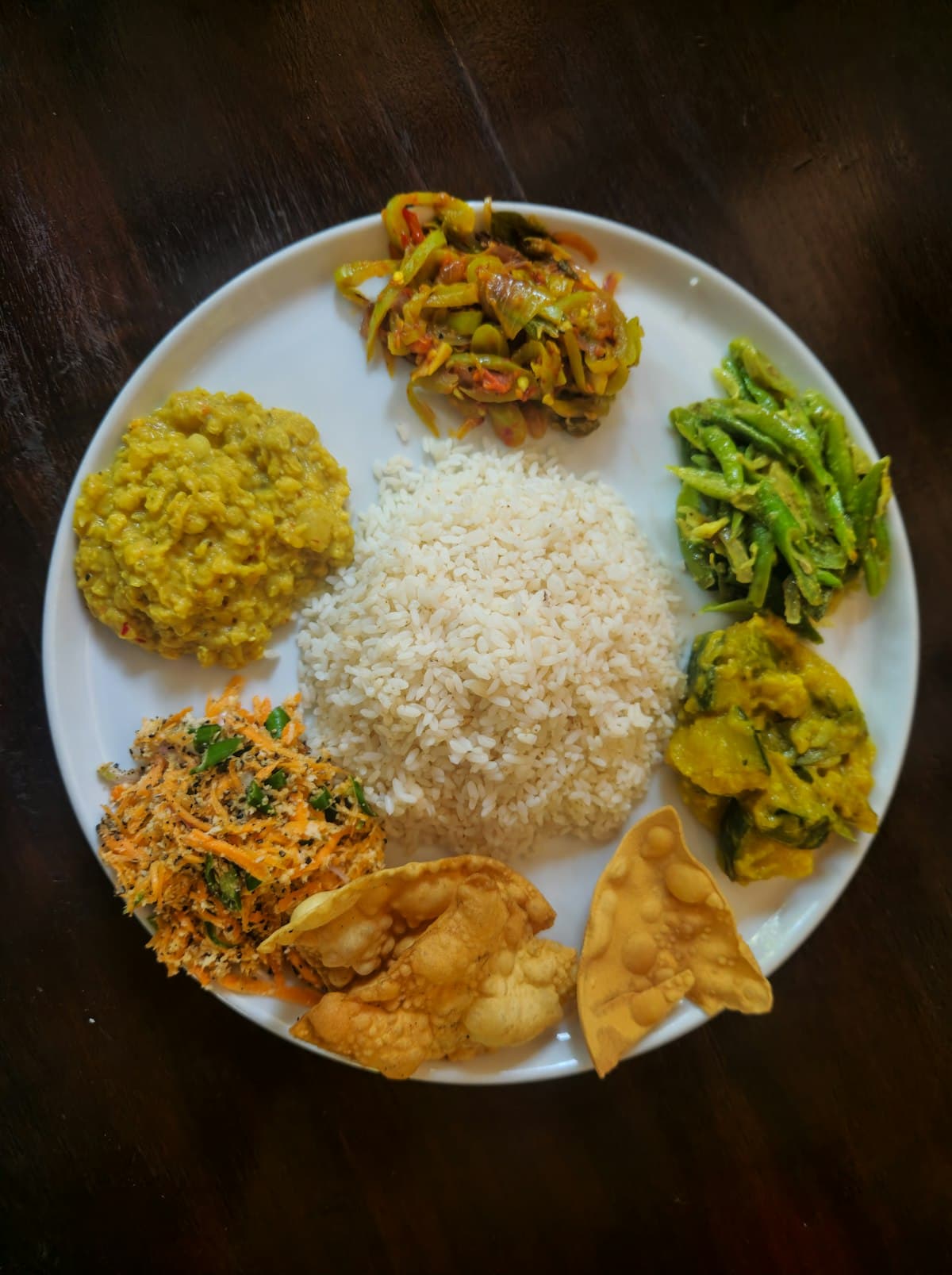
A balanced plate, the everyday way
The Healthy Eating Plate splits a meal simply: half vegetables and fruit, a quarter whole grains, a quarter protein — and water to drink. It works just as well for bhat, dal and bhaji.
The plate, in shares
- ½Vegetables and fruit
- ¼Whole grains
- ¼Protein
- +Water to drink
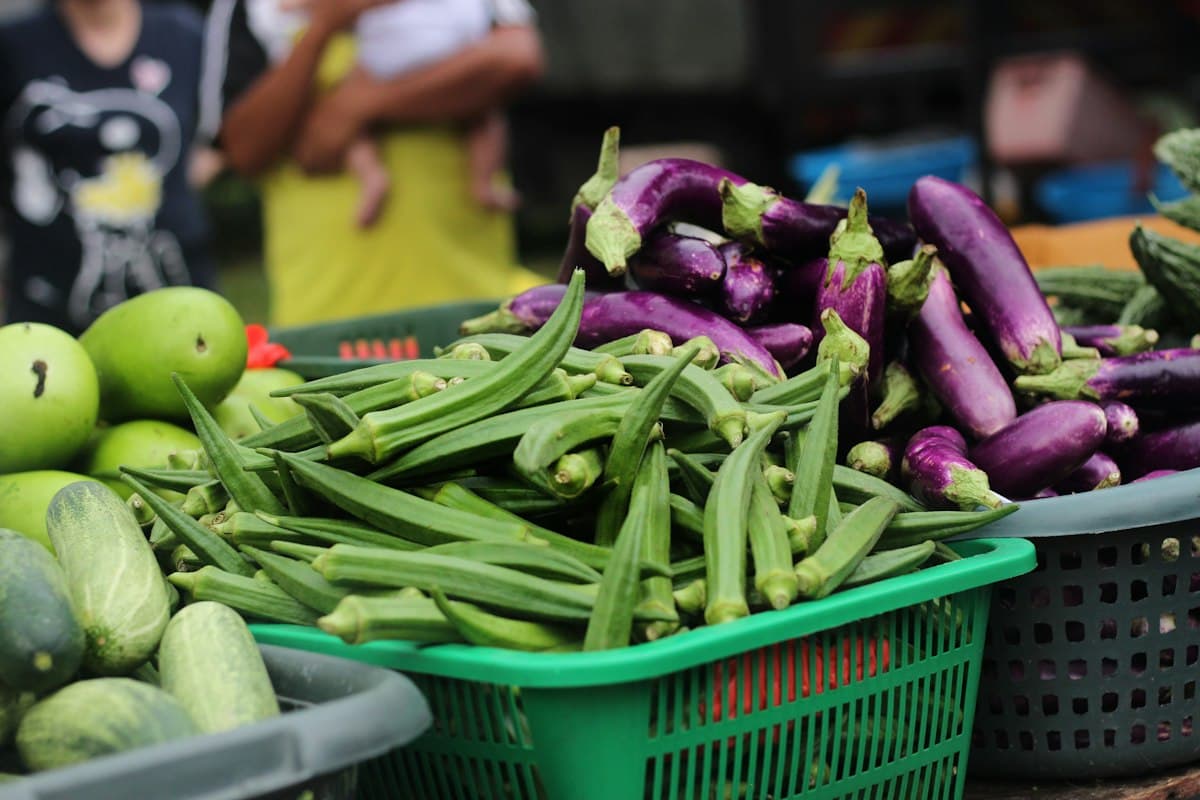
Vegetables and shak
Leafy shak, lau, begun, beans, carrots — as many colours as you can over the week. Potatoes count as a starch here, not a vegetable.
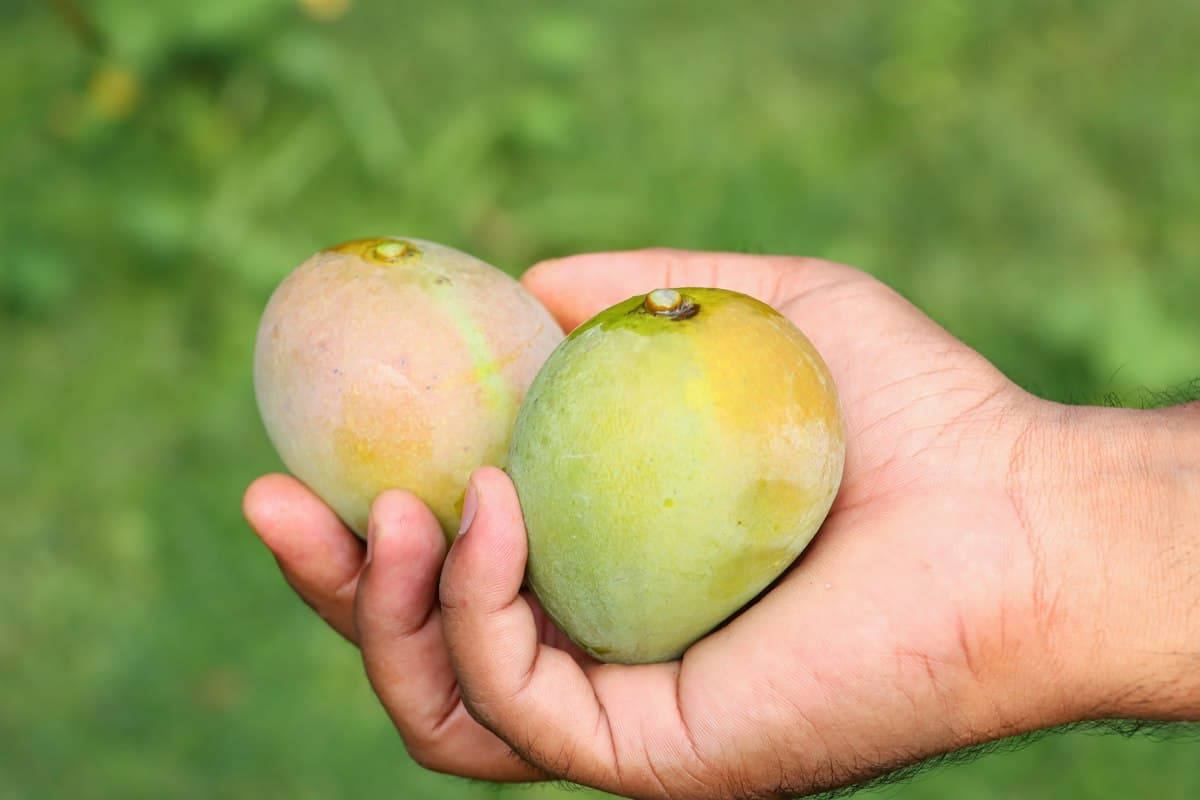
Fruit
Whole seasonal fruit — guava, banana, papaya, mango in summer. Whole fruit rather than juice: WHO counts the sugar in juice as free sugar.
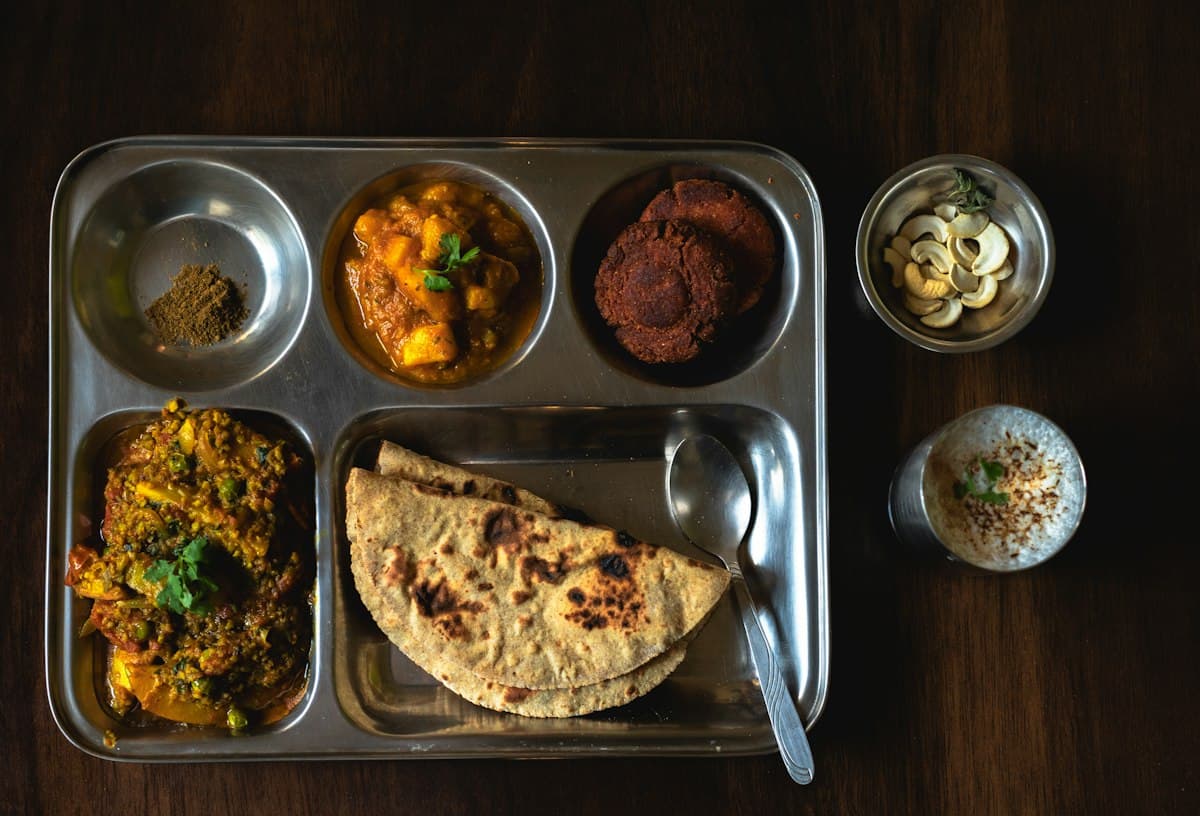
Rice, roti and grains
Rice and roti are the base of most meals. Whole grains — atta roti, brown rice, oats — keep more of the grain’s fibre.
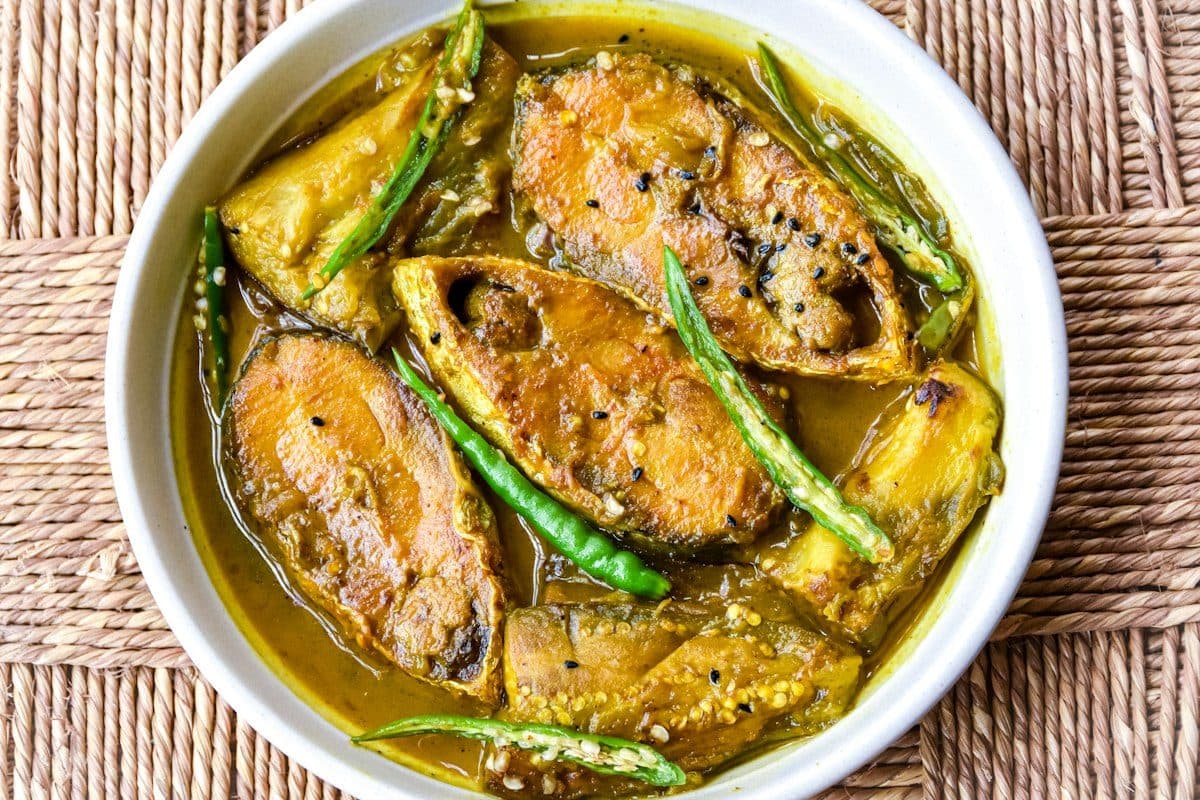
Fish, eggs and dal
Fish, eggs, dal and other pulses, chicken: protein can come from a mix of animal and plant sources.
The numbers, and where they come from
From the World Health Organization's healthy diet fact sheet, updated in January 2026. They are targets for a usual day, not rules for every meal.
350–400 gfruit and vegetables a day
At least 350 g at ages 6–9, and at least 400 g from 10 years. Fruit juice doesn’t count.
under 10%of daily energy from free sugars
Added sugar, and the sugar in honey, syrups and fruit juice. 5% or less may bring extra benefit.
under 5 gsalt a day, for adults
Children need less: WHO says their maximum is worked out from how much energy they need.
21–25 gfibre a day
At least 21 g at ages 6–9, and at least 25 g from 10 years — from whole grains, vegetables, fruit and pulses.
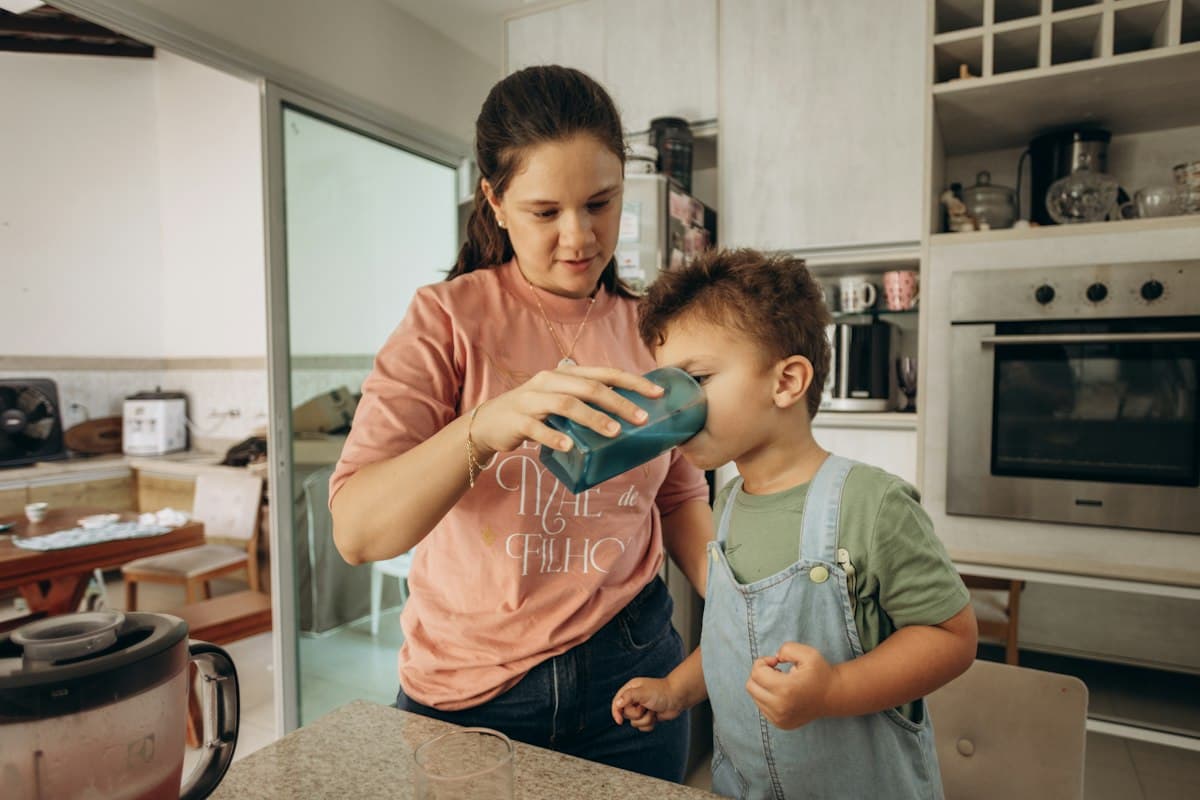
Water first
How much water children need in a day, in total — from drinks and from the water in food — according to the European Food Safety Authority.
| Age | Girls | Boys |
|---|---|---|
| 4–8 years | 1.6 L | 1.6 L |
| 9–13 years | 1.9 L | 2.1 L |
| 14 years and over | 2.0 L | 2.5 L |
These figures are for moderate temperatures and moderate activity. On hot days, and after sport or play, children need more.
A water bottle in the school bag helps. Soft drinks and fruit juice count towards free sugars, so water is the everyday drink.
Small habits, most days
None of these needs a special diet or a shopping list. Pick one that fits your family this week.
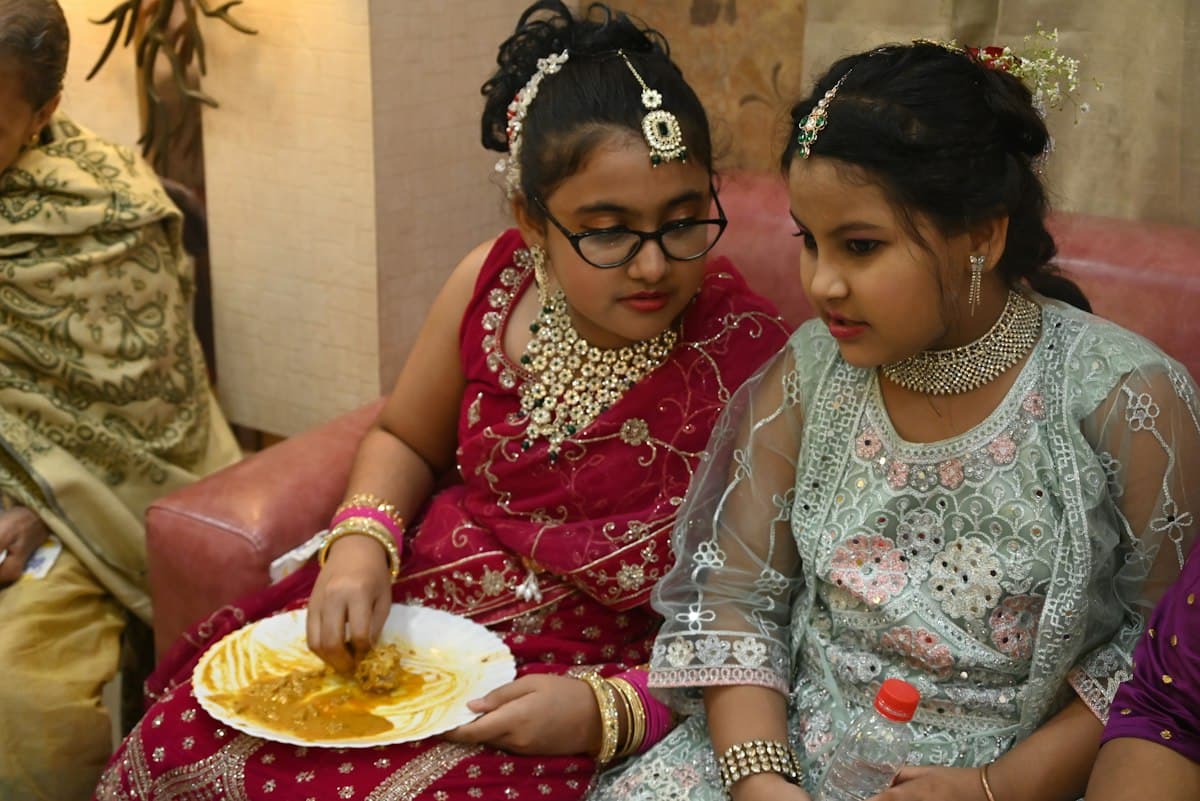
Eat together when you can
A shared meal is an easy moment to hear about the day. It doesn’t have to be every meal.
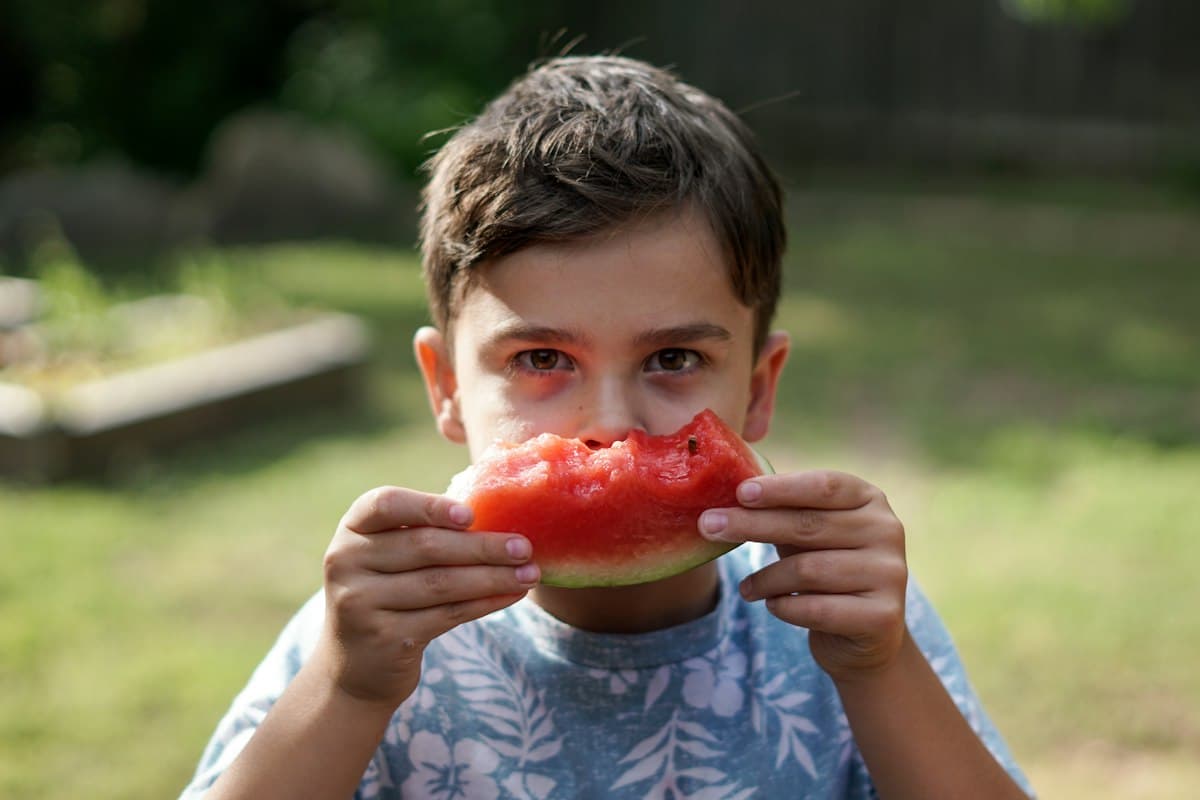
Fruit within reach
Keep washed fruit where children can reach it — a guava, a banana, a slice of watermelon.
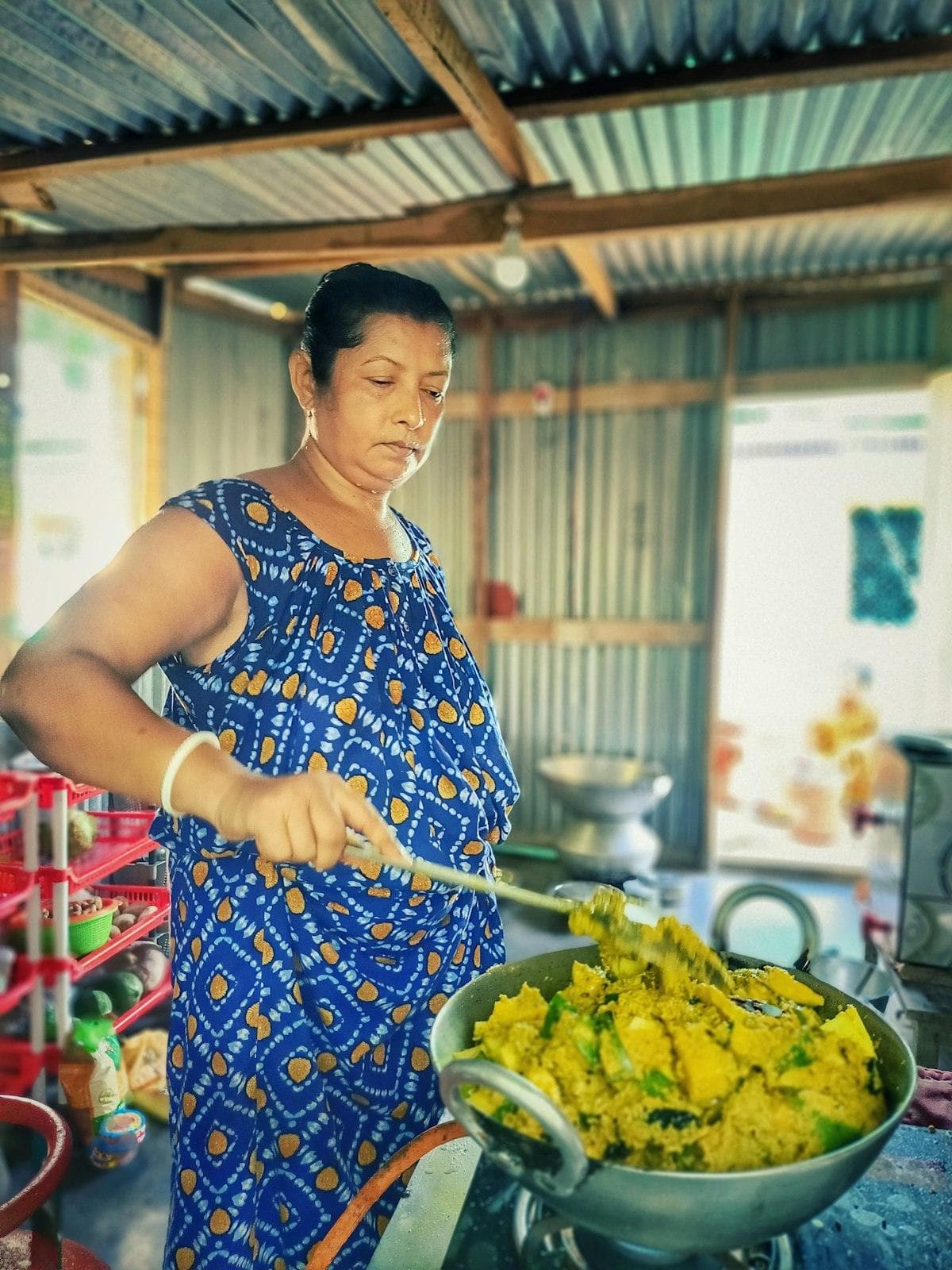
A small job in the kitchen
Washing dal, shelling peas, rolling a roti — a small job makes the meal theirs too.
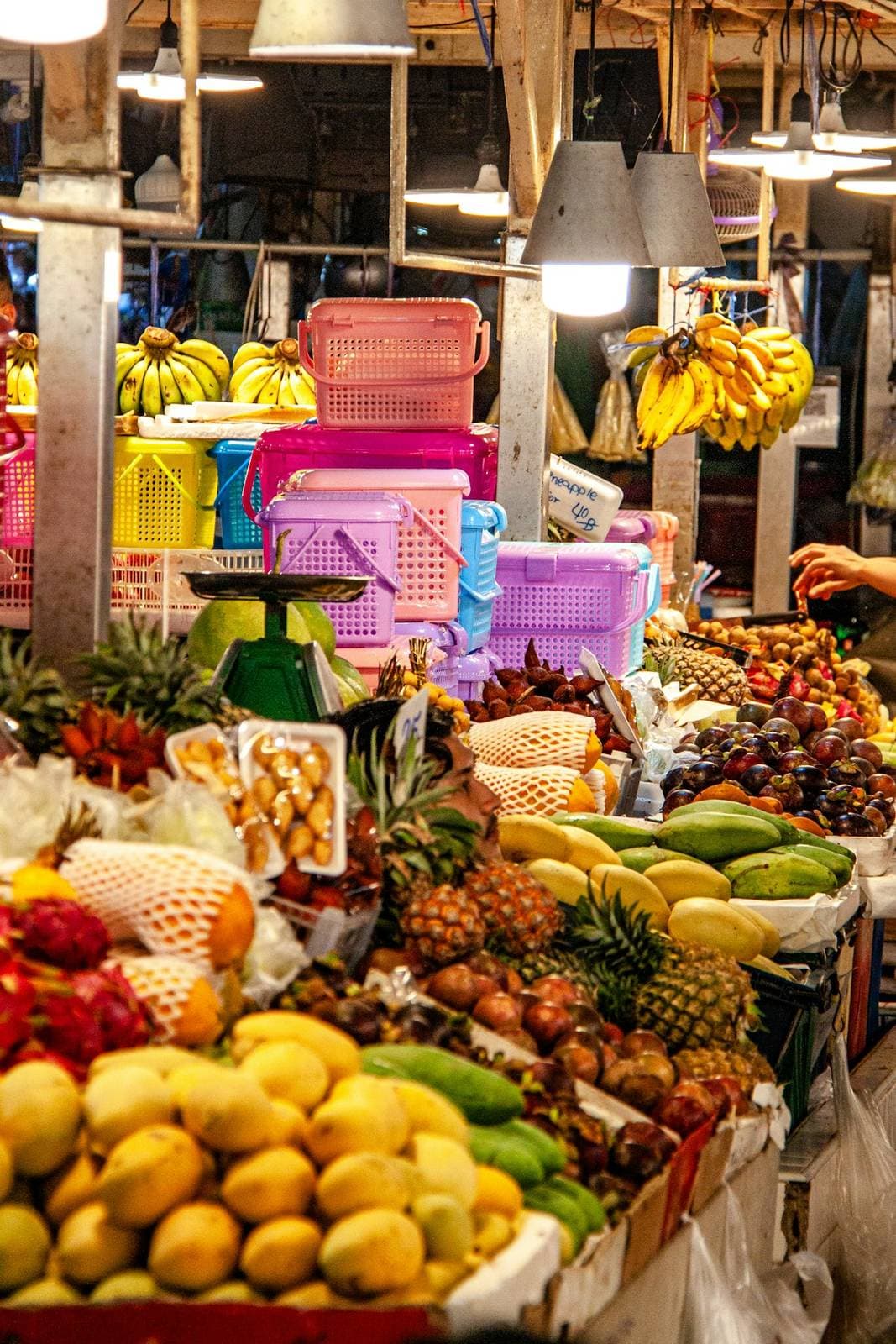
Something new from the bazar
Let your child choose one fruit or vegetable to try this week.
Reading a label
WHO's own example puts 50 g of free sugars at about 12 level teaspoons — so roughly 4 g of sugar on a label is one teaspoon.
Notice the pattern, not one day
Every child has days they hardly eat. A short daily note, kept for a week or two, shows whether a skipped breakfast is a one-off or most days — in your own child’s days, not an average.
See breakfast in the sample reportPlease read
This is general information, not medical advice, and it has not yet been reviewed by a clinician. If you're worried about your child's eating, weight, growth or an allergy, talk to a doctor.
Sources
- World Health Organization — Healthy diet (fact sheet, updated 26 January 2026)
- European Food Safety Authority — Dietary Reference Values for water (EFSA Journal 2010; 8(3):1459)
- Harvard T.H. Chan School of Public Health — Healthy Eating Plate
Photos from Unsplash by Zoshua Colah, Esperanza Doronila, Rejaul Karim, fuseviews, Abhik Paul, Jonathan Borba, AJOY DAS, Thomas Park, Sourav Debnath, Aleksandr Galichkin.

Try it with your own child
ParentMind keeps a short note of each day and shows, in your child's own numbers, whether a change is helping.
Free to join. No credit card. Private by default.
