Child only wants junk food? A calm plan for chips, sweets and soft drinks
Quick answer
When a child only wants junk food, a steady routine usually works better than a ban: set meal and snack times, planned treat days, few packets at home and one rule from every adult. Expect some protest at first. See a doctor if your child often eats in secret and seems upset afterwards, or worries a lot about their body.
 By the ParentMind team13 min read
Listen to this article
17 min listen · Read by your device's voice
At a glance
- Who it is for
- Parents of children aged 3–14 who ask for chips, chocolate, soft drinks or instant noodles every day
- Key takeaways
- Liking sweet, salty and crunchy food is normal; a daily junk food habit usually grows from easy access, long gaps between meals and sweets used as rewards.
- Planned treats work better than total bans, which often make children want junk food more and eat it in secret.
- What you keep at home matters most: fruit and muri where children can see them, chips and soft drinks not stocked every day.
- Agree one rule with grandparents, relatives and house help, and never talk about weight or 'getting fat' in front of your child.
If your child only wants junk food, you know the routine: chips the moment they're home from school, chocolate from every visiting relative, a soft drink with dinner and instant noodles instead of rice. Many parents feel they have tried everything. A strong pull towards sweet, salty and crunchy food is normal in children, and the habit can change without a daily fight.
The answer is rarely a ban. It is a calm routine: regular meals, planned treats, a home where the easy snack is a good one, and the same rule from every adult. Below: why children crave it, what to say when they beg, what to keep at home, how to handle school snacks and relatives, a 7-day plan and when to get help.
Why a child only wants junk food: the usual reasons
Wanting junk food is not greed or bad character. Children are born preferring sweet tastes, and many packaged snacks are made to be crunchy, salty and hard to stop eating. Most of the pull comes from ordinary things:
- Long gaps between meals. A hungry child after school or coaching reaches for whatever is quickest.
- Easy access. If chips, biscuits and soft drinks are in the cupboard, or the corner shop is downstairs, they become everyday food.
- Sweets as rewards or comfort. 'Finish your homework and you'll get chocolate' teaches that sweets are the real prize.
- Love shown with food. Grandparents, uncles and guests often bring chocolates and chips as a way of showing affection.
- Friends, adverts and screens. Snacks shared at school and adverts make some foods look exciting, and a packet eaten in front of a screen disappears without anyone noticing.
- Bans. Food that is completely forbidden often becomes the food children want most.
| Age | What's common | What helps |
|---|---|---|
| 3–5 years | Begs and cries for sweets at the shop; eats whatever visitors offer | You decide what is bought; offer two good choices; keep treats out of sight |
| 6–9 years | Swaps tiffin for friends' chips; wants chocolate after school; wants what classmates have | A tiffin they like, a set after-school snack, treat days agreed together |
| 10–14 years | Has tiffin money; buys from the canteen, the school gate or with friends; snacks during screens and study | A fixed weekly amount, a spending plan they make themselves, real food at home for hungry moments |
If your child also refuses most family meals, start with what to do with a picky eater: no hunger at mealtimes and junk food in between are often two sides of the same habit.
How to say no to junk food when your child begs
Most begging happens at predictable moments: the shop counter, straight after school, when guests arrive. A plan for those moments makes it easier to stay kind and firm.
- Check hunger first. If it is close to snack time, offer a real snack now: fruit, muri, a boiled egg or roti.
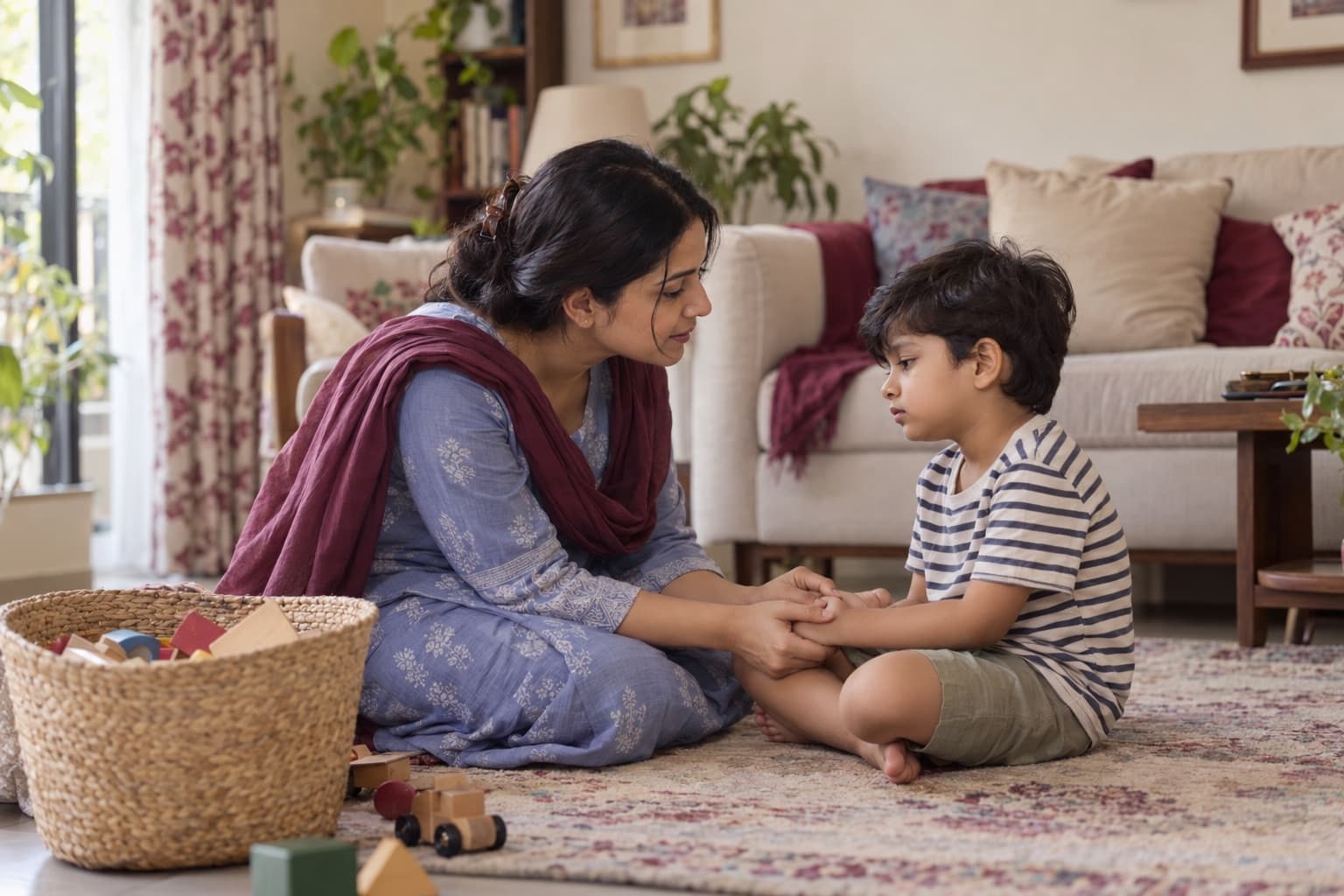
- Say no once, briefly and kindly. Skip the health lecture; a long speech invites a long argument.
- Name the wish and the plan: 'You really want chips. Chips are for Friday.'
- Offer two choices you are happy with, so your child still gets to decide something.
- Stay calm through the protest and don't give in after the tears. If crying changes the answer, children often learn to cry for longer.
- Plan the shop before you go in: 'We're buying eggs and rice today, not snacks.' With a tired or hungry child, skip the snack shelf if you can.
- Later, when everyone is calm, notice the coping: 'You were cross about the chips and you managed it.'
What you might say
- I know you really want it. The answer is still no today.
- Chips are for Friday. Today it's muri or a banana. Which one?
- You can be upset about it. I'm still not changing my mind.
- Let's put it on the list for treat day.
- Nanu brought chocolate! We'll have a piece after lunch.
- It's your tiffin money. What's your plan for this week?
Begging for snacks is one kind of demand. For whining and begging in general, see saying no and setting limits.
How to limit sweets for kids without banning them
When a child only wants junk food, a total ban tends to backfire. Children who are never allowed sweets often think about them more, eat them fast when they get the chance, or eat them in secret at a friend's house. Treats that are planned, small and ordinary usually lose their power.
- Pick treat times together: for example, chips on Friday, a sweet after lunch at weekends, ice cream on family outings.
- Serve treats with or after a meal, sitting down, in a bowl rather than from the packet.
- Make fast food an outing, not a habit: a burger or fried chicken with the family now and then, rather than a delivery whenever someone asks.
- Don't use sweets as the prize for vegetables, homework or good behaviour, or to stop tears. Praise, a hug or a game together work better.
- Let your child enjoy a treat without guilt. Words like 'poison' or 'disgusting' make food feel scary or more exciting, not less.
- Eat the same way yourself. A soft drink in a parent's hand at every meal teaches more than any rule.
Healthy snacks instead of chips: what to keep at home
What is in the house decides most of what children eat between meals. You don't need special products. Keep fewer packets, and put easy, filling food where children can see and reach it.
| If your child wants | Try at home |
|---|---|
| Chips | Muri with chopped tomato and onion, chira bhaja, or potato wedges made at home |
| Soft drinks and juice packs | Cold water with a slice of lemon, homemade lemon sharbat with less sugar, plain lassi or matha, or whole seasonal fruit |
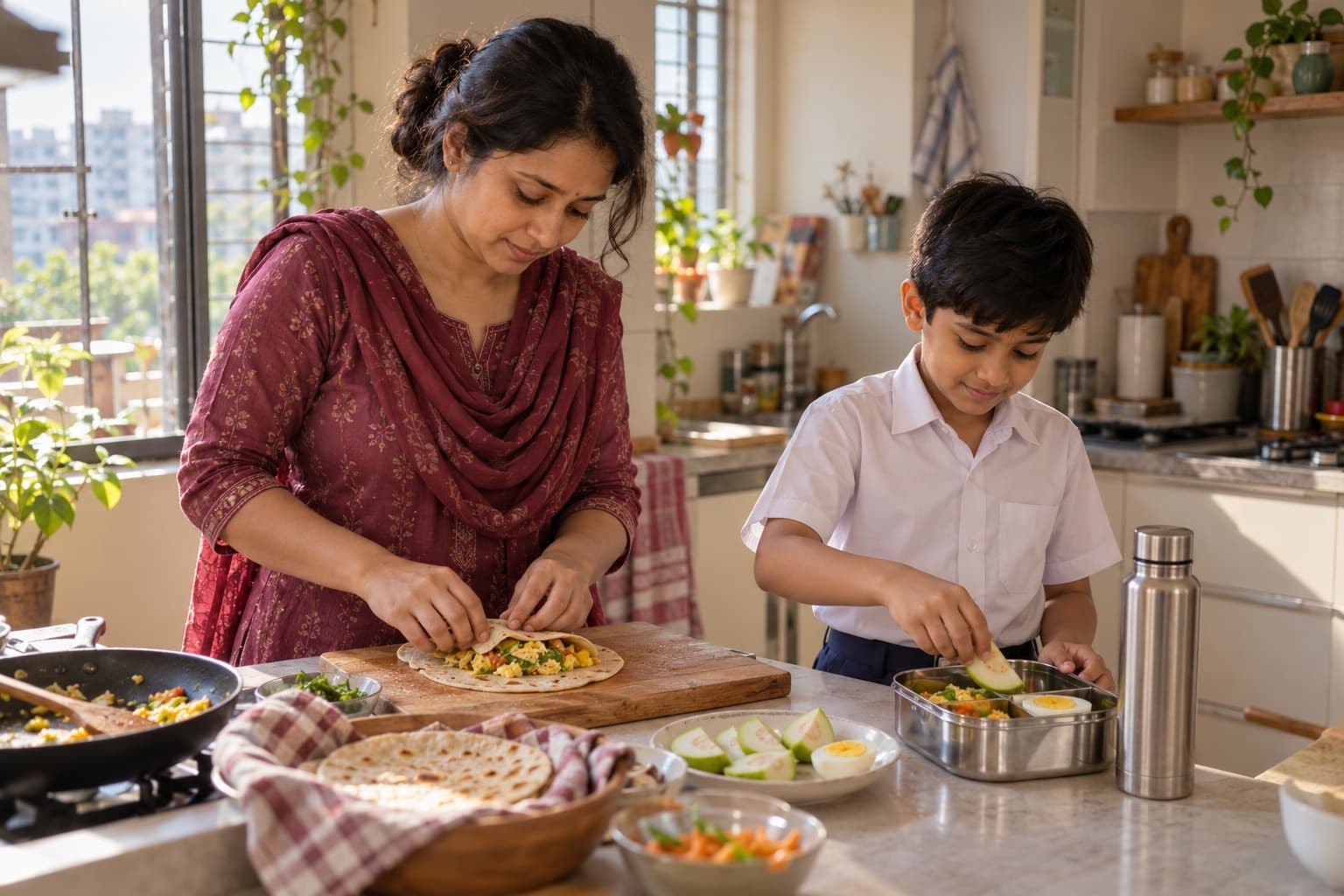
| Instant noodles | Noodles cooked with egg and vegetables and half the seasoning, khichuri, or a roti roll |
| Chocolate and sweets | Banana, guava, papaya, mango in season, dates with the stones removed, or a small piece of chocolate after a meal |
| Burgers and fried chicken | Home-cooked chicken with roti, an egg sandwich, or a homemade chicken roll |
| Ice cream | Frozen banana or mango pieces, or a fruit lolly made with yoghurt |
- Keep a fruit bowl and a box of muri or chira on the table, at your child's eye level.
- Buy small packs for treat days instead of family packs, and keep them out of sight.
- Make water the everyday drink: a bottle in the school bag, a jug on the table. Our food and nutrition guide for children shows how much water children need and how to read sugar on a label.
- For children under about 5, skip hard sweets, lollipops, chewing gum, popcorn and whole nuts: they are easy to choke on.
School canteens, tiffin money and shops near school
School is where many children first buy food for themselves. Phuchka, chotpoti, jhalmuri, ice cream, chips and juice packs by the gate are part of school life, and a complete ban is hard to keep. A few agreed rules usually work better.
- Send a tiffin your child actually likes, so they aren't hungry at the gate. Lunch ideas for kids has quick ones from a Bangladeshi kitchen.
- Younger children, under about 8: no daily cash. Agree one school-gate treat a week, bought with you.
- Older children: a fixed weekly amount for tiffin, and let them plan it. If it all goes on chips by Tuesday, the tiffin from home still goes in the bag, and it's a lesson, not a crisis.
- For street food, choose stalls that look clean and food cooked hot in front of you, and skip uncovered water, sharbat and ice, which can upset stomachs.
- On coaching days, pack a second snack and a full water bottle, so the evening isn't a packet from the stall.
- Ask what the school canteen sells. Parents asking together for fruit and water often get further than one parent alone.
In a Bangladeshi home: relatives, guests and sweets as love
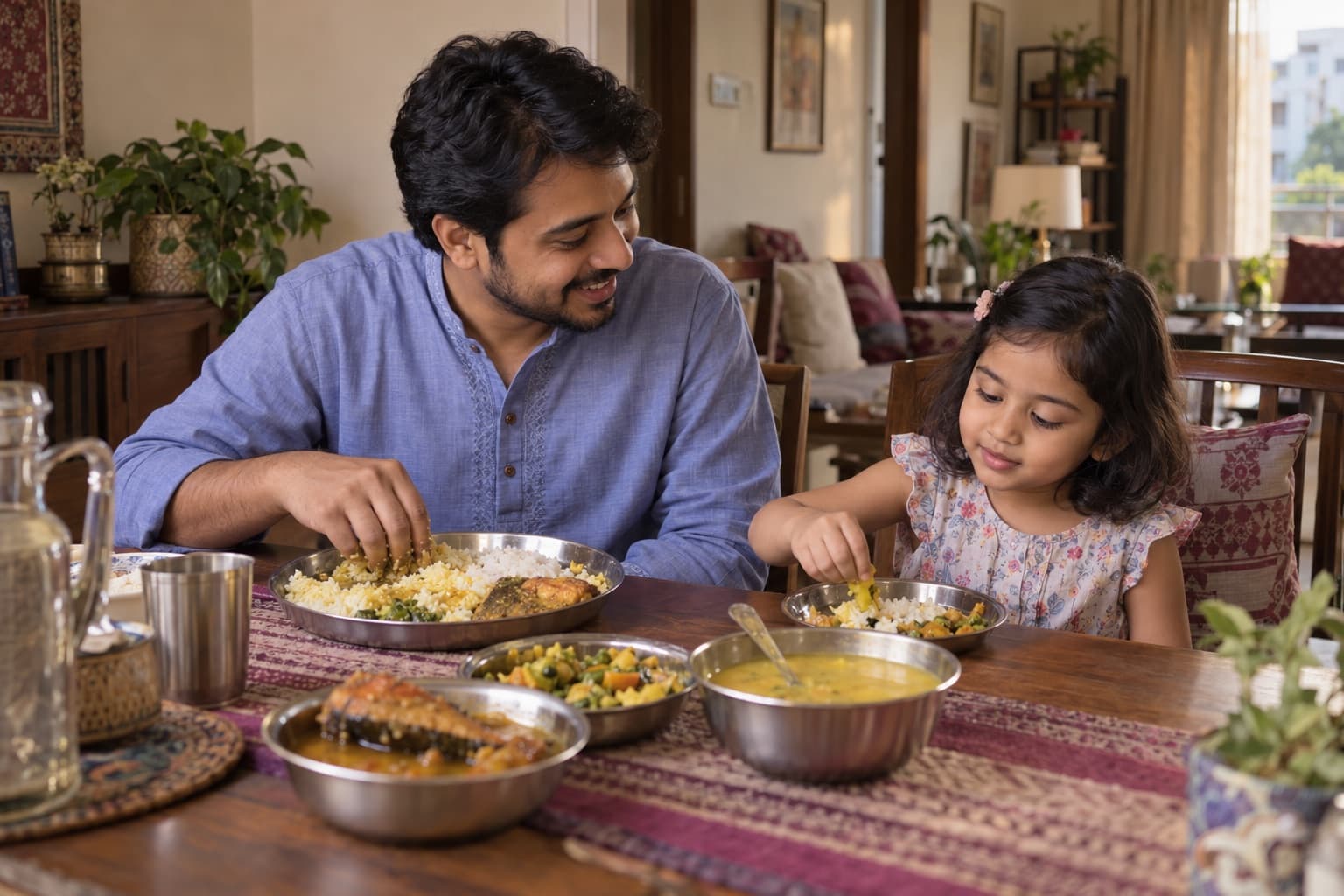
In many Bangladeshi families, food is how love is shown. Grandparents arrive with chocolates, an uncle brings chips, every guest gets a plate of biscuits and chanachur, and no celebration is complete without mishti. None of that needs to stop. It helps to agree how it fits around your child's everyday routine.
When grandparents and relatives bring chocolate
- Thank them warmly in front of your child, then put the gift in a treat box to be eaten after meals, one piece at a time.
- Talk to grandparents in private, never in front of the child: 'Amma, she loves it when you bring something. Could it sometimes be fruit or a storybook, and chocolate just on Fridays?'
- Share the same rule with house help and drivers, who often buy snacks when a child asks, and with the corner shop if your child buys on the family account.
Weddings, dawats, Eid and Ramadan
Celebrations come with mishti, firni, semai and fried snacks, and children can enjoy them with everyone else. In Ramadan, iftar often means beguni, piyaju and jilapi every evening: let children share the family table, add fruit and water alongside, and keep their dinner and bedtime as steady as you can. The next ordinary day, the usual routine returns, without comment.
No weight talk in front of children
Relatives may say 'she's getting fat' or 'he's so thin, give him more sweets'. Comments about size can stay with a child for years and turn food into something shameful. Step in kindly: 'We don't comment on bodies in our family.' At home, talk about energy and strong teeth, never weight or looks.
A 7-day plan to cut back on junk food
If your child only wants junk food, add one small change a day, note what happens, and compare after a week.
- Day 1: Notice. Write down every snack and drink, when it happened and who gave it, including relatives, the shop and school.
- Day 2: Set the rhythm: three meals and two snacks at roughly the same times, with water in between.
- Day 3: Choose treat days with your child and write them on a paper on the fridge.
- Day 4: Change the shopping. Buy fewer packets, and put fruit, muri and chira where your child can reach them.
- Day 5: Talk privately with grandparents, house help and anyone else who gives your child food, and agree the one rule.
- Day 6: Make one homemade swap together, such as noodles with egg and vegetables or frozen mango pieces.
- Day 7: Compare with Day 1: how often your child asked, how many arguments, which times were hardest. Keep what helped and adjust one thing.
When to get help with your child's eating
For most children, a love of chips and sweets is simply part of childhood. A few signs need more than a new routine:
Get help if
- Tooth pain, dark spots or holes in the teeth, or swollen gums: see a dentist soon.
- Your child eats only a few foods, the list keeps shrinking, or they gag on most new foods: talk to a doctor.
- Hiding food or eating large amounts in secret most weeks, especially if your child seems upset or ashamed afterwards: talk to a doctor.
- Strong worry about weight or looks, or skipping meals to change their body: talk to a doctor soon. If your child is teased or bullied about their body, believe them, act the same day, and call 999 if they are in danger.
- Whatever your child eats, see a doctor the same day if they are suddenly very thirsty, wee much more often, or are unusually tired or losing weight.
- Your child is choking and can't breathe, cough or cry: call 999 and start choking first aid if you know it.
ParentMind helps you note what your child eats and asks for each day, so the pattern shows: after school, on coaching days, when relatives visit. See how ParentMind works.
Questions parents ask
Is it okay to give kids junk food sometimes?
Yes. An occasional treat within a steady routine is fine, and planned treats usually work better than a ban, which often makes children want junk food more. Many families keep a treat day or two a week, serve treats with or after a meal, and keep portions small. Ordinary days matter most.
Is my child addicted to sugar?
It can feel that way, but a strong liking for sweets is normal in children. The daily pull usually comes from habit, easy access, long gaps between meals and sweets used as rewards. Calling it an addiction tends to turn food into a battle; a steady routine with planned treats often calms the asking within a few weeks.
How do I stop my child eating instant noodles every day?
Keep noodles, but make them a set-day meal rather than a daily habit. Cook them with an egg and vegetables, use half the seasoning sachet, and serve them at the table. Keep fewer packets in the house, and have another quick favourite ready for hungry moments, such as khichuri, roti with egg or homemade noodles.
What can I give my child instead of chips?
Try crunchy, salty food from your own kitchen: muri with chopped tomato and onion, chira bhaja, homemade potato wedges, or guava and cucumber slices. For children over about 5, roasted peanuts or chickpeas also work; for younger ones, skip whole nuts and popcorn because they are easy to choke on.
What do I do when grandparents keep giving my child chocolate?
Thank them, then agree a simple rule in private, never in front of your child: gifts go into a treat box and come out after meals, one piece at a time. Suggest other ways to spoil a grandchild, such as fruit, a storybook or making pitha together. Grandparents usually mean love, so ask for their help rather than criticise.
Should I tell my child that junk food will make them fat?
No. Talk about weight or getting fat can make children ashamed of their bodies and anxious about food, and it rarely changes what they eat. Talk instead about energy for play, strong teeth and feeling good after a proper meal. If you have concerns about your child's growth, raise them with their doctor rather than with your child.
This article is general information, not medical advice. For health worries, talk to a doctor; if someone is in danger, contact your local emergency number.