Can you spoil a child with too much love? What actually spoils
Quick answer
No, you can't spoil a child with love. Hugs, comfort, time and attention don't spoil children at any age; they help them feel secure. What can make behaviour harder is love without limits: giving in to every demand, buying things to stop crying, and doing everything for them. Keep the love, and add a few calm, steady rules.
 By the ParentMind team13 min read
Listen to this article
18 min listen · Read by your device's voice
At a glance
- Who it is for
- Parents and grandparents of children aged 2–12 who worry that love, cuddles or gifts are spoiling the child
- Key takeaways
- Love never spoils a child: cuddles, comfort, time and praise for effort help children feel secure and cope better with limits.
- What can make behaviour harder is giving in: a no that turns into a yes after crying, things bought to stop tears, and jobs done for a child who could do them.
- Swap some things for time: ten minutes of play together often means more to a child than a new toy.
- Agree two or three rules that matter with grandparents and other adults at home, and leave them plenty of yeses of their own.
Can you spoil a child by loving them too much? Many parents worry about it, often because someone kind has warned them: 'Don't pick her up every time she cries' or 'You're spoiling him with all that cuddling.' The reassuring answer is that love, comfort and attention don't spoil children, at any age.
What can make life harder is love without limits: giving in to every demand, buying things to stop the tears, doing everything for a child. Below: the difference between love and giving in, the signs worth noticing, how to add limits without losing closeness, grandparents and gifts, and a 7-day plan.
Can you spoil a child with love, cuddles or attention?
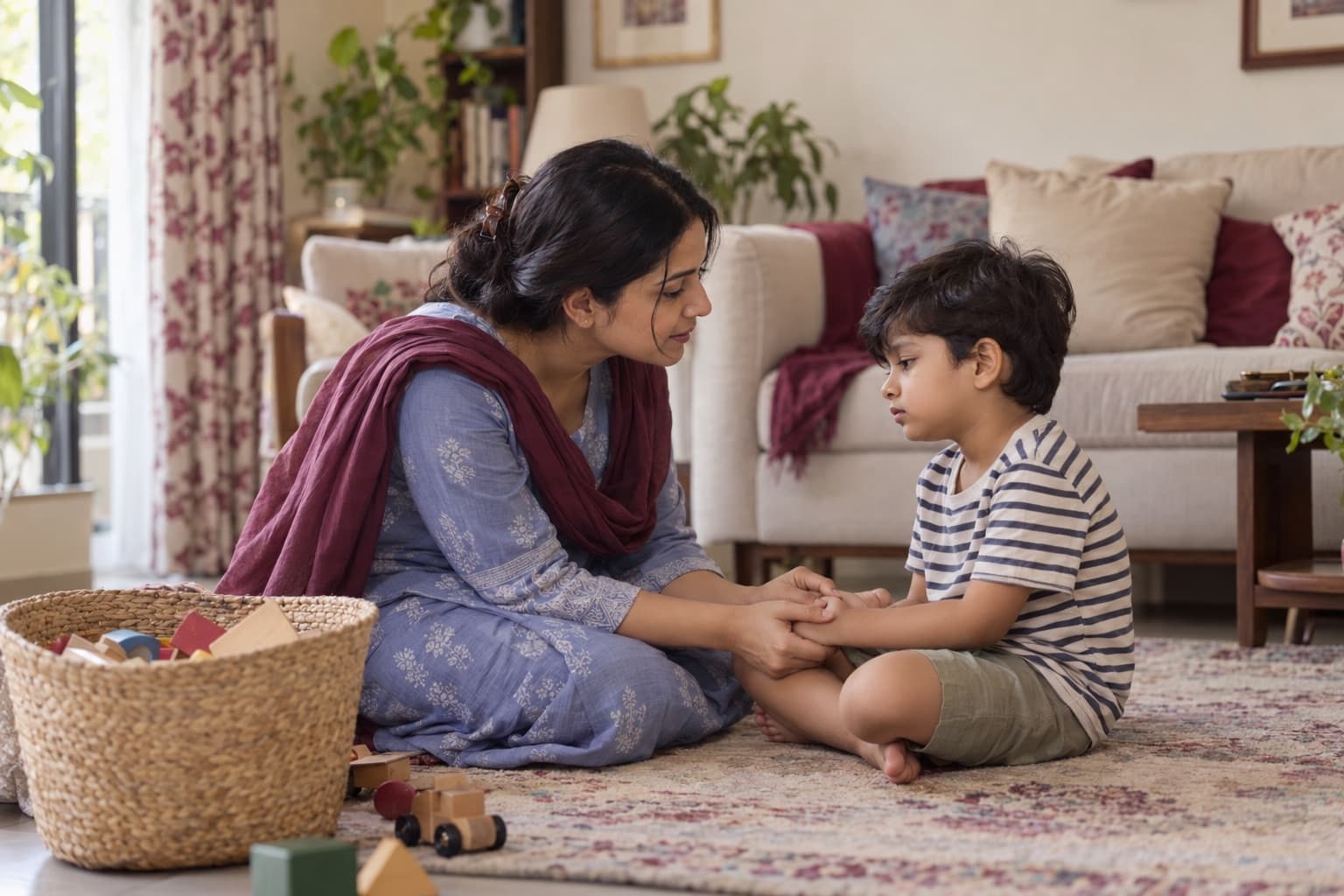
No amount of love spoils a child. Children of every age, from babies to preteens, do better when they feel loved, comforted and noticed. A child who knows they are loved often finds limits easier to accept, because a no from someone who clearly cares feels safe rather than cold.
- Picking up and comforting a crying baby. Babies cry to tell you they need something; answering them builds trust, not bad habits.
- Hugs, kisses, a lap to sit on and 'I love you', every day, at any age.
- Comfort when your child is hurt, scared or sad, even when the reason looks small to you.
- Time and attention: playing, listening, reading together, and being interested in their day.
- Specific praise for effort and kindness. How to praise a child has examples by age.
So when someone asks 'can you spoil a child with too much cuddling?', the honest answer is no. The more useful question is whether your child also has a few clear limits, and the chance to do things for themselves.
What actually spoils a child? Love versus giving in
What people call spoiling is usually giving in, not loving too much. Giving in to kids now and then is human; it's the everyday pattern that matters, and it often grows from habits that start with love:
- No limits, or limits that change with your mood: no today, yes tomorrow.
- Giving in to every demand, especially after whining or crying. A child soon learns that tears turn a no into a yes.
- Buying things, or handing over the phone, to stop crying. It works for a minute, and the next scene is often louder.
- Doing everything for a child who could do it: shoes, buttons, the school bag, clearing their plate.
- Rescuing them from every disappointment, so they never practise coping with a lost game, a no or a wait.
- Things instead of time: gifts that try to make up for long workdays or a parent who lives far away.
Many parents grew up with the idea that you must choose between love and discipline. Children need both: plenty of affection, and calm, steady limits without hitting or shouting, which tend to make behaviour worse over time.
| Love (never spoils) | Giving in (can make things harder) |
|---|---|
| Hugging your child while they cry about a no | Changing the no to a yes so the crying stops |
| Ten minutes of play together, with no phone | A new toy every time you feel guilty |
| Helping with a hard puzzle | Finishing their homework for them |
| 'You kept trying. Well done.' | A treat or a present for every small task |
| Listening to how they feel about a rule | Dropping the rule whenever they argue |
Signs of a spoiled child: what do they really tell you?
Lists of spoiled child signs can make loving parents feel judged. Most of these behaviours are normal at 2–4; at any age they usually mean a skill hasn't grown yet, not that your child is bad or you have failed. Signs a child may need firmer, kinder limits:
- After about age 5, most no's still lead to a long meltdown.
- They expect others to do things they could do themselves, and get angry when no one does.
- New things bring joy for a day, then 'I'm bored, buy me another one.'
- Waiting, sharing or taking turns is much harder for them than for other children their age.
- They are often rude to people who help them: grandparents, teachers or house help.
- They act as if rules are only for other people: 'Why should I?'
No entitled child is born that way. Each of these behaviours can change with the same two ingredients: plenty of love, and limits that hold.
How to stop spoiling your child without losing the closeness
If you think you've been giving in too often, you don't need to love less or turn strict overnight. These steps keep the warmth and add the limits:
- Keep every hug. Never hold back affection as a punishment or a fix; your warmth is what makes limits feel safe.
- Choose the three rules that matter most, such as no buying at the shop counter, no phone to stop crying, and putting on their own shoes. Fewer rules are easier to keep.
- Decide before you answer, then hold it kindly. Say no once, stay close through the tears, and don't change the answer because of them. How to say no to a child has the words, step by step.
- Swap some things for time. Ten minutes a day of play with no phone, where your child chooses the game, often fills the gap that gifts try to fill; see how to bond with your child.
- Hand back small jobs. Let your child do what they can for their age, even slowly: shoes, the school bag, carrying their plate. How to teach a child independence lists jobs by age.
- Let small disappointments happen. Losing at ludo or waiting for Friday is how children practise coping; stay beside them instead of fixing it.
- Practise thanks and giving. A thank-you at meals, helping a neighbour or giving outgrown clothes to someone who needs them builds the opposite of entitlement.
What you might say
- I love you so much, and the answer is still no.
- You're upset. I'm staying right here. We're still not buying it today.
- Hugs are free, any time you want one. Toys are for birthdays and Eid.
- You can do the buttons yourself. I'll wait.
- Let's write it on your wish list.
- Thank you for carrying your plate. That really helped me.
Love never spoils a child. Love without limits can make growing up harder.
What do love and limits look like from age 2 to 12?
| Age | Love that helps | Limits that help |
|---|---|---|
| 2–3 years | Lots of cuddles, comfort for every upset, simple play together | A few simple rules, distraction, routines; not giving in to tantrums |
| 4–6 years | Stories, special time, noticing effort | When-then ('First toys away, then cartoons'), small jobs, short waits, saying thank you |
| 7–9 years | Listening, one-to-one time with each parent, jokes and games | Daily chores, a wish list or a saving jar, letting them fix their own small mistakes |
| 10–12 years | Interest in their world, trust, talks on the way to school | Rules for screens and money agreed together, real help at home, consequences they understand |
A spoiled toddler is really a toddler who hasn't learned to wait yet, and no 2-year-old has. Patience, turn-taking and accepting a no grow slowly through the primary school years, helped along by calm, repeated practice.
In a Bangladeshi home: grandparents' love, gifts and many helpers
In many Bangladeshi families a child is loved by many people at once: parents, grandparents, aunts, uncles and often house help. That warmth is a real strength. The question 'can you spoil a child?' usually comes up when these loving adults follow different rules.
Grandparents' love
A grandparent's yes almost always comes from deep love, and from the joy of finally being free to give. Talk privately, never in front of your child; thank them, and ask for help with just two or three rules, such as sweets before meals and the phone at bedtime. Leave them treats and yeses of their own. Grandparents and parenting rules covers these talks in more detail.
The youngest child and the first grandchild
The youngest child, the first grandchild or a child born after a long wait often gets the most attention, and that is fine. Watch for just two things: rules that bend for them but not for their brothers and sisters, and siblings who feel loved less. Fairness between children usually matters more to them than equal gifts.
Eid money and gifts from abroad
Relatives working abroad, and Eid, can bring a flood of gifts and money. Gently ask relatives to send one thing rather than many, and let your child choose what to do with their Eid money (salami): some to spend, some to save in a clay money bank, some to give.
House help and many helping hands
If house help or relatives do every task for a child, the child may learn to give orders instead of doing. Ask everyone who helps to leave your child their own small jobs, and expect 'please' and 'thank you' for everyone at home, including the people who work there.
Words for grandparents and relatives
- Abba, your love is the best thing she has. Could you help me with just one rule: no phone when she cries?
- Khalamoni, could you send one gift this Eid instead of five? He'll treasure just one.
- Please let him carry his own bag. He's so proud when he does it himself.
A 7-day plan: keep the love, add the limits
- Day 1: Notice. Note each time you gave in, bought something to stop tears or did a job your child could do, and what happened just before. Change nothing yet.
- Day 2: Choose your three rules, and one daily cuddle or chat time that will never be taken away.
- Day 3: Start 10 minutes of special time, with no phone, where your child chooses the game.
- Day 4: Hand back one small daily job, such as shoes, the school bag or clearing their plate, and thank them for it.
- Day 5: Start a wish list or a saving jar together, and use it the next time something is asked for.
- Day 6: Talk privately with grandparents, relatives or house help about your three rules and the words you'll all use.
- Day 7: Compare with Day 1: how often you gave in, how long protests lasted, how your child managed their job. Keep what worked and change one thing.
When to get help with demands and meltdowns
Many children adjust within a few weeks once love and limits arrive together. Talk to your child's doctor, a child psychologist or the school if you notice any of these:
Get help if
- After age 5, a no still leads to long meltdowns most days, and they keep getting longer or more frequent over several weeks of steady, kind limits.
- Your child often hurts people or animals, or breaks things, when they don't get their way.
- Demands come with low mood: sad, irritable or tearful most days for two weeks or more, or no joy in things they used to love.
- A sudden change: an older child suddenly asks for far more money or things than usual, things go missing at home, or they turn fearful or withdrawn. Someone may be pressuring them: ask gently, believe your child, act the same day, and call 999 if they are in danger now.
- Disagreements between the adults at home about the child turn into shouting most weeks: a family counsellor can help you find one plan together.
- You feel you might hurt your child: make sure they are safe, step away and get help the same day. Call 999 if anyone is in danger.
So, can you spoil a child with love? No, and you never need to ration it. ParentMind helps you note what happens each day, such as when demands peak and what helped, so patterns are easier to see; see how ParentMind works.
Questions parents ask
Can you spoil a baby by holding them too much?
No. Babies cry to tell you they need something; picking them up, feeding and comforting them builds trust, not bad habits. Babies who are comforted quickly often grow into toddlers who explore with confidence. If you are very tired while holding a sleepy baby, lay them on their back on their own firm, flat surface, with nothing soft or loose in it, and never fall asleep with your baby on a sofa or in a chair.
What are the signs of a spoiled child?
People usually mean long meltdowns at most no's after about age 5, expecting others to do what the child could do, quickly losing interest in new things, and rudeness to people who help. These usually point to skills not yet learned, like waiting or accepting a no, and steady limits with plenty of warmth can ease them within a few weeks.
Can grandparents spoil a child?
Their love can't, and children gain a great deal from close grandparents. Problems tend to come only when a grandparent's yes regularly overrides the few rules that matter to you, so the child learns to go to whoever says yes. Talk privately and warmly, agree two or three rules together, and leave them plenty of treats and yeses of their own.
Should I give my child everything they ask for?
No, and you don't need to feel guilty about that. Hearing no sometimes, and waiting for things, is how children learn patience and how to handle disappointment. Say yes freely to small things that don't matter, keep a calm no for the few that do, and use a wish list for birthdays and Eid so your child knows they were heard.
Is it too late to stop spoiling my child?
No. Children of any age can adjust to new limits, especially when the love stays the same. Explain the change once to an older child ('We've decided that...'), start with two or three rules, and expect more protest for a week or two before things settle. Keeping your word, kindly and every time, matters more than any single rule.
Is an only child more likely to be spoiled?
Not because they are an only child. What shapes behaviour is the same for every child: warmth, a few steady limits, small jobs and chances to share and wait. An only child may simply have fewer chances to share and take turns at home, so regular time with cousins, neighbours and classmates can help. Many only children grow up generous, patient and kind.
What is the difference between love and indulgence?
Love is affection, comfort, time and attention, and children cannot have too much of it. Indulgence means taking limits away: giving in to every demand, changing a no because of tears, or doing everything for a child. Love helps children feel secure; constant indulgence can make waiting, sharing and accepting a no harder. Aim for plenty of the first and little of the second.
This article is general information, not medical advice. For health worries, talk to a doctor; if someone is in danger, contact your local emergency number.