How to praise a child: examples by age, and noticing the good
Quick answer
How to praise a child so it helps: describe what they did instead of labelling them, like “You kept trying with that zip” rather than just “Good boy.” Praise effort, strategies and kindness more than talent or marks, keep it honest, and notice small things daily. Praise like this rarely spoils children; comparison and bribes are what tend to backfire.
 By the ParentMind team13 min read
Listen to this article
18 min listen · Read by your device's voice
At a glance
- Who it is for
- Parents of children aged 2–14, and anyone who worries that praise will make a child proud
- Key takeaways
- Specific praise that describes what your child did (“You put every block back”) teaches more than “Good job” on its own.
- Praise effort, strategies and kindness more than talent, looks or marks, so that hard things feel worth trying.
- Honest, warm praise rarely spoils a child; constant empty praise, bribes and comparison with others are what tend to backfire.
- Noticing one good thing a day, out loud or in a note, can change how the whole week feels for both of you.
If you are wondering how to praise a child without making them proud, or whether “Good boy!” is enough, you are not alone. Many parents praise often when children are small, then mostly correct once school and worries take over. Others grew up hearing very little praise, because elders feared it would go to a child’s head.
The good news is that praise is one of the simplest tools a parent has, and it tends to work best when it is small, true and specific. You may not need to praise more; you may need to notice more. Below: more than 30 things to say at ages 2–14, praise versus encouragement, rewards and bribes, the worry about spoiling, a Bangladeshi home and a 7-day plan.
Why does praise matter so much to children?
Praise tells a child that someone sees them. When a parent names what a child did, such as tying a shoe, waiting for a turn or telling the truth, the child learns what the family values and is more likely to do it again. Child-development experts call this positive attention; most parents simply call it noticing.
Attention also tends to go wherever the noise is. Many children get more of it for misbehaving than for the quiet good moments, so the hard behaviour gets the spotlight. Turning the spotlight towards the moments that go well is the heart of positive reinforcement for kids, and of positive discipline.
How to praise a child: 6 ways to make praise count
Most advice on how to praise children comes down to six habits, and none of them takes extra time:
- Be specific. Say exactly what you saw: “You put your plate in the sink,” not only “Good job.”
- Praise what your child can control: effort, strategies, patience and kindness, rather than being clever, pretty or first.
- Keep it true and in proportion. Children can tell when praise is exaggerated, and “Best ever!” every day soon means nothing.
- Say it soon. Praise small children straight away, with a smile or a hug; older children are fine hearing it later in the day.
- Leave out the “but”. “You tidied your room, but why can’t you do it every day?” cancels the praise.
- Notice the person, not only the performance: honesty, helping, being gentle with a younger child, owning up to a mistake.
What you might say
- You kept going even when it got hard.
- You found a new way to do it. How did you think of that?
- Thank you for telling me the truth. That took courage.
- You waited for your turn. I saw that.
- You helped your sister without being asked. It made me happy to see.
- You must feel proud of what you did.
Praise vs encouragement: what’s the difference?
Praise usually judges a result: “Well done, great drawing.” Encouragement describes the effort, the process or the progress: “You worked on that for a long time.” Both have a place. Encouragement is especially useful when there is no result to praise yet: the first wobbly try on a bicycle, the tears over a hard sum, the match they lost.
| Instead of | Try | What it tells your child |
|---|---|---|
| “Good boy!” | “You put your shoes on the rack without being asked.” | Exactly what was good, so they can do it again |
| “You’re so clever.” | “You tried three ways until one worked.” | Effort pays, and effort is something they can repeat |
| “Best drawing ever!” | “You used so many colours in the sky. Tell me about it.” | You really looked, and you are interested |
| “Why can’t you always be like this?” | “You stayed calm when your brother took the ball.” | Praise with no sting in the tail |
| “You’re better than your cousin.” | “You read three pages today; last month it was one.” | Progress is measured against their own past, not against others |
Praise examples by age: what to say from 2 to 14
The words change as children grow. Use these as starting points, in your own words and with your child’s name.
Ages 2–5: short, warm and straight away
Small children need praise that is short, said at once and paired with a smile or a hug.
- Tidying up: “You put the blocks back in the box!”
- Dressing: “You pushed your arm into the sleeve all by yourself.”
- Sharing: “You gave your sister a turn. Look how happy she is.”
- Being gentle: “Gentle hands with the cat. That’s kind.”
- Trying food: “You tasted the pumpkin today.”
- Waiting: “You waited while I was on the phone. That was hard, and you did it.”
- Calming down: “You were so angry, and you took big breaths.”
- Using words: “You said ‘help me’ instead of crying. Now I know what you need.”
Ages 6–9: effort, strategies and kindness
School-age children can tell whether praise is honest. Describe the effort and the method, and ask about their work.
- Homework: “You checked your sums before showing me.”
- A hard word: “You broke that long word into pieces. Good strategy.”
- Responsibility: “You packed your school bag tonight without a reminder.”
- Kindness: “I saw you let the new boy join your game.”
- Honesty: “You told me you broke the glass. I’m glad you were honest.”
- Losing well: “Your team lost, and you still shook hands and said well played.”
- Practice: “You practised your handwriting every day this week, and it shows.”
- Helping at home: “You laid the table for everyone. That made dinner easier for me.”
Ages 10–14: quieter, sincere and often in private
Preteens and young teens often cringe at praise in front of others. Keep it low-key and sincere: a quiet word, a message, a note on the table. Notice their judgement and values, not only their results.
- Planning: “You planned your revision across the week. That’s a grown-up way to study.”
- Owning a mistake: “You said sorry to your friend first. That takes a big heart.”
- Effort before a result: “You worked hard for this test. Whatever the mark, that effort was real.”
- Self-control: “You put your phone away on your own tonight.”
- Disagreeing well: “You disagreed with me calmly and gave your reasons. I listened.”
- Helping a sibling: “You helped your brother with his maths without doing it for him.”
- Independence: “You sorted out the change in your coaching time yourself.”
- A long effort: “You’ve worked on that drawing for weeks. I can see how much you’ve learned.”
Will praise spoil my child? Praise, rewards and bribes
Many parents worry that praise will make a child proud, lazy or demanding. Honest, specific praise for effort and kindness rarely does: children tend to grow arrogant when they learn they are better than others, not when they learn their effort counts. How to praise without spoiling a child comes down to avoiding these:
- Automatic “Good job!” for everything, which soon stops meaning anything.
- Praise only for being clever, pretty or first, which can make a child avoid hard things in case they fail.
- Exaggeration they know isn’t true: “You’re the best player in the world.”
- Praise with a comparison attached: “You’re much better than your cousin.”
- Praise that is really pressure: “Good girl, now you must come first every time.”
Praise, rewards and bribes: what’s the difference?
Praise is words and attention; a reward is agreed ahead of time; a bribe is offered mid-protest to make it stop. Small rewards can help a new habit get going, while bribes tend to teach that protesting pays. For rewards around schoolwork, see how to motivate your child to study.
| What it is | When it comes | Example | What it tends to teach |
|---|---|---|---|
| Praise | Any time, after the behaviour | “You got ready on time today.” | What the family values |
| Reward | Agreed beforehand, given after the goal | A star each school morning; five stars and they choose the Friday outing | How to work towards a goal |
| Bribe | During a protest, to stop it | “Stop crying and you can have the phone.” | That protesting pays |
Praise in a Bangladeshi home: modesty, comparison and elders
Not praising in front of the child
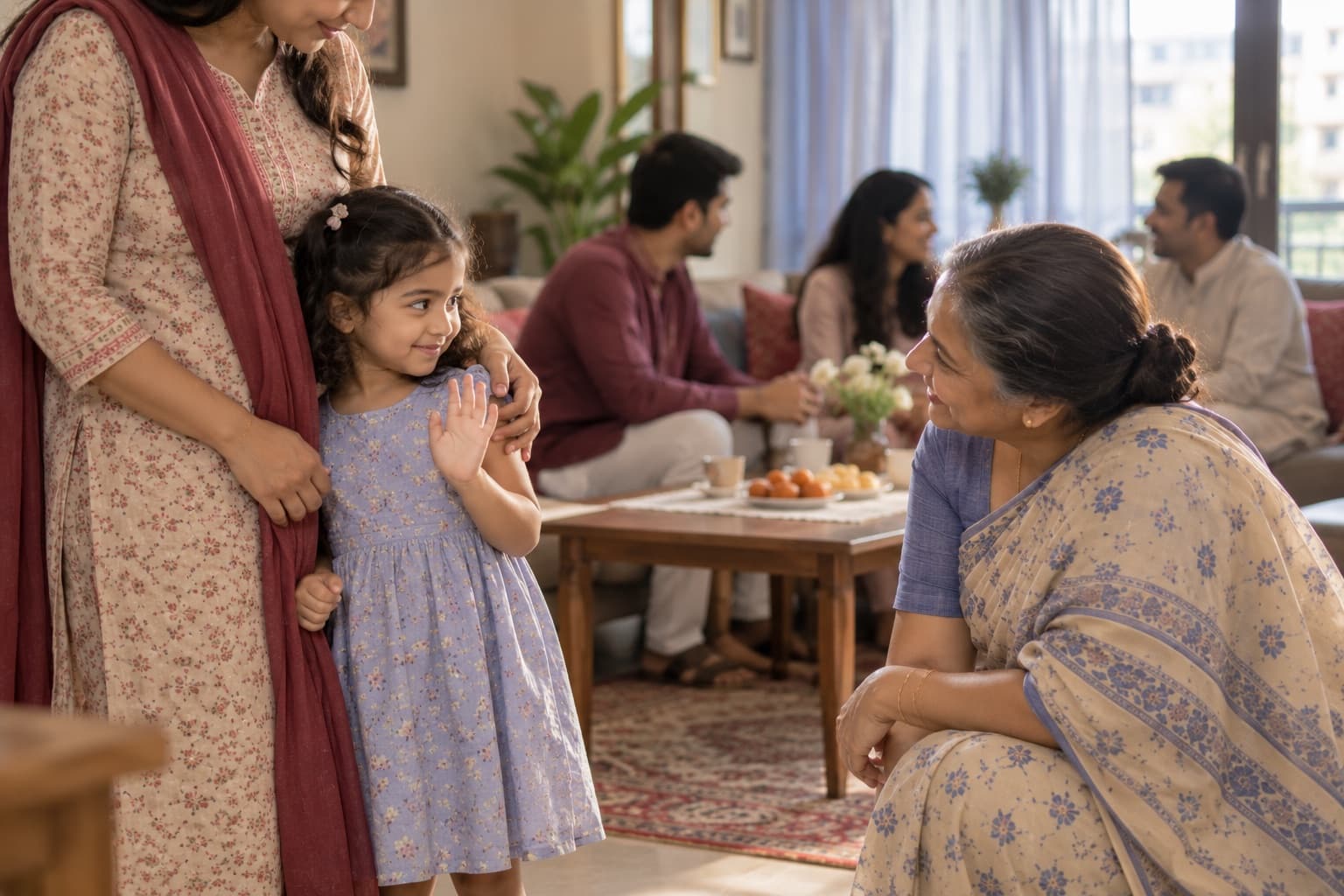
Many Bangladeshi parents grew up hearing their good points told to relatives but rarely to them, so they would not grow proud. The love was real; the child just didn’t hear it. Some families also hold back praise for fear of nazar, the evil eye. You can keep your family’s custom, such as adding a blessing, and still tell your child in a few true words what they did well.
The opposite also happens: a child hears their faults listed to guests (“She never sits down to study”). Children overhear more than we think, so let them overhear something good instead, perhaps on the phone to Nanu: “He helped me carry the shopping bags today.”
Comparison with cousins and classmates
“Look at your cousin, she came first” is meant to motivate, but children usually hear “you are not enough”, and it can sour cousins and siblings on each other. Compare your child only with their own past: “Last month you knew your tables up to five; now you know them up to eight.” For brothers and sisters, see sibling rivalry.
Grandparents, guests and house help
Grandparents often praise freely, which children love. If relatives praise only looks or marks, add your own line about effort or kindness. Praise for a fair complexion can teach children that skin colour decides their worth, and it can hurt a darker-skinned brother, sister or cousin who is listening, so steer it gently: “The best thing about her is her kind heart.” If house help look after your child for long hours, share two or three of your phrases with them, so your child hears the same kind of praise from everyone.
Noticing the good: one good thing a day
At the end of a long day, it is usually the hard moments we remember: the argument about homework, the door that slammed. The kind moment at breakfast fades by evening.
Worries shout and good moments whisper.
Noticing the good on purpose restores the balance. Some call it “catching them being good”: looking out for the moments your child gets something right, and saying so. Small wins count:
- Helped a younger sibling without being asked.
- Went to sleep on time on a school night.
- Told you about their day without being asked twice.
- Played calmly on their own while you cooked.
None of these make headlines, but over a few weeks they add up to a truer picture of your child, one that includes their strengths, not only the struggles.
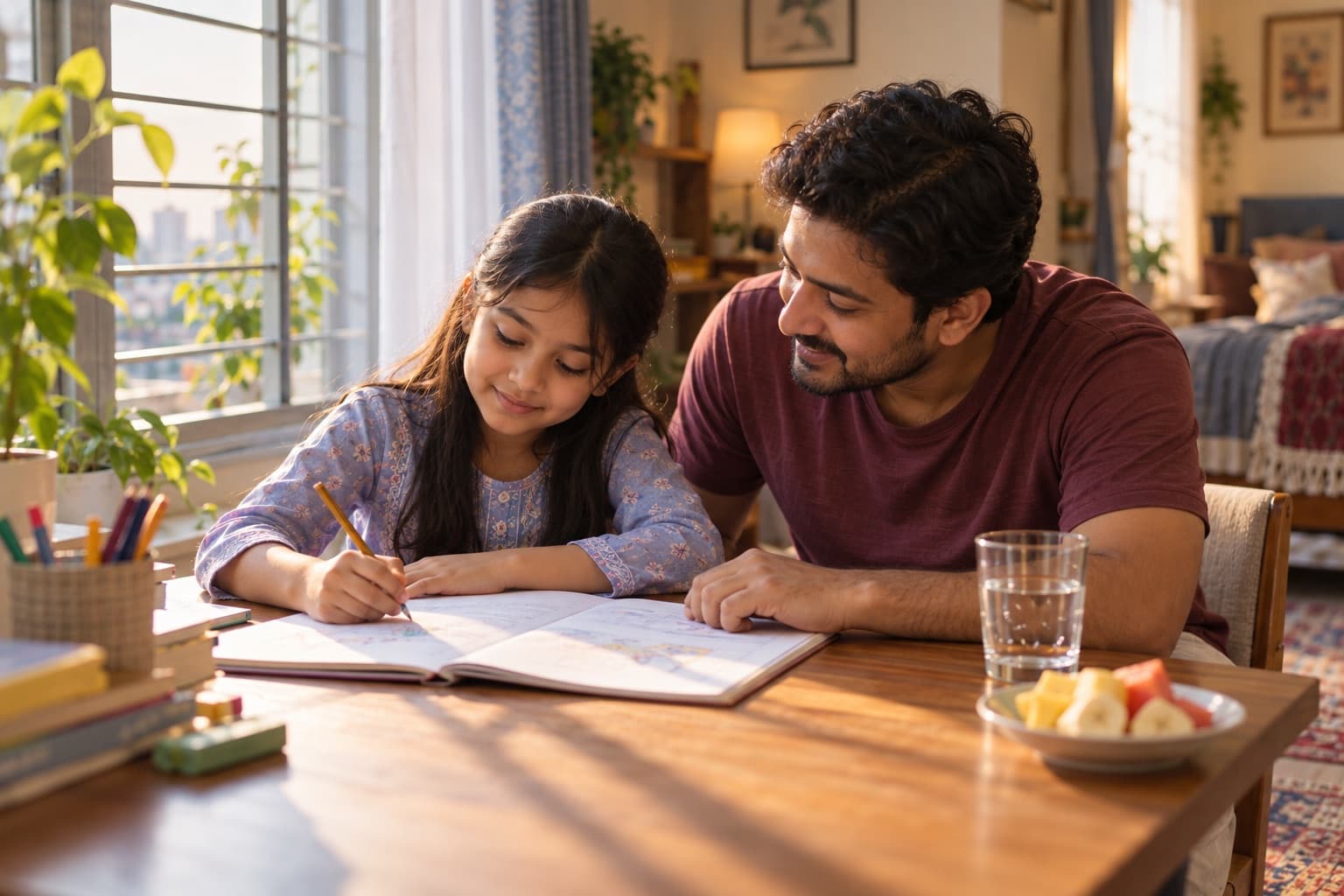
What a good moment can look like
Scroll for more photos
Wins first. No shaming streaks.
A 7-day plan for more specific praise
Change one habit at a time, and write one line each evening: what you praised, and how your child responded.
- Day 1: change nothing. Notice how often you say “Good job” and how often you correct your child.
- Day 2: swap one “Good job” for a description of what your child did.
- Day 3: praise one effort, ideally on something your child finds hard.
- Day 4: catch one quiet good moment you would usually miss, such as playing calmly or waiting patiently.
- Day 5: let your child overhear you tell someone else something good they did.
- Day 6: ask instead of judging: “What do you like best about it?”
- Day 7: read back your notes. Which kind of praise did your child respond to? Keep it, and add one more change next week.
When to get help: signs that need more than praise
Praise is part of everyday parenting, not a treatment. Talk to your child’s doctor or a counsellor if you notice any of these.
Get help if
- Your child calls themselves stupid, ugly or useless most days for two weeks or more, even when you notice their efforts.
- Your child cannot bear any praise and often tears up or spoils their own work, or seems flat and unhappy most days for two weeks or more.
- A confident child suddenly becomes withdrawn or fearful, or is afraid of a place or a person: believe your child, act the same day, and call 999 if they are in danger.
- Any talk of not wanting to live, or of hurting themselves: stay calm and stay close. Call 999 if they are in danger now; otherwise speak to a doctor the same day.
- You find it very hard to feel warmth towards your child, or you have felt low most days yourself for two weeks or more. Parents deserve support too: talk to a doctor.
Good moments are easy to lose in a busy week. ParentMind puts wins first: it helps you note what went well each day, alongside the hard moments, and see the pattern over time. See how ParentMind works.
Questions parents ask
Is it bad to say “good job” to your child?
No, a warm “good job” now and then does no harm; it just tells your child very little. One specific detail makes it far more useful: “Good job, you zipped your bag all by yourself.” If you say it automatically many times a day, swap a few for what your child actually did.
Can you praise a child too much?
Yes, if the praise is constant, automatic or exaggerated: children then stop believing it, or work only for praise. Sincere praise for real effort, kindness and progress is hard to overdo. A useful test: could you say exactly what your child did? If so, it is probably helpful praise.
What is descriptive praise?
Descriptive praise names exactly what your child did, so they know what to repeat. For example: “You put all the pencils back in the box,” “You waited until I finished talking,” or “You checked your answers before handing it in.” It suits toddlers and teenagers alike, because it is specific and believable.
Is it okay to praise a child in front of others?
Usually yes, if your child enjoys it: many young children glow when a grandparent hears what they did. Shy children and many preteens prefer praise in private, so watch their face and adjust. Avoid praise that compares them with a listening sibling or cousin. For quieter children, see how to build confidence in shy children.
What is positive reinforcement for kids?
Positive reinforcement means following a behaviour you want with something pleasant, so it is more likely to happen again. For children, the simplest forms are attention, specific praise, a smile or a hug, and sometimes a small agreed reward. It tends to work best alongside clear, calm limits, not instead of them.
How do I praise my teenager without it sounding fake?
Keep it short, specific and low-key, and mean it. Teenagers often dismiss big statements but take in small true ones: “You handled that call with your teacher well.” Praise their choices and values, not just marks. A message or a quiet word at bedtime often lands better than praise in front of the family.
This article is general information, not medical advice. For health worries, talk to a doctor; if someone is in danger, contact your local emergency number.