How to build confidence in shy children: what helps and what doesn't
Quick answer
To build confidence in shy children, give them gentle practice instead of pressure. Prepare your child for new places, allow warm-up time, stay close and let them greet in their own way, such as a wave. Drop the “shy” label and praise small brave steps. Get help if shyness keeps your child from school or everyday life for weeks.
 By the ParentMind team10 min read
Listen to this article
13 min listen · Read by your device's voice
At a glance
- Who it is for
- Parents of children aged 2–12 who hide from guests, go quiet with relatives or won't speak up at school
- Key takeaways
- Shyness is mostly temperament: many shy children just need more time to warm up, and join in once they feel safe.
- Forcing a greeting, teasing or calling a child “shy” in front of others usually makes them hold back more.
- Preparation, warm-up time and small, repeated practice build confidence better than one big push.
- Get help if shyness keeps your child from school, speaking at school or everyday life for more than a few weeks.
If your child hides behind your legs when guests arrive, goes silent when an aunt asks their name, or won't answer the teacher even though they chatter all evening at home, you have probably wondered how to build confidence in shy children without pushing.
Shyness is common and mostly temperament: some children need more time to feel safe with new people and attention. It is not rudeness or a flaw, and many shy children grow into confident people at their own pace, especially when adults prepare them instead of pushing.
Below: shyness versus introversion and anxiety, steps that help, words for relatives, a 7-day plan and warning signs.
Why are some children shy?
Shyness in kids is a rush of nerves around new people or attention. It usually comes from a mix of temperament, age and experience.
- Temperament: some children are cautious from birth and quietly study a new situation before stepping in. That is a style, not a problem.
- Age: toddlers are often wary of unfamiliar faces, and a 2- or 3-year-old may hide even from relatives they see only at Eid.
- Attention: being stared at, asked question after question or asked to perform is the hardest part for most shy children.
- Experience: being laughed at, compared with a cousin or called “shy” in front of others can make a child more guarded, and so can few chances to mix.
What is warm-up time?
Most shy children are slow to warm up rather than shy all the time: quiet and close to you at the start of a visit, playing happily a while later. Watching first is how they get ready. If the hardest moment is you leaving, read about separation anxiety.
Shy, introverted or anxious: how to tell the difference
A shy child and an introverted child can look alike at a party, but they differ, and anxiety is different again. A child can be shy and introverted at once; neither needs fixing.
| What you notice | Shy | Introverted | More than shy |
|---|---|---|---|
| With new people | Holds back and watches, then warms up | Joins in, but prefers small groups and quiet time after | Stays frightened, even with time and support |
| Everyday life | Goes on as normal | Goes on as normal | School, play, eating or sleep affected, often for weeks |
| What helps | Preparation, warm-up time, gentle practice | Respect for quiet time and a few close friends | Steady support at home, and often professional help |
If what you see sounds like the last column, read about anxiety in children.
How to build confidence in shy children, step by step
- Prepare: before a visit or a new class, say who will be there, what will happen and how long you will stay. Arrive early; a room that fills slowly is easier than a crowd.
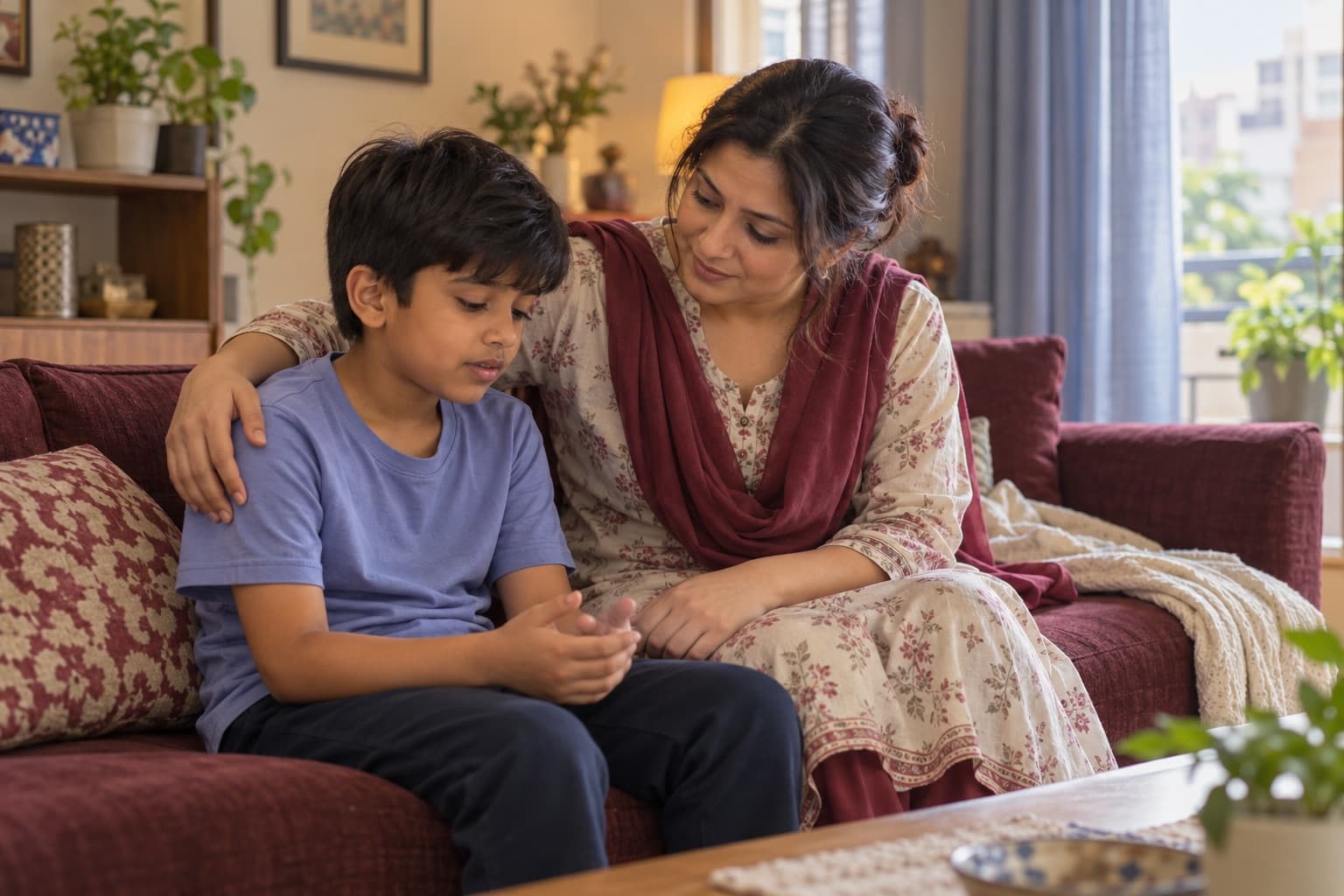
- Be the safe base. Let your child watch from your side or lap, then move a little away once they start to play.
- Ask relatives to come close slowly, starting with a toy or a book instead of a stream of questions.
- Offer a greeting your child can manage: a wave, a nod, a high-five, or standing beside you while you greet. Count it as a real greeting.
- Speak for your child as a bridge, never with a label: “She likes to watch first. She’ll show you her doll in a bit.”
- Praise the brave step later, specifically and in private. Noticing effort works better than praising “not being shy”; see noticing the good.
What you might say
- There will be lots of people at the wedding. You can stay with me until you’re ready.
- You can wave instead of talking. That counts as hello.
- You greeted your teacher today, even though it felt hard. I noticed.
- Feeling shy is okay. You just need a little time with new people.
Should you push a shy child? Nudge gently, never force
Pushing a shy child rarely builds confidence; small successes usually do. A gentle nudge says “you can do this with me”; force says “what is wrong with you?”
- Nudge: “Let’s go and say salaam to Dadi together.” Force: “Say salaam right now. Why are you acting like this?”
- Nudge: staying for the start of a birthday party, then leaving them with an adult they know. Force: teasing, scolding or comparing them with a cousin who “talks so nicely”.
How to help a shy child make friends and speak up in class
Shy children usually make friends one at a time, and speak up in class once they feel safe with the teacher.
- Invite one child over for a short play at home with an activity ready, such as blocks or drawing, so there is less pressure to talk.
- Ask the class teacher who your child seems to like, and whether the two can sit together or work as a pair.
- If your child is too shy to speak in class, ask the teacher to start with yes-or-no questions, or to let them point, write or show their work.
- Role-play at home: toys meet, ask “Can I play?” or answer the teacher. Then let your child play the teacher.
One close friend is a good outcome for a shy child. If your child is not only quiet at school but scared to go, see school anxiety.
Relatives, guests and weddings: shyness in a Bangladeshi home
In many Bangladeshi families, children are expected to greet every elder, answer every question and perform when asked, often in a crowded room. A shy child feels it all at once. These habits help without giving up on manners.
- “Salaam dao”: greeting elders matters to many families. A shy child can learn it in steps: standing beside you while you greet, then greeting with you, then alone. Practise with family at home first.
- The label: when a relative says “She is so shy!” or “Why doesn’t he talk?” in front of your child, answer warmly and briefly so it does not stick.
- Weddings, holud and Eid visits: arrive early, find a quieter room away from the music, keep one familiar cousin nearby and plan a break.
- Reciting or singing for guests or at a school function: ask in private first and accept a no. Rehearse for grandparents, and ask the teacher if your child can start in a group.
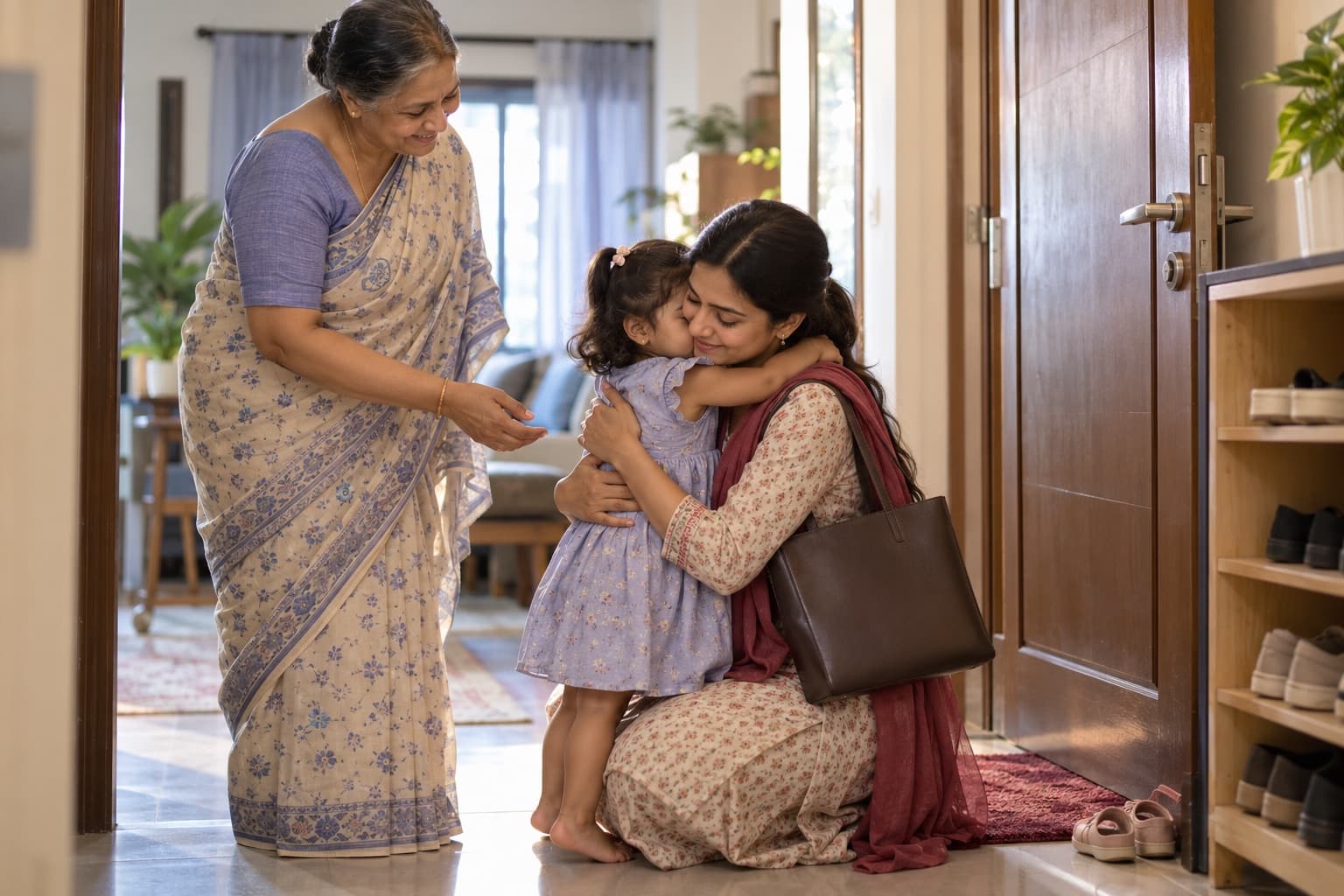
- Grandparents and house help who look after your child can follow the same plan: no labels, no forcing, plenty of warm-up time.
If a relative pushes
- He takes a little time. Give him a few minutes and he’ll come and play.
- She’s learning to greet. Today she’ll do it standing next to me.
- To your child, quietly: “Let’s sit here together for a bit. You don’t have to talk yet.”
A 7-day plan for a shy child
Write one line a day: where shyness showed up, how long warm-up took and what helped.
- Day 1: change nothing. Just notice when shyness showed up and how long warm-up took.
- Day 2: stop calling your child “shy”, and agree on a family phrase instead: “She likes to watch first.”
- Day 3: practise greetings in play. Toys greet each other; your child chooses a wave, a salaam or a high-five.
- Day 4: one small real step with you beside them, such as a wave to the guard.
- Day 5: invite one cousin or neighbour for a short play with an activity ready.
- Day 6: before an outing, prepare your child, arrive early, allow warm-up time and praise one brave step afterwards.
- Day 7: compare with Day 1. Was warm-up quicker? Which steps felt easy or hard? Choose next week’s step.
When is shyness more than shyness?
Most shyness needs patience, not treatment. These signs are worth raising with your child’s doctor, the school or a child psychologist.
Get help if
- Shyness keeps your child from everyday things, such as school, play, eating in front of others or family visits, for more than a few weeks.
- Your child talks freely at home but says nothing at all at school or to certain people, and this lasts beyond the first month or so at a new school.
- Panic-like fear around new people: shaking, freezing, a racing heart or crying that will not settle.
- No friends at all, with your child lonely or unhappy about it for a few months.
- Very little speech for their age, or little eye contact or shared play. These differ from shyness, so mention them to a doctor; see speech delay in toddlers.
- A sudden change: an outgoing child turns withdrawn, or suddenly fears one person or place. Ask gently what happened and believe what your child tells you. If anyone may be hurting your child, act the same day, and call 999 if they are in danger now.
Confidence in a shy child grows in small steps that are easy to miss. ParentMind helps you note what happens each day, see patterns and get guidance: how ParentMind works.
Questions parents ask
Is it normal for a 3-year-old to be shy with relatives?
Yes. Many toddlers are wary of relatives they see only now and then, especially in a busy room. Let your child watch from your lap, ask relatives to approach slowly with a toy, and accept a wave as a greeting. Most young children relax once they have had time to watch.
Should I make my shy child say hello or salaam?
Teach it, but don’t force it in the moment. Forcing a greeting in front of everyone usually makes a shy child freeze and dread the next visit. Practise at home, let your child greet beside you or with a wave, and build up to a spoken salaam over a few weeks.
How can I tell if my child is shy or an introvert?
A shy child feels nervous with new people but often joins in after warming up. An introverted child is comfortable with people but prefers small groups and needs quiet time to recharge. Many children are a bit of both. Neither needs fixing; worry only if fear stops your child joining everyday life.
Will my child grow out of being shy?
Often it softens. Many shy children grow more at ease with age and practice, though a quiet nature may stay, and that is fine. Gentle practice, warm-up time and no labels help most. If shyness is growing rather than easing, or keeps your child from school or friends, get help.
How can I help my shy child make friends at school?
Start with one friend, not a group. Ask the teacher who your child gets on with, invite that child home for a short play with an activity ready, and role-play joining a game. If your child has no friends at all and is unhappy for months, talk to the school.
Why does my child talk at home but not at school?
Usually because school still feels new, and your child talks only where they feel completely safe. It often eases as they get to know the teacher and one friend. Ask the teacher to accept answers without words at first. If your child still says nothing at all at school after the first month or so, ask your doctor.
This article is general information, not medical advice. For health worries, talk to a doctor; if someone is in danger, contact your local emergency number.