Separation anxiety: why your child cries when you leave, and what helps
Quick answer
Separation anxiety, distress when a parent leaves, is a normal stage for babies and toddlers. It usually begins in the first year, is often strongest at about 10–18 months and eases by about 3, returning briefly at changes like play school. A short, loving goodbye routine often helps. Get help if it stops daily life or stays strong after 3 despite steady goodbyes.
 By the ParentMind team10 min read
Listen to this article
13 min listen · Read by your device's voice
At a glance
- Who it is for
- Parents of children aged 1–6 who cry, cling or panic when a parent leaves, at home, play school or daycare
- Key takeaways
- Crying when you leave is a sign of a close bond and a normal stage, not a sign that you are doing something wrong.
- A short goodbye that is the same every day usually works better than a long goodbye or sneaking out.
- Most children settle within minutes of the parent leaving, and within a few weeks of starting play school or a new carer.
- Get help if distress stops daily life, is still strong after age 3 despite a month of steady goodbyes, or is strong and lasting in a child over 6.
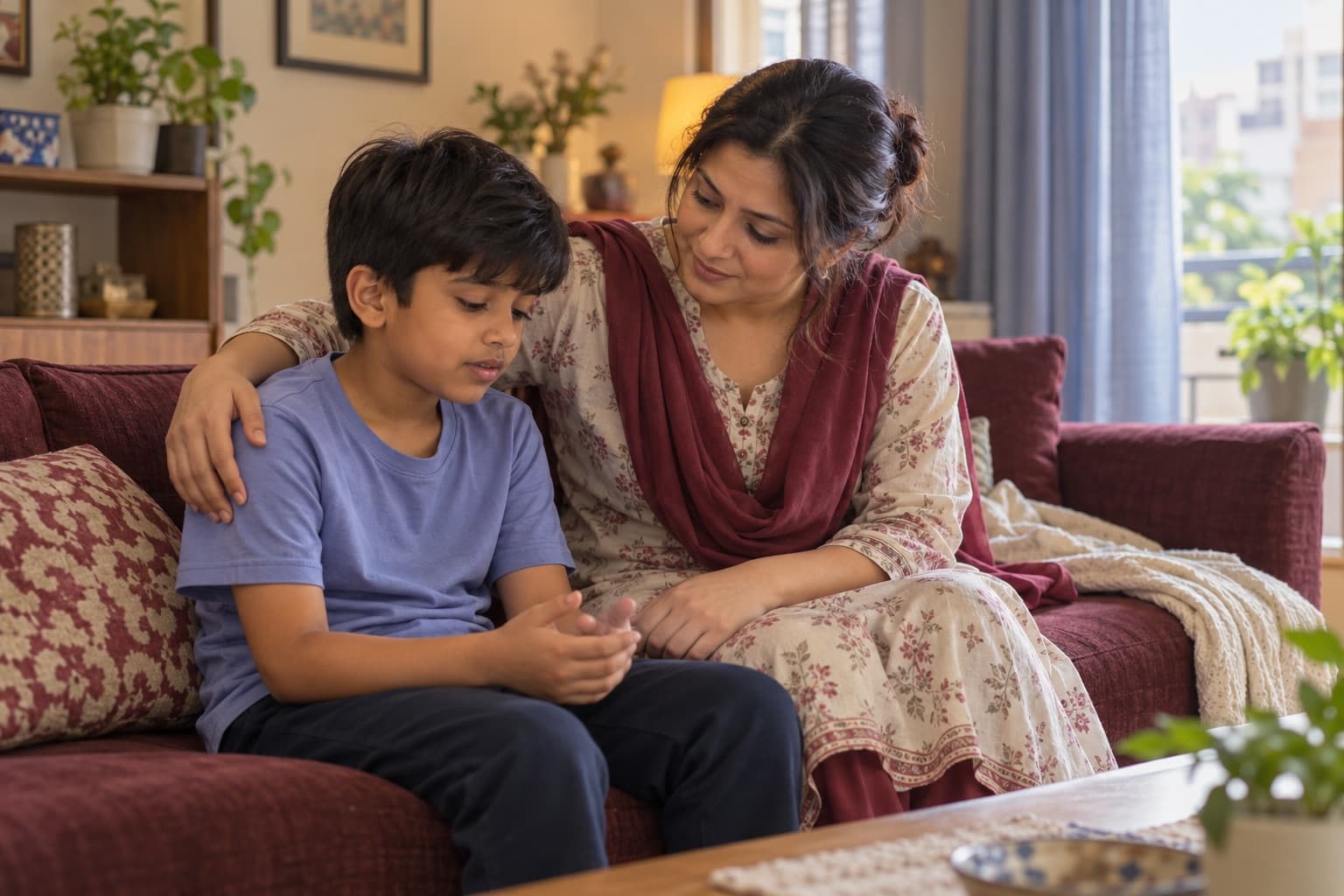
Separation anxiety is what you see when your toddler screams the moment you pick up your bag, clings to your clothes at the play school gate, or follows you from room to room. For a working parent, those tears at the door can stay with you all day.
It is one of the most normal stages of early childhood. It means your child is attached to you and has not yet learned that you always come back, and it usually fades with time and a steady goodbye routine.
Below: what is normal by age, why it happens, a goodbye routine, play school and daycare, working parents and carers, a 7-day plan and when to get help.
What is normal? Separation anxiety by age
Most children follow a rough pattern, but every child is different, so treat these ages as a guide, not a test.
| Age | What you might see |
|---|---|
| Under about 6 months | Usually content with any calm, familiar carer |
| About 6–10 months | May start to cry when you leave the room; wary of strangers |
| About 10–18 months | Often the strongest: clings, cries at every goodbye, may wake at night looking for you |
| About 18 months–3 years | Eases for most, but flares up with play school, a new baby, illness or a move |
| 4–6 years | Brief worry at a new school or after holidays; most settle within weeks |
| Over 6 | Strong, lasting fear of being apart is less typical: see the signs below |
Why does my toddler cry when I leave?
A toddler who cries when mom or dad leaves is not being naughty or spoilt. Usually several things add up:
- A strong bond: you are their safe person, so losing sight of you feels like losing safety.
- Not yet sure you will return: young children are still learning that people who leave come back.
- Change: a new play school, a new carer, a new baby, a house move or a parent starting work.
- Tiredness, hunger or illness, which make every goodbye harder.
- Your own worry: children read your face, so a tense, drawn-out goodbye tells them something is wrong.
How to handle drop-off crying: a short goodbye routine
A goodbye routine for kids often works because it is short and the same every time, so your child learns what comes next: you leave, and you come back.
- Practise short separations first: go to the next room, or out to the shop for a few minutes while another trusted adult stays with your child, and come back when you said.
- Before you go, say in simple words who will look after your child and when you will be back, linked to their day: “after your nap”, “by snack time this evening”.
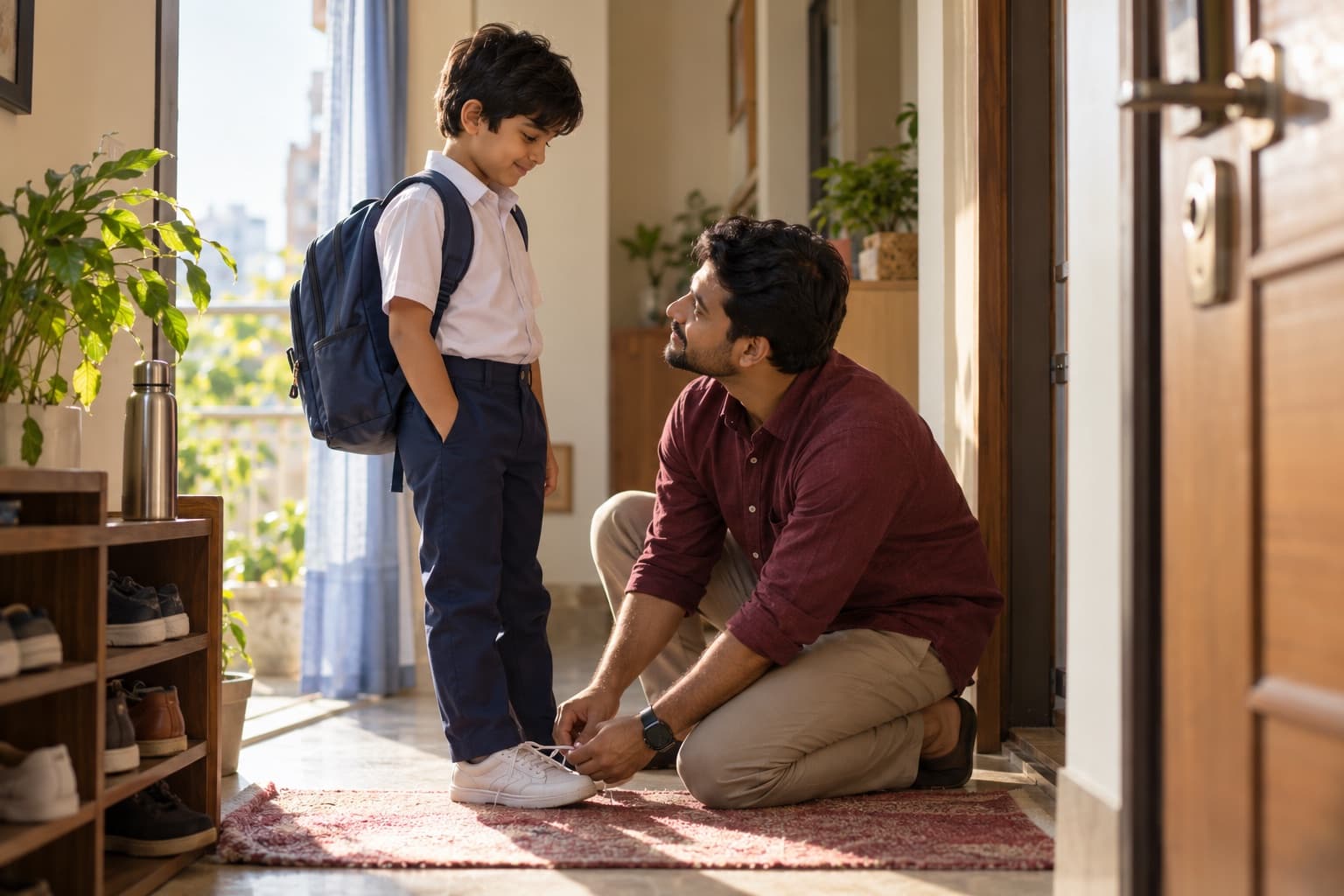
- Use the same short ritual every time: a hug, a kiss, a goodbye phrase and a wave from the window or the gate.
- Hand your child to a person, not an empty room: the grandmother, the teacher or the carer, ideally with a toy or a small job ready.
- Then leave, calmly, without coming back for “one more hug”. Lingering usually makes the crying longer.
- Come back when you said, and greet your child warmly. Keeping that promise is what builds trust.
What you might say
- I’m going to the office now. Nanu will look after you, and I’ll be back by snack time this evening.
- You’re sad I’m going. It’s okay to cry. I always come back.
- Hug, kiss, wave from the window. See you this evening!
- I came back, just like I said.
How to help a child settle at preschool, play school or daycare
Crying at drop-off in the first weeks of play school or daycare is common, and most children stop within minutes of the parent leaving. These steps tend to make settling in easier:
- Visit together before the first day, and meet the teacher while you are there.
- Start with shorter days if the school allows, and pick up on time, especially at first.
- Let the same person do drop-off for the first weeks, with the same goodbye ritual.
- Send a small comfort from home: a family photo in the bag, or a handkerchief that smells of you.
- Waiting outside the gate all morning can keep a child watching for you. If you stay nearby, stay out of sight, and agree with the teacher when they will call you.
- Expect tears or tantrums after pickup. Holding it together all morning is tiring, and home is where it comes out.
If your child still won’t go to daycare or school without hard crying after about a month, talk to the teacher. For children of school age, see school anxiety.
Clingy toddler at home: when your child follows you everywhere
A clingy toddler may follow you to the kitchen and the bathroom, and cry when you take a phone call. This often peaks at the same ages as separation worries, and a little daily practice helps.
- Play hide-and-seek and peekaboo: these games practise “gone, then back” in a fun way.
- Say where you are going: “I’m going to the kitchen. I’ll be back in two minutes.” Then come back.
- Build short stretches of play alone near you, starting with a few minutes while you stay in sight.
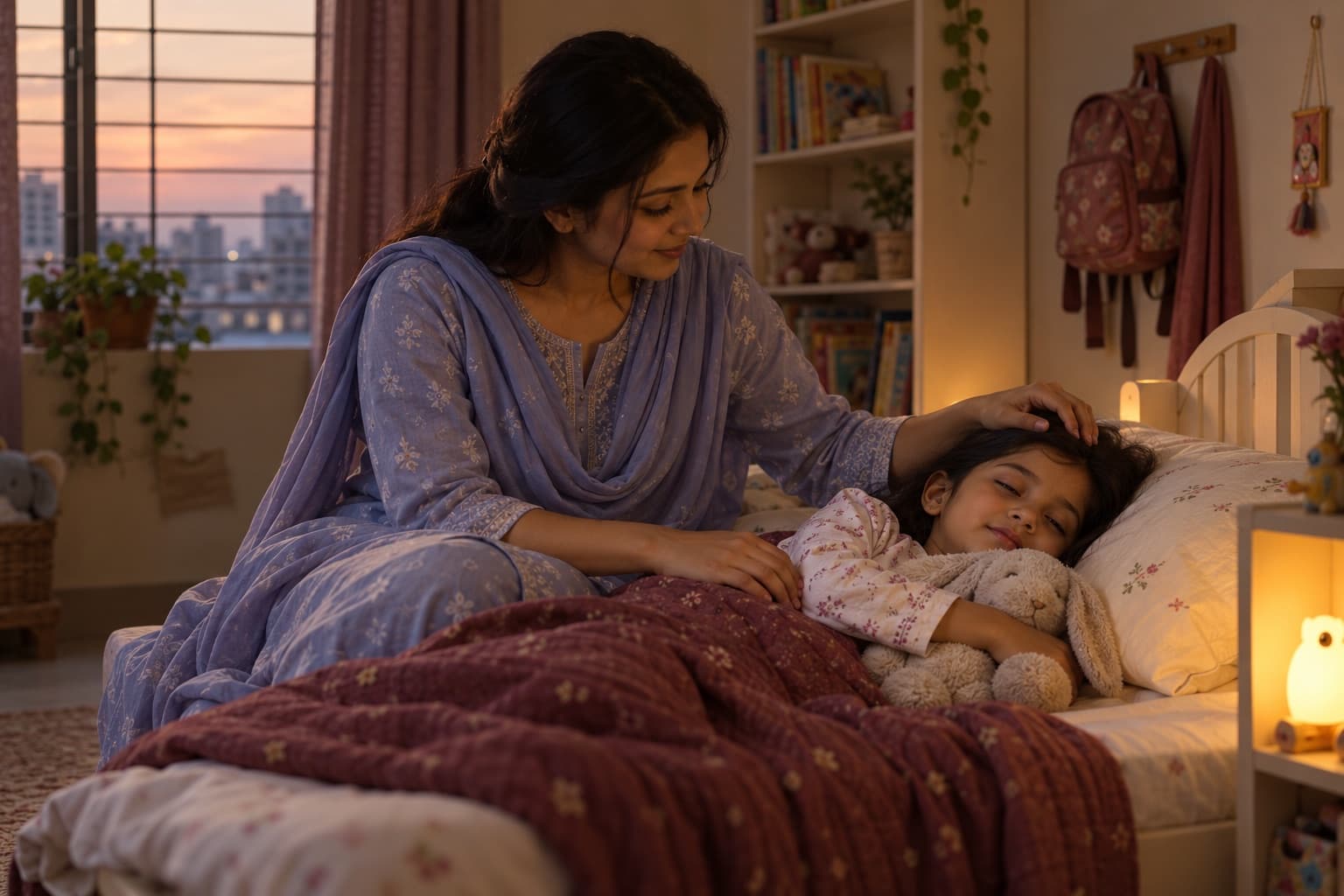
- Keep bedtime calm and the same each night; for night-time clinging, see a calm bedtime routine.
Working parents, grandparents and house help: goodbyes in a Bangladeshi home
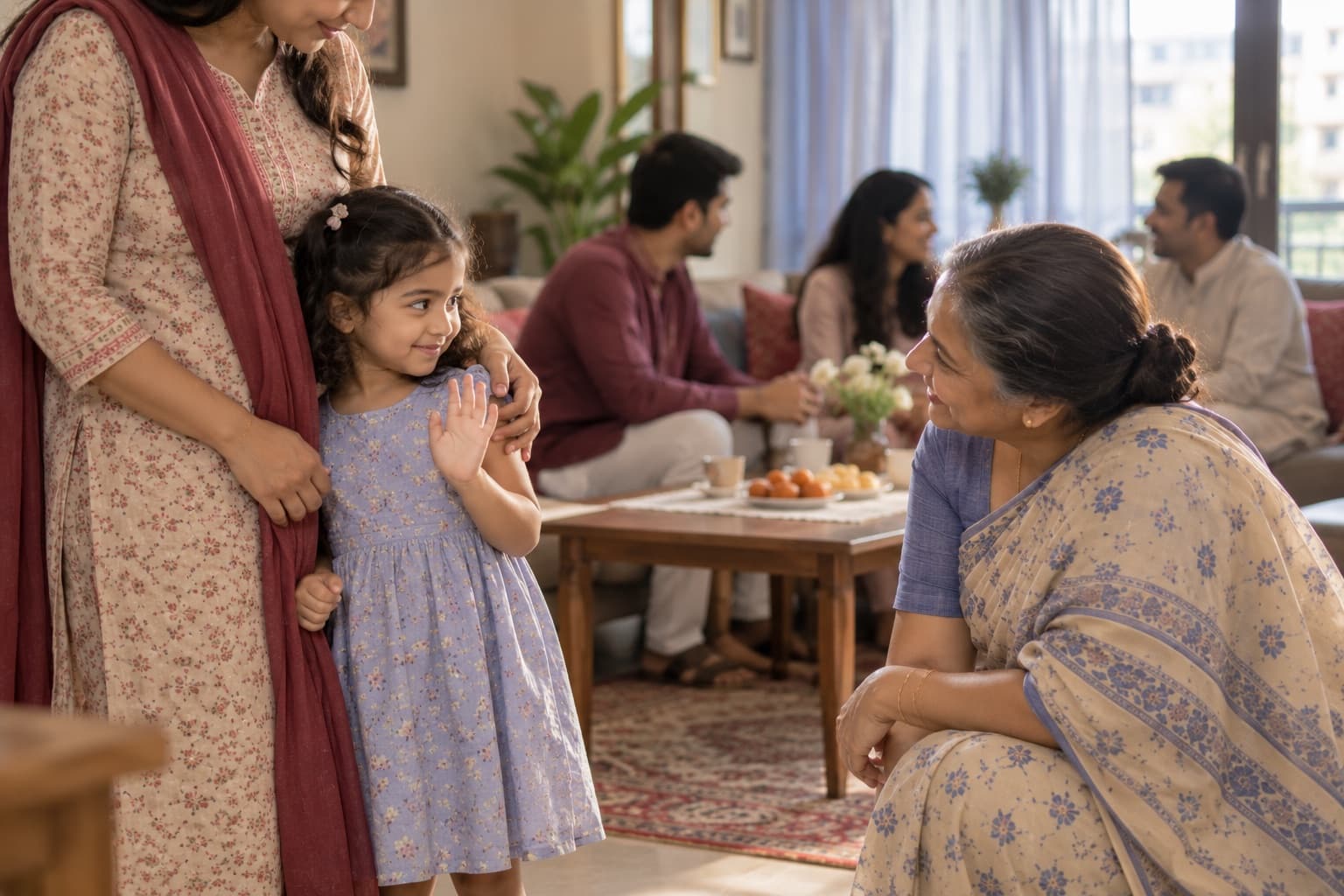
In many Bangladeshi homes, a child spends the working day with a grandparent or house help, and goodbyes happen at the door every morning. A few habits make them easier for everyone.
- Working mothers and guilt: tears when you leave for the office are not a verdict on your choice. Many children cared for by loving relatives or carers do well; a steady goodbye and a warm return matter most.
- One plan for all carers: agree with grandparents and house help on the same goodbye and the same comforting words.
- No sneaking out while a grandparent distracts your child, and no threats such as “If you cry, Ammu won’t come back.” Both teach a child that goodbyes are dangerous.
- A parent working abroad or in another city: keep video calls at a regular time, and keep their photo where your child can see it.
- When you get home, give your child the first few minutes, before the phone and the chores. A short reunion with your full attention often makes the next goodbye easier.
A 7-day plan for easier goodbyes
Write a line each day: when the goodbye happened, how long the crying lasted after you left (ask the carer), and what helped.
- Day 1: change nothing. Note each goodbye and how long the tears lasted.
- Day 2: choose your goodbye ritual (hug, kiss, phrase, wave) and tell everyone who cares for your child.
- Day 3: practise two short separations at home, leaving the room for a few minutes and coming back as promised.
- Day 4: use the ritual at every real goodbye, and leave without lingering.
- Day 5: give your child the first minutes when you get home, before the phone.
- Day 6: add a comfort item or a photo, and keep the same person doing drop-off.
- Day 7: compare with Day 1. How long did the tears last after you left? Keep what helped.
When is it more than a normal phase?
Separation anxiety needs a closer look when it is stronger, longer or later than the usual pattern. Talk to your child’s doctor or a child psychologist if you notice these signs.
Get help if
- After about age 3, distress at goodbyes is still strong and has not eased after about a month of a steady routine.
- It stops normal life: your child cannot stay with any other trusted adult, or misses play school or school most days.
- A child over about 6 has strong, lasting fears that something bad will happen to you, or refuses school; see anxiety in children.
- Panic at goodbyes, day after day: shaking, vomiting, or crying for most of the time you are away.
- Stomach aches or headaches before most separations: have a doctor check your child, and mention the worry too.
- Sudden fear of one carer or place, after being fine before. Ask gently, believe what your child tells you and look into it the same day, keeping your child with an adult you trust; if your child may be in danger, call 999.
Goodbyes get easier in small steps that are easy to miss. ParentMind helps you note what happens each day, see patterns and get guidance: how ParentMind works.
Questions parents ask
At what age does separation anxiety start and stop?
For most children it starts in the second half of the first year, is often strongest between about 10 and 18 months, and eases by about age 3. It can flare up again at changes such as play school, a new baby or a move, usually for a few weeks.
Is it better to sneak out or say goodbye?
Say goodbye. Sneaking out avoids tears in the moment, but many children then cling harder because they cannot predict when you will disappear. A short ritual, such as a hug, a kiss and a wave, then leaving promptly, is harder for a minute and usually easier over the following weeks.
How long does it take a toddler to settle at play school?
Usually a few weeks. Many toddlers cry at drop-off for the first week or two, then less, and most stop within minutes of the parent leaving. A steady routine, the same person at drop-off and an on-time pickup help. If hard crying continues every day after about a month, talk to the teacher.
Is it bad for my toddler if I go back to work?
Not usually. Many children do well with a loving, steady carer while their parents work. What matters most is a warm, consistent carer, short and predictable goodbyes, and your full attention when you get home. Tears at the door are a sign of attachment, not of harm.
Why is my toddler suddenly so clingy?
Sudden clinginess often follows a change or a stress: a new sibling, illness, teething, a move, a new carer, a parent’s new job or a long holiday. It is your child’s way of checking you are still there. Extra closeness, a steady routine and calm goodbyes usually help it pass within a few weeks.
Is it normal for a 6 or 7 year old to cry when a parent leaves?
Some worry is normal at 6 or 7 after a change, such as a new school, a move or an illness in the family, and it usually settles within a few weeks. Strong fear at every separation that lasts longer, or keeps your child from school, is less typical, so talk to your doctor; see anxiety in children.
This article is general information, not medical advice. For health worries, talk to a doctor; if someone is in danger, contact your local emergency number.