Toddler meal ideas: easy family food for ages 1–3, plus a sample day
Quick answer
Good toddler meal ideas for ages 1–3 start with family food made softer: khichuri, rice mashed with dal and vegetables, deboned fish, egg, chicken and soft fruit. Offer three meals and two or three snacks daily, with little salt or sugar, no honey before age 1, and no whole nuts or whole grapes. Always seat and watch your toddler at meals.
 By the ParentMind team10 min read
Listen to this article
14 min listen · Read by your device's voice
At a glance
- Who it is for
- Parents of toddlers aged 1–3 who want simple, everyday meal ideas
- Key takeaways
- From around the first birthday, most toddlers can eat family food made softer, in small pieces, with little salt and no chilli.
- Three meals and two or three snacks at roughly the same times suit most toddlers, with water and milk at meals.
- No honey before age 1; cut grapes and other round foods small, keep whole nuts away, and check fish for bones twice.
- Always seat and watch your toddler while eating; if they are choking and can't breathe, cough or cry, call 999.
Toddler meal ideas become urgent at the point where baby mush no longer works and your one- or two-year-old wants what is on your plate. That is a good sign. From around the first birthday, most toddlers can eat family food, made a little softer and milder.
You don't need a separate menu. Below: turning the family pot into toddler meals, easy dishes, finger foods, a sample day, a week of ideas, safety, and when to get help.
What to feed a toddler: family food, made softer and milder
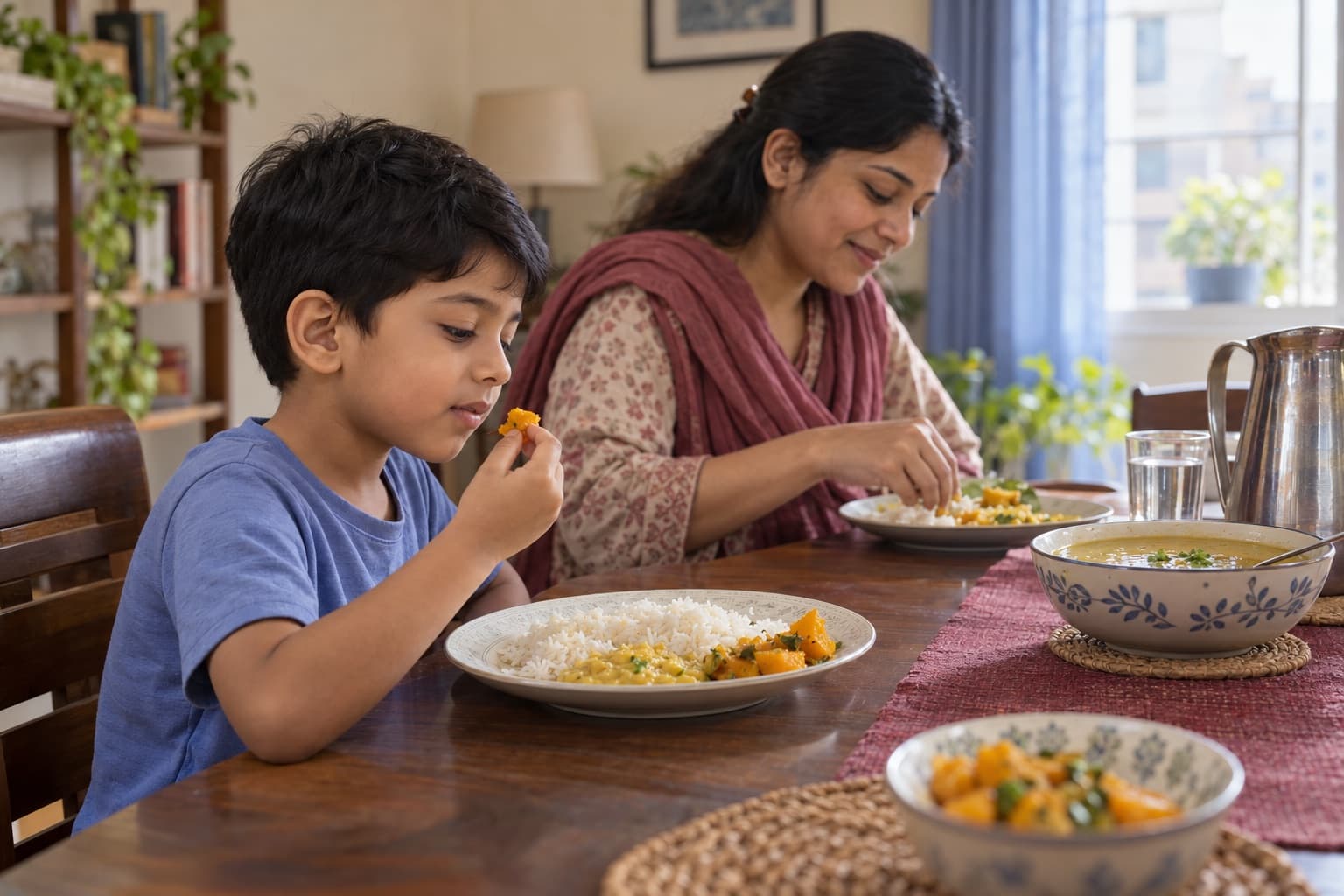
What to feed a toddler is mostly what the family already eats. Over a day, toddlers need a mix of grains, protein (dal, fish, egg, chicken or meat), vegetables, fruit, and milk or yoghurt. Turning tonight’s dinner into a toddler meal takes a few steps:
- Take out your toddler's portion before the chilli goes in, and add only a little salt to it.
- Cook it a little longer, or add a splash of water, so it is soft.
- Pick out every bone, then mash or cut the food small; younger toddlers need it softer.
- Put a little of each food on the plate, including one your toddler already likes.
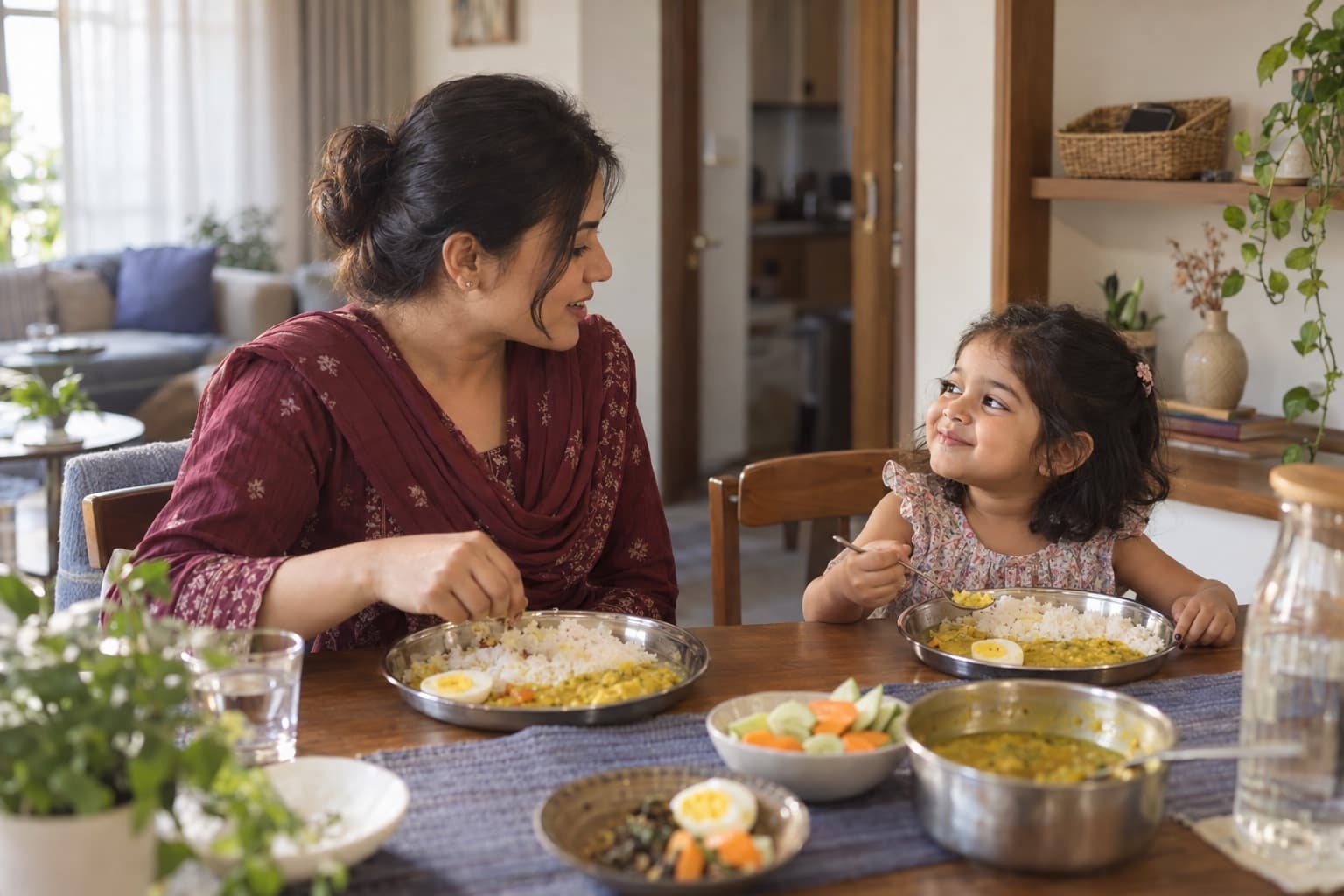
- Seat your toddler at the table, with the family when you can.
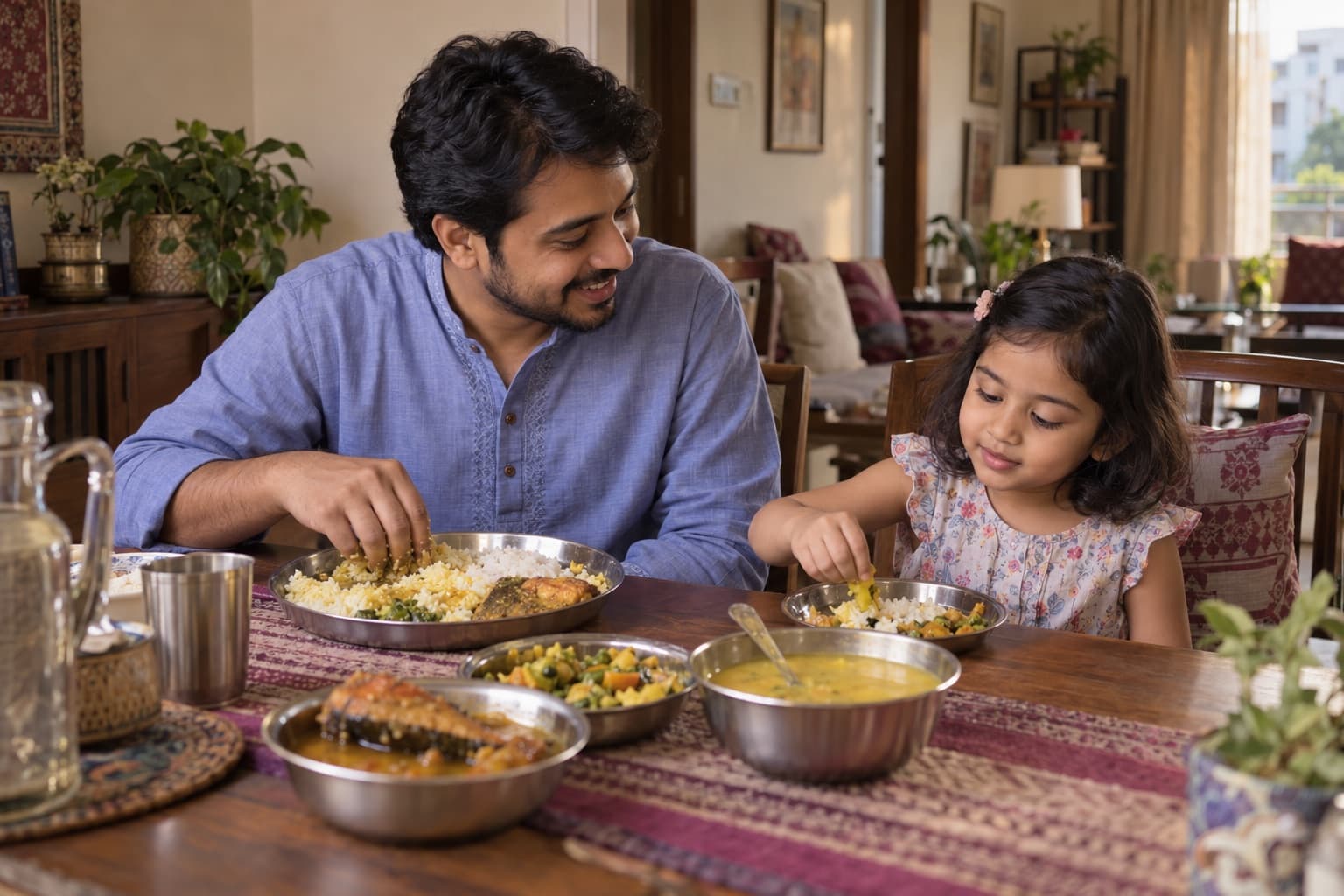
- Let them feed themselves with fingers or a spoon, and help only when they want it.
- Stop when they show they are done: turning away, pushing the plate, playing with the food.
What you might say at mealtimes
- We sit down to eat. Then we play.
- Hot! Shall we blow on it together?
- Small bites. Chew, chew, then swallow.
- Still hungry? You can have more rice.
- Tummy full? Okay, all done.
| Age | Texture | For example |
|---|---|---|
| 12–18 months | Mashed, or soft pieces that squash easily | Soft khichuri, mashed dal-bhat, egg, banana |
| 18 months–2 years | Small, soft pieces of family food | Rice with fish and vegetables, roti pieces, chopped chicken |
| 2–3 years | Most family food, cut small, without chilli | Rice and curry, roti and bhaji, fruit slices |
Easy toddler meal ideas from a Bangladeshi kitchen
These dishes use everyday Bangladeshi food, made from what the family eats, without chilli and with little salt.
Breakfast
- Suji cooked soft in milk, with mashed banana and no added sugar
- Soft roti pieces with scrambled egg
- Chira soaked soft and mashed with banana and plain yoghurt
- Oats cooked in milk with grated apple
- Bread dipped in egg and cooked soft, cut into strips
Toddler lunch ideas
- Soft vegetable khichuri with egg or chicken
- Rice mashed with dal and soft pumpkin or lau
- Rice with soft, deboned fish such as tilapia or pangas, and potato
- Shredded chicken curry without chilli, with rice and carrot
- Soft masoor dal with roti pieces dipped in it
Toddler dinner ideas
- A small portion of the family dinner: rice, mashed vegetables and fish
- Homemade vegetable noodles with egg, cut short
- Egg curry with soft potato and rice, the egg cut small
- Chicken soup with soft vegetables and a little rice
- Potato and pumpkin bhorta without chilli, with dal and rice
Rice isn’t the only base. Roti, suji, chira, oats, potato, noodles and bread all count, which helps on days your toddler pushes rice away.
Finger foods for toddlers: soft pieces they can hold
Finger foods let toddlers feed themselves, which many love, and they help them practise chewing. Good ones are soft and easy to hold:
- Steamed or boiled carrot, pumpkin or potato sticks
- Ripe banana, papaya or mango pieces
- Omelette strips, or boiled egg cut into quarters
- Small pieces of soft roti
- Little balls of rice mashed with dal or fish
- Shredded chicken, or flakes of soft fish with the bones removed
- Grated or thinly sliced apple instead of raw chunks
Meal plan for a 2 year old: a sample day (ages 1–3)
Most toddlers do well with three meals and two or three snacks at roughly the same times each day, about two to three hours apart. Here is one sample day; the times are only a guide.
| When | Meal | For example |
|---|---|---|
| Morning | Breakfast | Soft suji with mashed banana; water or milk |
| Mid-morning | Snack | Papaya pieces and a little plain yoghurt |
| Midday | Lunch | Rice mashed with dal, soft pumpkin and deboned fish; water |
| Afternoon | Snack | Soft roti pieces with egg, or a banana |
| Early evening | Dinner | Rice, chicken without chilli and soft vegetables; water or milk |
Portions are small: a few spoonfuls of each food is often a whole toddler meal. You decide what and when; your toddler decides how much. If mealtimes have become a battle, see what to do with a picky eater. If you're unsure how much milk your toddler needs, a doctor can advise.
A week of toddler food ideas
Healthy toddler meals don't need something new every day. Breakfast and snacks can repeat (suji, chira, egg, roti, fruit, yoghurt), while lunch and dinner change through the week:
| Day | Lunch | Dinner |
|---|---|---|
| Saturday | Khichuri with egg and carrot | Rice, dal and soft fish |
| Sunday | Rice with chicken and pumpkin | Egg curry with potato and rice |
| Monday | Dal and rice with lau | Vegetable noodles with egg |
| Tuesday | Rice with soft fish and spinach | Chicken soup with rice |
| Wednesday | Khichuri with chicken and mashed peas | Roti pieces with dal and egg |
| Thursday | Rice with scrambled egg and vegetables | Potato and pumpkin bhorta with dal and rice |
| Friday | The family lunch, without chilli: rice, chicken, soft vegetables | Soft roti with mixed vegetable curry |
Toddler food safety: choking, honey, salt and sugar
A few safety rules matter more than any recipe:
- No honey before the first birthday, not even a taste or mixed into food: it can carry germs that make babies very ill.
- Cut round foods small: quarter grapes and cherry tomatoes lengthways, and peel and stone litchi and cut it up.
- Keep whole nuts and peanuts away from young children, usually until about age 5, and skip popcorn, chanachur and hard sweets.
- Check fish for bones twice, and take chicken and meat off the bone.
- Grate raw carrot and apple, or cook them soft; hard raw chunks are a choking risk.
- Keep salt and sugar low: no chips or instant-noodle flavour packets, no sweet drinks. Water is the everyday drink.
- Always seated, always watched: no eating while walking, playing, lying down or in a moving rickshaw or car.
Gagging is common while toddlers learn to chew: they cough, splutter or retch, and it usually clears by itself. Choking is different and often silent: the child can't breathe, cough or cry. Call 999 at once, and start choking first aid if you know it.
Toddler meals in a Bangladeshi home
- Late family dinners: if the family eats at 9 or 10 pm, feed your toddler earlier, then let them sit with everyone for fruit or a small taste.
- Tea and biscuits: tea is not a toddler drink, and biscuits are an occasional snack, not a meal. Offer water or milk instead.
- A taste of honey for a newborn: many families do this out of love, as a blessing. Because honey can make babies very ill before the first birthday, give none at all, not even a taste; the blessing itself, a dua or a kind word, can stay without the honey.
- Grandparents feeding by hand: an act of love. Ask for some meals where your toddler feeds themselves, so they learn to stop when full.
- The phone at meals: cartoons get food in, but toddlers stop noticing taste and fullness; see how to stop feeding with the phone.
- Someone else cooking: share the safety list (chilli, bones, round foods, nuts) with the house help or anyone who feeds your toddler.
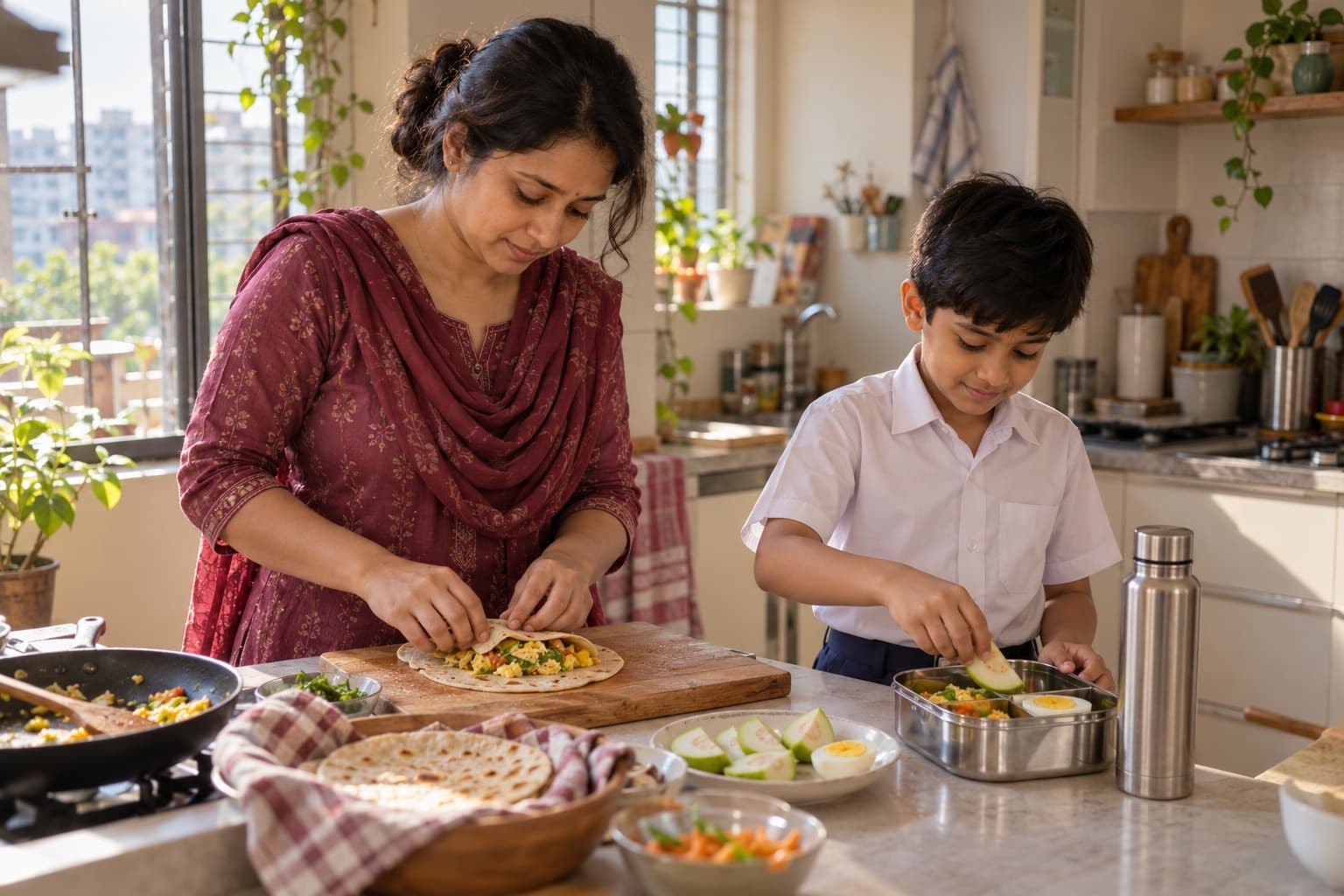
When your toddler starts school with a tiffin box, see lunch ideas for kids; for older children's plates, see food and nutrition for school-age children.
A 7-day plan to move your toddler onto family meals
- Day 1: Notice. Write down what and when your toddler eats and drinks, including milk, biscuits and juice. Change nothing yet.
- Day 2: Set rough times for three meals and two or three snacks, with water in between.
- Day 3: Take your toddler's portion from the family pot before the chilli goes in.
- Day 4: Add one finger food to each meal and let your toddler feed themselves.
- Day 5: Go through the safety list with everyone who feeds your toddler.
- Day 6: Offer a tiny amount of one new food next to a favourite, without comment.
- Day 7: Look back over the week, not one meal: what did your toddler eat across the days? Keep what helped.
When to get help with your toddler's eating
Most toddlers eat well one day and little the next, and that is normal. Talk to your child's doctor if:
When to get help
- Your toddler is losing weight, isn't growing as expected at check-ups, or has little energy for play.
- At around 12 months your child still manages only smooth purées and nothing lumpy, or at any age often gags, chokes or vomits while eating.
- A rash, swelling, vomiting or diarrhoea keeps following a particular food.
- Your toddler eats very few foods, and the list keeps getting shorter.
- Call 999 at once if your toddler is choking and can't breathe, cough or cry (start choking first aid if you know it), or has trouble breathing or a swollen face or lips after eating.
A toddler's eating makes more sense over a week than in one meal. ParentMind helps you note what happens each day, see patterns and get guidance. See how ParentMind works.
Questions parents ask
What can a 1 year old eat for dinner?
Most 1-year-olds can eat a soft version of the family dinner: rice mashed with dal and vegetables, deboned fish, egg or shredded chicken, without chilli and with little salt. Cut everything small and soft, offer water or milk with the meal, and feed your toddler earlier if the family eats late.
How much should a 2 year old eat in a day?
Usually less than parents expect: often a few spoonfuls of each food per meal, and appetite changes from day to day. Offer three meals and two or three snacks, and let your toddler decide how much. If they are active and growing well at check-ups, they are usually eating enough.
What foods should toddlers not eat?
Avoid honey before the first birthday, whole nuts and peanuts, whole grapes and other round foods unless cut small, popcorn, hard sweets, and fish with bones left in. Keep chilli out of your toddler’s portion, and keep salty snacks, sugary drinks, tea and coffee out of their everyday food.
Is khichuri good for toddlers?
Yes, soft khichuri is one of the easiest toddler meals: rice and dal together, with vegetables and egg or chicken cooked in. Keep your toddler's portion soft, without chilli and with little salt, and mash it for younger toddlers. Serve it fresh, and refrigerate leftovers soon rather than leaving them out.
Is it okay if my toddler eats rice every day?
Yes. Rice is a good base for toddler meals, as long as it comes with other foods: dal, fish, egg or chicken, and vegetables. Variety across the week matters more than any single food. On days your toddler refuses rice, roti, suji, chira, potato or noodles work just as well.
This article is general information, not medical advice. For health worries, talk to a doctor; if someone is in danger, contact your local emergency number.