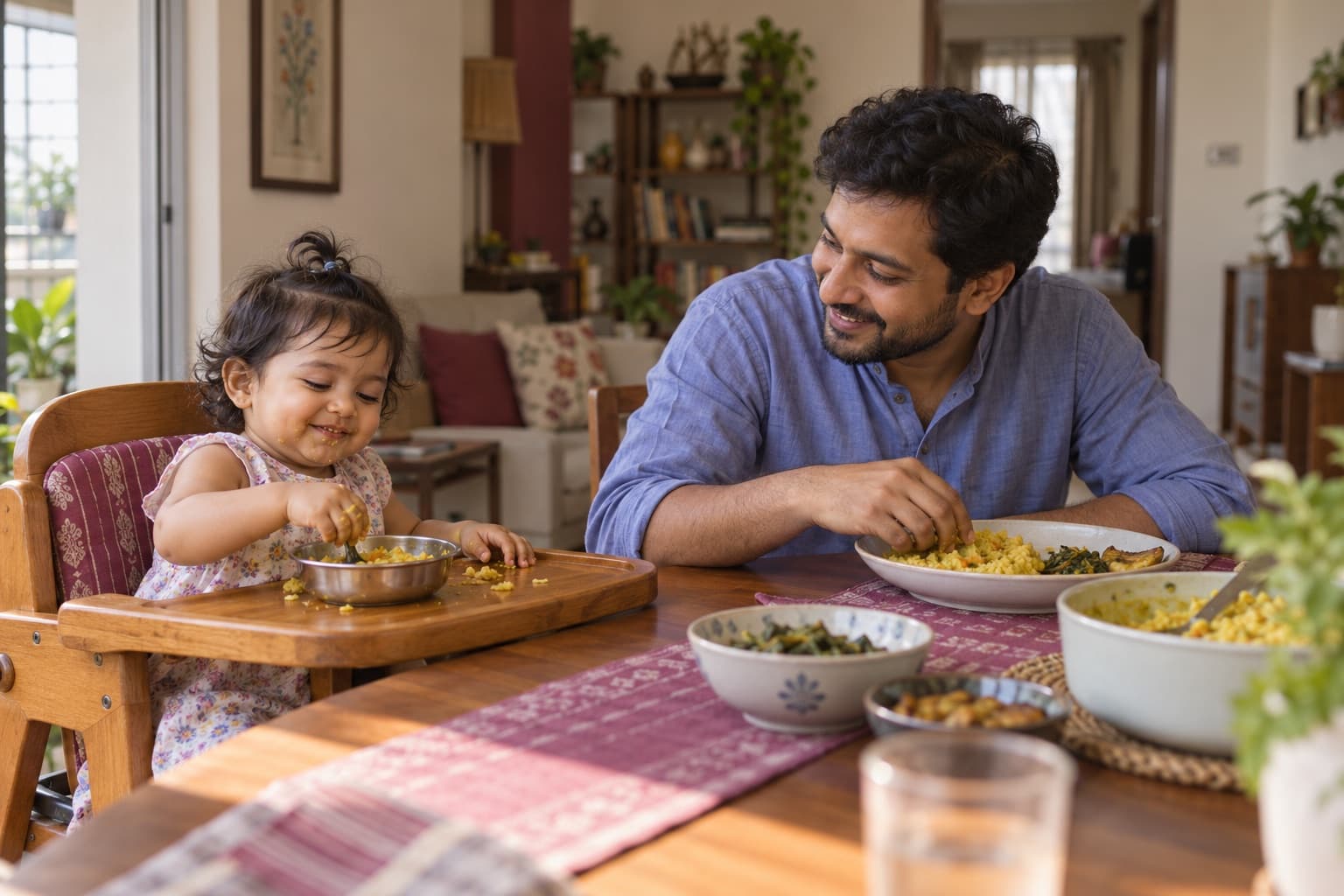
Child eats too slowly or holds food in the mouth? What to do (ages 1–6)
Quick answer
When a child eats too slowly or holds food in the mouth, the usual reasons are low hunger, distraction, food that's hard to chew, or pressure at the table. For ages 1–6, serve small portions at set times, turn screens off, let them feed themselves, and end calmly after about 20–30 minutes. See a doctor for trouble chewing or swallowing.
 By the ParentMind team11 min read
Listen to this article
15 min listen · Read by your device's voice
At a glance
- Who it is for
- Parents of children aged 1–6 whose meals take an hour, or who hold food in the mouth without swallowing
- Key takeaways
- Slow eating is common at 1–6 and usually comes from low hunger, distraction, food that's hard to chew, or pressure at the table.
- Meals and snacks about two to three hours apart, with water in between, help a child come to the table hungry.
- Small portions, no screens, letting your child feed themselves and a calm end after about 20–30 minutes often make meals shorter.
- See a doctor for trouble chewing or swallowing, frequent gagging or choking, or worries about weight or growth.
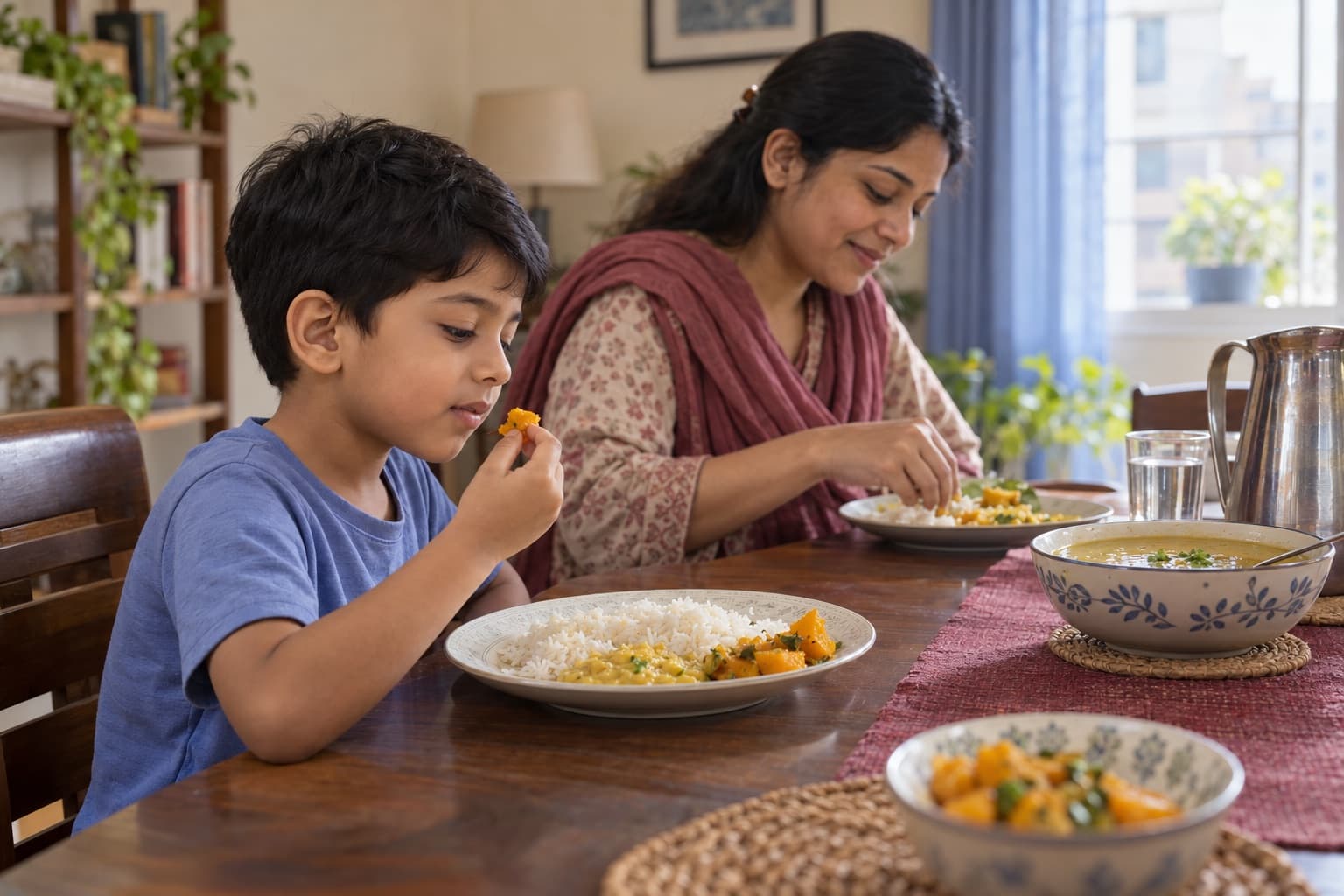
If your child eats too slowly, you know the scene: an hour at the table, a cheek full of rice that never gets swallowed, and you following them around the flat with the plate. By the end, the food is cold and everyone is tired.
Slow eating is very common between about 1 and 6, and it rarely means something is wrong. Most of the time the cause is an everyday one, such as milk or biscuits too close to the meal, a cartoon on, food that is hard to chew, or a meal that has turned into a battle, and each of these is something you can change, starting today.
Below: the common reasons, what to do when food stays in the mouth, how long a meal should take, portions and snacks, self-feeding, Bangladeshi habits that slow meals down, a 7-day plan and when to see a doctor. If your child barely eats at all, start with what to do with a picky eater.
Child eats too slowly? The common reasons
A child who takes forever to eat is usually telling you something about hunger, the food or the table. Look for the reason first, because each one has a different answer:
| Reason | What you might notice | What often helps |
|---|---|---|
| Not hungry yet | Picks at food, holds it, says “full” after a few bites; milk, biscuits or juice not long before | Meals and snacks two to three hours apart; water in between; milk with meals or snacks |
| Too much on the plate | A big mound of rice; your child gives up halfway | Serve a small portion, and more if they ask |
| Distraction | TV, phone, toys or people coming and going; eats only while watching | Screens off, toys away, sit and eat together |
| Hard to chew | Holds meat, dry rice or stringy vegetables in the cheek; spits out lumps | Softer, moister food: rice mixed with dal or curry gravy, boneless flaked fish, soft vegetables, small pieces |
| Still learning to chew | Younger toddlers; pushes food out with the tongue; takes a long time over lumps | Plenty of practice with soft finger foods, and patience |
| Tired | A late lunch after a missed nap; dinner close to bedtime | Move meals earlier; never feed a child who is falling asleep |
| A mealtime battle | Begging, bribes, “one more bite”, chasing with the plate; your child holds food or refuses | Drop the pressure: you decide what and when, your child decides how much |
| Feeling unwell | A cold, sore throat, mouth ulcer or new tooth; constipation | Soft food and patience; see a doctor if it lasts or comes with pain or fever |
Some children are simply slow, careful eaters by nature. That's fine if they grow well and have energy to play; the goal is a calmer meal, not a race.
Toddler holds food in mouth? What to do in the moment
Holding food in the cheek, sometimes called pocketing food, is common in toddlers. A child may be full, finding the food hard to chew, distracted, or using it to hold off the next spoonful. Try these steps, in order:
- Stay calm, and don't add more food until the mouth is empty.
- Prompt once, lightly: “Chew, chew, swallow,” and chew your own food to show them.
- Offer a sip of water.
- If the food is still there after a minute or two, let them spit it into a bowl or tissue, without fuss. Food held for a long time is better out. Never force a swallow: pinching the nose, tipping the head back, pouring in water or pushing in more food can make a child choke.
- Make the next bite smaller and softer, or offer a different food from the plate.
- Keep your child seated and upright while eating. Never let them run, lie down, laugh wildly or fall asleep with food in the mouth, because that's when food can block the airway.
- If your child keeps holding food, end the meal calmly and offer the next food at the next planned time.
What you might say at the table
- Chew, chew, chew… now swallow. Like this.
- Is that bite too big? You can spit it out here.
- Let's have a little water.
- Your tummy decides how much. Is it full?
- Lunch is finished now. We'll eat again at snack time.
How long should a meal take for a child? A calm time limit
For most young children, about 20–30 minutes is enough for a meal. When a child eats too slowly, the extra half-hour of coaxing rarely adds much food, and it often adds tears on both sides.
- Start the meal when your child is hungry and calm, not straight after milk or a nap.
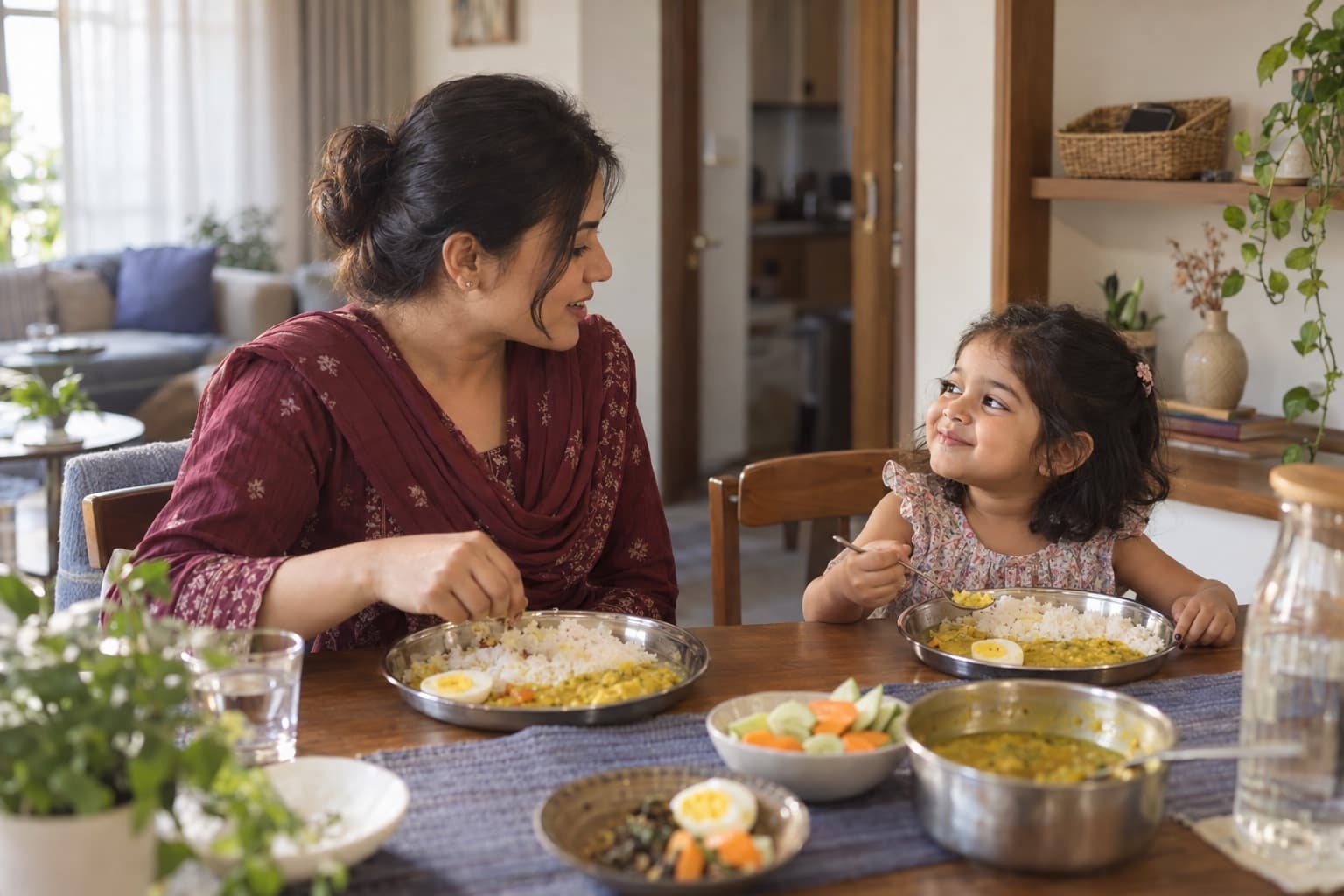
- Let the family's meal set the length: when everyone has finished, the meal is over.
- Give one calm warning: “Five more minutes, then lunch is finished.”
- When time is up, clear the plate without comment, praise or punishment.
- Offer no other food until the next meal or snack; water is fine.
Portions, snacks and drinks: helping your child come to the table hungry
A slow eater is often simply not hungry. A few changes to the day can make a big difference:
- Small portions: a few spoonfuls of each food is often a whole toddler meal. Serve less and let them ask for more; a full plate can look like a mountain to a 2-year-old.
- Three meals and two or three snacks at roughly the same times, about two to three hours apart.
- Water between meals; milk at meal or snack times, not all day from a bottle or cup.
- Chips, sweet biscuits and juice as occasional treats, not everyday snacks.
- Plenty of active play, outdoors or in the flat, before meals.
Toddler meal ideas has simple, soft family dishes and a sample day for ages 1–3.
Let them feed themselves: why self-feeding can speed meals up
It sounds backwards, because a toddler feeding themselves is messy and slow at first. But children often eat more willingly when they're in charge, and meals tend to get shorter once the fight over the spoon is gone.
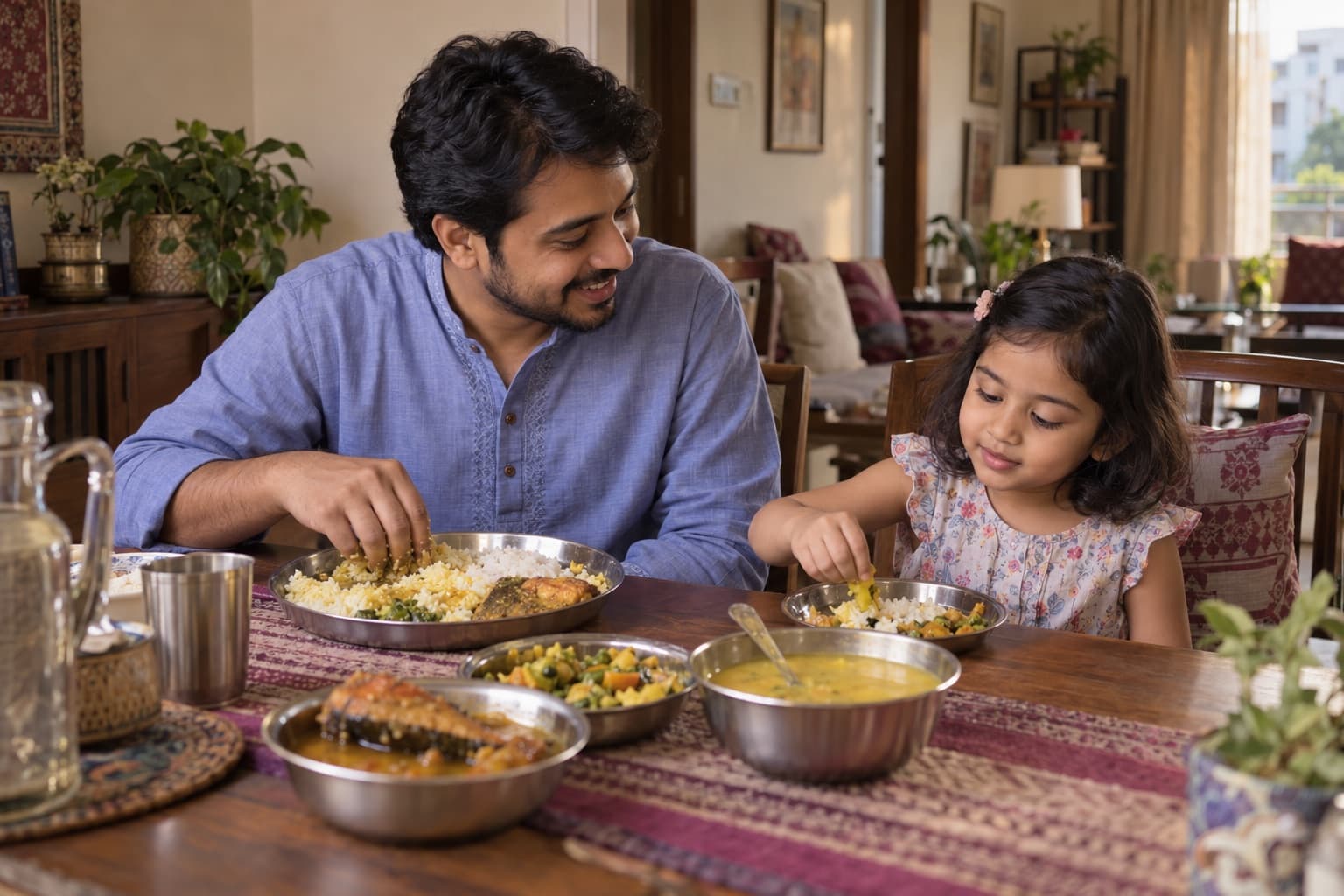
- Offer finger foods your child can pick up: soft roti pieces, small balls of rice and dal, egg, banana, soft-cooked carrot or potato.
- Give them their own small spoon, or let them eat with their hand, the way the family does.
- Expect mess: a mat under the chair and a cloth nearby make it easier to stay calm.
- You can help with a few spoonfuls at the end, but let your child lead.
Feeding themselves is one of the first steps in teaching a child independence.
In a Bangladeshi home: chasing with the plate, hand-feeding and the phone
Long meals are a very familiar worry in Bangladeshi homes, and most of the habits behind them come from love, and from worry that a child isn't eating enough.
- Chasing with the plate: following a child around the flat and slipping in a mouthful each time they pass gets food in, but it teaches that food comes to them, so they never sit. Running with food in the mouth can also cause choking. Meals happen sitting down, at the table or on the mat.
- Hand-feeding: many parents and grandparents feed children by hand well into school age. A mix often works: let your child eat by themselves first, then offer a few mouthfuls if they want.
- The phone or TV: a cartoon can keep a child sitting, but they often eat slowly and only while watching. How to stop feeding with the phone has a gentle two-week plan.
- Rice, fish and meat: mix rice with dal or curry gravy so it is soft and moist, take out every fish bone, and cut meat into small, tender pieces. Dry rice and chewy meat are often the foods left in the cheek.
- Late dinners: a 3-year-old eating at 10 pm is often too sleepy to chew well. Feed your child earlier, with the family or before.
- Grandparents and house help: agree one plan with everyone who feeds your child: sitting down, a small portion, about 20–30 minutes, no phone, no chasing and no force.
- Weight worries and comparisons: relatives may say your child is too thin, or compare them with a cousin. Your child's growth at check-ups is a better guide than any comparison.
A 7-day plan for shorter, calmer meals
For a week, write down three things at each main meal: how long it took, roughly how much was eaten, and what your child ate or drank in the two hours before.
- Day 1: Notice. Change nothing; time each meal and note the snacks, milk and screens around it.
- Day 2: Set meal and snack times about two to three hours apart, with only water in between.
- Day 3: Serve smaller portions, with one food your child likes on the plate.
- Day 4: Screens off and toys away; sit and eat together, and let your child feed themselves.
- Day 5: Add the calm limit: a five-minute warning, then end the meal after about 20–30 minutes.
- Day 6: Agree the plan with everyone who feeds your child.
- Day 7: Compare with Day 1: meal length, how much was eaten and the mood at the table. Keep what helped, and give it another week.
When to see a doctor about slow eating
When a child eats too slowly, it usually improves with hungrier meals, softer food and less pressure. Talk to your child's doctor if:
When to get help
- Your child seems to have trouble chewing or swallowing: food often falls out, they can't manage textures most children their age eat, or swallowing seems to hurt.
- Your child often gags, coughs or chokes while eating or drinking, or seems afraid of eating.
- Your child is losing weight, isn't growing as expected at check-ups, or clothes that fitted are getting loose.
- At around 12 months your child still manages only smooth purées and nothing lumpy.
- Long, difficult meals go on for weeks along with tiredness, frequent illness, constipation, tummy pain, mouth sores or tooth pain.
- If your child is choking and can't breathe, cough or cry, call 999 and start choking first aid if you know it.
Slow meals are easier to change when you can see the pattern: the snacks, the timing, the screens. ParentMind helps you note what happens each day, see patterns and get guidance. See how ParentMind works.
Questions parents ask
Why does my toddler hold food in his mouth and not swallow?
Usually because they're not very hungry, the food is dry or hard to chew, they're distracted, or holding food delays the next spoonful. Offer smaller, softer, moister bites, give a sip of water, and let them spit out food that's been held a while. If they often can't manage textures, gag or choke, see a doctor.
How long should a meal take for a toddler?
Usually about 20–30 minutes is enough. Most young children eat what they need in that time when they come to the table hungry and the table is calm. Longer meals rarely add much food and often add stress. End calmly when time is up, and offer the next food at the next planned meal or snack, with water in between.
Should I feed my child myself to make meals faster?
Sometimes is fine, but letting your child feed themselves usually helps more over time. Children who feed themselves learn to notice hunger and fullness, and meals often get shorter once they're in charge. Let them eat by themselves first, by hand or with a spoon, then offer a few mouthfuls if they want.
Is it okay to let my child watch cartoons so they eat faster?
It may speed up one meal, but it often makes eating slower and harder over time, because the child eats only while watching and stops noticing taste and fullness. Turn screens off, sit and eat together, and talk about the food. Expect a few harder meals at first; many families find things settle within about two weeks.
What if my child eats very little after I set a time limit?
For the first few days, many children do, and that's okay. Hunger builds, and many children eat more at the next meal or snack. Don't make up for it with biscuits or milk straight after; keep the next food at its planned time, and offer water. If your child is losing weight or seems unwell, see a doctor.
Is it a problem if my child eats too slowly?
Usually not. Many children are slow, careful eaters, and that's fine if they grow well and have energy to play. It's worth seeing a doctor if your child has trouble chewing or swallowing, often gags, coughs or chokes, can't manage textures most children their age eat, or is losing weight.
This article is general information, not medical advice. For health worries, talk to a doctor; if someone is in danger, contact your local emergency number.