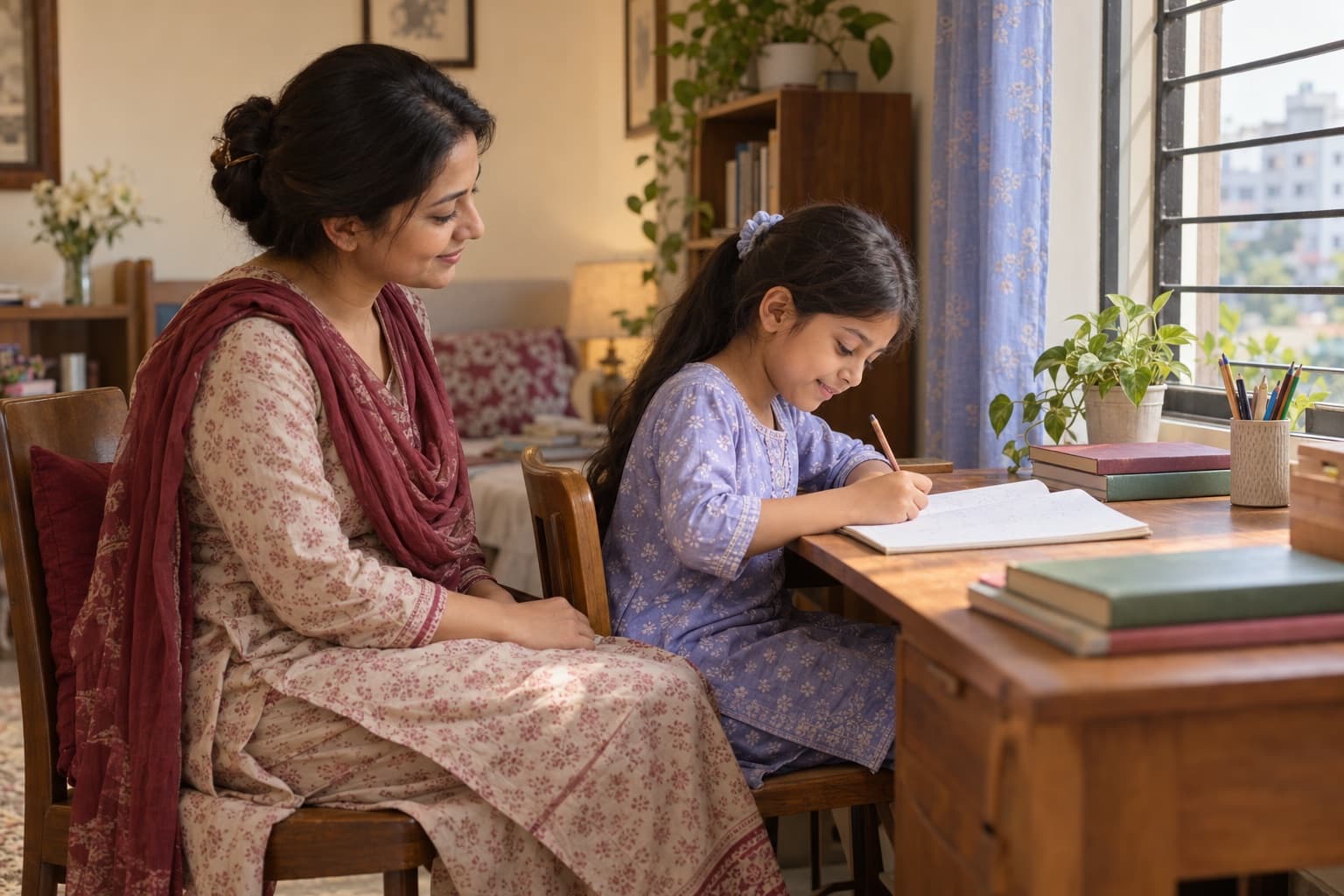
How to teach a child independence: self-care skills for ages 2–7
Quick answer
To teach a child independence at 2–7, let them try everyday tasks before they can do them well, such as dressing, eating, washing hands, using the toilet and tidying up. Break each task into small steps, allow extra time, help only as much as needed and praise the effort. Keep an adult close around knives, stoves, stairs and water.
 By the ParentMind team12 min read
Listen to this article
16 min listen · Read by your device's voice
At a glance
- Who it is for
- Parents of children aged 2–7, especially in homes where adults, grandparents or house help do most things for the child
- Key takeaways
- Many children want to do things “myself” from about 2, long before they can do them well; that wish is the moment to teach.
- Teach one skill at a time in small steps, and let your child do the last step first, then a little more each week.
- Doing everything for a child is an act of love, but it takes away practice; agree one plan with grandparents and house help.
- Independence never means being left alone: an adult stays close around knives, stoves, stairs, balconies and water.
If you've ever buttoned a 6-year-old's shirt in the rush for the school van, you've probably wondered how to teach a child independence when doing it yourself is so much quicker. You're not alone: in many homes, love and busy mornings mean adults do almost everything.
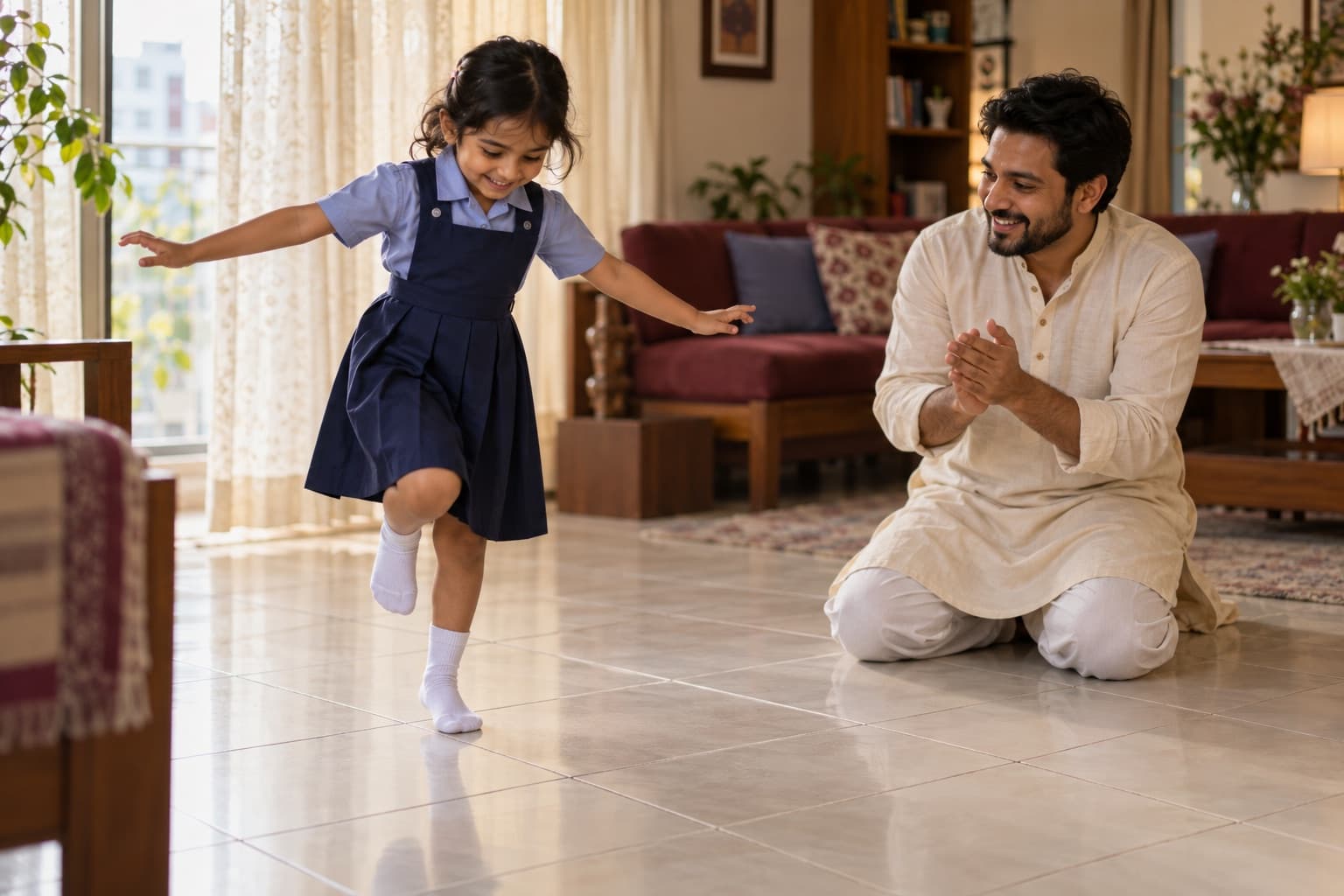
Children are usually ready to do more than we expect, and they often want to. A 2-year-old who insists “me do it” and a 5-year-old who can't yet pour water are both at a normal stage. What helps most is small, daily practice, with you close by.
Below: why independence matters, self-care skills by age, how to teach any skill step by step, the “I do it myself” phase, safety limits, Bangladeshi homes, a 7-day plan and when to talk to a doctor.
Why independence matters, and why children want it so early
From about 2, many children want to do things themselves: pull off their socks, feed themselves, press the lift button. This drive to do it alone is part of healthy development, and each small success can build confidence.
- Confidence: “I can do it” is a powerful feeling for a small child.
- School: children who can manage the toilet, their tiffin box and their bag often settle into play group or school more easily.
- Fewer battles: a child who has some control over small things often fights less over big ones.
- Responsibility: today's sock drawer is tomorrow's homework and housework; chores and responsibility by age picks up from here.
Self-care skills by age: what most children can do from 2 to 7
Every child learns at their own pace, so use this as a rough guide, not a test. Each row describes what many children manage around that age, with practice:
| Age | Dressing | Eating | Toilet and washing | Tidying and helping |
|---|---|---|---|---|
| 2 years | Pulls off socks, shoes and loose clothes; pushes arms into sleeves | Feeds self with fingers and a spoon, messily; drinks from an open cup with help | May tell you about a wet or dirty nappy; washes hands with a lot of help | Puts toys in a basket with you; copies sweeping and wiping |
| 3 years | Pulls on loose clothes and sandals; a T-shirt may end up back to front | Eats alone with a spoon or by hand, with fewer spills | Many are learning to use the toilet; washes hands with help | Puts toys away with reminders; carries a plastic plate to the kitchen |
| 4 years | Dresses with a little help; buttons and laces are still hard | Eats alone; pours water from a small jug | Uses the toilet in the day, with the odd accident; washes hands; brushes teeth with your help | Tidies one area with a reminder; helps set the table |
| 5 years | Dresses with a little help with buttons | Eats alone with a spoon or by hand; mixes their own rice and dal | Uses the toilet; learning to wash and wipe; washes hands | Puts dirty clothes in the basket; small daily jobs |
| 6–7 years | Dresses, washes and brushes teeth with reminders; many tie laces around 7 | Serves themselves; helps clear up after meals | Manages the toilet alone; bathes with an adult close by | Packs a school bag with help at 6, with a few reminders at 7; small chores |
For the bigger picture at each age, see child development by age, and for toilet steps, potty training.
How to teach a child independence, step by step
The same method can work for almost any skill, from putting on sandals to washing hands:
- Pick one skill your child is nearly ready for, from the table above.
- Break it into small steps. A T-shirt might be: find the label, lay it face down, head in, one arm, the other arm, pull down.
- Show it slowly, side by side, with few words.
- Do it together, then let your child do the last step alone. When that's easy, they do the last two steps, and so on. Finishing a task feels like winning.
- Make it easy: a low hook for the bag, a sturdy step stool at the basin, a small jug, clothes with elastic waists, sandals with a strap, a low shelf for toys.
- Allow extra time: on school mornings, start ten minutes earlier rather than taking over.
- Praise the effort, not perfection, and don't redo their work in front of them. A crooked shirt worn proudly is a success.
What you might say while they learn
- You try first. I'm right here if you need me.
- Which one today, the blue shirt or the red one?
- You did the buttons yourself! That took real effort.
- It's tricky. You haven't learned it yet. Let's do it together.
- You do this part, and I'll do that part.
- A little mess is fine. We'll clean up together.
The “I do it myself” phase: when a toddler wants to do everything
Around 2 to 3, many children insist on doing everything themselves, from buckling the pram strap to pressing every lift button, and melt down when you step in. Their wish runs ahead of their skills, which is frustrating for both of you.
- Say yes to safe tasks as often as you can, even when slower: carrying their own tiffin box, pushing their arms into sleeves, pressing the lift button.
- Build in time for “myself” on the tasks they care about most, and do the urgent ones together.
- Offer a share: “You do the shoes, I'll do the buttons.”
- When it has to be you, say why and name the feeling: “You wanted to do it. We're late, so I'm helping today. Tomorrow you try first.”
- Say no only for safety, such as the stove, a knife or the balcony door, and offer a safe job instead.
Independent play: a few minutes on their own, with you nearby
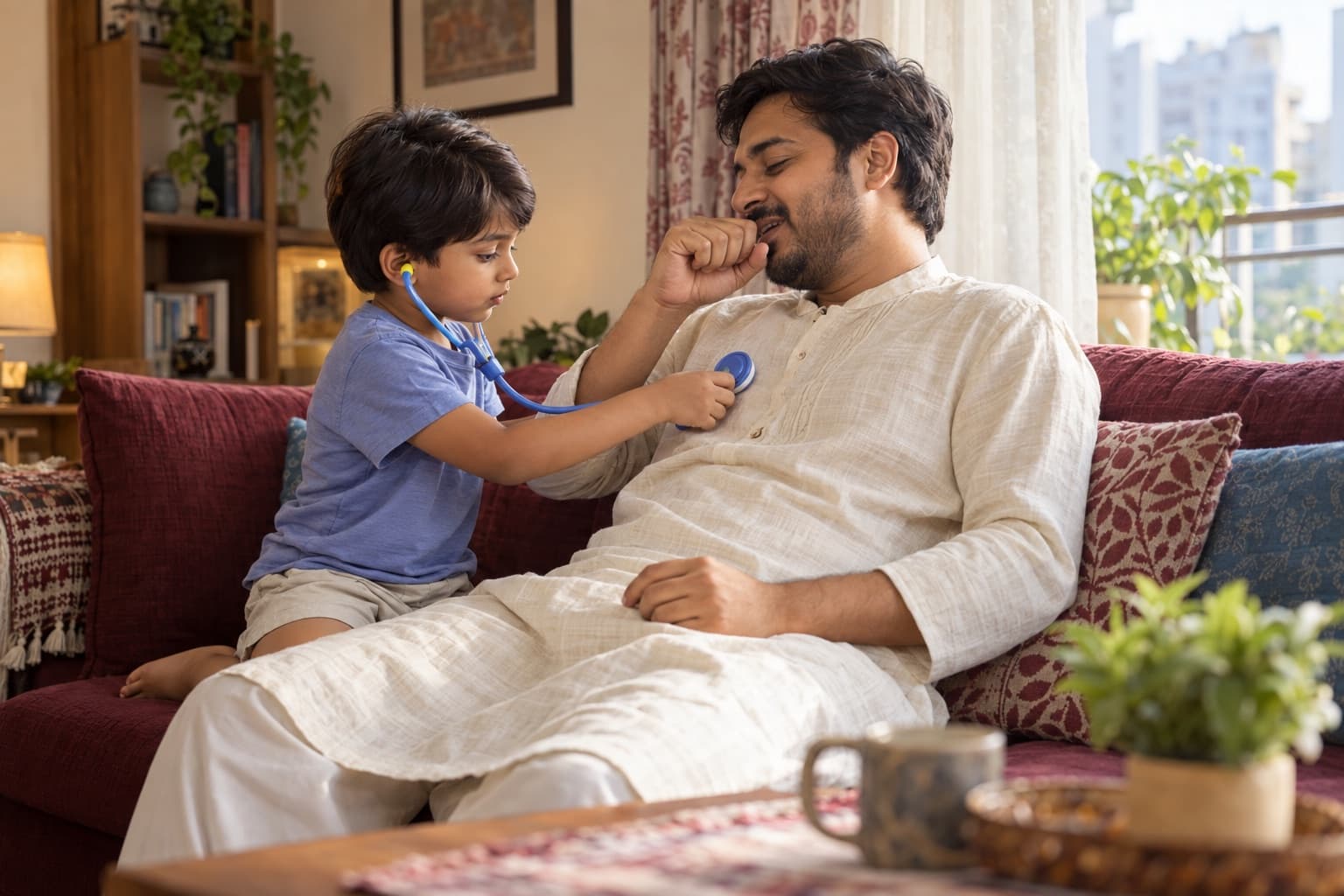
Playing alone for a while is a skill too. Start with a few minutes while you are in the same room, cooking or folding clothes, with simple things such as blocks, pots and spoons or crayons, and stretch it slowly as your child grows. Independent play for toddlers always happens within your sight and hearing.
Safety limits: knives, stoves, stairs and water
Independence means doing things themselves, never being left alone. Some limits stay the same, however capable your child seems:
- Knives and the bonti (floor blade): young children can spread or cut soft food, such as a banana or boiled egg, with a blunt table knife while you are right beside them. Sharp knives and the bonti stay out of reach.
- Stoves and hot food: keep young children away from the gas stove, hot pots, the pressure cooker and hot tea, and turn pan handles inward. Children can “cook” by washing vegetables or mixing cold batter at the table.
- Stairs, balconies and windows: young children hold the rail with an adult close, and don't carry things in both hands on the stairs. No balcony play for young children, and keep anything they could climb away from windows and grills.
- Water: never leave a young child alone in the bathroom or near water, even for a minute. Empty buckets and tubs after use and keep the bathroom door shut; toddlers can drown in a bucket. Even a 6- or 7-year-old who washes alone needs an adult close by, and the water checked so it is not too hot.
- Medicines, cleaning liquids, button batteries and magnets: high up or locked away. A swallowed button battery or magnet means hospital straight away.
- Never leave a young child alone, or alone with a baby. Helping with a baby brother or sister is lovely, but minding them is an adult's job.
In a Bangladeshi home: when someone has always done it for them
In many Bangladeshi homes, children are fed by hand, dressed, bathed and carried well into school age by parents, grandparents or house help. It comes from love, from busy mornings, and from worry that a child won't eat enough or will make a mess. If you're wondering how to teach a child independence without upsetting anyone, small changes can keep that warmth and still give your child practice:
- Start with what matters most to your family, such as eating with their own hand or getting ready for school. You don't have to change everything at once.
- Grandparents: ask with respect and give them a role. “Amma, you do so much for her. Could she try first, and you cheer her on?” Many grandparents love being the cheerleader.
- House help: explain the plan and why, show them the steps, and thank them. They may worry about being blamed for a mess or a late lunch, so make it clear that letting the child try is now part of the job.
- School mornings: lay out clothes the night before, keep the bag on a low hook, and wake ten minutes earlier so there's time to try.
- Mealtimes: eating rice by hand is a real skill, so let your child mix their own rice and dal. When a child eats too slowly has more on long meals and hand-feeding.
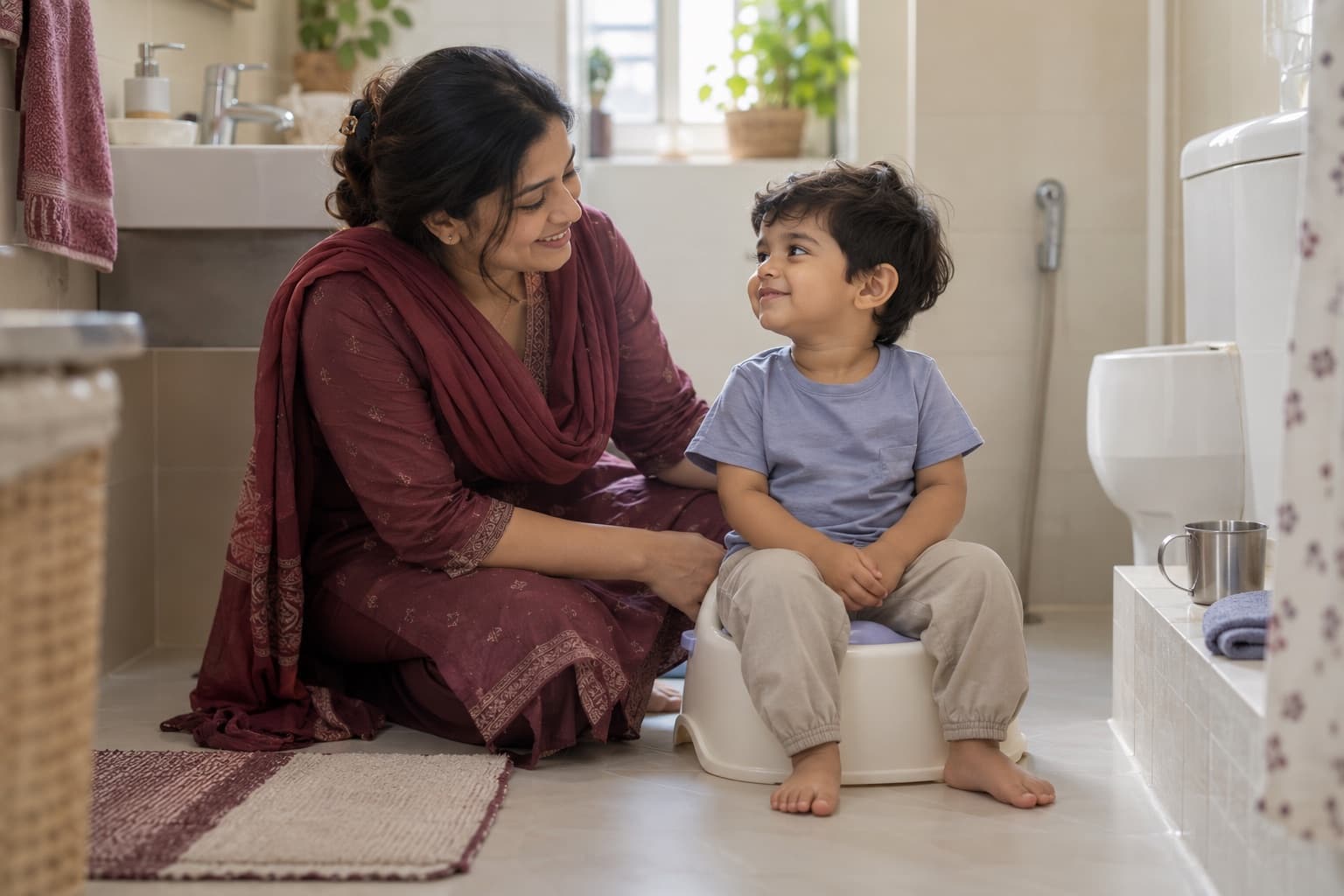
- Toilet and washing: washing with water from a mug or hand shower, then soap for hands, is part of learning the toilet; show it in small steps, with you close by.
- Sons and daughters: teach both the same skills, from pouring water to folding clothes.
A 7-day plan to build one new skill
Choose one skill for the week, and note each day what your child did alone, what they needed help with, and how they felt.
- Day 1: Notice. Write down what your child does for themselves today, and what others do for them.
- Day 2: Choose one skill, break it into steps, and set up the space: a stool, a hook, a small jug.
- Day 3: Show it slowly, do it together, and let your child do the last step.
- Day 4: Tell everyone who looks after your child about the plan, and ask them to wait a moment before helping.
- Day 5: Let your child do the last two steps, and add ten minutes to the morning if needed.
- Day 6: Praise the effort, and let your child show the new skill to a grandparent.
- Day 7: Compare with Day 1. Keep going, and add the next step next week.
When to talk to a doctor about self-care skills
Children learn self-care at very different speeds, and being a few months behind the table is common. Talk to your child's doctor, or act sooner, if:
When to get help
- Your child loses skills they had, such as feeding themselves, using the toilet, words or play. Get this checked promptly.
- Everyday physical tasks are much harder for your child than for other children their age, such as holding a spoon, pulling on clothes or climbing stairs, or your child falls very often.
- Daytime accidents still happen most days well after age 4, or using the toilet seems to hurt.
- Your child suddenly refuses to undress, bathe or use the toilet, or becomes afraid of one person or place: ask gently, believe what your child tells you, keep them away from that person and act the same day; call 999 if they are in danger now. If your child tells you someone has hurt them, report it to the local police station (thana).
- A swallowed button battery or magnet means hospital straight away. After a fall or a knock to the head, call 999 if your child is drowsy, vomits or isn't acting normally.
- Your child is very upset by almost every new task for weeks, or calls themselves useless: talk to their doctor, and see building a child's confidence.
Small skills grow fastest with daily practice, and a week of notes shows progress that's easy to miss. ParentMind helps you note what happens each day, see patterns and get guidance. See how ParentMind works.
Questions parents ask
At what age should a child dress themselves?
Most children pull on loose clothes by about 3, dress with a little help at 4–5, when buttons and laces are still hard, and dress themselves with reminders by 6–7. Elastic waists, big buttons and sandals with a strap make it easier. Lay clothes out the night before, and let your child finish the last step themselves.
How do I raise an independent child without being too strict?
Independence grows from trying, not from pressure. Choose one skill at a time, show it, let your child try, and step in only as much as needed. Offer small choices, accept mess and slowness, and praise effort. Keep firm limits where safety matters, and let everything else be practice.
Is it bad to feed my 5 year old by hand?
Now and then, no; it's a loving habit in many homes. But a 5-year-old who is always fed misses daily practice, and children who feed themselves often eat with more interest. Let them eat by themselves first, by hand or with a spoon, and offer a few mouthfuls at the end if they want.
My child always says “I can't do it”. What should I do?
Treat it as “I can't do it yet”. Break the task into a smaller step, do part of it together and let your child finish, so they feel the win. Praise effort, not perfection, and avoid comparing them with siblings or cousins. If “I can't” is about almost everything, see building a child's confidence.
What chores can a 3 year old do?
Small, real jobs: putting toys in a basket, carrying a plastic plate to the kitchen, putting dirty clothes in the laundry basket, wiping a spill with a cloth, and handing you pegs as you hang the washing. Keep jobs short, do them together and say thank you. Chores by age has ideas for older children.
Can my 6 year old bathe alone?
Many 6- and 7-year-olds can soap and rinse themselves, but not without an adult close by. Young children can drown quickly, even in a bucket, and hot water can scald. Let your child wash themselves while you stay near, keep buckets empty after use, check the water temperature, and keep the bathroom door unlocked.
This article is general information, not medical advice. For health worries, talk to a doctor; if someone is in danger, contact your local emergency number.