Your 3-year-old: development, behaviour, sleep, play and what's normal
Quick answer
A 3-year-old wants to do everything 'myself': most can run, climb, pedal a tricycle, talk in short sentences the family understands and play pretend. Tantrums and clinging at goodbyes are common. Most need 10–13 hours of sleep in 24 hours, naps included, and at most 1 hour of good-quality screen time a day. Talk to a doctor if your child loses skills.
 By the ParentMind team13 min read
Listen to this article
18 min listen · Read by your device's voice
At a glance
- Who it is for
- Parents of 3-year-olds, at home or starting play group
- Key takeaways
- Most 3-year-olds run, climb, pedal a tricycle, talk in short sentences, ask endless questions and start playing with other children, each at their own speed.
- 'No!', tantrums and clinging at goodbyes are common at 3, and usually ease with calm, steady limits and a predictable day.
- Most 3-year-olds need 10–13 hours of sleep in 24 hours, naps included, at least 180 minutes of activity a day and at most 1 hour of good-quality screen time.
- Talk to a doctor if your child loses skills, family understand little of what they say, or they show little interest in people.
Life with a 3 year old is full of questions, opinions and pretend games: one minute your child serves you imaginary tea, the next they are on the floor in tears because the banana broke. Both are normal. Three is a year of fast growth in words, imagination and independence, and the wish to do it 'myself' often runs ahead of the skills.
Use this page as a guide, not a test. It covers what to expect from a 3 year old: what most can do, which behaviour is normal, sleep, food and screens, play ideas for a small flat, play group in Bangladesh, a sample day, a 7-day plan and when to talk to a doctor.
What can a 3 year old do? Development at three
Each row describes what most children do around their third birthday. Read it as a direction, not a deadline: being ahead in one area and behind in another is common.
| Area | What most 3-year-olds do | How you can help |
|---|---|---|
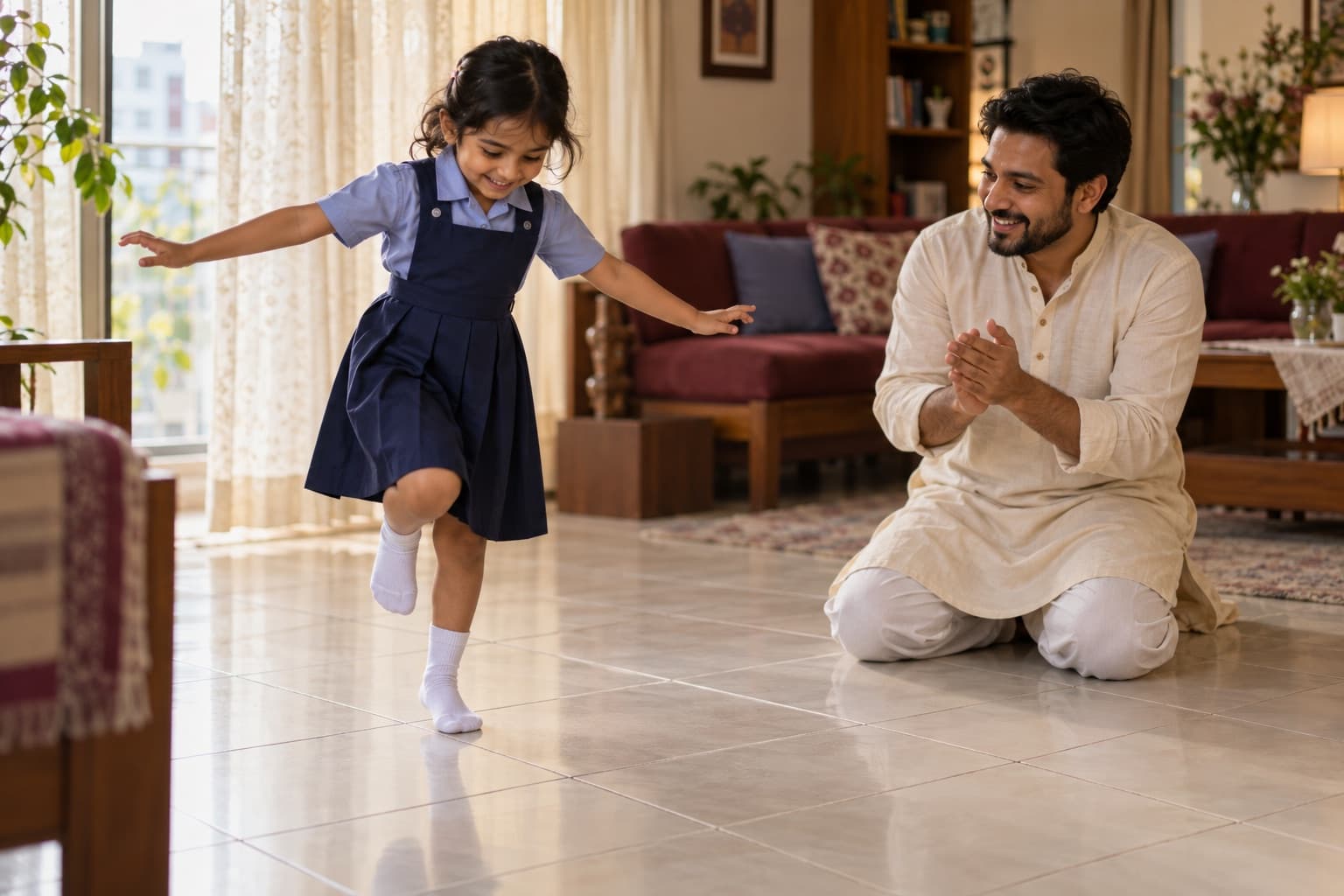
| Body | Runs, climbs, jumps with both feet and kicks a ball; many pedal a tricycle and walk upstairs one foot per step; turns book pages one at a time; draws a circle after you show them | Daily running, climbing and ball games; crayons, chunky puzzles and play dough |
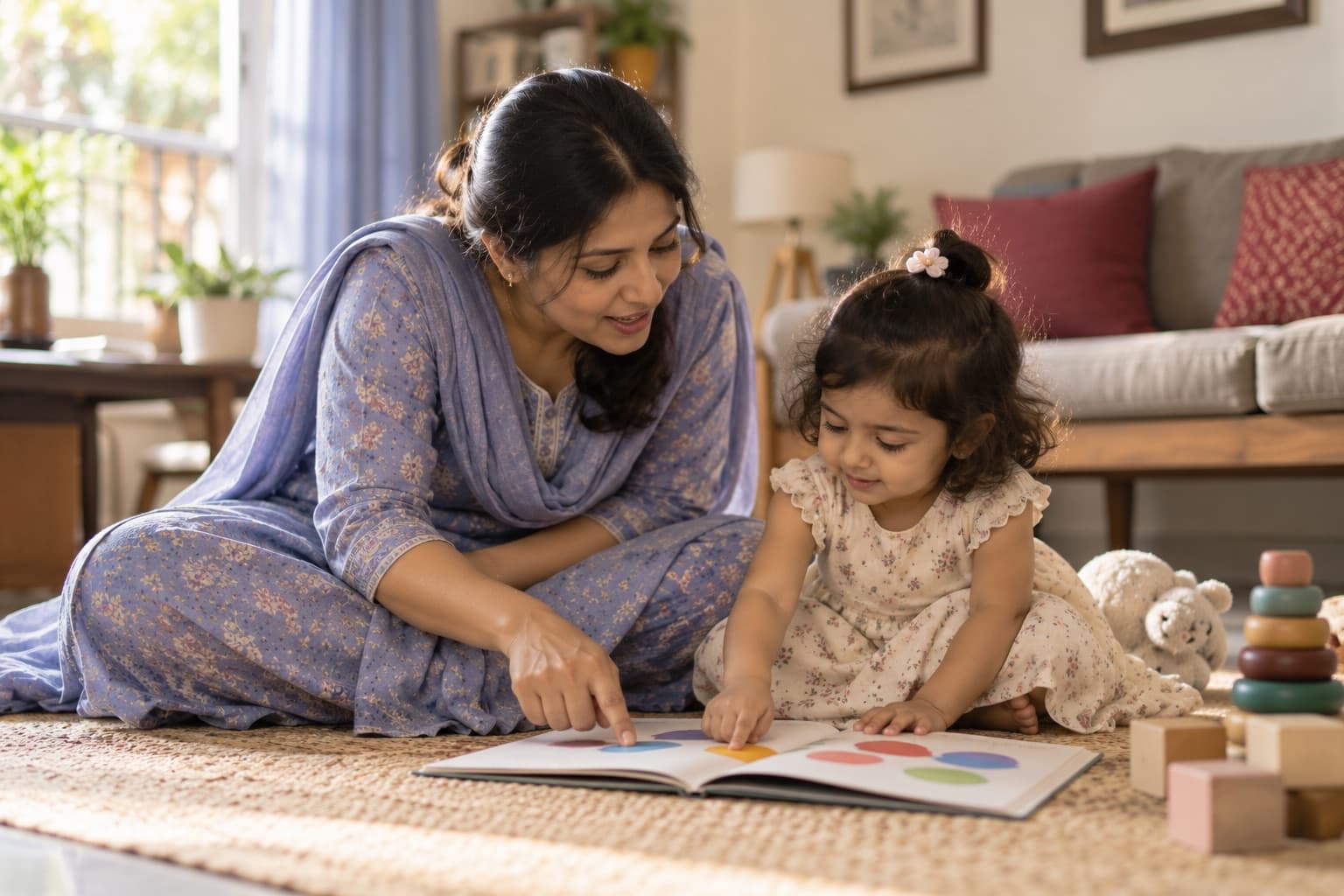
| Words | Talks in short sentences; family and people who know them understand most of it; asks 'who?', 'what?', 'where?' and 'why?'; says their first name | Answer simply, add a word or two to what they say, and share rhymes and picture books daily |
| Thinking | Plays pretend, like feeding a doll or cooking rice for you; does simple puzzles; sorts things by colour or shape; understands 'in', 'on' and 'under'; follows two-step instructions | Play 'put the spoon in the cup, then bring it to me'; sort socks, spoons and toys together |
| Friends | Notices other children and joins in; plays beside them and starts to play together; takes turns with help; finds sharing hard | Short play times with a cousin or neighbour; take turns and say it: 'My turn, your turn' |
| Feelings | Shows many feelings; tantrums are common; may cling at goodbyes but settles with a familiar adult; shows concern when a friend cries | Name feelings out loud; keep goodbyes short and warm; keep the day's order steady |
| Doing things alone | Eats alone with a spoon or by hand; pulls on loose clothes; washes hands with help; many are learning to use the toilet | Let them try first, even slowly; give small jobs like putting shoes on the rack |
Many 3-year-olds still mix up colours, can't manage buttons and say some sounds unclearly; that's typical. Losing skills they had, at any age, needs a prompt check. See child development stages from 0 to 12 for the bigger picture, and your 4-year-old for the year ahead.
3 year old behaviour: what's normal at three?
Three-year-olds understand rules now, and they test them on purpose to see what happens. Much of what worries parents at this age is ordinary growing up:
- 'No!' to almost everything, and doing the opposite to see what you'll do. The push for independence that starts around two often carries on at three; see the terrible twos.
- Tantrums when tired, hungry, rushed or told no. Most are over within a few minutes; what to do during a toddler tantrum has the steps.
- Not listening the first time, especially in the middle of play; how to get kids to listen shows calmer ways to be heard.
- Endless 'why?', often the same question many times. Repeating is how a 3-year-old remembers, and a short, simple answer is enough.
- Clinging and tears at goodbyes, especially with a new carer or at the start of play group; see separation anxiety.
- Grabbing toys or pushing when frustrated, usually less than at two and easing as words grow.
- Mixing up pretend and real, imaginary friends, and new fears of the dark, dogs or loud noises. Comfort the fear rather than laughing at it.
When your 3-year-old says no or melts down
- Give a heads-up before changes: 'Two more slides, then home.' Sudden stops cause many hard moments at 3.
- Turn a 'must' into a game: a race to the bathroom, a song for tidying up.
- Offer two choices you can live with, so your child has some control.
- If a tantrum starts, stay close and calm, name the feeling in a few words and keep everyone safe.
- Hold the limit in one short sentence. Long explanations are hard to follow when a 3-year-old is upset.
- Reconnect afterwards with a hug, then notice the next thing they do well.
What you might say
- You're cross. You wanted to keep playing.
- Two more slides, then we go home.
- Red cup or blue cup? You choose.
- I won't let you throw the car. You can throw the soft ball.
- Let's see who gets to the bathroom first!
- I'm right here. Come for a hug when you're ready.
How much sleep, food and screen time does a 3-year-old need?
- Sleep: most 3-year-olds need 10–13 hours in 24 hours, naps included. Many still nap after lunch; those who drop the nap usually need an earlier bedtime. A steady bedtime and the same short wind-down each night (wash, teeth, story, cuddle) make evenings easier.
- Food: a 3-year-old can eat what the family eats, with less chilli and salt, as three meals and two snacks, with water to drink. Appetite often swings from day to day, and new foods may need many tries; see picky eating.
- Safe eating: until about 5, cut grapes and cherry tomatoes lengthwise into quarters, skip whole peanuts, chanachur and hard sweets, and keep your child sitting down to eat. If your child chokes and can't breathe, cough or cry, call 999 at once and start choking first aid if you know it.
- Screens: child-health guidance suggests at most 1 hour a day of good-quality content for children aged 2 to 5, ideally watched with you, and none at meals or in the hour before bed. Talking and playing with you usually builds more words than cartoons do.
- Activity: children aged 3–4 need at least 180 minutes of activity a day, spread across the day. Any movement counts: walking to the shop, dancing, climbing, chasing bubbles.
3 year old activities for a small flat
Three-year-olds learn by doing, and the best play costs almost nothing. These ideas fit a Dhaka flat:
- Bubbles made from soap and water: an adult blows, your child chases and pops.
- A cushion mountain to climb and roll down, on a clear floor away from windows.
- Animal walks: hop like a frog, waddle like a duck, stomp like an elephant.
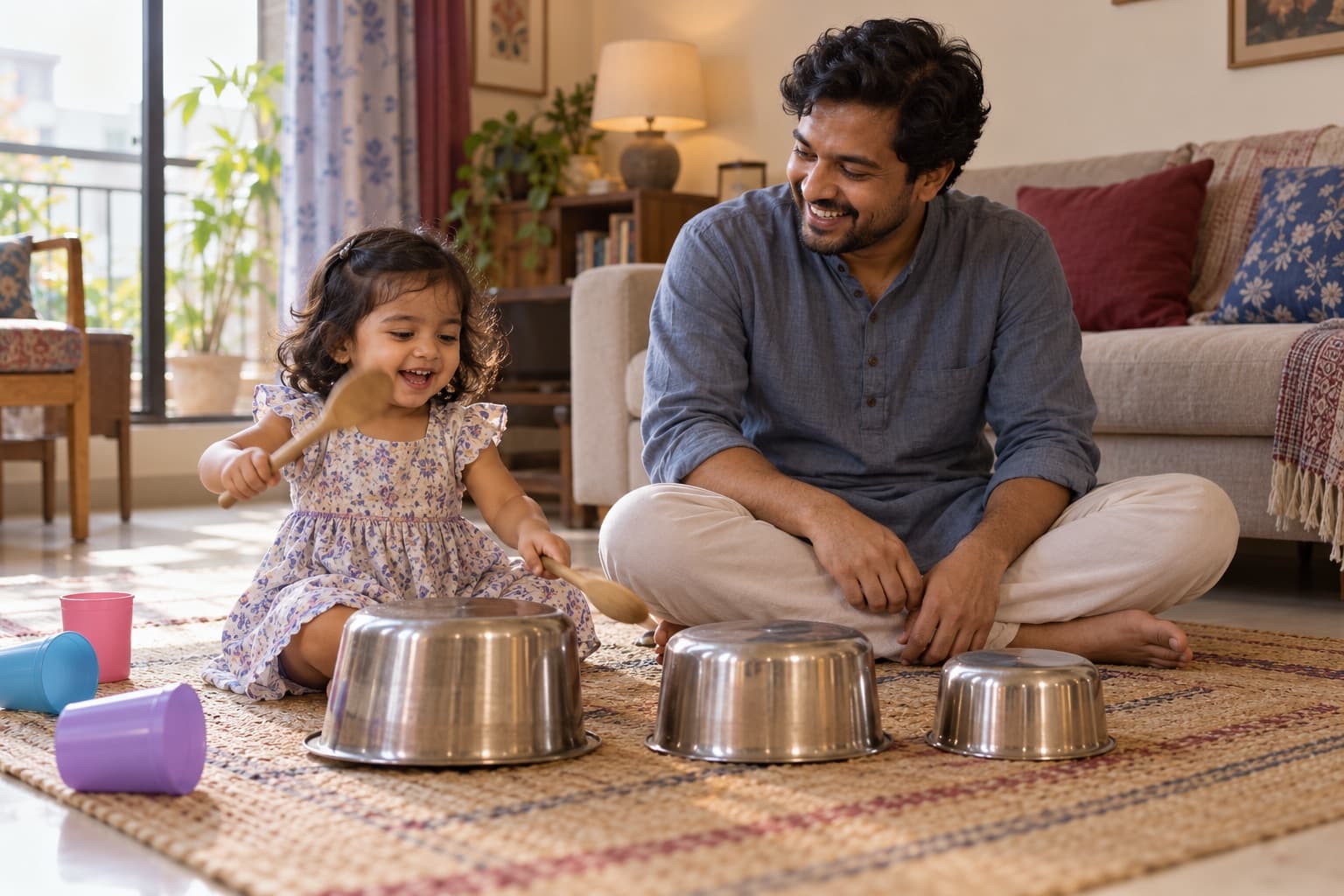
- A kitchen band with steel pots, lids and wooden spoons.
- Pretend cooking with small pots and dough made from atta: 'Ammu, your rice is ready!'
- Water play in a shallow basin, with an adult right beside them: pouring, washing a doll's clothes, floating leaves.
- Action rhymes like 'Ay ay chand mama' and 'Twinkle, twinkle', plus real jobs: washing potatoes, carrying spoons to the table.
In a Bangladeshi home: play group, many carers and two languages
Play group at 3, or home a little longer?
Some schools in Bangladesh take children into play group around 3; others start with nursery at 4 or KG at 5, so check the school's own notice for ages and admission steps. Staying home at three is fine. If your child starts, look for a short, play-based day with warm teachers, practise goodbyes and expect some tears in the first weeks. No 3-year-old needs writing drills or admission coaching.
When grandparents and house help do everything
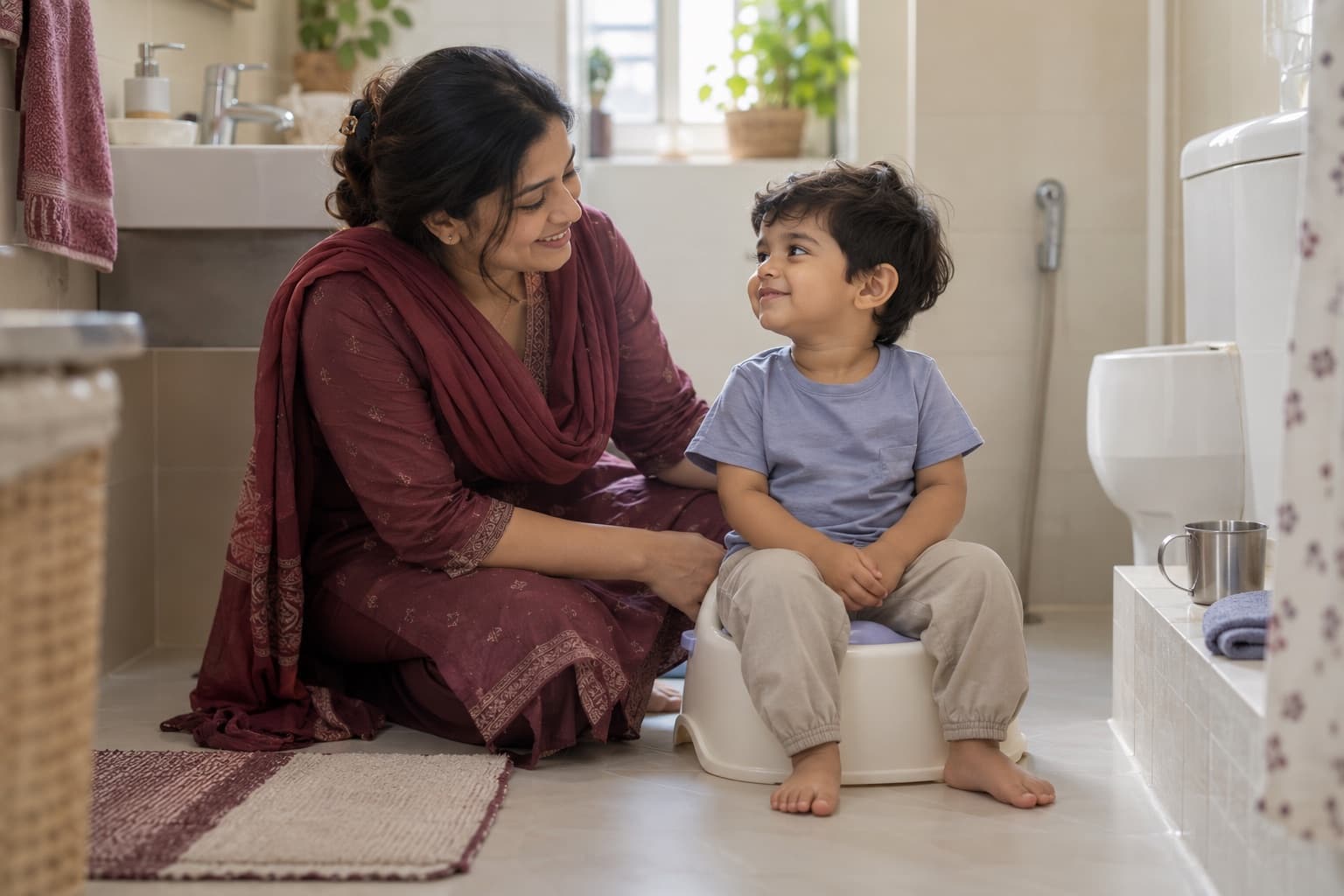
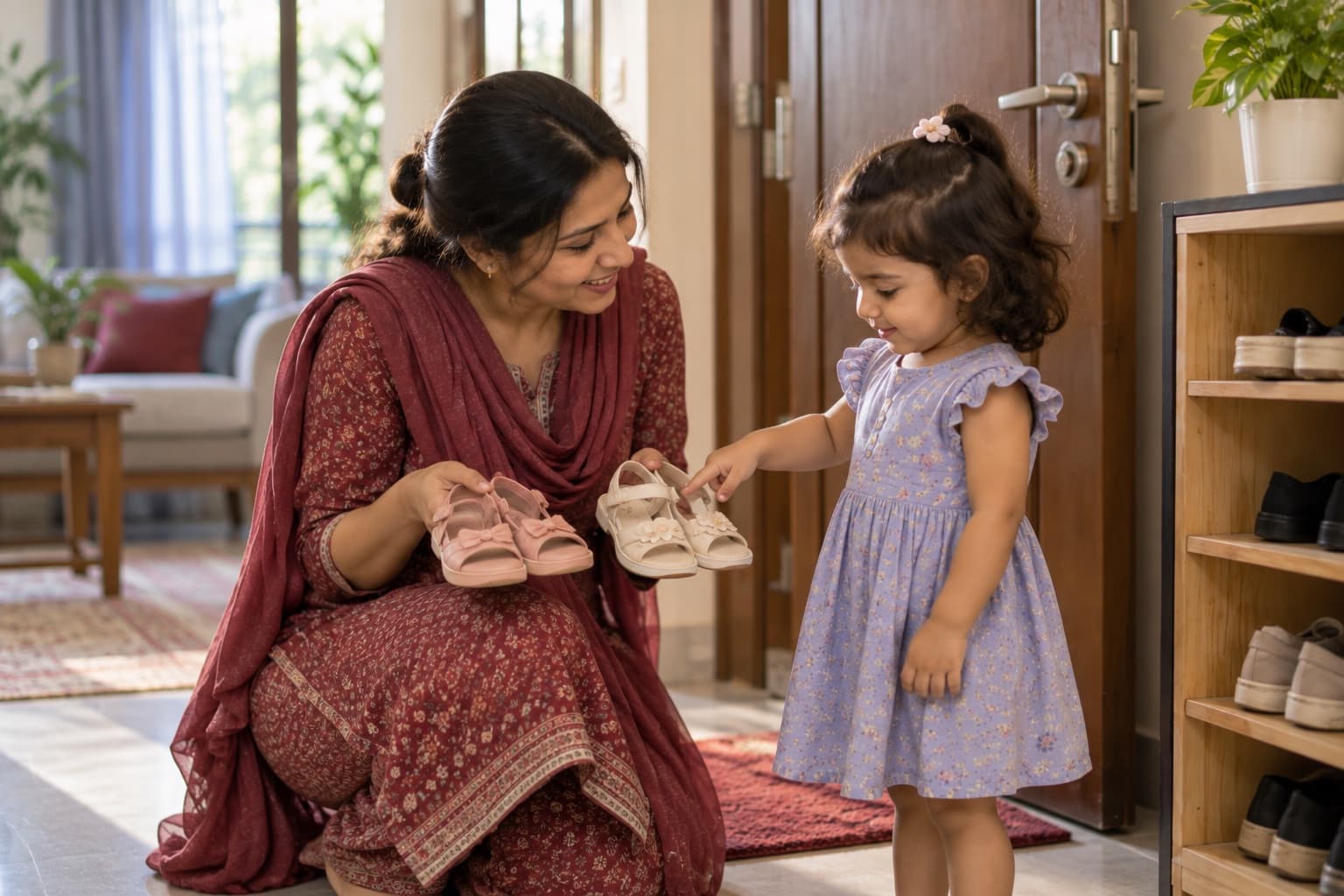
In many joint families, a 3-year-old is fed, carried and dressed by whoever is nearest, often with cartoons on during meals. It comes from love, but it takes away daily practice. Choose two things your child now does alone, such as eating with their own hand or spoon and putting on sandals, and ask grandparents and your house help to wait and let them try. Agree the same toilet words and routine too; potty training has a gentle plan.
Bangla, English and the cousin who talks more
Many 3-year-olds hear Bangla at home, English rhymes on YouTube and a grandparent's dialect, and mix them in one sentence. That's normal: count their words in every language together. When relatives compare your child with a cousin, remember that every child has their own timetable. If family understand little of what your child says by about 3, read speech delay in toddlers and talk to a doctor.
A 3 year old routine: one sample day
Every family's day looks different; this example is for a 3-year-old at home who still naps. Shift the times to suit your family, and keep the order steady.
| Time | What happens |
|---|---|
| About 7:00 | Wake up, toilet or nappy change, wash face, brush teeth together |
| 7:30 | Breakfast: suji, roti with egg or khichuri, and a little fruit |
| 9:00 | Outside with an adult: the roof, a park or a walk to the shop |
| 10:30 | Snack, then pretend play, dough or a puzzle |
| 12:30 | Lunch: rice, dal, fish or egg, and soft vegetables |
| 1:30 | Nap or quiet rest in a darkened room |
| 4:00 | Snack, then active play: dancing, bubbles, chasing games |
| 6:00 | Wash, quiet play and books; any screen time, watched together, goes here |
| 7:30 | Dinner with the family |
| 8:15 | Brush teeth, a story, a cuddle and a bedtime dua or song, then lights out |
If your 3-year-old has dropped the nap, keep a quiet rest after lunch and move bedtime a little earlier. If the family eats late, feed your child first so bedtime doesn't slide past 9.
A 7-day plan for calmer days with your 3-year-old
Pick one change, note what happens each day, and compare after a week.
- Day 1: Note each 'no!' or tantrum: when, where and what came just before.
- Day 2: Fix one bedtime and one nap or rest time, and keep them, weekends included.
- Day 3: Give a heads-up before every change: 'Two more minutes, then bath.'
- Day 4: At the hardest moment of the day, offer two small choices.
- Day 5: Play for 10 minutes where your child leads, with your phone away.
- Day 6: Hand over one 'I can do it' job, and share your two or three key rules with grandparents and your house help.
- Day 7: Compare your notes with Day 1, and keep what made the days easier.
When to talk to a doctor about your 3-year-old
Most 3-year-olds who are a little behind in one area catch up, and a check is simple if you're unsure. Talk to your child's doctor if:
Talk to a doctor if
- Your child loses skills they had, such as words, using the toilet or play. Get this checked promptly.
- Your child isn't doing several things most 3-year-olds do: for example, family understand little of what they say, they don't follow simple instructions or play pretend, they show little interest in other people, or they fall often and find stairs very hard.
- Hearing or sight worries: your child often does not respond to their name, turns the TV up very loud or sits very close to it, squints, or one eye turns in or out.
- Tantrums come several times a day on most days, regularly last longer than about 25 minutes, or your child often hurts themselves or others during them.
- Your child suddenly fears one person or place, or shows sexual behaviour or knowledge far beyond their age. Ask gently, believe what your child tells you and act the same day; if they may be in danger now, call 999.
- You feel you can't cope, or that you might hurt your child: make sure your child is safe with another adult, step away and get support for yourself. If anyone is in immediate danger, call 999.
ParentMind helps you note the hard moments, sleep and new words each day, so patterns stand out after a week or two; see how ParentMind works.
Questions parents ask
What should a 3 year old be able to do?
Most 3-year-olds can run, climb, jump with both feet and pedal a tricycle, talk in short sentences that family understand, ask lots of questions, play pretend and start playing with other children. Many feed themselves and are learning to use the toilet. Being a little behind in one area is usually fine.
How well should a 3 year old talk?
Most 3-year-olds talk in short sentences and ask 'who?', 'what?' and 'why?' questions. Family and people who know them usually understand most of what they say, though some sounds are still unclear. If family understand little of your child's speech by about 3, talk to a doctor; a hearing check is often the first step.
Why does my 3 year old say no to everything?
Saying no is how a 3-year-old practises being their own person. They now know many rules and test them, especially when tired, hungry or rushed. Offer two choices you can live with, give a heads-up before changes, turn chores into games and keep a few firm limits for safety. It usually eases as words and patience grow.
Is it normal for a 3 year old not to be potty trained?
Yes, many 3-year-olds are still learning. Most children show signs of readiness somewhere between about 18 months and 3 years, and accidents are common for months after. Keep it calm and unhurried, without punishment or shaming. Talk to a doctor if weeing or pooing hurts, or if daytime accidents still happen most days well after age 4.
What should I teach my 3 year old?
Teach through play and daily life rather than lessons: new words while you cook, colours while you sort laundry, counting stairs, taking turns in a game, and saying their full name. Small jobs, like putting shoes on the rack, build independence. Letters and writing can wait; at 3, hands grow strong through dough, crayons and puzzles.
What is a good daily routine for a 3 year old?
A good routine keeps the same order each day: wake, breakfast, outdoor play, a snack and pretend play, lunch, a nap or quiet rest, active play, an evening wash, dinner, then a calm bedtime with a story. Aim for 10–13 hours of sleep in 24 hours, naps included, and keep bedtime steady, weekends included.
This article is general information, not medical advice. For health worries, talk to a doctor; if someone is in danger, contact your local emergency number.