Your 5-year-old: development, behaviour, sleep, play and what's normal
Quick answer
A 5-year-old is usually chatty, busy and keen to be a big kid: most can hop, dress with a little help, tell a simple story and play games with rules. Tantrums still happen. Most need 10–13 hours of sleep in 24 hours and at most 1 hour of good-quality screen time a day. Talk to a doctor if your child loses skills.
 By the ParentMind team12 min read
Listen to this article
16 min listen · Read by your device's voice
At a glance
- Who it is for
- Parents of 5-year-olds, at home, in KG or starting class one
- Key takeaways
- Most 5-year-olds can hop, dress with a little help, tell a simple story, count ten or more things and play games with rules, but children develop at different speeds.
- Bossiness, tall tales, silly toilet words and the odd tantrum when tired are all common at 5.
- Most 5-year-olds need 10–13 hours of sleep in 24 hours, at least 60 minutes of active play a day, and at most 1 hour of good-quality screen time.
- Play builds the skills school needs. Short, happy practice usually helps more than long writing drills.
Life with a 5-year-old can swing from proud big-kid moments to tears over a broken crayon in the same afternoon. That mix is normal. Five is a year of fast growth in confidence, friendships and words, often alongside a big change like KG or class one.
Children develop at different speeds, so use this page as a guide, not a test. It covers what to expect from a 5 year old: what most can do, which behaviour is normal, sleep, food and screens, play ideas for a small flat, school in Bangladesh, a sample day, a 7-day plan and when to talk to a doctor.
What can a 5 year old do? Development at five
Most 5 year old milestones fall into a few areas of development. These are rough descriptions of what most children do around their fifth birthday; a child who is ahead in one area and behind in another is usually fine.
| Area | What most 5-year-olds do | How you can help |
|---|---|---|
| Body | Hops on one foot, climbs, swings, maybe skips; catches a bounced ball; holds a pencil and draws a person with a body, arms and legs | Daily running and climbing; play dough, drawing and cutting with child-safe scissors |
| Words | Speaks clearly enough for most people to understand; tells a short story with a beginning and an end; uses words like 'yesterday' and 'tomorrow' | Ask about their day with open questions; read together every day |
| Thinking | Counts ten or more things; knows some letters and numbers; names colours; follows two- or three-step instructions | Count stairs and fruit, spot letters on shop signs, play 'what comes next?' |
| Friends | Has friends; plays pretend and simple games with rules; wants to be liked; still learning to lose | Make time to play with a cousin or neighbour; practise taking turns in Ludo |
| Feelings | Names feelings, can wait a little, cares when others are hurt; fears of the dark or ghosts are common | Name feelings out loud; keep bedtime calm, with a small night light if they're scared |
| Doing things alone | Uses the toilet, washes hands, dresses with a little help with buttons; eats alone with a spoon or by hand | Give one 'big kid job' each day; let them dress, even slowly |
Many 5-year-olds still write some letters backwards, can't tie laces and find buttons fiddly; that's typical. Losing skills they had, at any age, needs a prompt check. For the stages before and after five, see child development stages from 0 to 12.
5 year old behaviour: what's normal at five?
Much of what worries parents at 5 is ordinary growing-up behaviour. These are common, and usually nothing to fear:
- Tantrums when tired, hungry or overwhelmed, though usually fewer and shorter than at 3. See what to do about tantrums at 4 and 5.
- Not listening the first time, especially when deep in play; see how to get kids to listen.
- Bossiness: telling friends, siblings and even grandparents what to do.
- Tall tales and mixing up wishes with facts ('I saw a lion on the roof!'). This is imagination, not lying in the adult sense.
- Hating to lose, changing the rules mid-game, or crying when a friend won’t play.
- Giggling at toilet words, often louder when adults react.
- Touching their own private parts for comfort when tired or bored. Stay calm and don’t scold; gently give their hands something else to do, and explain that private parts are private.
When your 5-year-old melts down
- Check the basics first: hunger, tiredness and too much going on cause many hard moments at 5.
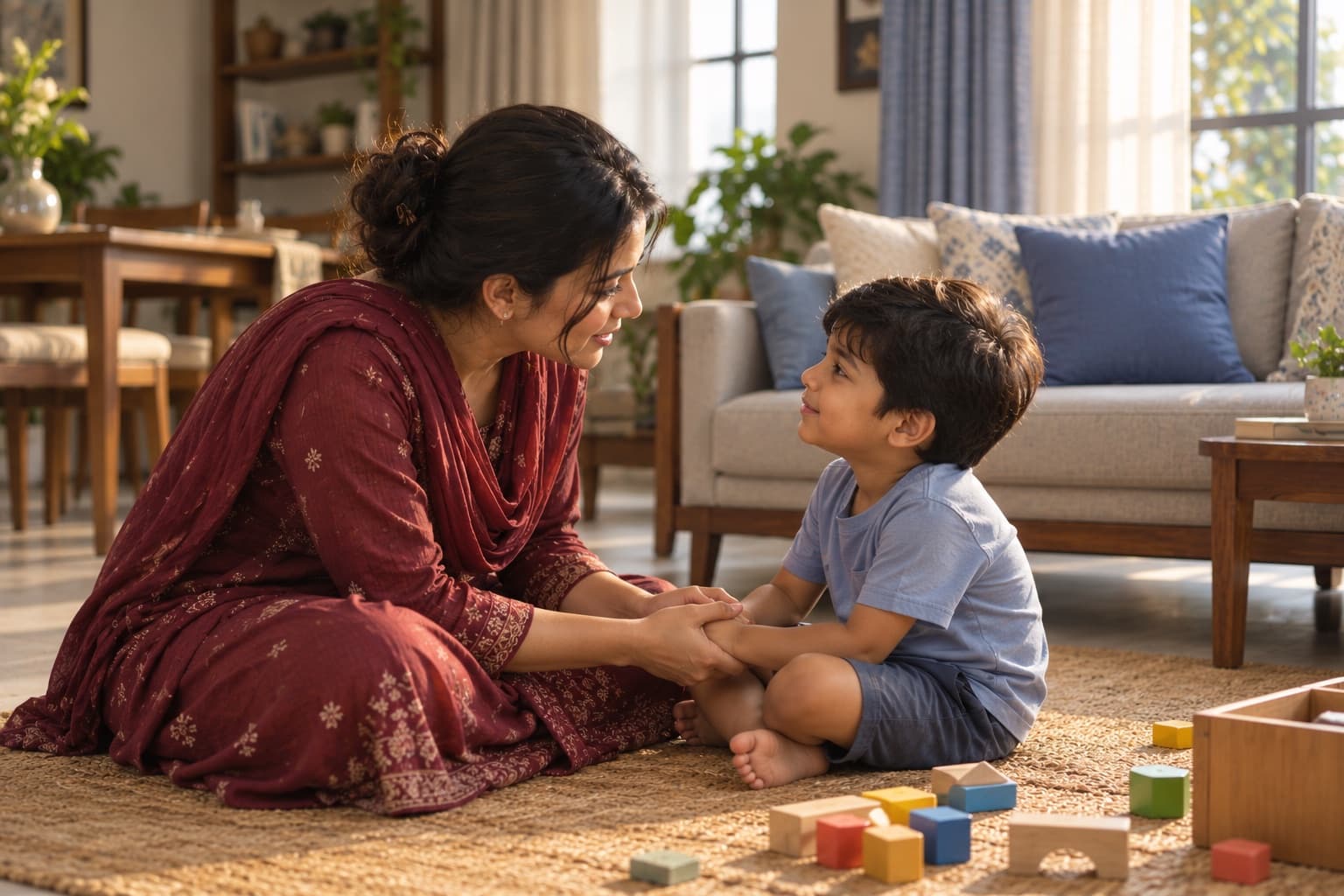
- Get down to their level and name the feeling in a few words.
- Hold the limit calmly, without a lecture. One short sentence is enough.
- Offer two choices you can live with.
- If they need to cry, wait nearby and keep everyone safe.
- Reconnect afterwards with a hug, then talk about what to try next time.
What you might say
- You really wanted to win. Losing feels bad, doesn’t it?
- I won't let you hit. You can stamp your feet instead.
- Shoes first, then the park. The red sandals or the blue ones?
- That's a great story! Is it a pretend story or a real one?
- I'm right here. Tell me when you're ready for a hug.
How much sleep, food and screen time does a 5-year-old need?
- Sleep: most 5-year-olds need 10–13 hours in 24 hours. Many have dropped the daytime nap, though some still need a rest after school. A steady bedtime matters more than the exact time; see how much sleep children need.
- Food: a 5-year-old can eat what the family eats, with less chilli if needed, at regular meals plus one or two snacks. Eating at the table with you, by hand or with a spoon, builds independence and good habits.
- Screens: child-health guidance suggests at most 1 hour a day of good-quality content for children aged 2 to 5, ideally watched together, and none at meals or in the hour before bed. See screen time by age.
- Active play: from 5, children need at least 60 minutes of moderate-to-vigorous activity a day, the kind that makes them puff: running, jumping, dancing, climbing.
5 year old activities for a small flat
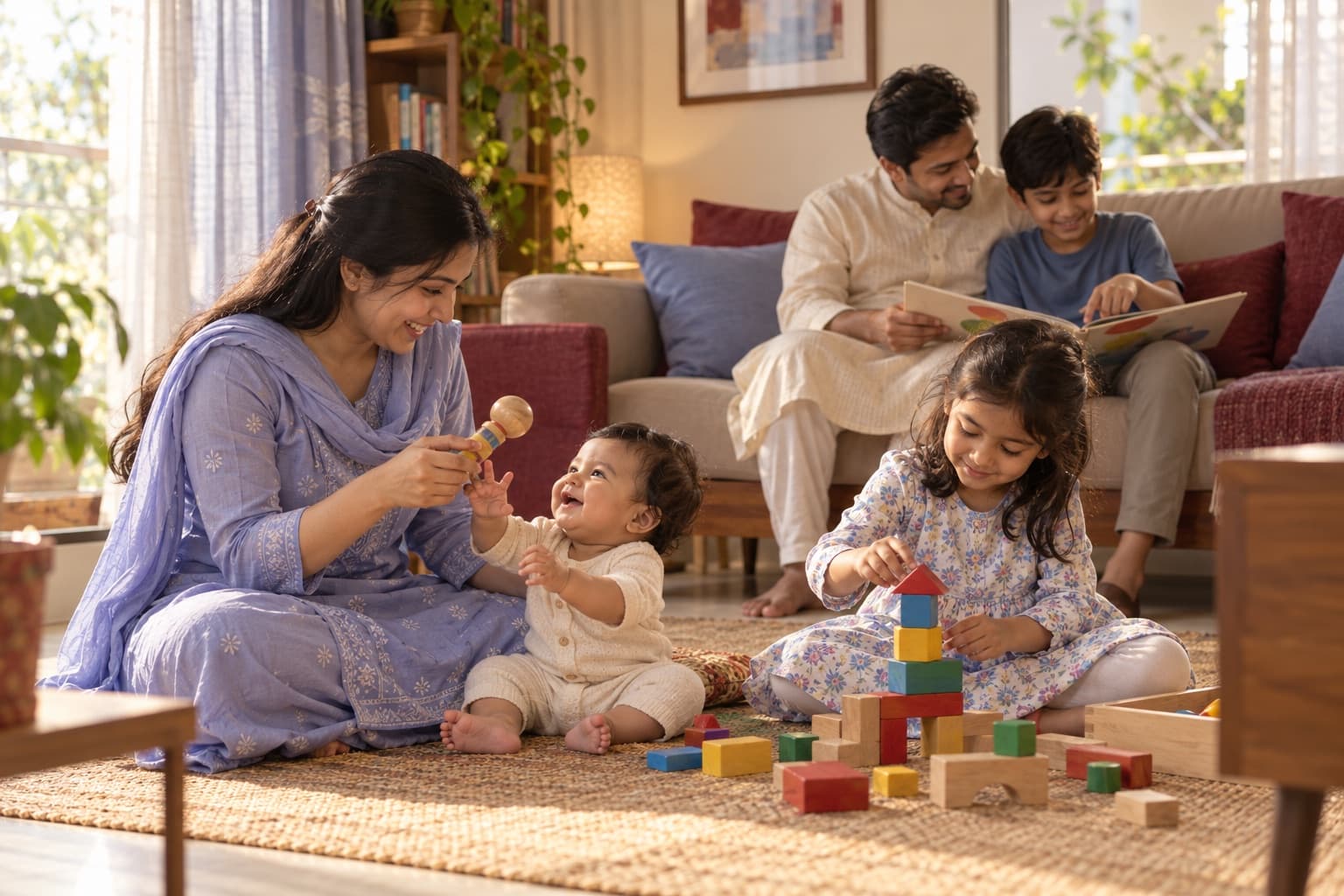
You don't need a garden or expensive toys. These ideas fit a Dhaka flat and cost little:
- Hopscotch (kutkut) along the floor tiles, or in chalk on the roof.
- A cushion obstacle course: crawl under the table, jump over a rolled towel, walk along a line of tape.
- Balloon volleyball with an adult playing too (pick up burst pieces at once, as they are a choking risk), or throwing rolled-up socks into a bucket.
- Dance and freeze: play a song and freeze like a statue when it stops.
- Ludo, snakes and ladders and kanamachi (blindfold tag) for counting, turn-taking and losing well.
- Atta dough, drawing, cutting and sticking, to build strong fingers before writing.
- Real jobs: washing potatoes, folding small clothes, watering plants, setting the table.
In a Bangladeshi home: KG, class one and many helping hands
Getting ready for school without the pressure
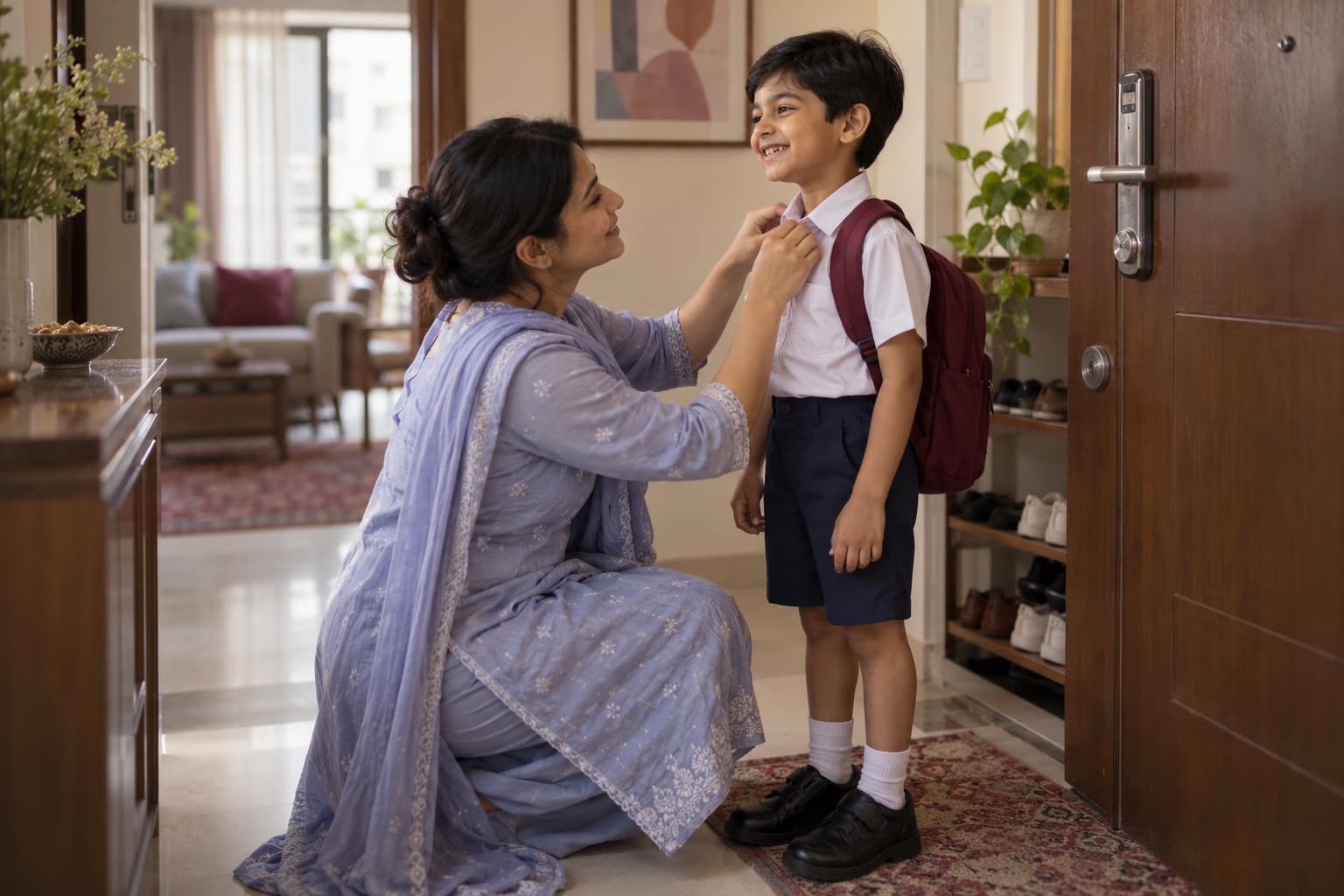
Depending on the school, a 5-year-old may be in pre-primary, KG or even class one. Many schools now admit by lottery and some hold a test, so check the school's own notice for ages and steps. What helps most at 5 is not long drills but the skills underneath: sitting through a short story, following two-step instructions, using the toilet alone, opening a tiffin box. Getting ready for school admission has a calm plan.
What should a 5-year-old be learning?
Many 5-year-olds are learning Bangla and English letters, and in many families Arabic letters too, with a teacher who comes home. That is a lot for small hands. Keep any sit-down practice short, about 10 minutes, and stop while it is still going well. Beyond letters, teach everyday skills: washing hands, asking for help, waiting for a turn, and saying their full name and a parent’s phone number.
When everyone helps a little too much
In a busy joint family, a 5-year-old may be fed, dressed and carried by whoever is nearest. Agree on two or three things your child now does alone, such as eating, putting on shoes and carrying their own school bag, and ask grandparents and your house help to give them time to try. Thank them: waiting is harder than doing it yourself.
A 5 year old routine: one sample day
Every family's day is different; this is one example for a child in a morning KG. Shift the times to fit your family, and keep the order steady.
| Time | What happens |
|---|---|
| About 7:00 | Wake up, toilet, wash face, brush teeth with your help |
| 7:30 | Breakfast together: roti, egg or khichuri, and a little fruit |
| 8:00–11:30 | School, or play-based learning and outdoor time at home |
| 12:30 | Lunch, then quiet time: books, drawing, or a nap if still needed |
| 4:00 | Snack, then at least an hour of active play: the roof, a park or the flat games above |
| 6:00 | About 10 minutes of practice, then reading together; any screen time comes here, not at meals |
| 7:30 | Dinner with the family, then a wash and night clothes |
| 8:30 | Brush teeth, a story, a cuddle and lights out |
If your family eats late, give your child dinner earlier or a filling evening snack, so bedtime doesn’t slide to 10 or 11 at night.
A 7-day plan for calmer days with your 5-year-old
Pick one change, note what happens each day, and compare after a week.
- Day 1: Note when the hard moments happen: the time, the place and what came just before.
- Day 2: Fix one bedtime and keep it, weekends included.
- Day 3: Add an hour of active play before dinner, outdoors if you can.
- Day 4: Give one 'big kid job' and praise the effort, not just the result.
- Day 5: Turn screens off at meals and in the hour before bed.
- Day 6: Share your two or three key rules with grandparents and your house help.
- Day 7: Compare your notes with Day 1, and keep what made the days easier.
When to talk to a doctor about your 5-year-old
Children develop at different speeds, and most 5-year-olds who are a little behind in one area catch up. Still, talk to your child’s doctor if:
Talk to a doctor if
- Your child loses skills they had, such as words, using the toilet or play. Get this checked promptly.
- Your child isn't doing several things most 5-year-olds do: for example, people outside the family can't understand them, they don't play pretend or with other children, or they can't follow simple two-step instructions.
- You're worried about hearing or sight: your child often doesn't respond when called, sits very close to the TV, or squints to see.
- Tantrums or outbursts happen most days, regularly last longer than about 25 minutes, or your child hurts themselves or others during them.
- Your child seems very worried, fearful or withdrawn most days for a few weeks, or refuses school for more than a week or two.
- Your child suddenly fears one person or place, or shows sexual behaviour or knowledge far beyond their age. Ask gently, without leading questions, believe what your child tells you and act the same day; if they may be in danger now, call 999.
ParentMind helps you note the hard moments, sleep and small wins each day, so patterns stand out after a week or two; see how ParentMind works.
Questions parents ask
Is it normal for a 5 year old to still have tantrums?
Yes, some tantrums at 5 are normal, especially when a child is tired, hungry or overwhelmed after school. Most are shorter and less frequent than at 3. Stay calm, keep the limit and reconnect afterwards. Talk to a doctor if they happen most days, regularly last longer than about 25 minutes, or anyone gets hurt. More in tantrums at 4 and 5.
What should a 5 year old be able to do?
Most 5-year-olds can hop on one foot, dress with a little help, use the toilet, speak clearly enough for strangers to understand, tell a simple story, count ten or more things and play simple games with rules. Children develop at different speeds, so being a little behind in one area is usually fine.
Is it normal for a 5 year old not to write yet?
Yes, for many children. At 5, many can write their name or a few letters, often backwards, while others are still building the finger strength to hold a pencil well. Dough, drawing and cutting build that strength. Keep practice short and happy, and mention it to the teacher if writing upsets your child every day.
How much screen time should a 5 year old have?
Child-health guidance suggests at most 1 hour a day of good-quality content for children aged 2 to 5, ideally watched with an adult. Keep screens away from meals and the hour before bed, and make sure your child also gets at least 60 minutes of active play and 10–13 hours of sleep.
Why is my 5 year old so bossy and such a sore loser?
Both are usually signs of growing confidence and a new love of rules, not a flaw in character. Children this age like to feel in charge and find losing genuinely painful. Give real choices and small jobs where they can lead, and coach turn-taking in play: 'You chose last time; now it's your cousin's turn.'
What is a good daily routine for a 5 year old?
A good routine keeps the same order every day: wake, breakfast, school or play-based learning, lunch and quiet time, active play, a short practice and reading, dinner, then a calm bedtime. Aim for 10–13 hours of sleep in 24 hours, and keep bedtime steady, weekends included.
This article is general information, not medical advice. For health worries, talk to a doctor; if someone is in danger, contact your local emergency number.