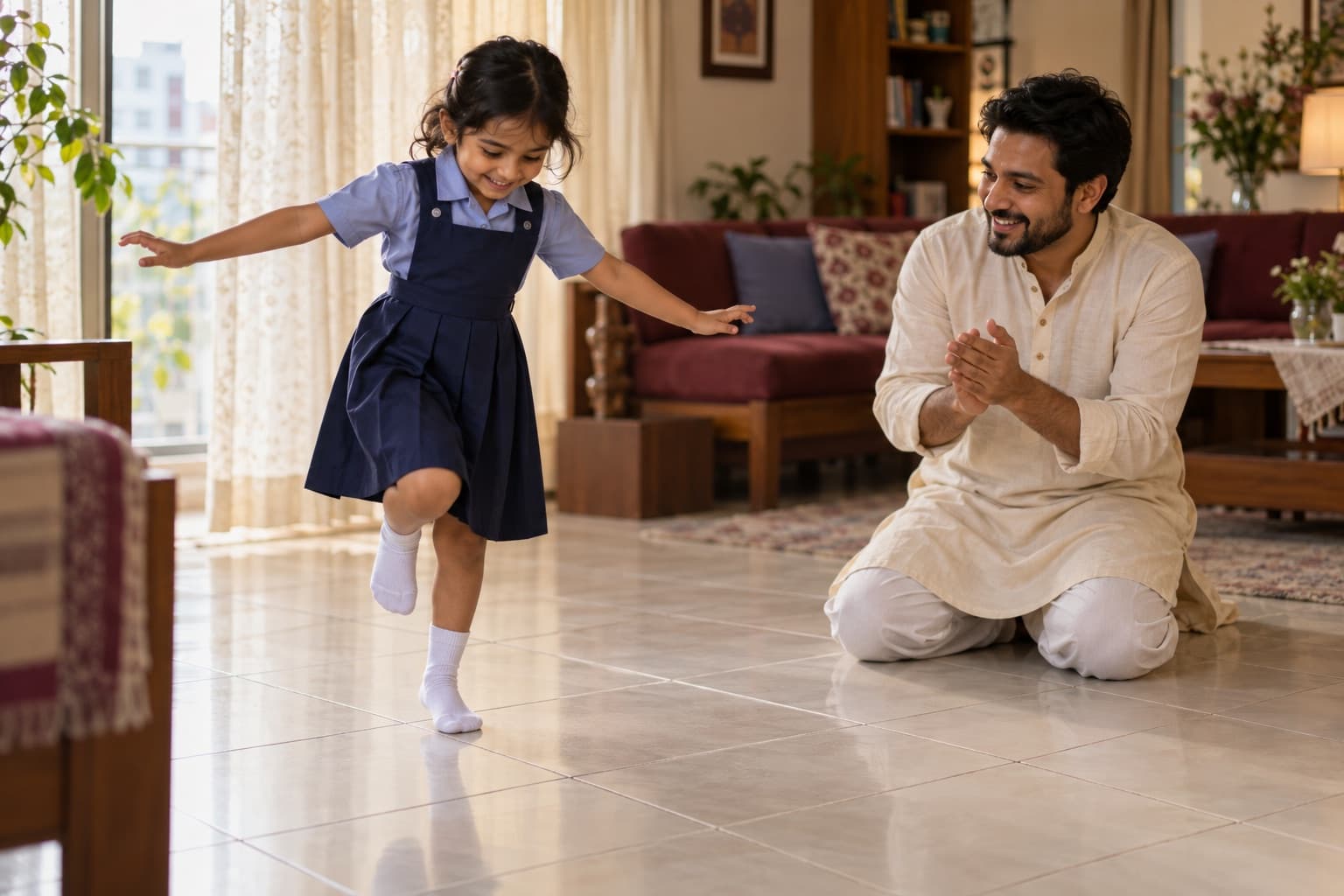
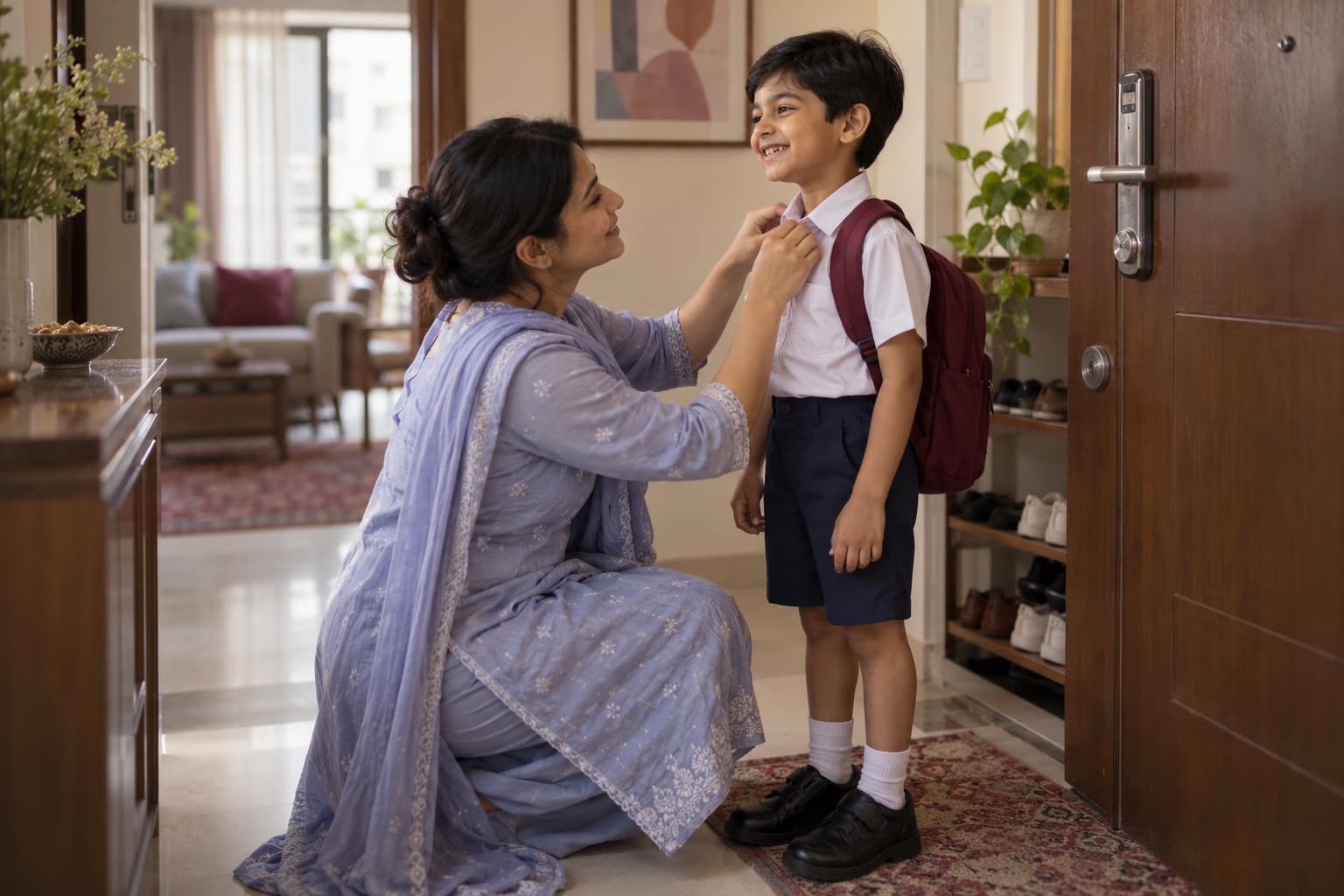
Child development stages from 0 to 12: what to expect and how to help
Quick answer
Child development stages are the broad steps children move through: babies (0–1) learn to trust, move and babble; toddlers (1–3) walk, talk and want independence; preschoolers (3–5) pretend, ask why and make friends; school-age children (6–12) learn to read, follow rules and manage feelings. Children develop at different speeds; talk to a doctor if your child loses skills.
 By the ParentMind team13 min read
Listen to this article
18 min listen · Read by your device's voice
At a glance
- Who it is for
- Parents of children from birth to 12 who want to know what's typical, what helps and when to ask
- Key takeaways
- Children grow in five areas at once: movement, words and thinking, play with others, feelings, and doing things for themselves.
- The ages in any chart are rough. Children develop at different speeds, and one skill can come early while another comes late.
- Play, talk, enough sleep and a warm, predictable home help development at every stage more than classes, flashcards or apps.
- Talk to a doctor if your child loses skills they had, isn't doing several things most children their age do, or you're worried about hearing, sight, speech or play with others.
Child development stages give you a rough map of childhood: what most children learn first, what usually comes next, and when it's worth looking more closely. If your child walked late, talks less than a cousin or still can't hold a pencil well, you are not alone. Most differences simply mean a child is growing at their own pace.
This page is a guide, not a test: one chart from birth to 12, why play matters so much, what helps at each stage, a 7-day plan and the signs that mean talk to a doctor.
What are the stages of child development?
Child development is the way a child's body, mind and relationships grow from birth onwards. Most guides group childhood into broad stages, each with its own big job:
- Babies (0–1): feeling safe with the people who care for them, and learning to move and make sounds.
- Toddlers (1–3): walking, first words and a strong wish to do things alone.
- Preschoolers (3–5): pretend play, endless questions and first friendships.
- Early school years (6–8): reading, writing, rules and a sharp sense of fairness.
- Preteens (9–12): bigger thinking, closer friendships and, for many, the first signs of puberty.
Within each stage, children grow in five areas at once: movement, words and thinking, play and friends, feelings, and independence. Growth and development are often spoken of together, but they are different: growth means size, such as height and weight, while development means skills. A child can be small and right on track, or tall and still finding words.
Child development stages by age: a chart from 0 to 12
Most lists of developmental milestones 0 to 5 stop when school starts; this chart carries on to 12. Each cell describes what most children do somewhere around that stage. It is not a checklist to pass.
| Stage | Movement | Words and thinking | Play and friends | Feelings | Doing things alone |
|---|---|---|---|---|---|
| 0–1 year | Holds head up, rolls, sits, then crawls or shuffles; many pull up to stand near 12 months | Coos, then babbles 'ba-ba'; turns to voices; many say a first word around 12 months | Smiles back at faces, loves peekaboo, knows familiar people | Cries to show needs; may be wary of strangers in the second half of the year | Holds food and starts feeding with fingers |
| 1–2 years | Most walk by about 18 months; climb, push and carry things | Points to show you things; many use around 50 words by 2 | Copies adults, like sweeping; plays beside other children more than with them | Strong attachment; short, sudden tantrums; upset when you leave | Tries a spoon, pulls off shoes, says 'me do it' |
| 2–3 years | Runs, kicks a ball, jumps with both feet, climbs stairs | Joins two words, then short sentences; family understands most of it by 3 | Simple pretend play, like feeding a doll; short spells of playing together | 'No!' and tantrums peak for many; starts to name feelings | Washes hands with help; many start learning to use the toilet |
| 3–5 years | Hops, pedals a tricycle, catches a large ball, draws a simple person | Tells simple stories and asks 'why?' endlessly; most people understand them by 4 | Pretend play with roles, takes turns, makes first real friends | Fewer tantrums; fears of the dark or 'ghosts' are common | Dresses with a little help, uses the toilet, eats alone with a spoon or by hand |
| 6–8 years | Rides a bicycle, skips, gets better at sports; handwriting gets neater | Learns to read and write; enjoys jokes and riddles; thinks more logically | Games with rules; best friends; cares a lot about fairness and winning | Talks about feelings; hurt easily by criticism; may worry about school | Washes, dresses and packs a school bag, with reminders; small chores |
| 9–12 years | Stronger and better coordinated; many have a growth spurt and first signs of puberty, girls often earlier | Reads to learn, argues a point, plans ahead, sees other people's views | Friends and fitting in matter more; close best friends; group chats begin | Moods can swing; wants more privacy; self-conscious about body and looks | Manages homework and routines with less help; wants more say |
Read each row as a direction, not a deadline. A child who walks late may talk early. What matters most is steady progress over months, and that your child keeps the skills they have. Losing skills at any age needs a prompt check.
Toddler milestones: what usually changes between 1 and 3?
Toddler milestones arrive faster than at almost any other time, which is why parents worry and compare most in these years. The toddler development stages are easiest to follow through four big changes:
- Walking and climbing. Most children walk by about 18 months, then run, climb furniture and jump. Make the flat safe rather than holding them back: keep chairs away from windows and balcony grilles.
- Words. Many toddlers say a first word around 12 months, use around 50 words by 2 and join two together. Count words in every language you speak at home. If words are slow to come, see speech delay in toddlers.
- Independence and 'no!'. The wish to do it alone grows faster than words and patience, so tantrums are common; the terrible twos explains this stage.
- Using the toilet. Most children show signs of being ready somewhere between about 18 months and 3 years, not at a set age; see potty training.
Why is play the engine of child development?
Play is how children practise every skill in the chart. Peekaboo teaches a baby that people come back. Building a tower trains the hands and patience. Pretend play grows words and the ability to see through someone else’s eyes, and games with rules teach turn-taking, losing and fairness.
The best play things are mostly free: pots and spoons, cardboard boxes, a ball in the corridor, chalk on the roof with an adult, and water in a shallow basin with an adult right beside them. Your attention matters more than the toy. Ten minutes where your child leads and you follow, with your phone away, often does more than an hour of educational videos.
What you might say while you play
- Where's Ammu? Peekaboo, here I am!
- You're pouring the water. Slowly, slowly... stop!
- I wonder what your doll wants for dinner today?
- That puzzle was hard. What did you try first?
- Will you teach me this game? I want to learn it too.
- You look upset. Do you want a hug, or some quiet time?
What can parents do at each stage?
Across all the stages, the basics stay the same: talk, play, read, enough sleep and a warm, predictable home. What changes is how they look:
- Babies (0–1): answer cries, talk and sing through the day, give floor time and tummy time while they are awake, and keep screens away except video calls with family.
- Toddlers (1–3): name everything, offer small choices, let them try (and spill), keep a steady daily rhythm, and make the home safe instead of saying 'no' all day.
- Preschoolers (3–5): pretend play, picture books, running and climbing, and small jobs like setting out plates. Letters through play, not long writing drills. More in your 5-year-old.
- Early school years (6–8): read together every day, keep homework short and calm, protect active play, and praise effort more than marks. See your 6-year-old.
- Preteens (9–12): short daily chats, more say in decisions, clear phone rules, and talks about body changes before they begin. See parenting preteens.
Sleep and screens matter at every stage. Most children need 12–16 hours of sleep in 24 hours at 4–12 months, 11–14 at 1–2 years, 10–13 at 3–5 and 9–12 at 6–12, naps included; see how much sleep children need. For screens, child-health guidance suggests none under 18 months except video calls with family, only good-quality content watched with an adult from 18 to 24 months, at most 1 hour a day of good-quality content from 2 to 5, and from 6, consistent limits that protect sleep and active play; see screen time by age.
How can you tell if your child's development is on track?
A milestones checklist is useful as a prompt, not a score. These steps give a fairer picture than any single list:
- Look at the whole child. Check all five areas, not just the one that worries you.
- Compare your child with themselves. Progress since three months ago says more than a cousin's skills.
- Read the row before and after yours in the chart. Being between two rows is normal, because skills overlap.
- Ask people who know your child well, such as a teacher, a grandparent or your house help, what they notice, and bring it all to check-ups.
Compare your child with who they were three months ago, not with the child next door.
In a Bangladeshi home: comparisons, early letters and many helping hands
'Your cousin is already reading'
Relatives often compare children at every visit, usually out of love. A child who keeps hearing it learns that they are behind, not that they are growing. You might say kindly: 'Every child has their own timetable. She's doing really well at her own pace.'
Writing before the hands are ready
Many 3- and 4-year-olds are asked to write letters for KG admission, sometimes in Bangla, English and Arabic at once. Small hands often aren’t ready for long writing yet. Play builds the grip: dough made from atta, tearing paper, threading beads, drawing with chalk. Short, happy practice usually helps more than page after page of tracing.
Grandparents, house help and doing it for them
In many homes, loving adults feed, dress and carry children long after they can do it themselves. A 5-year-old who is fed by hand at every meal misses daily practice in independence. Agree on one or two jobs your child does alone, like eating by hand or putting on sandals, and ask every adult to wait and let them try.
Small flats and active play
Children aged 3–4 need at least 180 minutes of activity a day, and children from 5 need at least 60 minutes of moderate-to-vigorous activity, which is hard in a flat with no field nearby. Use the roof with an adult, the corridor, a Friday park trip and dancing at home, and keep balcony doors locked.
A 7-day plan to see your child's development more clearly
Use the chart above as your guide. Pick one area you’re unsure about, note what happens each day, and compare after a week.
- Day 1: Choose one area (movement, words, play, feelings or independence) and write down what your child does today.
- Day 2: Read your child's row in the chart and the row before it; mark what you've already seen.
- Day 3: Add 10 minutes of play where your child leads, with your phone away.
- Day 4: Hand over one small job your child can try alone, and wait before helping.
- Day 5: Ask a teacher, grandparent or carer what they notice in that same area.
- Day 6: Take a short video of your child playing or talking; it helps at a check-up.
- Day 7: Compare with Day 1. If anything in the list below fits, book a check; if not, keep the new habits and look again in a month.
When to worry about developmental delay
Children move through these stages at different speeds, and most differences even out. But some signs mean talk to your child’s doctor now rather than wait and see:
Talk to a doctor if
- Your child loses skills they had, such as words, walking or play, at any age: talk to a doctor soon, and the same day if it happens suddenly. If it comes with a fit, unusual drowsiness or weakness on one side, call 999.
- Your child isn't doing several things that most children their age do in the chart, especially in more than one area.
- Hearing worries: your baby doesn't startle at loud sounds or turn to voices, or your child often seems not to hear you.
- Sight worries: eyes that turn in or out after the first few months, squinting, or holding things very close to see them.
- Speech worries: no words by about 16 months, not joining two words by about 2, or family members understand little of what your child says by about 3.
- Play worries: little interest in people or in playing with others, rarely points to show you things, or doesn't respond to their name.
A check usually starts with questions and watching your child play, and often includes hearing and sight tests. If help is needed, starting early tends to make the biggest difference.
ParentMind helps you note what your child does each day, so you can see patterns over weeks and take a clear record to a check-up; see how ParentMind works.
Questions parents ask
What are the 5 stages of child development?
Many guides use five broad stages: babies (0–1), toddlers (1–3), preschoolers (3–5), school-age children (6–12) and teenagers (13–18). Some split school age into the early school years and the preteen years. In every stage, children grow in movement, words and thinking, play with others, feelings and independence, each at their own speed.
What are the main toddler milestones?
Most toddlers walk by about 18 months, then run, climb and jump. Many say a first word around 12 months, use around 50 words by 2 and join two together, then talk in short sentences by 3. They copy adults, start simple pretend play and want to do things themselves, which brings tantrums too.
When should I worry about developmental delay?
Talk to a doctor if your child loses skills they had, isn't doing several things most children their age do, or you're worried about hearing, sight, speech or how they play with others. Don't wait for the next birthday: a check is simple, and if help is needed, early help usually works best.
Is it normal for my child to be behind their cousin?
Usually, yes. Two healthy children of the same age can be months apart in walking, talking or writing, and a child who is behind in one area is often ahead in another. Compare your child with where they were three months ago. If they are behind in several areas, or losing skills, ask for a check.
Is a milestones checklist enough to know if my child is OK?
A milestones checklist is a helpful prompt, but it isn't a test and it can't diagnose anything. Use it alongside what you see over weeks, what teachers and carers notice, and regular check-ups. Take your notes and questions to the doctor, especially if any of the warning signs fit.
How can I support my child's development at home?
Talk with your child often, read together every day, play on the floor where they lead, and let them try small jobs alone. Keep a steady routine with enough sleep, and protect time for active play. Ten focused minutes with the phone away usually matter more than expensive toys, classes or apps.
This article is general information, not medical advice. For health worries, talk to a doctor; if someone is in danger, contact your local emergency number.