Your 6-year-old: development, behaviour, sleep, school and what's normal
Quick answer
A 6-year-old is usually starting school life in earnest: most begin to read and write simple words, follow class rules and keep friends; many ride a bicycle and lose a first baby tooth. Fairness battles, fibs and after-school meltdowns are common. Most need 9–12 hours of sleep in 24 hours. Talk to a doctor if your child loses skills.
 By the ParentMind team13 min read
Listen to this article
17 min listen · Read by your device's voice
At a glance
- Who it is for
- Parents of 6-year-olds, especially in the first years of school
- Key takeaways
- Most 6-year-olds can read and write some simple words, follow classroom rules and keep a best friend, and many can ride a bicycle, but children develop at different speeds.
- 'It's not fair!', small lies to dodge trouble, boasting and meltdowns after school are common at 6, and usually ease with calm, steady handling.
- Most 6-year-olds need 9–12 hours of sleep, at least 60 minutes of active play a day, and screen limits that protect both.
- Keep homework short and calm. If reading, hearing, sight or school worries stand out, talk to the teacher and a doctor rather than waiting.
A 6-year-old can seem to grow up overnight: suddenly reading shop signs, arguing about rules and wiggling a loose tooth at dinner. Then they come home from school and fall apart over a broken pencil. Both are normal. Six is often the year of class one, and your child is learning to manage a whole new world.
Children develop at different speeds, so read this as a guide, not a test. It covers what to expect from a 6 year old: what most can do, losing baby teeth, normal behaviour, class one and homework, sleep and screens, a school-day routine, a 7-day plan and when to talk to a doctor.
What can a 6 year old do? Development at six
Most 6 year old milestones are school-age skills: moving with more control, the beginnings of reading and writing, rules and friendships. These are rough descriptions of what most children do around six; being ahead in one area and behind in another is usually fine.
| Area | What most 6-year-olds do | How you can help |
|---|---|---|
| Body | Skips, catches a smaller ball, balances on one foot; many ride a bicycle, often with stabilisers at first; draws with more detail | Cycling, skipping rope and ball games; at least 60 minutes of active play a day |
| Reading and writing | Knows most letter sounds; reads simple words and short sentences; writes their name and some words, often spelled by sound | Read together daily; let them read you shop signs and labels; praise tries, not just right answers |
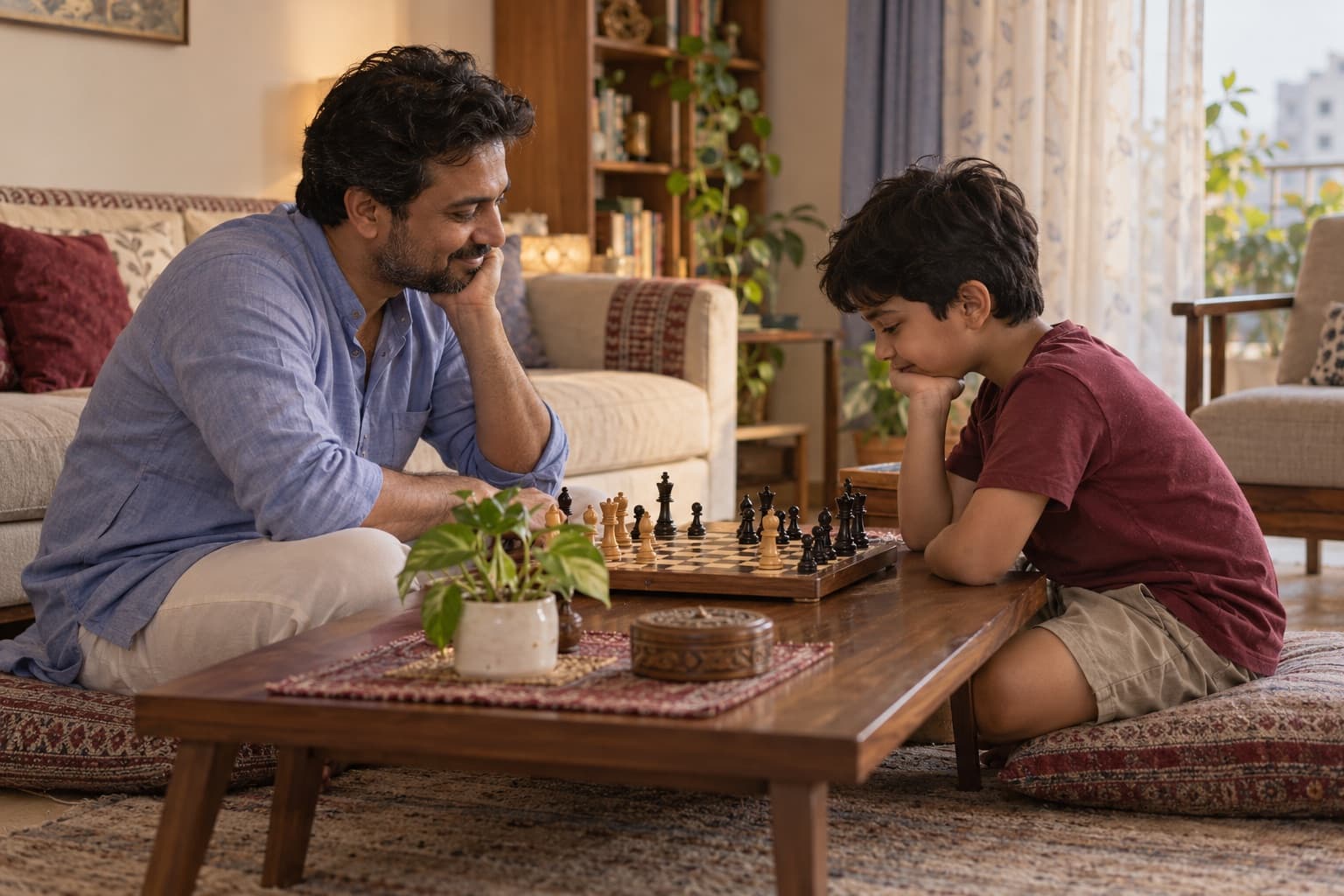
| Thinking | Understands rules and simple cause and effect; enjoys jokes and riddles; counts well beyond 20; starts to understand days and time | Play card and board games, ask 'what do you think will happen?', cook together and measure |
| Friends | Has a best friend or two; plays games with rules; cares a lot about fairness and winning; compares themselves with others | Coach losing well; listen to friendship troubles without fixing everything |
| Feelings | Can describe feelings; hurt easily by criticism or being laughed at; may worry about the teacher or getting things wrong | Notice effort, avoid comparing with siblings or cousins, and talk through worries at bedtime |
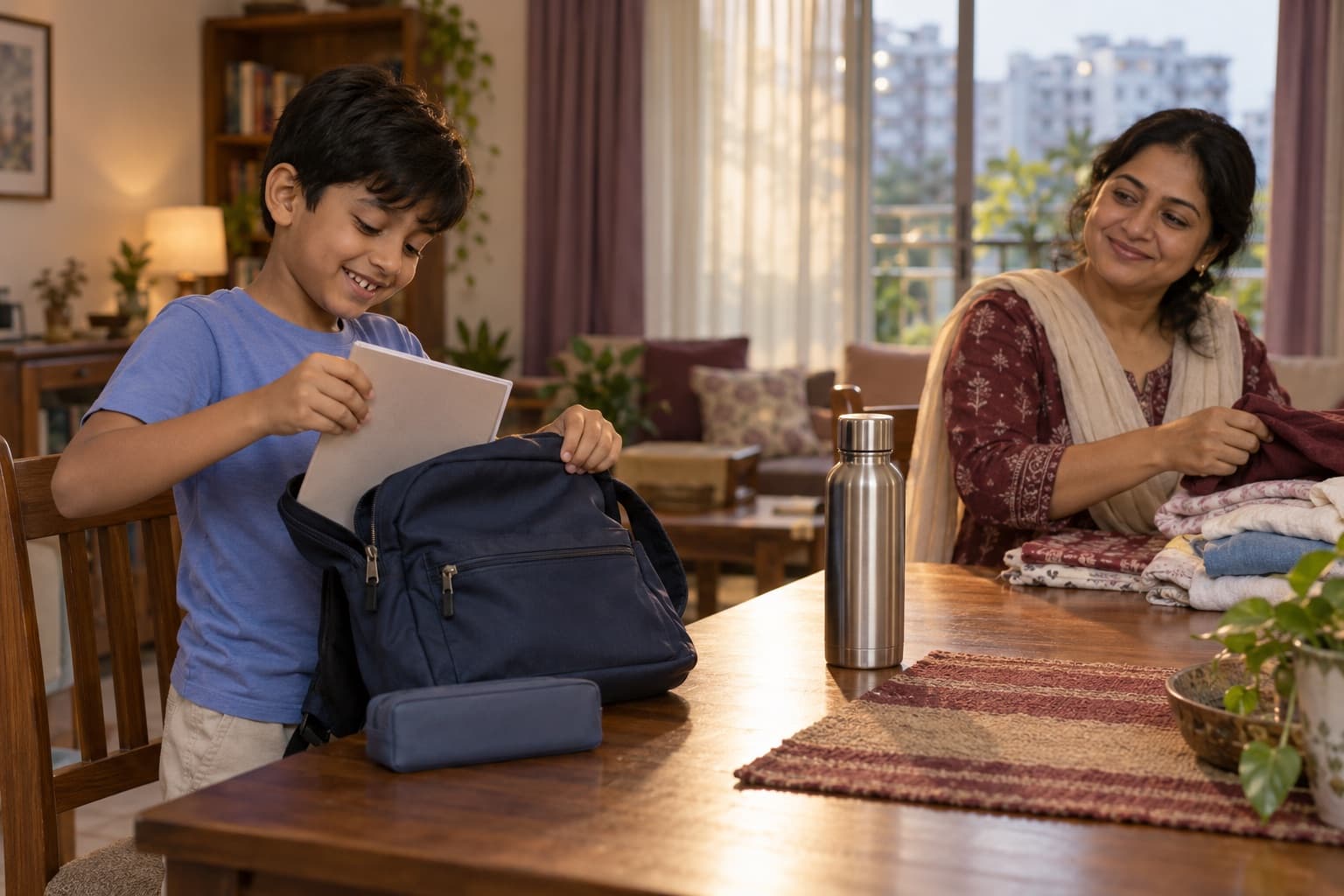
| Doing things alone | Dresses, washes and brushes teeth with reminders; packs a school bag with help; manages small chores | Make a picture checklist for mornings; give one daily job, like filling water bottles |
Reading varies a lot at this age: some 6-year-olds read short books, others are still matching letters and sounds, and both can be fine. For the stages before and after six, see child development stages from 0 to 12.
When do 6-year-olds lose their baby teeth?
Most children lose their first baby tooth somewhere around 5 to 7, usually one of the bottom front teeth, and the rest follow over the next several years. Around the same time, the first adult back teeth often come through behind the baby teeth without any tooth falling out first, so they are easy to miss when brushing.
- Let a loose tooth come out on its own; wiggling is fine, pulling hard isn't.
- Brush twice a day, and help with the back teeth until your child can do them well.
- Keep sweets and sweet drinks mainly to mealtimes; the new adult teeth have to last a lifetime.
- Enjoy the family customs, like offering the fallen tooth to the mouse with a little rhyme for a strong new one.
- See a dentist the same day if a tooth is knocked out or broken in a fall (if it is an adult tooth, keep it in milk and go at once). Book a visit if a tooth or gum is painful or swollen, or an adult tooth has come in behind a baby tooth that still won't loosen after a few months.
6 year old behaviour: fairness, fibs, boasting and after-school meltdowns
Much of what worries parents at 6 comes from big-kid rules meeting small-kid self-control. These are common, and usually nothing to fear:
- 'It's not fair!' A new, strong sense of fairness brings arguments about who got more, who went first and whose turn it is.
- Small lies to avoid trouble ('I already brushed!') and stories that grow in the telling. At this age they usually come from fear of getting it wrong; see why children lie and what helps.
- Boasting and big claims ('I'm the fastest in the whole school!'), often a sign of wanting to feel capable.
- Hating to lose, or quitting a game when behind.
- Meltdowns after school. Many children hold it together all day in class and let go at home, where they feel safest.
- New words from school, rude ones included, tried out at home to see what happens.
When your 6-year-old falls apart after school
- Feed first, talk later. A snack and water on the way home or at the door heads off many meltdowns.
- Hold your questions. Give some quiet time or play before asking about the day.
- Name what you see, briefly: 'Long day. You held it together for hours.'
- Keep the limit on hurting: feelings are allowed, hitting and breaking things aren't.
- Move homework later, after food and some active play.
- If a lie comes out, stay calm, fix the problem together and thank your child when they tell the truth.
What you might say
- Rice first, then tell me about your day if you want to.
- You wanted it to be fair. Let's find a way that feels fair to both of you.
- I'm not angry. I just want to know what really happened, so we can fix it.
- Thank you for telling me the truth. That took courage.
- You're really fast, and you're getting faster because you keep practising.
- That word hurts people, so we don't use it at home.
Class one: reading, writing and the first homework
For many Bangladeshi children, six brings class one: a longer day, more rules, a heavier bag and, often, homework every evening. Many also learn to read and write in two scripts at once, Bangla and English, and sometimes Arabic at home. That is a big load for a child who was playing on the floor a year ago.
Beyond letters and numbers, the most useful things to teach at 6 are habits: packing their own bag, asking the teacher for help, waiting for a turn and owning up to mistakes.
Homework at 6: short, calm and at the same time
- Same time, same place each day, after food and some play, with the TV off.
- Sit nearby rather than over them, and let the work be theirs, mistakes included.
- Break it up: a page, a stretch, then the next page.
- Praise effort and careful tries, not only right answers.
- If homework regularly takes much longer than the teacher expects, or ends in tears most nights, talk to the teacher. More in homework without the fights.
Some 6-year-olds start to dread school: stomach aches on school mornings, fear of a strict teacher, or worry about getting things wrong. A few gentle questions and a word with the teacher often help; see school anxiety.
Sleep, screens and play: what a 6-year-old needs each day
- Sleep: most 6-year-olds need 9–12 hours in 24 hours. With a morning-shift school that starts around 7, that usually means a bedtime around 8 to 9 at night.
- Screens: from 6 there's no fixed number of hours. Child-health guidance suggests consistent limits that protect sleep, at least 60 minutes of active play, homework and family time, with no screens in the hour before bed and devices out of the bedroom at night. See screen time by age.
- Active play: at least 60 minutes a day of moderate-to-vigorous activity. Good 6 year old activities: cycling with an adult nearby, skipping rope on the roof with an adult, badminton, a soft ball in the corridor, dancing, and games like kanamachi, kutkut and borof-pani (freeze tag).
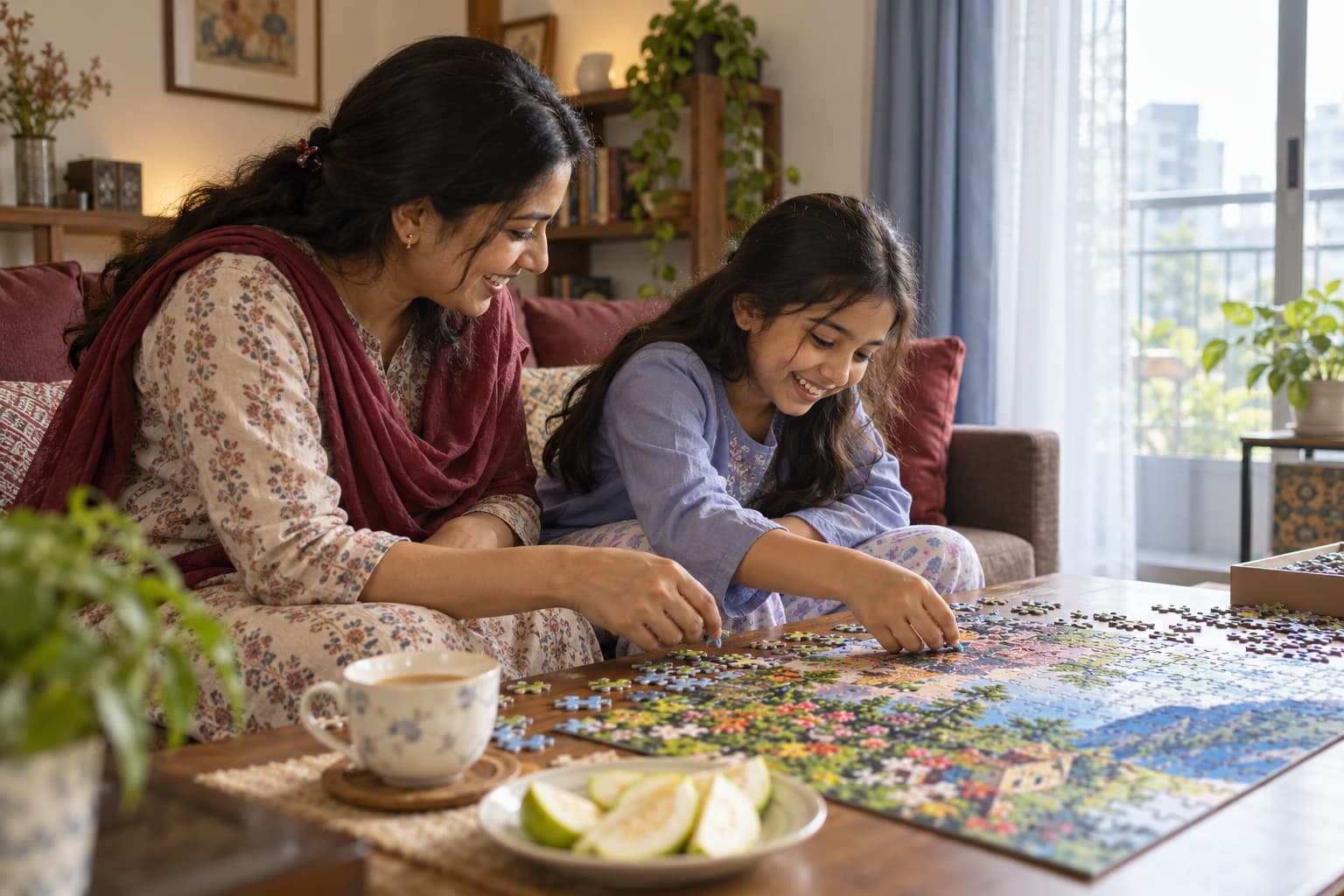
- Quieter play matters too: building, drawing, Ludo, carrom and simple card games grow focus and turn-taking.
In a Bangladeshi home: morning shifts, tutors and the family phone
A home tutor in class one?
Many families arrange a tutor or coaching from class one, often out of worry that the child will fall behind. Before adding hours, check what is left of the day: sleep, an hour of active play, time to be bored and time with you. If a tutor helps, keep sessions short, and ask them to praise effort and never to hit or shame. If your child won't sit down to study at all, see how to motivate your child to study.
Morning shifts and late dinners
In a morning-shift school, the day can start before 7. If the family eats dinner at 10 and guests stay late, a 6-year-old can easily lose an hour or two of sleep a night. Give your child an earlier dinner, keep evening visits calm, and protect bedtime on school nights.
The family phone, and comparisons
Many 6-year-olds use a parent's or grandparent's phone for cartoons and games. Agree together when and where it is used, and keep it out of the bedroom at night. When relatives compare report cards or handwriting, you might say: 'He's working hard, and we're proud of how he's trying.'
A 6 year old routine for a school day
This example is for a child in a morning shift that starts around 7:30. Move the times to fit your school, and keep the order steady.
| Time | What happens |
|---|---|
| 6:15 | Wake up, toilet, wash, school uniform on (laid out the night before) |
| 6:45 | A quick breakfast: paratha or roti with egg, or bread and a banana |
| 7:30–12:30 | School, with a tiffin of fruit and something filling |
| 1:00 | Lunch at home, then rest or quiet play |
| 4:00 | Snack and at least an hour of active play |
| 5:30 | Homework in short chunks at the same table, then free time |
| 7:30 | Dinner, a wash, and the school bag packed for tomorrow |
| 8:30 | Screens off well before this; a story or a chat, then lights out |
A 7-day plan for smoother school days at 6
Pick one change, note what happens each day, and compare after a week.
- Day 1: Note the hardest time of day: before school, after school or bedtime.
- Day 2: Add a snack and quiet time straight after school, before any questions or homework.
- Day 3: Set one homework time and place, with the TV off.
- Day 4: Lay out the uniform and pack the bag together the night before.
- Day 5: Read together for 10 minutes, letting your child read some words to you.
- Day 6: Thank your child every time they tell you the truth about something hard.
- Day 7: Compare with Day 1, keep what helped, and share it with everyone who looks after your child.
When to talk to a doctor or teacher about your 6-year-old
Children develop at different speeds, and many 6-year-olds who are slower in one area catch up during the first years of school. Talk to your child's doctor, and the teacher where it fits, if:
Talk to a doctor or teacher if
- Your child loses skills they had, such as speech, reading or using the toilet. Get this checked promptly.
- Your child isn't doing several things most 6-year-olds do, or still finds letters and sounds very hard after a year of school while managing well in other ways.
- Hearing or sight worries: your child often mishears, can't see the board, squints, holds books very close or gets headaches after reading.
- Stomach aches or tears on most school mornings for a few weeks, or refusing school for more than a week or two.
- Bullying, or a teacher or tutor hitting or humiliating your child: believe your child, act the same day (talk to the school, or stop that tutor’s sessions), and call 999 if your child is in danger.
- Low mood most days for two weeks or more, or any talk of not wanting to live or of self-harm. For any such talk, stay calm and close: call 999 if your child is in danger now; otherwise speak to a doctor the same day.
ParentMind helps you note after-school moods, sleep and homework each day, so you can spot what makes the hard days harder; see how ParentMind works.
Questions parents ask
Is it normal for a 6 year old to lie?
Yes. Small lies are common at 6, usually to avoid trouble or because the child fears getting it wrong. Stay calm, focus on fixing the problem rather than punishing the lie, and thank them when they tell the truth. If a lie seems to hide fear of someone, ask gently and believe what your child tells you. More in why children lie.
What should a 6 year old be able to do?
Most 6-year-olds can skip and catch a small ball, dress and wash with reminders, read some simple words, write their name, follow classroom rules and keep a best friend, and many can ride a bicycle with stabilisers. Reading varies widely at this age, so being early or later is usually fine.
When do kids lose their first tooth?
Most children lose their first baby tooth somewhere around 5 to 7, usually a bottom front tooth. Some start a little earlier or later, which is usually fine. The first adult back teeth often come in around the same time, behind the baby teeth, so help your child brush right to the back.
How much homework should a 6 year old have?
Not much. At 6, a short, calm session is usually enough, and play, sleep and reading together matter at least as much. If homework regularly takes far longer than the teacher expects, or ends in tears most nights, talk to the teacher; the load can often be adjusted.
Why is my 6 year old so emotional after school?
Many 6-year-olds work hard all day to follow rules, sit still and get along, then let it all out at home, where they feel safe. Hunger and tiredness add to it. Offer a snack and quiet time first, save questions and homework for later, and keep bedtime early enough for 9–12 hours of sleep.
Is it normal for a 6 year old to say 'it's not fair' all the time?
Yes. A strong new sense of fairness is a normal step at 6, as children learn rules and compare themselves with others. Listen, name the feeling, and explain that fair doesn't always mean the same. Taking turns to choose, cut the cake or go first often settles many arguments.
This article is general information, not medical advice. For health worries, talk to a doctor; if someone is in danger, contact your local emergency number.