Your 9-year-old: development, behaviour, sleep, play and what's normal
Quick answer
A 9-year-old is usually more independent: most read to learn, manage homework with less help, care about friends and fairness, and can do real jobs at home. Moodiness and arguing back are common, and some show early signs of puberty. Most need 9–12 hours of sleep. Talk to a doctor if your child loses skills or seems low for two weeks or more.
 By the ParentMind team14 min read
Listen to this article
18 min listen · Read by your device's voice
At a glance
- Who it is for
- Parents of 9-year-olds, most often in class three or four
- Key takeaways
- Most 9-year-olds read to learn, manage more of their own homework and routine, and can do real jobs at home, but children develop at different speeds.
- Friends, fitting in and fairness matter a lot at 9; moods and arguing back are common, and calm, steady limits help more than lectures.
- Some 9-year-olds, more often girls, show the first signs of puberty; short, calm talks about growing up often work best before the changes arrive.
- Most 9-year-olds need 9–12 hours of sleep and at least 60 minutes of active play a day, with screen, game and phone rules that protect both.
If you are wondering what to expect from a 9 year old, picture a child with one foot in childhood and one in the preteen years: a door shut for privacy, an eye-roll at your joke, long stories about who said what at school. An hour later, the same child wants a cuddle and a story. Both are normal at nine.
Children develop at different speeds, so read this as a guide, not a test. Below: development, friendships and fairness, independence, early puberty, school and coaching, sleep and screens, phones and games, a routine, a 7-day plan and when to get help.
What can a 9 year old do? Development at nine
Most 9 year old milestones are about growing skill and independence rather than brand-new abilities. These are rough descriptions; ahead in one area and behind in another is usually fine.
| Area | What most 9-year-olds do | How you can help |
|---|---|---|
| Body | Stronger, faster and better coordinated; many love sports and team games; some start a growth spurt with a big appetite | At least 60 minutes of active play a day; a sport, swimming lessons or cycling where you can |
| Reading and writing | Reads longer books and texts to learn, often silently; writes paragraphs and short stories with their own ideas | Books, comics and magazines in Bangla and English; ask what they thought of the story |
| Thinking and maths | Multiplies and divides, starts fractions, solves problems in steps; thinks about rules, fairness and other people's views | Chess, carrom and quiz games; cooking with measures; handling a little money |
| Friends | A close friend or small group, often of the same sex; cares about fitting in; being left out can hurt badly | Listen first, help them think through what to say, and invite friends home |
| Feelings | Feels strongly but hides more; easily embarrassed; worries about tests, friends or family troubles; can be hard on themselves | Praise effort, avoid comparisons, and leave time to talk at bedtime or in the rickshaw |
For the year before, see your 8-year-old, and for every stage from 0 to 12, child development stages by age.
Doing more on their own: jobs and pocket money
Nine-year-olds often want more freedom than parents are ready for, and can handle more responsibility than they are given. Real jobs and small, safe freedoms build confidence:
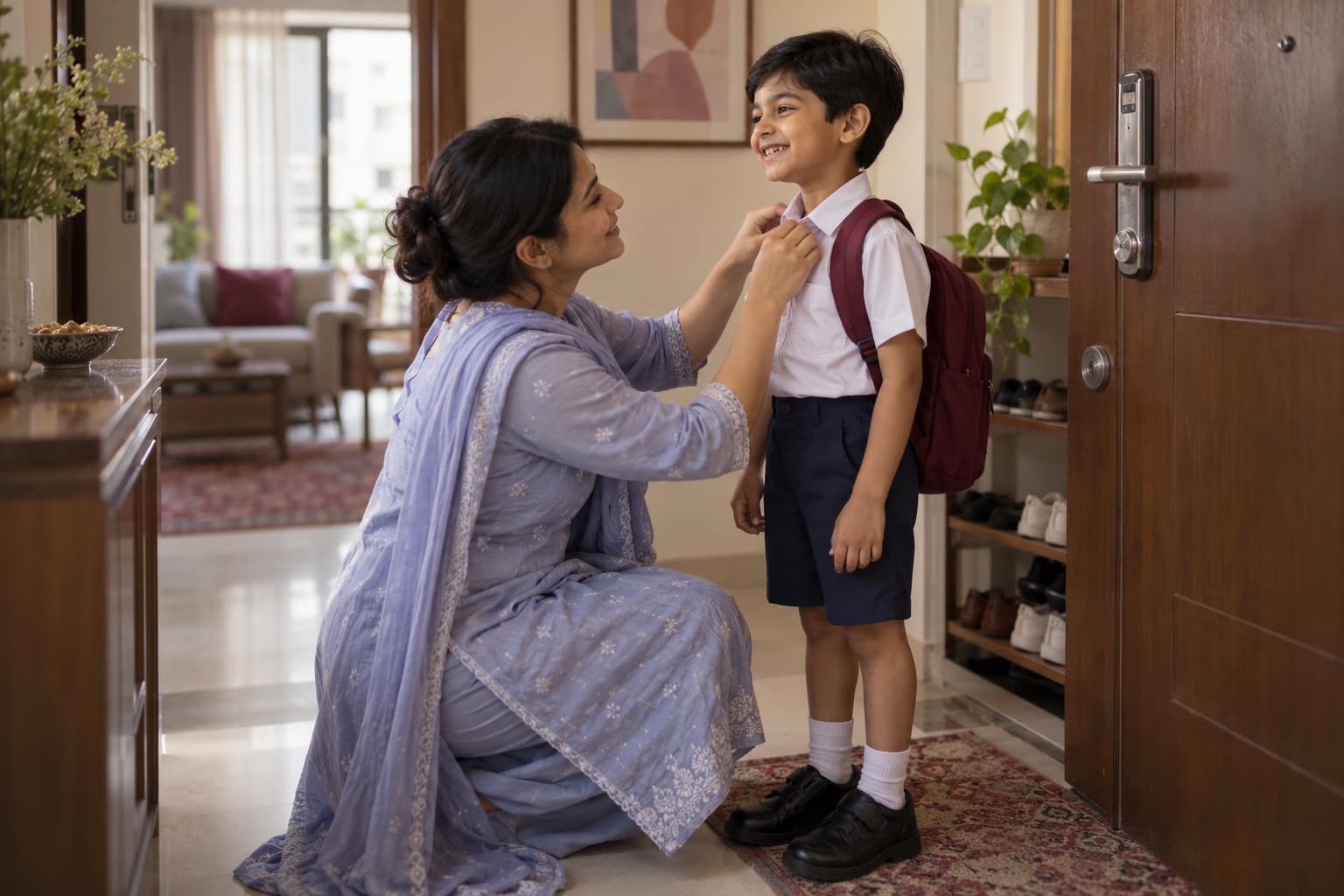
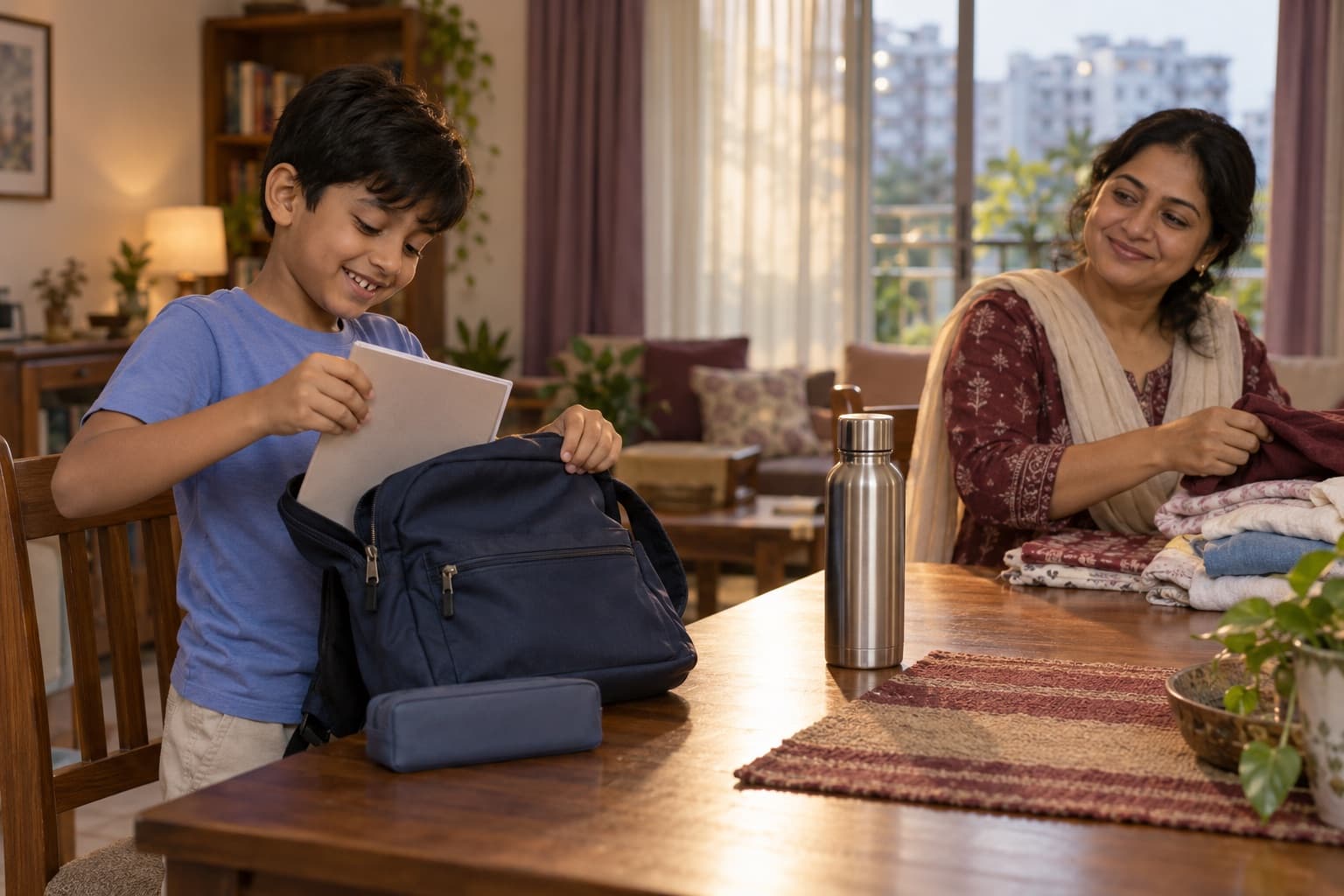
- Daily jobs: making the bed, setting and clearing the table, folding their own clothes, packing the school bag and tiffin, watering plants.
- Money: a little pocket money or part of the Eid salami to save or spend, with a simple plan.
- Choices: what to wear, which book to read, which activity to try after school.
- Younger siblings: a 9-year-old can be a great help, reading a story or playing nearby, but is not ready to be in charge. Never leave a young child alone, or alone with a baby.
9 year old behaviour: friendships, fairness and arguing back
Much of what puzzles parents at 9 comes from a child who is starting to want a life of their own while still needing you close. These are common, and usually nothing to fear:
- Arguing back and negotiating: a 9-year-old wants reasons, and can argue them well.
- 'That's not fair!': strong feelings about rules, turns and how siblings and cousins are treated.
- Eye-rolling, sighs and 'whatever', often picked up from older cousins, school or videos.
- Friendship troubles: a best friend one week, left out the next.
- Wanting privacy: a closed door, a diary, secrets shared only with friends.
- Mood swings and tired meltdowns, especially after school, coaching or a late night.
When your 9-year-old argues back or says 'It's not fair'
- Stay calm and keep your voice low; a louder argument becomes a contest.
- Listen to the end, then name it: 'You think it's unfair that your brother stays up later.'
- Give the reason once, briefly, then stop explaining.
- Offer a fair process, such as taking turns, a timer or a choice of two.
- Keep the limit, and deal with rude words later, privately and calmly.
- Notice when your child disagrees politely or sorts out a friendship trouble, and say so.
What you might say
- That sounds really unfair. Tell me what happened.
- Let's find a fair way: you choose first today, your sister tomorrow.
- I want to hear your side, without shouting. Try again?
- You don't have to tell me everything. I'm here when you want to talk.
- I liked how you sorted that out with your friend.
Early signs of puberty at 9: what to expect and what to say
Puberty often starts somewhere around 8 to 13 in girls and 9 to 14 in boys, so some 9-year-olds, more often girls, show the first changes: breast buds, a growth spurt, stronger body smell or hair under the arms. Many show none yet, and both are normal. Children usually cope best with changes they already know about:
- Start before the changes, with short, calm talks in plain words, and keep coming back to them.
- For girls: explain periods before they start, show pads and how to use them, and agree who she can tell at school. Some girls get their first period at 10 or earlier.
- For boys: explain voice changes, growth, hair and wet dreams before they happen; a father, uncle or mother can do it.
- A daily wash and clean clothes matter more now; stronger body smell often comes first.
- Protect your child from comments about their body, weight or skin colour, including relatives' remarks. Strong worry about weight, skipping meals or eating in secret is a reason to talk to a doctor soon.
For a fuller guide to body changes in girls and boys, privacy and moods at 9 to 12, see preteens.
School at 9: homework, coaching and what to teach beyond marks
For many Bangladeshi children, nine means class three or four: more subjects, class tests and exams, and homework most evenings. Many families add a private tutor or coaching around now. A 9-year-old can take more charge of their own studies, with you nearby rather than beside them.
The most useful things to teach at 9 go beyond marks: planning the week, asking the teacher for help, owning up to mistakes and coping with a bad result.
- Let your child plan homework with a simple list, and check in rather than sit beside them the whole time.
- Before adding coaching, check what's left of the day: 9–12 hours of sleep, an hour of active play, some free time and time with you.
- Ask any tutor to praise effort and never to hit or shame your child.
- Keep reading for pleasure going, in Bangla and English, alongside the textbooks.
- If homework regularly ends in tears, or takes far longer than the teacher expects, talk to the teacher.
How much sleep does a 9 year old need? Sleep, screens, food and play
- Sleep: most 9-year-olds need 9–12 hours in 24 hours. With a morning-shift school and a 6:30 wake-up, that usually means lights out by about 9 at night.
- Screens: from 6 there is no fixed number of hours. Child-health guidance suggests consistent limits that protect sleep, at least 60 minutes of active play, homework and family time, with no screens in the hour before bed and devices out of the bedroom at night.
- Food: three meals and one or two snacks at set times, a tiffin your child actually eats, and water as the everyday drink. A growth spurt can bring a big appetite.
- Active play: at least 60 minutes a day of moderate-to-vigorous activity. Good 9 year old activities: football or cricket in an open space, cycling away from traffic, swimming lessons, badminton on the roof with an adult, skipping, dance, and games like gollachut and borof-pani, with chess, carrom and Ludo for quieter times.
Phones and online games at 9: when to say yes, and the first rules
Many 9-year-olds ask for their own phone, want the online games their classmates play, and join class group chats on a parent's phone. Set family rules now, before habits form:
- Most 9-year-olds don't need a smartphone of their own yet; for readiness signs and first rules, see what age a child should get a phone.
- Check a game's age rating before saying yes; many popular battle games are made for older children and teens.
- Agree game times in advance, with a warning before the end, rather than stopping a game halfway in anger.
- Teach the safety rules: no chatting with strangers, no photos or home address, and tell a parent if anything online feels strange or scary, without being in trouble for telling.
- If games start to crowd out sleep, homework or friends, or bring big anger when it is time to stop, see online game addiction.
A 9 year old routine in a Bangladeshi home
This example is for a child in a morning-shift school, with coaching or an Arabic lesson on some afternoons. Shift the times to fit your day, and keep the order steady.
| Time | What happens |
|---|---|
| 6:30 | Wake up, wash, uniform on (laid out the night before) |
| 7:00 | Breakfast: roti with egg or vegetable bhaji, or khichuri |
| 7:30–1:00 | School, with a tiffin your child packed and a water bottle |
| 1:30 | Lunch at home, then rest or a book |
| 4:00 | Snack, then at least an hour of active play |
| 5:30 | Homework from their own list, or coaching or an Arabic lesson on some days |
| 7:00 | Free time: a game, a book, a daily job, or screen time that ends by 8 |
| 8:00 | Dinner with the family, a wash, the bag packed for tomorrow |
| 8:45 | Reading in bed and a chat about the day; lights out by 9 |
Fairness, a shared room and first fasts
- Fairness: nine-year-olds notice every difference between siblings and cousins. Explain your reasons once, keep rules fair for sons and daughters, and give each child some time that is only theirs.
- A shared room: a drawer or box of their own, a knock before entering, and a little time alone after school go a long way.
- First fasts: some 9-year-olds want to join the family fast in Ramadan. Families follow their own scholars on the faith side; on health, keep sehri and iftar nourishing with plenty of water, and if your child feels unwell or wants to stop, don't push them to go on; let them eat and drink. More in children and first fasts.
A 7-day plan for calmer days with your 9-year-old
Pick one change, note what happens each day, and compare after a week.
- Day 1: Note the hardest moment of the day: the morning rush, after coaching, homework, game time or bedtime.
- Day 2: Hand over one real job, such as packing the tiffin or folding clothes, and thank your child for it.
- Day 3: Agree screen, game and phone times together, write them down, and charge devices outside the bedroom.
- Day 4: Spend ten minutes one to one, doing something your child chooses, with your phone away.
- Day 5: Start a short, calm talk about growing up, using a hook from daily life, such as a cousin's growth spurt.
- Day 6: Ask about friends at a relaxed moment, in the rickshaw or at bedtime: 'Who did you sit with at tiffin time?'
- Day 7: Compare with Day 1, keep what helped, and share it with everyone who looks after your child.
When to talk to a doctor or teacher about your 9-year-old
Many 9-year-olds who are slower in one area catch up with time and support. Talk to your child's doctor, and the teacher where it fits, if:
Talk to a doctor or teacher if
- Your child loses skills they had, such as speech, reading or staying dry. Get this checked promptly.
- Reading, writing or maths stay much harder than for classmates despite several months of steady help, or you have hearing or sight worries: often mishearing, squinting or not seeing the board.
- Stomach aches or tears on most school mornings for a few weeks, refusing school for more than a week or two, or no friends at all for a school term or more.
- Bullying, a sudden change in behaviour, or a teacher or tutor hitting or humiliating your child: believe your child, act the same day, and call 999 if your child is in danger. If an adult online asks for photos, secrets or a meeting, keep the messages, send nothing, block and report the account, and report it at the local police station.
- Signs of puberty that began before about 8 in a girl or 9 in a boy, such as breast buds or body hair.
- Low mood most days for two weeks or more, or any talk of not wanting to live or of self-harm. For any such talk, stay calm and close: call 999 if your child is in danger now; otherwise speak to a doctor the same day.
ParentMind helps you note moods, sleep, homework and game time each day, so you can see what makes the hard days harder; see how ParentMind works.
Questions parents ask
What should a 9 year old be able to do?
Most 9-year-olds read longer books on their own, write a few paragraphs, multiply and divide, and manage washing, dressing and the school bag with few reminders. Many do one or two real jobs at home. Children develop at different speeds; ahead in one area and behind in another is usually fine.
Is it normal for a 9 year old to have mood swings and attitude?
Yes, for many children. At 9, feelings run high, friends matter more and some bodies are starting to change, while self-control is still growing. Tiredness and long days with coaching make it worse. Stay calm, set a limit on rudeness, keep sleep regular, and talk to a doctor if low mood lasts most days for two weeks or more.
How many hours should a 9 year old sleep?
Most 9-year-olds need 9–12 hours of sleep in 24 hours. For a 6:30 wake-up for a morning-shift school, that usually means lights out by about 9 at night. Keep screens off for the hour before bed and devices out of the bedroom, because late games, videos and chats are common reasons children this age sleep too little.
Can puberty start at 9?
Yes. Puberty often starts somewhere around 8 to 13 in girls and 9 to 14 in boys, so some 9-year-olds, more often girls, show early signs such as breast buds, a growth spurt or stronger body smell. Start simple, calm talks before the changes arrive, and talk to a doctor if signs began before about 8 in a girl or 9 in a boy.
Should a 9 year old have a phone?
Most 9-year-olds don't need a smartphone of their own. If your child travels without an adult or needs to reach you, a basic phone for calls is usually enough. Most social apps set 13 as the minimum age. Until then, a shared family device used in a shared room, with agreed times, works well for many families.
How much coaching or homework is too much for a 9 year old?
There is no fixed number, but count what's left of the day: 9–12 hours of sleep, at least 60 minutes of active play, some free time and time with family. If homework or coaching regularly eats into those or ends in tears, talk to the teacher and cut back where you can.
This article is general information, not medical advice. For health worries, talk to a doctor; if someone is in danger, contact your local emergency number.