Your 8-year-old: development, behaviour, school, sleep and what's normal
Quick answer
An 8-year-old is usually moving from learning to read to reading to learn: most read short books alone, follow rules, care about fairness and friends, and can manage daily jobs. Arguing back, mood swings and sensitivity to criticism are common. Most need 9–12 hours of sleep. Talk to a doctor if your child loses skills or seems low for weeks.
 By the ParentMind team13 min read
Listen to this article
17 min listen · Read by your device's voice
At a glance
- Who it is for
- Parents of 8-year-olds, most often in class two or three
- Key takeaways
- Most 8-year-olds read short books on their own, explain their ideas, play games with rules and handle a few daily jobs, but children develop at different speeds.
- Fairness, friendships and arguing back are big at 8, and moods can swing; calm, steady limits usually help more than lectures.
- Most 8-year-olds need 9–12 hours of sleep, at least 60 minutes of active play a day, and screen and game limits that protect both.
- First requests for a phone, online games and group chats often start around 8: agree family rules early and keep devices out of the bedroom at night.
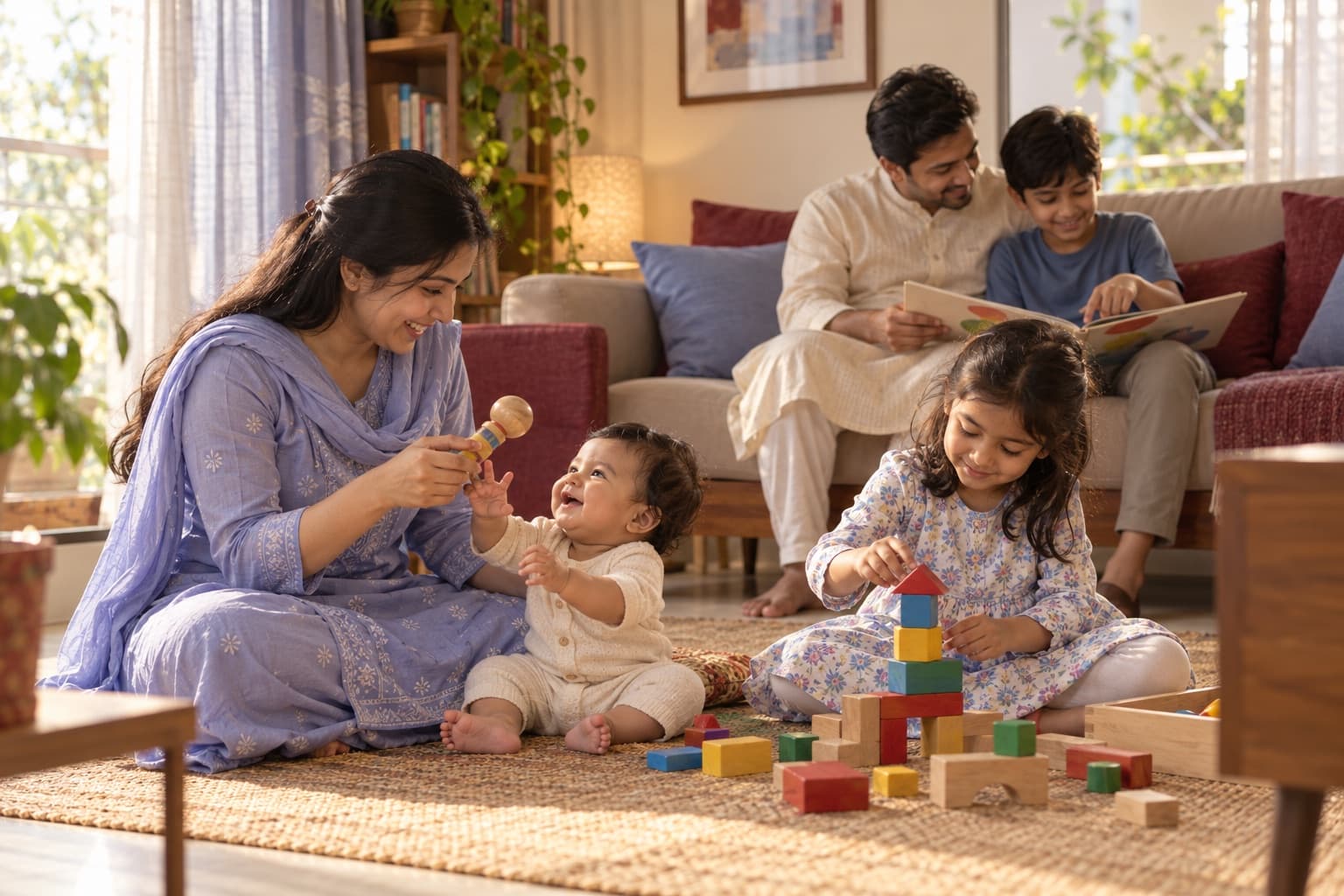
Life with an 8-year-old can feel very different from the first school years: comics read under the blanket, a score kept in every game, arguments about rules, and questions about why a cousin has a phone. For most children, eight is a busy, fairly steady age, with big feelings about friends and fairness underneath.
Children develop at different speeds, so read this as a guide, not a test. It covers what to expect from an 8 year old: what most can do, normal behaviour, school and coaching, sleep, screens and first games, chores, a school-day routine, a 7-day plan and when to talk to a doctor.
What can an 8 year old do? Development at eight
Most 8 year old milestones are about becoming more skilled and independent rather than brand-new abilities: reading to learn, thinking things through, closer friendships and doing more alone. These are rough descriptions; ahead in one area and behind in another is usually fine.
| Area | What most 8-year-olds do | How you can help |
|---|---|---|
| Body | Runs, jumps, throws and catches with more control; rides a bicycle without stabilisers; baby teeth keep falling out | At least 60 minutes of active play a day; team games, cycling and swimming lessons where you can |
| Reading and writing | Reads short chapter books and comics alone, often silently; writes a few sentences or a short paragraph; spelling improves | Keep books and comics around, let your child choose, and ask about the story, not the marks |
| Thinking and maths | Adds and takes away bigger numbers, starts times tables, tells the time, counts money; plans a little ahead; loves facts and collections | Cook and measure together, let them count the change at the shop, play chess, carrom and board games such as Ludo |
| Friends | Has close friends, often a small group; cares a lot about rules and fairness in games; falling out and making up are common | Listen to friendship troubles and help them think of what to say, rather than fixing it for them |
| Feelings | Can name feelings and also hide them; easily embarrassed; sensitive to criticism; may worry about tests, the teacher or family troubles | Praise effort, avoid comparing with cousins, and leave time to talk at bedtime |
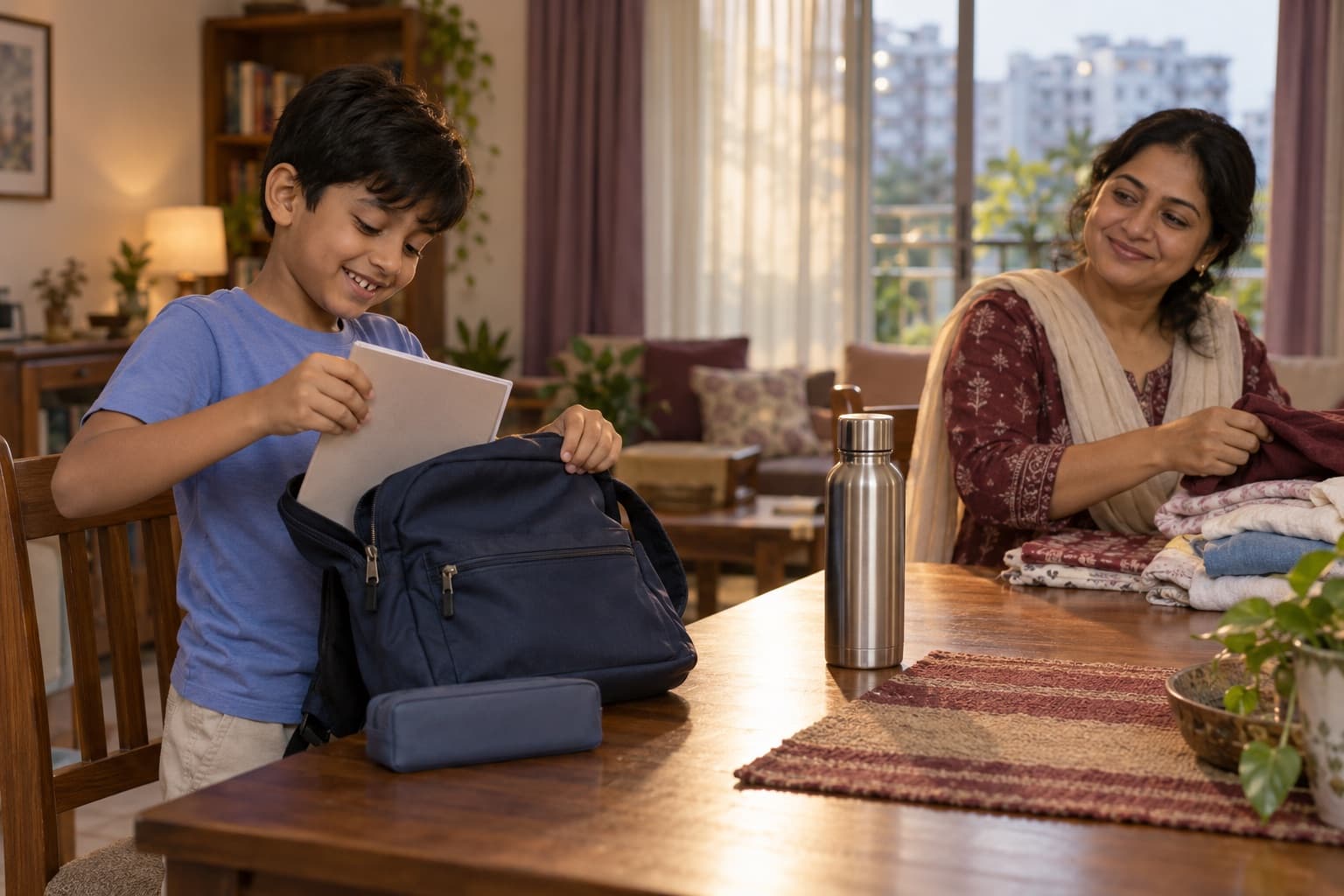
| Doing things alone | Washes, dresses and packs the school bag with fewer reminders; can handle small daily jobs and a little money | Give one or two real daily jobs, and thank them for doing them |
Reading varies a lot at this age: some 8-year-olds read long stories, others are still building speed, and both can be fine. For the year before, see your 7-year-old, and for every stage from 0 to 12, child development stages by age.
Puberty often starts somewhere around 8 to 13 in girls and 9 to 14 in boys, so a few girls show early changes, such as breast buds, at this age. Calm, simple talks about growing up work best before the changes arrive; see preteens for ages 9 to 12.
8 year old behaviour: what's normal at eight?
Much of what puzzles parents at 8 comes from a child who now thinks like a big kid but still has a young child's self-control. These are common, and usually nothing to fear:
- Arguing back and negotiating. Eight-year-olds want reasons, spot every loophole and point out when you break your own rule.
- 'That's not fair!' A strong sense of rules and fairness, at home, in games and at school.
- Mood swings and tired meltdowns, especially after school, coaching or a late night.
- Big friendship feelings: a best friend one week, 'nobody likes me' the next.
- Sensitivity to criticism and embarrassment, including about a parent's hug in front of friends.
- Rude words, jokes and attitude picked up from school, older cousins or videos, tried out at home.
When your 8-year-old argues back
- Stay calm and lower your voice; arguing louder turns it into a contest.
- Give the reason once, briefly, then stop explaining.
- Name the feeling: 'You think it's unfair that your brother stays up later.'
- Offer a fair process, such as taking turns, a timer or a choice of two.
- Keep the limit, and deal with rudeness later, privately and calmly.
- Notice when they disagree politely, and say so.
What you might say
- I hear you. The answer is still no, and I'm happy to talk about it after dinner.
- You can disagree with me. You can't be rude to me.
- It's not the same, but it's fair. Your turn comes tomorrow.
- Sounds like today was hard with your friends. Do you want to tell me, or just sit together for a bit?
- Everyone makes mistakes. What could you try next time?
School at 8: reading to learn, homework and the start of coaching
For many Bangladeshi children, eight means class two or three: more subjects, class tests, half-yearly and annual exams, and homework most evenings. It is also when many families add a private tutor or coaching. Reading matters more now, because more of every subject is learned by reading.
The most useful things to teach at 8 go beyond marks: planning homework, asking the teacher for help, owning up to mistakes and coping with a bad result.
- Keep reading for pleasure alive: storybooks, comics and children's magazines in Bangla and English all count, and so does reading together.
- Homework at a set time and place, after food and play, with your child doing the work and you nearby.
- Before adding coaching, check what's left of the day: 9–12 hours of sleep, an hour of active play, some free time and time with you.
- Ask any tutor to praise effort and never to hit or shame your child.
- If homework regularly ends in tears, or takes much longer than the teacher expects, talk to the teacher.
Sleep, screens, food and play: what an 8-year-old needs each day
- Sleep: most 8-year-olds need 9–12 hours in 24 hours. With a morning-shift school, that usually means lights out around 8:30 to 9 at night.
- Screens: from 6 there's no fixed number of hours. Child-health guidance suggests consistent limits that protect sleep, at least 60 minutes of active play, homework and family time, with no screens in the hour before bed and devices out of the bedroom at night. See screen time by age.
- Food: three meals and one or two snacks at set times, a tiffin your child actually eats, and water as the everyday drink, with chips and soft drinks kept for treat days.
- Active play: at least 60 minutes a day of moderate-to-vigorous activity. Good 8 year old activities: cricket or football in an open space, badminton on the roof with an adult, cycling, swimming lessons, skipping, and games like gollachut, kanamachi and borof-pani. Quieter games such as chess, Ludo and puzzles build focus and patience.
Phones, online games and group chats: when do they start?
Around 8, many children ask for their own phone, want the online games their classmates talk about, and join class group chats on a parent's phone. Set family rules now, before habits form.
- Most 8-year-olds don't need a phone of their own yet; for readiness signs and first rules, see what age a child should get a phone.
- Use shared devices in shared rooms, and keep all devices out of the bedroom at night.
- Check a game's age rating before saying yes; many popular battle games are made for older children and teens.
- Agree game times in advance, with a warning before the end, rather than stopping a game halfway in anger.
- Teach one rule early: no chatting with strangers, no sharing photos or the home address, and tell a parent if anything online feels strange or scary.
- If games start to crowd out sleep, homework or friends, or bring big anger when it is time to stop, see online game addiction.
In a Bangladeshi home: chores, younger siblings and comparisons
Responsibility in a home with house help
In homes with house help, children often do very few chores. Yet eight is a good age for one or two real daily jobs, such as setting the table or folding their own clothes. Give sons and daughters the same jobs, and say thank you.
Younger brothers and sisters
An 8-year-old can be a wonderful help with a younger brother or sister: fetching things, reading a story, playing nearby. They are not ready to be in charge. Never leave a young child alone, or alone with a baby.
Cousins, class position and comparisons
At family gatherings, report cards are often compared: who came first, whose roll number went up. Eight-year-olds feel this keenly. You might say: 'Every child grows at their own pace, and we're proud of how hard she tries.' At home, compare your child only with their own last result.
An 8 year old routine for a school day
This example is for a child in a morning-shift school, with coaching on some afternoons. Shift the times to fit your day, and keep the order steady.
| Time | What happens |
|---|---|
| 6:30 | Wake up, wash, uniform on (laid out the night before) |
| 7:00 | Breakfast: roti with egg or vegetable bhaji, or khichuri |
| 7:30–12:30 | School, with a tiffin and a water bottle |
| 1:00 | Lunch at home, then rest or quiet play |
| 3:30 | Snack, then at least an hour of active play |
| 5:00 | Homework at the same table, or coaching on coaching days |
| 7:00 | Free time: reading, a game, or screen time that ends by 8 |
| 8:00 | Dinner, a wash, and the school bag packed for tomorrow |
| 8:45 | Reading in bed and a chat about the day, then lights out |
A 7-day plan for calmer days with your 8-year-old
Pick one change, note what happens each day, and compare after a week.
- Day 1: Note the hardest moment of the day: the morning rush, after coaching, homework, game time or bedtime.
- Day 2: Give one real daily job, such as setting the table or packing the school bag, and thank your child for it.
- Day 3: Agree screen and game times together, write them down, and charge devices outside the bedroom.
- Day 4: Spend ten minutes one to one, doing something your child chooses, with your phone away.
- Day 5: Read together for 10–15 minutes, or let your child read to you, and ask about the story, not the marks.
- Day 6: Ask about friends at a relaxed moment, in the rickshaw or at bedtime: 'Who did you play with today?'
- Day 7: Compare with Day 1, keep what helped, and share it with everyone who looks after your child.
When to talk to a doctor or teacher about your 8-year-old
Children develop at different speeds, and many 8-year-olds who are slower in one area catch up with time and support. Talk to your child's doctor, and the teacher where it fits, if:
Talk to a doctor or teacher if
- Your child loses skills they had, such as speech, reading or staying dry in the day. Get this checked promptly.
- After two years of school your child still finds simple sentences very hard to read, or often mishears, squints or can't see the board: talk to the teacher and a doctor, and ask for eye and hearing checks.
- Stomach aches or tears on most school mornings for a few weeks, or refusing school for more than a week or two.
- Bullying, a sudden change in behaviour, a teacher or tutor hitting or humiliating your child, or an adult online asking for photos or secrets: believe your child and act the same day. With an adult online, send nothing, keep the messages, block and report the account, and tell your local police station. Call 999 if your child is in danger now.
- Signs of puberty in a boy before about 9, or signs that began in a girl before about 8, such as breast buds or body hair.
- Low mood most days for two weeks or more, or any talk of not wanting to live or of self-harm. For any such talk, stay calm and close: call 999 if your child is in danger now; otherwise speak to a doctor the same day.
ParentMind helps you note moods, sleep, homework and game time each day, so you can spot what makes the hard days harder; see how ParentMind works.
Questions parents ask
Is it normal for an 8 year old to have mood swings?
Yes, for many children. Eight-year-olds feel things strongly and care what friends think, while their self-control is still growing. Hunger, tiredness and long days with coaching make moods worse. Keep sleep and meals regular, give time to unwind after school, and talk to a doctor if low mood lasts most days for two weeks or more.
How much sleep does an 8 year old need?
Most 8-year-olds need 9–12 hours of sleep in 24 hours. For a child who wakes at 6:30 for a morning-shift school, that usually means lights out by about 9 at night. Keep screens off for the hour before bed and devices out of the bedroom, because late games and videos are a common reason children sleep too little.
Should an 8 year old have a phone?
Most 8-year-olds don't need a phone of their own. If your child travels without an adult or must be able to reach you, a basic phone for calls is usually enough. Smartphones and social media can wait; most social apps set 13 as the minimum age. Until then, a shared family device in a shared room works well.
What chores can an 8 year old do?
Most 8-year-olds can set and clear the table, fold and put away their own clothes, water plants, tidy their room, pack their school bag, help prepare simple food such as muri or fruit, and help a grandparent or younger sibling. Start with one or two daily jobs, show how once, and thank them rather than redo the job.
Why does my 8 year old argue back so much?
At 8, children can think through rules and spot when something seems unfair, but they are still learning to disagree politely. Arguing back is often a sign of growing reasoning, not disrespect. Give the reason once, keep the limit calmly, deal with rudeness later in private, and praise your child when they disagree politely.
My 8 year old says 'I'm stupid'. What should I do?
Stay calm and curious rather than arguing: 'Sounds like something felt really hard today.' Ask what happened, then point to effort and progress: 'You couldn't do these last month.' Avoid comparing with siblings or cousins. If the self-criticism comes most days for weeks, or with low mood or talk of self-harm, talk to a doctor.
This article is general information, not medical advice. For health worries, talk to a doctor; if someone is in danger, contact your local emergency number.