Child won't eat vegetables? What works, and what backfires
Quick answer
When a child won't eat vegetables, keep offering small amounts without pressure: many children need 10 or more tastes before they accept one. Serve a familiar food alongside, eat vegetables yourself, cook together and let them choose at the bazar. Skip bribes, force and secret hiding. See a doctor if your child loses weight or eats very few foods.
 By the ParentMind team12 min read
Listen to this article
17 min listen · Read by your device's voice
At a glance
- Who it is for
- Parents of children aged about 2 to 10 who push vegetables away, pick them out, or live on rice, egg and potato
- Key takeaways
- Refusing vegetables is very common at 2 to 10: many taste bitter to children and new foods feel risky, so acceptance often takes 10 or more calm tastes.
- Pressure, sweets as a prize and 'one more bite' battles tend to make children refuse more; small portions, a safe food on the plate and your own example help more.
- Bangladeshi kitchens are full of child-friendly vegetables: soft lau and pumpkin, carrots in dal, vegetable khichuri, bhaji, bhorta and homemade pakora now and then.
- Talk to a doctor if your child is losing weight, eats a very short and shrinking list of foods, or often gags or vomits at meals.
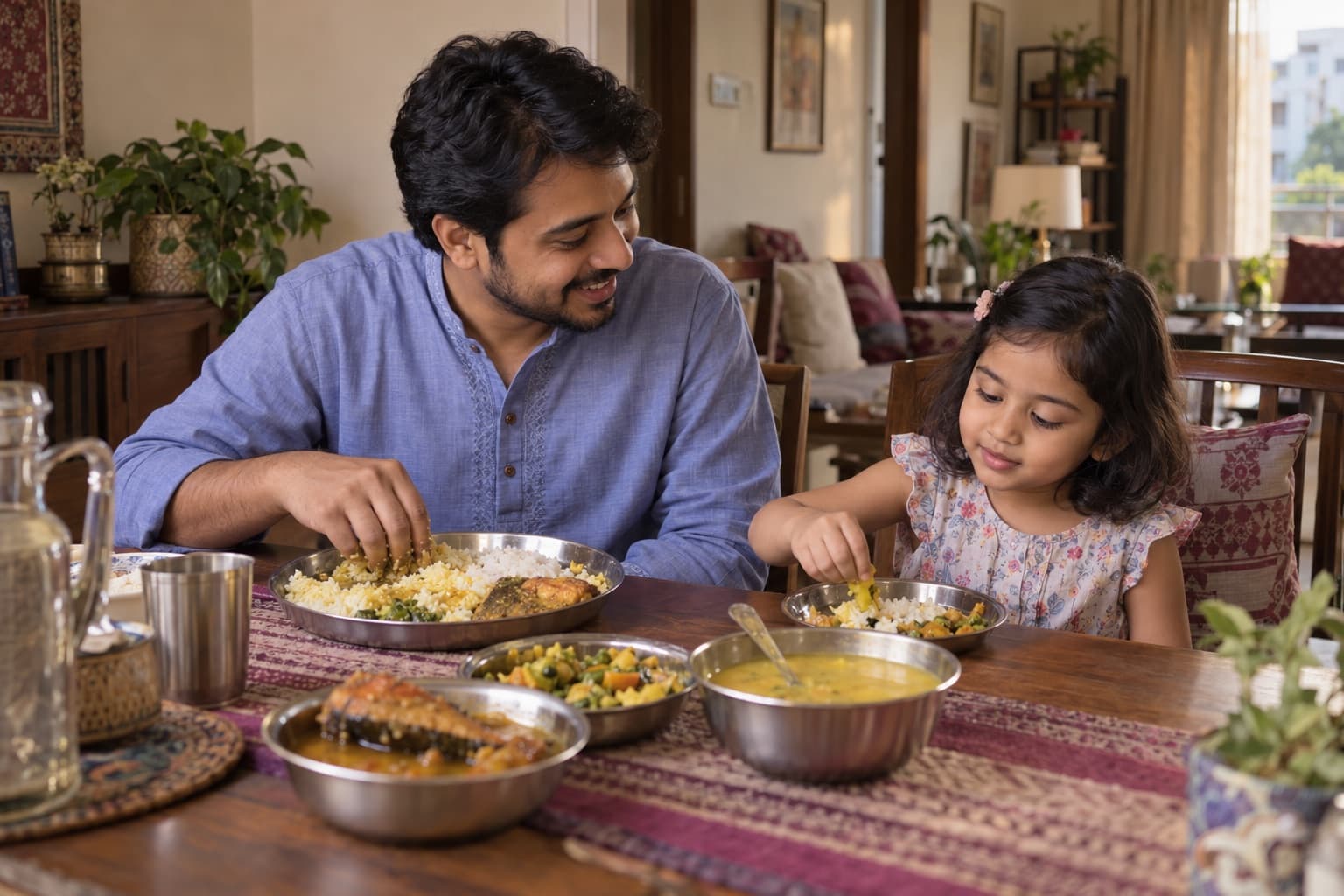
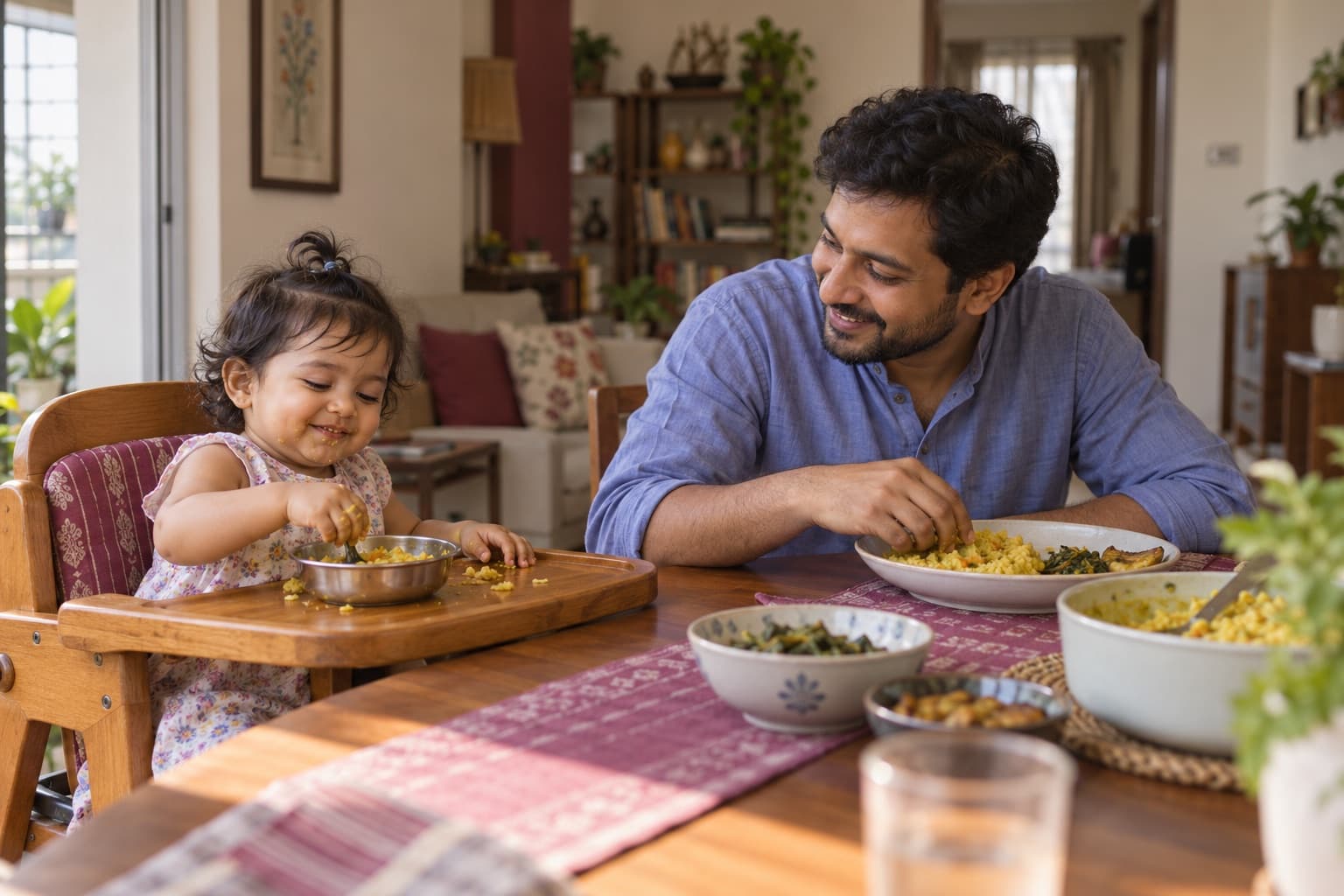
If your child won't eat vegetables, you are in very good company: the shak pushed to the side of the plate, the carrot fished out of the dal, the lau curry refused before it is even tasted. Many children go through this for years, and most slowly eat more vegetables as they grow, especially when meals stay calm.
This page is about vegetables only: why children refuse them, what to do at the table, Bangladeshi dishes many children like, cooking together and the bazar trip, what backfires, a 7-day plan and when to worry. If your child refuses most foods, not just vegetables, start with what to do with a picky eater.
Child won't eat vegetables? Why it happens
Kids who hate vegetables are usually not being difficult. Vegetables are one of the hardest foods for young children to like, mostly for reasons of taste and age:
- Bitter tastes: many vegetables, especially leafy greens such as shak, taste more bitter to children than to adults. This often eases with age.
- Texture: stringy, slimy or mixed textures, such as hard pieces in a soft curry, are harder to accept than smooth or crunchy ones.
- Wariness of new foods: a normal stage, often strongest between about 2 and 6.
- Too few meetings: children tend to like what they have seen, smelled and tasted many times. A vegetable that appears once a month stays a stranger.
- Pressure: the more a child is pushed to eat greens, the more they become the enemy.
- Full already: milk, biscuits, chips or juice between meals leave little hunger for vegetables.
| Age | What's common | What helps |
|---|---|---|
| 2–3 years | A toddler refuses vegetables, or anything green; eats a vegetable one day and refuses it the next | Tiny soft pieces beside rice or roti; letting them touch and squash without eating |
| 4–6 years | Picks vegetables out of curry; calls dishes 'yuck'; copies siblings and friends | A choice of two vegetables; small kitchen jobs; one new vegetable a week |
| 7–10 years | More willing to try with a say in it; may still dislike strong tastes; notices friends' tiffins | Choosing at the bazar, cooking a simple dish, packing a vegetable they picked |
How to get kids to eat vegetables: small tastes, many times
Children usually learn to like vegetables slowly, by meeting them again and again without pressure. Many need 10 or more tastes, over weeks, before a vegetable feels safe, and each calm meeting counts, even one that ends with the piece left on the plate.
- Put a small amount on the plate, a spoonful or two pieces, next to a food your child already eats, such as rice, roti or egg.
- Say nothing about it, or one neutral line: 'That's lau. It's soft.'
- Eat the same vegetable yourself and enjoy it, without asking your child to copy you.
- Let your child touch, smell or lick it, or spit it into a napkin; each of these is a step.
- Serve it again a few days later, the same way or a new way: boiled, mashed, in dal, in a bhaji.
- End the meal when your child is full, eaten or not, with no replacement snack straight after.
- Notice courage, not quantity: 'You tried something new today.'
What you might say at the table
- You don't have to eat it. It can stay on your plate.
- This is pumpkin. It's soft and a little sweet.
- Want to smell it first, or just touch it?
- One tiny bite, or none. You choose.
- Shall we cook this together tomorrow?
Vegetables for picky eaters: Bangladeshi dishes many children like
If your child won't eat vegetables, start with mild, soft or slightly sweet ones; strong greens usually come last. Take your child's portion out before the chilli goes in, and keep salt low.
| Vegetable | Ways many children like it |
|---|---|
| Lau (bottle gourd) | Soft and mild: in dal, a light curry with small fish or chicken, lau bhaji with egg |
| Mishti kumra (pumpkin) | Naturally sweet: mashed into rice, kumra bhaji, a bhorta without chilli, in khichuri |
| Gajor (carrot) | Grated into dal or khichuri, soft-cooked sticks, in a vegetable omelette or homemade noodles |
| Pepe (green papaya) | Mild and soft once cooked: in a chicken or fish curry, pepe bhaji, mashed in a bhorta |
| Shak (lal shak, palong, pui) | Often the hardest: a little mixed into rice and dal; red shak turns rice pink, which many children find fun; spinach in an omelette or a paratha |
| Alu and friends (potato, peas, cauliflower, beans) | A good bridge: alu-phulkopi, alu with peas, alu-shim bhaji, with less potato over time |
| Shosha and tomato (cucumber, tomato) | Mild and crunchy raw for older children; tomato in dal or an omelette |
- Vegetable khichuri: rice, dal and soft vegetables in one pot. Mixing vegetables into khichuri this way is visible and honest, not hiding.
- Bhorta: mashed potato, pumpkin, brinjal or beans with a little mustard oil and salt, chilli left out. Smooth bhorta suits many children who dislike lumps.
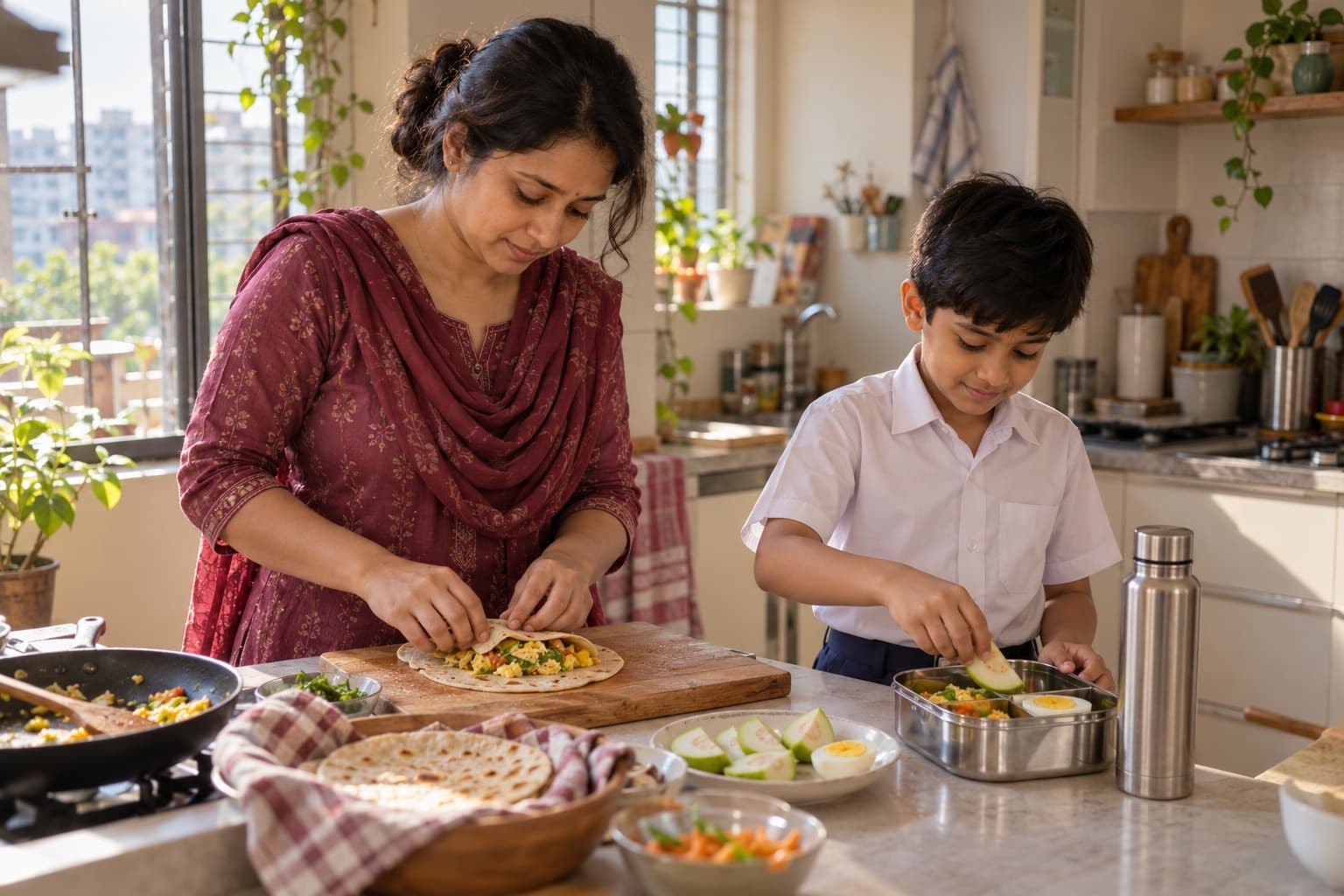
- Rolls and parathas: a roti rolled around egg and vegetable bhaji, or a paratha with grated vegetables in the dough.
- Homemade pakora, beguni or a vegetable cutlet: fried, so keep them for weekends or iftar, but they can be a friendly first meeting with a vegetable.
For children under about 5, cook vegetables soft or grate them: hard raw pieces such as carrot sticks are a choking risk, and small tomatoes need cutting lengthways into quarters. For more meals for ages 1–3, see toddler meal ideas; for a balanced plate at each age, see food and nutrition for children.
Make vegetables appealing to kids: cooking together and the bazar trip
Children are more likely to try food they helped choose or cook. Small jobs, matched to age, turn a vegetable from a stranger into something they know:
- 2–4 years: wash vegetables in a basin, tear shak leaves, drop peas into a bowl, mix cold ingredients in a bowl.
- 5–7 years: shell peas, pick shak from the stems with a grandparent, use a peeler, mash a bhorta, carry the vegetable dish to the table.
- 8–10 years: crack eggs for a vegetable omelette, chop soft vegetables with a child-safe knife and an adult beside them, choose and help cook one simple dish a week.
Stay right beside a child doing any kitchen job. Keep young children well away from the hot stove, hot oil and sharp knives; older children use them only with an adult right beside them.
The bazar trip
Take your child to the bazar, or to the vegetable van at the gate, and let them choose one vegetable for the week. Talk about colours and shapes, let them hold it and hand over the money, then cook it together that day. A tub of lal shak or coriander on a sunny windowsill, or on the roof with an adult, lets children watch food grow.
Hiding vegetables in food, bribes and force: what backfires?
When a child won't eat vegetables, some common tricks get a few in today but make tomorrow's meal harder:
- Sweets as a prize: 'Eat your shak and you get chocolate' teaches that vegetables are a chore and sweets the reward. Many children then want the sweet more and the vegetable less.
- Force and pressure: holding a child still, 'one more bite' battles or keeping them at the table until the plate is clean tend to make vegetables the enemy, and pushing food into a crying child's mouth can make them choke.
- Hiding as the only plan: blending vegetables into dal or roti dough is fine as an extra. But if vegetables are only ever hidden, your child never learns to like them, and finding out can make them distrust all food. Keep a visible piece on the plate too.
- Threats and comparisons: 'No cartoon until you finish' or 'Your cousin eats everything' turn dinner into a fight and can make a child feel bad about eating.
- A separate meal every time: cooking something else whenever vegetables are refused teaches that refusing works. Serve family food with one safe food instead.
- The phone at the table: a cartoon gets food in, but children stop noticing taste and fullness; see how to stop feeding with the phone.
In a Bangladeshi home: grandparents, house help and 'only rice and egg'
- Only rice, egg and potato: many children live on these for a while. Use them as a bridge: egg with lau or papaya bhaji, a vegetable omelette, potato with cauliflower or peas, then a little less potato each week.
- Grandparents: a grandmother who says 'he doesn't like vegetables, don't give him any' means well. Ask for a small piece on the plate at every meal, without coaxing, and invite her to pick shak with your child.
- House help who cooks: share the plan with your গৃহকর্মী: the child's portion before the chilli, one vegetable cooked soft, and no forcing or sweets as a prize.
- Tonics and syrups: relatives may suggest a vitamin syrup instead of vegetables. Give none unless a doctor prescribes it after checking your child.
- The tiffin: a roti roll with vegetable bhaji, or cucumber pieces for an older child; lunch ideas for kids has more.
- Winter vegetables: the cool months fill every bazar with cauliflower, beans, peas, tomatoes and carrots, a good season to try something new.
A 7-day plan to help your child eat more vegetables
When a child won't eat vegetables, progress often starts with looking and touching, long before eating. Each day, note what your child did with the week's vegetable: looked, touched, licked, tasted or ate.
- Day 1: Notice. Write down which vegetables your child ate, touched or refused, and what they ate and drank between meals.
- Day 2: Choose one 'learning vegetable', such as pumpkin or lau, and serve two pieces next to a safe food, without comment.
- Day 3: Take your child to the bazar or the vegetable van to choose a vegetable, and let them wash it.
- Day 4: Cook it together in a dish your child already likes: khichuri, bhaji or an omelette.
- Day 5: Serve the learning vegetable in a new form: in a bhorta, in dal, or as soft sticks.
- Day 6: Eat vegetables yourself at every family meal, and talk about taste and colour, not your child's plate.
- Day 7: Look back: did your child look, touch, lick or taste more than on Day 1? Count those steps, keep going, and add a second vegetable next week.
When to worry if your child won't eat vegetables
Refusing vegetables on its own is rarely a medical problem, especially if your child eats some fruit, grows steadily and has energy to play. Talk to your child's doctor if:
Talk to a doctor if
- Your child is losing weight, isn't growing as expected at check-ups, or clothes that fitted are getting loose.
- Your child eats only a very small number of foods, has dropped whole food groups, and the list keeps shrinking.
- Your child often gags, chokes or vomits at certain textures, or seems afraid of eating.
- Constipation, tummy pain or other stomach problems last more than a couple of weeks.
- Your child seems pale or unusually tired, has little energy for play, or is often unwell.
- If your child is choking and can't breathe, cough or cry, call 999 at once and start choking first aid if you know it.
If your child won't eat vegetables, small steps are easy to miss from one meal to the next. ParentMind helps you note what happens each day, see patterns and get guidance. See how ParentMind works.
Questions parents ask
Is it normal for a child not to eat vegetables?
Yes, it is very common, especially between 2 and 6. Many vegetables taste bitter to children, and new foods feel risky. Most children slowly eat more as they grow, particularly when vegetables keep appearing without pressure. See a doctor if your child is losing weight, eats very few foods overall, or often gags or vomits at meals.
How many times should I offer a vegetable before giving up?
Many children need 10 or more tastes, spread over weeks, before they accept a new vegetable, and some need many more. Keep offering a small amount every few days, cooked different ways, without pressure. A child who looks at it, touches it or licks it is making progress, even if they don't eat it yet.
Is it OK to hide vegetables in my child's food?
As an extra, yes: grated carrot in dal or khichuri, or pumpkin in roti dough, adds vegetables without a fight. But don't make hiding the only plan. Children learn to like vegetables by seeing and tasting them, so serve a visible piece on the plate too, and if your child asks what is in the food, tell the truth.
Should I reward my child with sweets for eating vegetables?
It is better not to. Sweets as a prize can teach children that vegetables are a chore and sweets the reward, so many end up wanting sweets more and vegetables less. Notice their courage instead, cook together, and keep sweets for occasional treats that don't depend on what is eaten.
My child only eats rice, egg and potato. What should I do?
Use those foods as a bridge. Cook egg with a little lau or papaya, add peas or cauliflower to potato bhaji, or make a vegetable omelette, then slowly shift the balance towards the vegetable over weeks. Keep one safe food on every plate, and see a doctor if the list of foods your child eats is getting shorter.
What vegetables do kids like best?
Many children start with mild, soft or slightly sweet vegetables, such as pumpkin, carrot, lau, potato, peas and cucumber, and accept strong-tasting greens such as shak last. Begin with what your child already tolerates, cook it soft and simply, and add one new vegetable at a time beside a familiar food.
This article is general information, not medical advice. For health worries, talk to a doctor; if someone is in danger, contact your local emergency number.