Child refuses to drink milk? What to do, and calcium without milk
Quick answer
When a child refuses to drink milk, don't force it: milk isn't a must if their food includes other calcium sources, such as doi (yoghurt), cheese, small fish eaten with their soft bones, leafy greens and dal. Use milk in cooking, offer it at meals, and see a doctor if milk brings tummy pain or diarrhoea, or growth slows.
 By the ParentMind team10 min read
Listen to this article
14 min listen · Read by your device's voice
At a glance
- Who it is for
- Parents of children aged 2–10 who won't drink milk, or who drink so much of it that they won't eat
- Key takeaways
- Milk is one good source of calcium, not the only one: doi, cheese, small fish with soft bones, leafy shak and dal can cover it.
- Forcing, bribing or scaring a child into drinking milk often makes the refusal stronger; offer it calmly and let them decide.
- Too much milk between meals can spoil a child's appetite for food; milk with meals or snacks suits most children.
- Tummy pain or diarrhoea after milk, a rash or swelling, or slow growth are reasons to see a doctor; trouble breathing means 999.
When a child refuses to drink milk, many parents worry straight away about bones, height and brains, especially when relatives say a glass a day is a must. Going off milk is very common between about 2 and 10, and many children who drink little milk grow well when their food includes other calcium sources.
Below: why children go off milk, what to do instead of forcing, the calcium foods that can take milk's place, easy ways to use milk in cooking, how much milk is too much, a 7-day plan and the signs that need a doctor. For babies under 1, see the baby food chart.
Why a child refuses to drink milk
Most milk refusal has an everyday cause, and many children have more than one:
| Reason | What you might notice | What can help |
|---|---|---|
| Taste, smell or the skin on boiled milk | Pulls a face at the smell, picks out the skin | Strain the skin off, serve it cold, or try doi instead |
| Too full | Refuses milk soon after snacks, juice or biscuits | Space out milk and snacks, with water in between |
| Pressure | Says no the moment milk appears; tears or battles | Offer it once, calmly, then let it go |
| Wanting a say | Refuses milk but happily eats doi or cheese | Let them choose the cup, pour it, or pick milk or doi |
| Leaving the feeder | Drank from a feeder for years; now won't take a cup | Milk in a cup with meals while the feeder is phased out |
| A tummy reaction | Tummy ache, bloating, wind or loose stools after milk | See a doctor before cutting out all dairy |
| Feeling unwell | Off milk and food for a few days with a cold | Offer drinks often; milk usually returns as they recover |
What to do when your child won't drink milk
- Stop the daily battle: no forcing, no bribes, and no threats such as “you won't grow tall”. Pressure tends to make refusal stronger.
- Offer milk calmly with a meal or snack, in a small cup, once. If your child says no, put it away without comment.
- Change how it comes: cold milk on a hot day, the skin strained off, a new cup, or milk blended with a ripe banana or mango and no added sugar.
- Put a calcium food on the plate every day: doi, cheese, small fish or leafy shak.
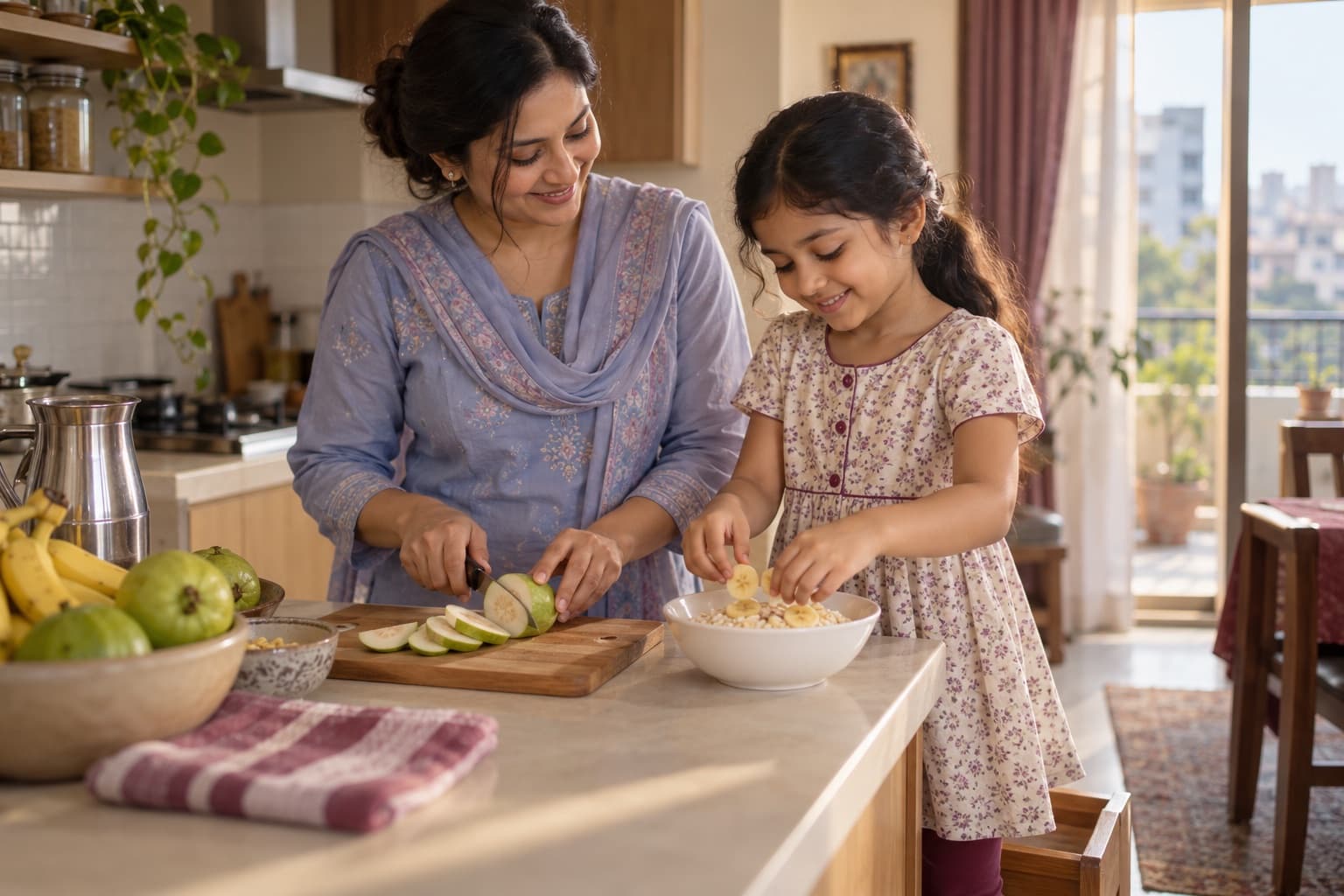
- Let your child help: pour their own milk, choose the cup, or make banana milk with you.
- Eat doi or drink milk yourself at the table, without making it a lesson.
What you might say instead of “Drink your milk!”
- Here's your milk. Drink it or leave it, that's fine.
- Would you like milk or doi with lunch today?
- Want to pour it yourself? Hold the jug with both hands.
- Let's make banana milk together. You peel the banana.
- Amma, she gets her calcium from doi and fish. We're not forcing the milk.
Getting calcium without milk: foods that can take its place
Milk gives calcium and protein, but it isn't the only way to get them. Over a week, a child who eats a mix of these foods can do well without drinking milk:
| Food | What it gives | Ways children often like it |
|---|---|---|
| Doi (plain yoghurt) | Calcium and protein | With rice, mixed with mashed mango or banana, or as a lassi with little sugar |
| Cheese, chhana or paneer | Calcium and protein | Grated into egg or roti, cubes in a vegetable curry, a piece at snack time |
| Small fish eaten with their soft bones: mola, dhela, kachki | Calcium and protein | Cooked until the bones are soft, mashed into rice for younger children; check for any hard bones |
| Leafy shak: lal shak, data shak, kochu shak, pui shak | Some calcium | Cooked soft in dal, bhaji or khichuri |
| Dal and chhola | Some calcium, and protein | Thick dal over rice, chhola at nashta (mashed for small children) |
| Til (sesame) | Some calcium | Ground into a bhorta, or sprinkled on roti |
| Eggs | Protein, as milk gives | Boiled, scrambled or in a curry |
Powdered “health drinks”, growth powders and calcium syrups aren't needed for a child who eats a mix of these foods, and many powders add a lot of sugar. Don't give calcium tablets or syrups unless a doctor prescribes them after checking your child. For more on greens, see child won't eat vegetables.
Milk in cooking: easy ways to use it
- Suji or oats cooked in milk, sweetened with mashed banana instead of sugar.
- Doi-chira with banana for nashta.
- A splash of milk in scrambled egg or an omelette.
- A banana or mango milkshake made at home, with no added sugar.
- Payesh, firni, semai or winter dudh-puli, made with less sugar than usual, as an occasional treat.
How much milk is too much?
Some children have the opposite problem: they drink milk all day and then won't eat. A small stomach fills fast, and milk between meals can leave little room for rice and dal. If this sounds like your child, see what to do with a picky eater.
- Offer milk with meals or snacks, not as a drink all day, and water in between.
- Move milk from a feeder to a cup, starting with the daytime feeds.
- Avoid milk in a feeder at bedtime or through the night: it can harm teeth and leave a child too full for breakfast. Brush teeth after the last milk of the day.
- There's no amount every child must drink; a doctor can advise on milk for your child, especially if growth or eating worries you.
Milk in a Bangladeshi home: relatives, feeders and the gowala
- “Milk makes you tall and clever”: relatives often say this with love. Growth comes from the whole diet, sleep and play, not from one glass a day.
- The skin on boiled milk: many children hate it. Strain it off, or whisk the milk after boiling.
- Milk from the gowala: boil fresh milk well before use, and let it cool before your child drinks it.
- Milk tea: cha is mostly tea and sugar, so it isn't a way to get milk into a child, and tea isn't a good everyday drink for young children.
- Morning milk and biscuits: if your child has milk with biscuits before school and then eats nothing, try the milk with a proper nashta, such as roti and egg.
- Hot days: cold milk, doi or a lassi often go down more easily than hot milk.
- One message at home: agree as a family, including grandparents and the house help, that nobody forces or bribes milk.
A 7-day plan to end the milk battle
If your child refuses to drink milk most days, change one thing at a time and note a line each day: what they drank and ate, and how the meal felt.
- Day 1: Change nothing. Note everything your child eats and drinks, and when, including milk, juice, biscuits and snacks.
- Day 2: Stop asking and reminding. Offer milk once, at one meal or snack, and say nothing if it isn't drunk.
- Day 3: Add one calcium food to lunch or dinner: doi, small fish or leafy shak.
- Day 4: Use milk in cooking once: suji, oats or payesh with less sugar.
- Day 5: Let your child choose: milk or doi, which cup, or making banana milk together.
- Day 6: Check the gaps between meals: water in between, and no milk or snacks in the hour before a meal.
- Day 7: Compare with Day 1: how many calcium foods your child ate this week, and how mealtimes felt. Keep what helped.
For the whole plate at school age, including drinks and sugar, see food and nutrition for children.
When to see a doctor about a child who won't drink milk
See a doctor, or call 999, if
- Tummy pain, bloating, wind or diarrhoea comes most times after milk or dairy: see a doctor before cutting out all dairy for long.
- A rash, hives, vomiting or swelling after milk: stop milk and see a doctor.
- Your child is losing weight, isn't growing as expected at check-ups, or seems very pale and tired.
- Your child refuses whole food groups as well as milk, eats only a handful of foods, or gags on most textures.
- Your child drinks milk all day and eats very little food, even after a couple of weeks of cutting milk back.
- Call 999 if your child has trouble breathing, or swelling of the face, lips or tongue, after milk or any food.
When a child refuses to drink milk, the pattern is easier to judge over a week than from one breakfast. ParentMind helps you note what happens each day, see patterns and get guidance: how ParentMind works.
Questions parents ask
Is it okay if my child doesn't drink milk?
For many children it's fine, as long as their food includes other sources of calcium and protein, such as doi, cheese, small fish eaten with their soft bones, leafy shak, dal and eggs. Milk is a handy source, not a must. If your child also eats very few other foods, or growth worries you, talk to a doctor.
How much milk should a child drink a day?
There's no set amount every child must drink. What matters is calcium and protein across the whole day, from milk or from foods such as doi, cheese, small fish and dal. Milk with meals or snacks suits most children; drinking it all day can spoil appetite. A doctor can advise on milk for your child.
What can I give my child instead of milk?
Doi (plain yoghurt), cheese, chhana or paneer, small fish such as mola or kachki eaten with their soft bones, leafy shak such as lal shak or data shak, dal and til can all give calcium, and eggs add protein. Many children who refuse a glass of milk will happily eat doi with rice, or suji cooked in milk.
Is flavoured milk okay for kids?
As an occasional treat, yes, but chocolate milk and sweet milk powders add a lot of sugar. A homemade banana or mango milkshake without added sugar, or cold plain milk on a hot day, makes a better everyday choice. Keep sweetened milk out of the feeder and away from bedtime, for your child's teeth.
My child drinks only milk and won't eat food. What should I do?
Move milk to meal and snack times instead of all day, offer water in between, and keep offering family food at set times with one food your child already likes. Expect some protest for a few days. See what to do with a picky eater for a full plan, and see a doctor if your child is losing weight.
Can a child be allergic to milk?
Yes. Some children react to cow's milk, and a rash, hives, vomiting, tummy pain or diarrhoea after dairy can be signs. Others find milk hard to digest and get tummy upsets. Only a doctor can tell which, so see one before cutting out all dairy. Call 999 for trouble breathing or a swollen face, lips or tongue.
This article is general information, not medical advice. For health worries, talk to a doctor; if someone is in danger, contact your local emergency number.