Leaving child with a nanny or house help: a safe, simple plan
Quick answer
Leaving your child with a nanny or house help works best when the carer is a kind adult, trained beside you for a few days, with a written routine for food, sleep, screens and safety. Make the home safe first, call at set times and watch your child's mood. If your child may have been hurt, act the same day.
 By the ParentMind team13 min read
Listen to this article
18 min listen · Read by your device's voice
At a glance
- Who it is for
- Working parents of children aged 0–10 who are cared for by a nanny or house help at home
- Key takeaways
- The person in charge of your child should be an adult; never ask a child to look after a child.
- A few days of training beside you and a written routine do more than a long list of instructions on the first morning.
- Make the home safe first: water, stairs, balconies, the gas stove and medicines.
- Respect and fair pay help a good carer stay, and any sign your child has been hurt means acting the same day.
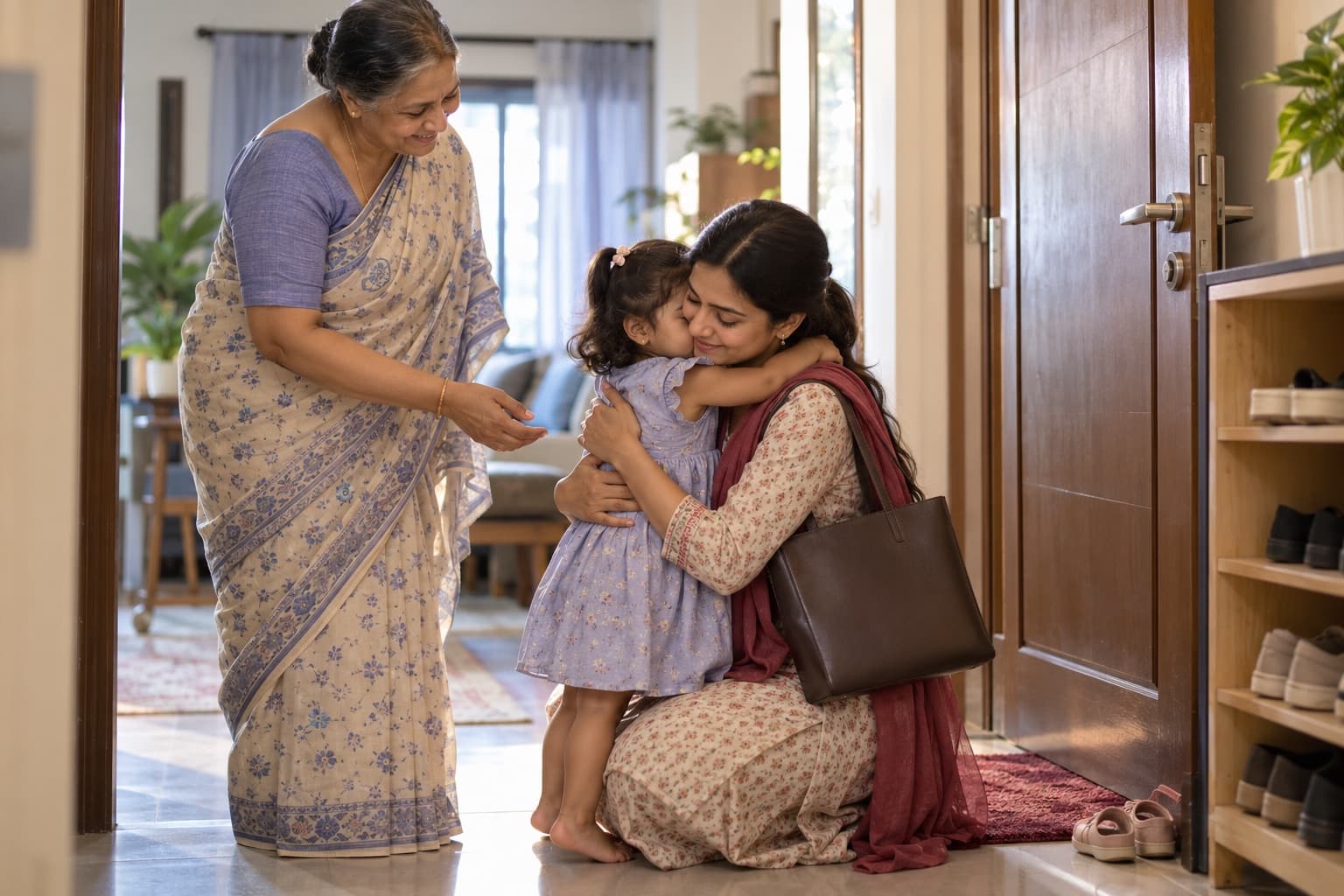
It is 8 in the morning, you are late for the office, and your toddler is crying at the door in the house help's arms. Leaving your child with a nanny or house help is a daily reality for many working parents, and it is normal to feel torn about it.
Many children do well with a caring, well-briefed carer, and still love their parents best. What helps is choosing carefully, training together, writing the routine down and keeping a friendly, close eye on your child.
Below: choosing and briefing a carer, food, sleep and screens, home safety, the signs to watch, respect and pay, a 7-day plan and when to act.
Leaving child with a nanny or house help: choosing the right carer
Many working parents combine options, such as a grandparent and a house help, or day care and an aunt in the holidays:
| Option | Often good for | Check |
|---|---|---|
| Grandparents or relatives | Babies and toddlers; trust and love are already there | Their health and energy, and agreement on the basic rules |
| A nanny or house help at home | Babies, toddlers and after-school hours, in their own home | An adult, trained beside you, with a written routine and regular calls |
| A day-care centre | Toddlers and preschoolers who enjoy other children | Enough staff for each child, cleanliness, safe rooms, and whether you can drop in |
What to look for in a nanny or house help
- An adult. Whoever is in charge of your child should be a grown woman or man. A girl who is herself a child cannot be responsible for a baby, however capable she seems: it isn't safe for your child, and it isn't fair to her.
- Someone known: recommended by family or neighbours you trust, whose home and family you know.
- Calm and warm with children: watch what they do when your child cries, refuses food or makes a mess.
- Clean habits: hand-washing, safe food handling and care with nappies.
- One main carer where possible. Babies and toddlers usually settle best with the same familiar person every day.
How to brief a nanny or house help: training and a written routine
Handing over goes far better when the carer has watched you first. These steps help:
- Start a few days to a week before you go back to work: first you do the routine, then you do it together, then you watch the carer do it.
- Write the day down simply, with small drawings if reading is hard, using the checklist below.
- Agree how to handle hard moments: comfort, distraction and a calm “no”, never hitting, threats or frightening stories.
- Set short calls at fixed times, and a five-minute handover when you get home: food, sleep, mood and anything unusual.
| Topic | What to write down |
|---|---|
| Contacts | Your numbers, a neighbour nearby, 999 and the nearest clinic, by the door and in her phone |
| Food | What and when, how much water, and what to do if your child refuses |
| Sleep | Nap times, how your child falls asleep, and safe sleep for a baby |
| Screens | When, how long and what, or none at all |
| Play and going out | Toys and games, and where your child may go and with whom |
| Illness and medicines | Which signs mean calling you, no medicine unless you say so, and 999 in an emergency |
| House rules | Visitors, the main door, the gas, going out, and phone use while minding your child |
What you might say to your carer
- If she won't eat, don't force her. Offer it again in half an hour.
- If anything happens, even a small fall, call me straight away. You won't be in trouble for telling me.
- Your phone is fine while she naps. When she's awake, and near water or the stairs, she needs your eyes.
- Thank you. I can go to work in peace because of you.
Food, sleep and screen time with a nanny
Food
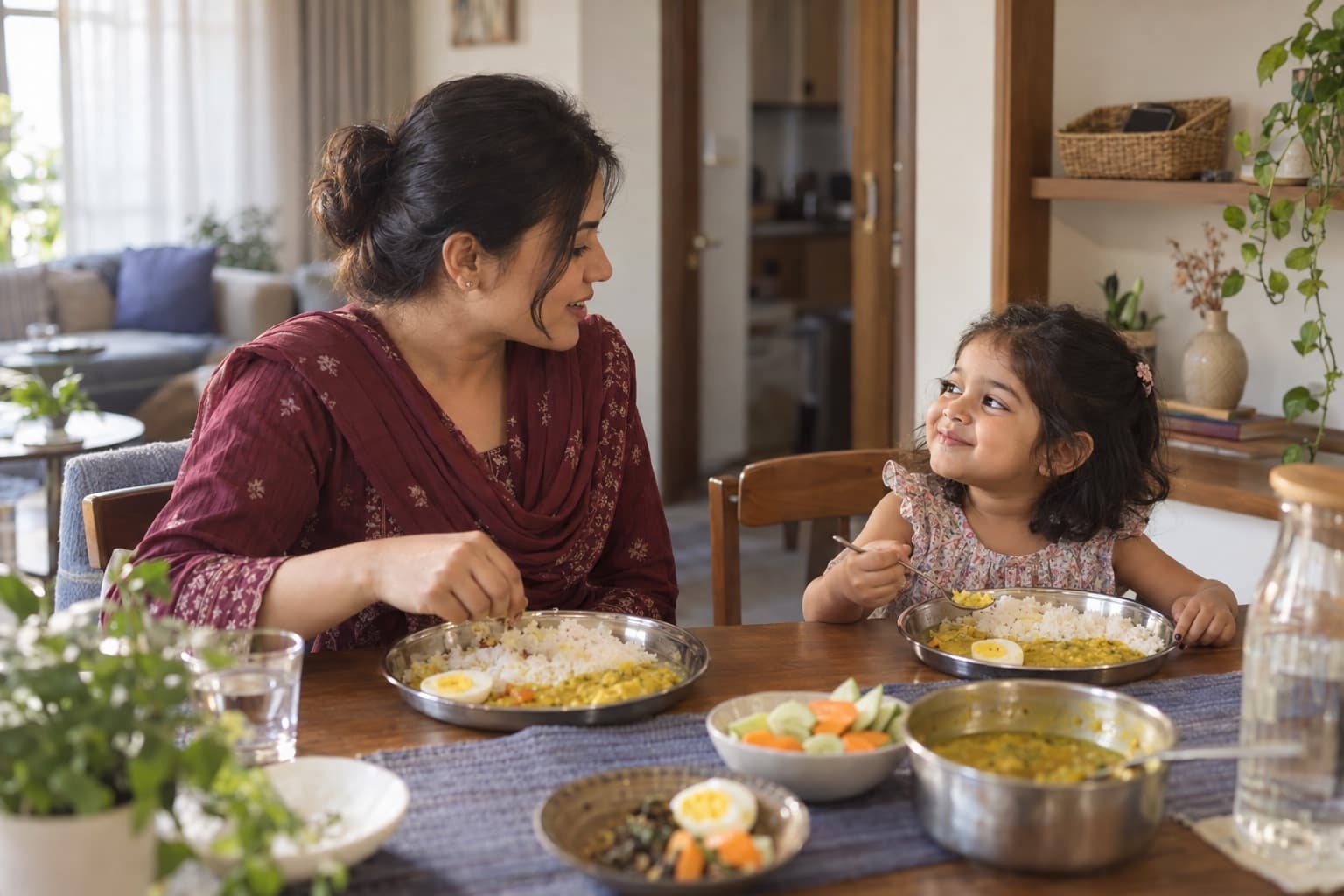
Ask for meals at regular times, offered calmly and never forced. If feeding in front of a phone or TV has started, a child who won't eat without phone videos has a gentle plan you can follow together. Whole nuts, whole grapes and hard sweets can choke young children, so cut food small and keep your child sitting while eating. If a child is choking and can't breathe, cough or cry, call 999 at once and start choking first aid if you know it.
Sleep
Write down nap times and how your child falls asleep; a carer who protects the nap protects your evening too. A baby always sleeps on their back on a firm, flat surface, with no pillows, quilts or bolsters nearby, and never on a sofa.
Screens
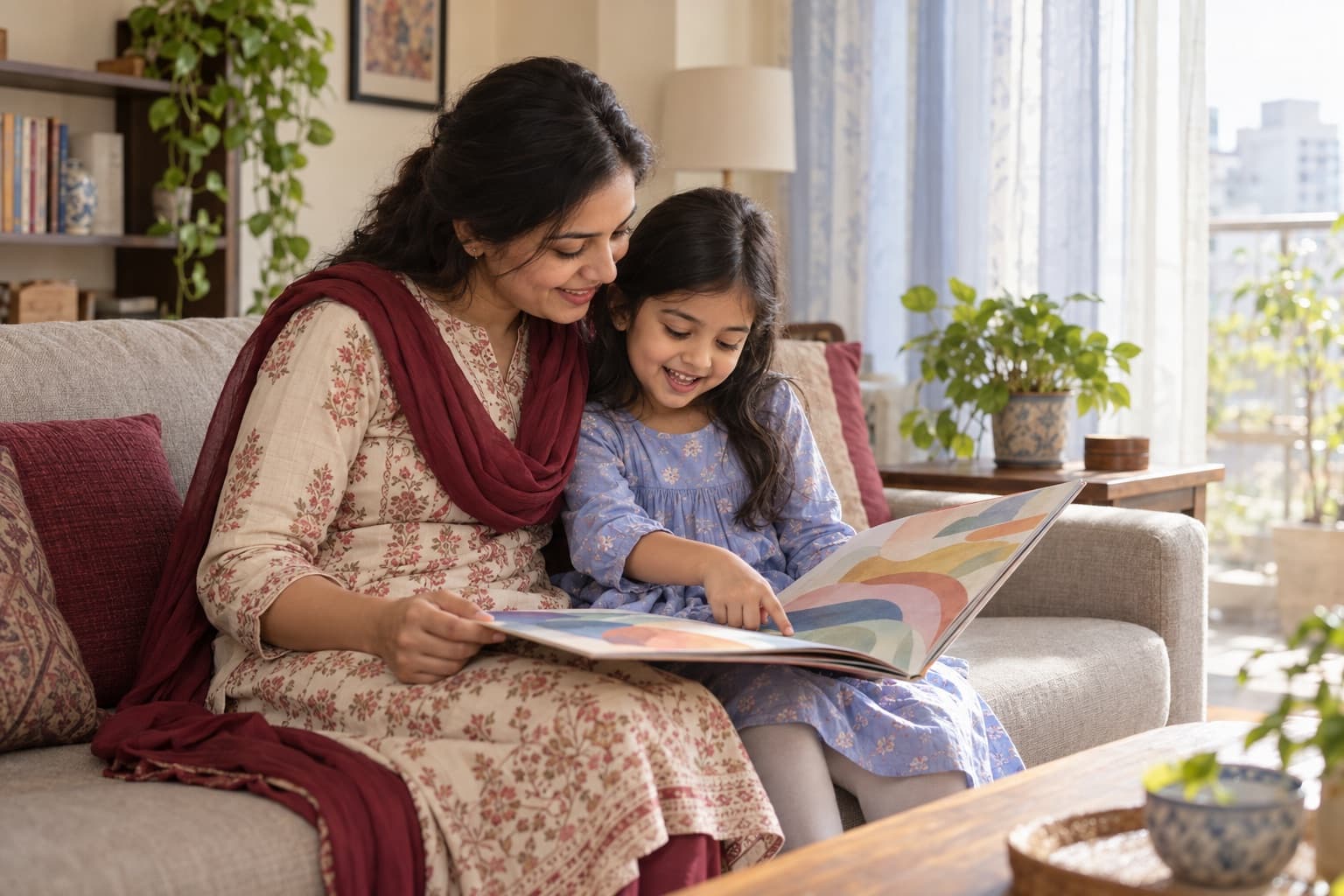
Screen time with a nanny follows your home rules, written down: no screens under 18 months except video calls with family, and for 2–5-year-olds at most an hour a day of good-quality content, ideally watched together. For older children, see screen time by age. Give the carer better tools than a phone: a basket of toys, picture books, crayons, rhymes and a daily walk.
For a school-age child, plan the afternoon too: lunch, rest, homework, play and screens. The school-day planner can help you write it down.
Home safety checklist: water, stairs, balconies, gas and medicines
Many serious accidents to young children happen at home, often in a few unwatched seconds. Make the home safe before the first day, and agree one rule above all: never leave a young child alone, or alone with a baby, even to answer the door or hang clothes on the roof.
- Water: empty buckets and tubs after use, keep bathroom doors shut, and stay within arm's reach of a young child near water. Toddlers can drown in a bucket.
- Stairs and the main door: a gate, or an adult beside a toddler on the stairs, and the main door locked.
- Balconies and windows: grills on both, no chairs or boxes nearby that a child could climb, and no balcony play for young children. Rooftop play is always with an adult.
- The gas stove and hot drinks: children stay out of the kitchen while cooking, pan handles turn inward, and hot tea, hot water, the iron, matches and lighters stay out of reach.
- Medicines and cleaners: up high or locked away, in their own containers, never in water or soft-drink bottles. That includes kerosene, toilet cleaner and insect spray.
- Small things: coins, button batteries, beads and magnets out of reach, and sockets covered. A swallowed button battery or magnet means hospital straight away.
Is my child happy with the nanny? Signs to watch
Some tears at goodbye are normal for weeks, especially in toddlers. What matters more is how your child is during the day. Good signs:
- Your child settles soon after you leave, and the carer can tell you what they did today.
- Your child reaches for the carer, laughs with them and talks about them at home.
- Meals, naps and moods are much like the days you are at home.
Look more closely, and ask gently, if your child becomes afraid of the carer after being fine, cries or hides when she arrives, is often very hungry, dirty or unusually sleepy, calls part of the day “a secret”, or has bruises, burns or marks nobody can explain. These do not always mean harm, but they always deserve a calm look the same day.
Ask your child about the day
- What was the best part of your day with Apa?
- Was anything hard today?
- You can always tell me anything, even if someone says it's a secret.
Too attached to the nanny, or never settles?
A child who runs to the carer at the end of the day, or cries when she goes home, has a healthy bond; it does not replace you. Give your child the first minutes when you get home, and keep bedtime as your time. A child who still cries most of the day after several weeks may need a slower start or a different carer; separation anxiety has a step-by-step goodbye routine.
In a Bangladeshi home: respect, fair pay and two firm lines
In many Bangladeshi homes, a house help stays with the family for years, and how she is treated teaches your children how to treat people. A good carer is more likely to stay when:
- Everyone, children included, calls her by a respectful name, such as apa or khala.
- Pay is agreed clearly and paid on time, with rest each day, a regular day off where possible, and an Eid bonus and leave.
- She eats the same food as the family, has a safe place of her own to sleep, and can call her own family.
- Nobody shouts at her or hits her, and mistakes are talked through calmly, never in front of the children.
- Her Eid leave is planned for early, since many carers go home then: a relative, leave from work or a back-up carer, arranged in good time.
Two lines stay firm, said kindly:
- The carer is an adult. Never ask a child, whether a young house help, an older sibling or a cousin, to look after a baby or a young child on their own.
- Any sign your child has been hurt is taken seriously the same day: believe your child, keep them with you, and report it at your local police station (thana); call 999 if your child is in danger now. Teaching kids body safety has the steps if a child tells you something.
A 7-day plan for leaving child with a nanny or house help
If you can, start before you go back to work. Each evening, note how your child ate, slept and seemed.
- Day 1: Walk the house together and fix the biggest safety risk. Write the routine and put it on the fridge.
- Day 2: You do the routine while the carer watches and asks questions.
- Day 3: Do it together: meals, nap, play and bath.
- Day 4: The carer leads while you stay at home, nearby but busy.
- Day 5: Go out for two or three hours. Say goodbye properly, call once, and come back when you said you would.
- Day 6: A longer stretch, with your set call times and a five-minute handover when you return.
- Day 7: Read your notes. What went well? What needs another talk? Thank your carer for one specific thing.
When to act the same day, and when to get help
Most worries settle with time and small changes. Act the same day if you notice:
Act the same day if
- Bruises, burns, bites or injuries nobody can explain, or an explanation that does not fit: have your child checked by a doctor the same day, and keep them with you or another trusted adult. If someone may have hurt them, report it at your local police station (thana).
- Your child says someone hurt them, touched their private parts or told them to keep a secret, or is suddenly afraid of one person: believe your child, keep them away from that person, act the same day and report it at your local police station (thana); call 999 if they are in danger now.
- Your child is unusually sleepy: see a doctor the same day. If they seem to have had a medicine you did not give, go to a doctor straight away with any packet you find. Call 999 if they are hard to wake or breathing oddly.
- You see or hear that a carer hit, shook or threatened your child, or left a young child alone: from today, keep your child with you or another trusted adult, and you can report it at your local police station. If a baby may have been shaken, go to a hospital at once or call 999.
- After several weeks with the same carer, your child still cries most of the day, eats or sleeps badly, or has lost skills they had: talk to your child's doctor and rethink the arrangement.
Leaving your child with someone else is an act of trust, built a little each day. ParentMind helps you note what happens each day, see patterns and get guidance: see how ParentMind works.
Questions parents ask
Is leaving child with a nanny or house help safe for a baby?
It can be, when the carer is a kind, healthy adult, trained beside you, with a written routine and safe-sleep rules, in a home made safe first. Call at set times and watch how your baby eats, sleeps and seems. Many babies do well with one steady, loving carer.
How do I train a new nanny for my toddler?
Show, then share, then watch: do the routine yourself for a day, do it together the next, then let the carer lead while you are home. Write the day down simply, add emergency numbers, and agree how to handle tears, meals and naps without force or threats.
What should I do if the nanny gives my child the phone all day?
Talk to her calmly, without blame: a phone is the quickest way to keep a child quiet. Write down your screen rules (none under 18 months except video calls, at most an hour a day at 2–5) and give her better tools: a toy basket, books, rhymes and a daily walk. Thank her when she uses them.
Day care or a nanny: which is better?
Neither is better for every child. A nanny or house help suits babies and toddlers who do well with one familiar person at home; a good day-care centre suits toddlers and preschoolers who enjoy other children. What matters most is a warm, steady adult, safety, cleanliness, and being able to check in or drop by.
My child loves the nanny more than me. Is that normal?
Yes. A child attached to a loving carer has learned to trust, and that bond does not replace yours. Children often cling to whoever they have just spent the day with. Give your child the first few minutes when you get home, and keep bedtime and weekends as your special time.
Should I put a camera at home to check on the nanny?
Some families do. If you use one, tell the carer openly, keep it in shared rooms only, never in a bathroom or where anyone sleeps or changes, and treat it as a safety check, not suspicion, while you keep treating her with respect. A camera does not replace the trust built through training, regular calls and listening to your child.
How can I tell if my child is unhappy with a caregiver?
Look for changes from your child's usual self: fear or crying when the carer arrives after being fine before, hiding, new sleep or eating problems, a sudden return to babyish habits, or saying part of the day is a secret. Ask gently and openly, believe what your child says, and look into it the same day.
This article is general information, not medical advice. For health worries, talk to a doctor; if someone is in danger, contact your local emergency number.