When a teacher hits or shames your child: what parents can do
Quick answer
If a teacher hits or shames your child, believe your child and act the same day: check for injuries, take photos, see a doctor if they are hurt, and write down what happened. Then give the head teacher a written complaint. Physical and mental punishment is banned in schools in Bangladesh. Call 999 if your child is in danger now.
 By the ParentMind team12 min read
Listen to this article
16 min listen · Read by your device's voice
At a glance
- Who it is for
- Parents of children aged 5–17 who have been hit, insulted or humiliated by a teacher, a coaching teacher or a home tutor
- Key takeaways
- Physical and mental punishment is banned in schools in Bangladesh: hitting, ear-pulling, insults and public humiliation are not acceptable ways to discipline a child.
- Believe your child, check for injuries and write down what happened the same day; photos and a doctor's note help if your child is hurt.
- Give the head teacher a written complaint, keep a signed copy, and ask in writing that your child faces no payback, such as lower marks or being singled out.
- For an assault you can report it at the local police station, and call 999 if your child is in danger now.
Typing “teacher hits my child what to do” into your phone late at night is something no parent expects. Maybe your child came home with red marks on a palm, or went quiet after being called stupid in front of the class. You may feel furious, or unsure whether to make a fuss.
You are right to take it seriously. Physical and mental punishment is banned in schools in Bangladesh, and a calm, written, step-by-step response is often the quickest way to stop it while keeping your child safe. Below: what counts as punishment, the first 24 hours, complaining in writing, preventing payback, coaching and home tutors, a 7-day plan and when to act at once.
What counts as physical and mental punishment?
Corporal punishment in school means hurting a child's body or dignity to discipline them. A teacher may correct a child firmly; the line is crossed when the aim is to hurt, frighten or humiliate. In plain words:
| Type | What it looks like |
|---|---|
| Firm, fair discipline (fine) | A calm warning, a seat change, finishing work at break, losing a privilege, a note or call to parents, a talk with the head teacher |
| Physical punishment (not allowed) | Hitting with a hand, cane or ruler; slapping; pinching; pulling ears or hair; making a child hold their ears and squat, or stand for a long time; throwing things at a child |
| Mental punishment (not allowed) | Insults and name-calling (“stupid”, “donkey”); mocking marks, looks, family or religion in front of others; tearing up work; threats; standing a child on a bench to be laughed at |
Whatever it is called, a child should never be hurt or humiliated to make them learn. Physical punishment tends to leave children more afraid and less willing to learn over time; for what does help, see discipline without hitting.
Teacher hits my child: what to do in the first 24 hours
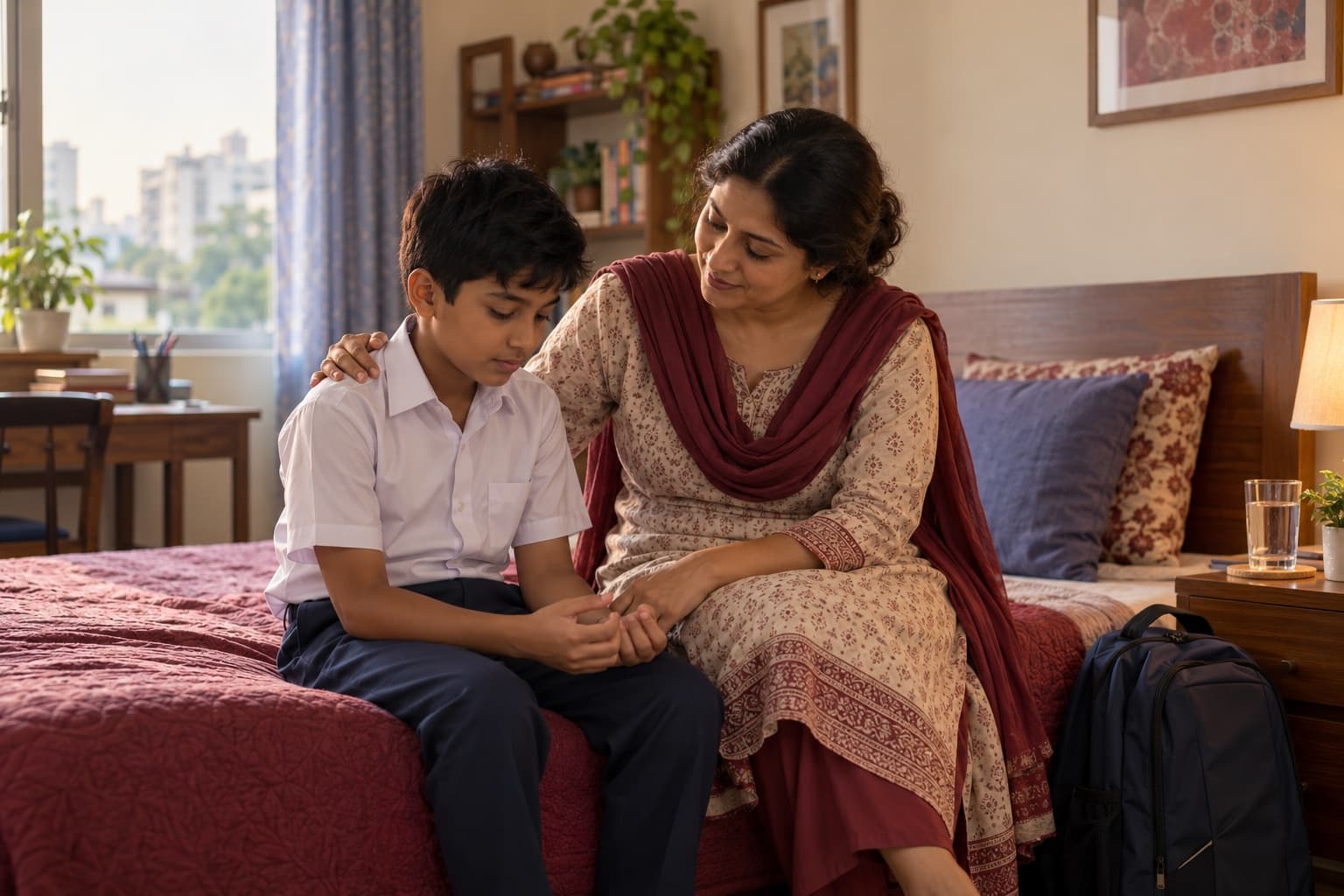
- Stay calm and listen. Let your child tell it their way, without interrupting or turning your anger on them.
- Believe them and thank them for telling you. Say clearly that it is not their fault, even if they were talking in class.
- Check gently for injuries, and photograph any marks, swelling or cuts with the date. If your child is hurt, see a doctor the same day and ask for a written note of the injury.
- Write it down the same day, in your child's words: when and where, what was done or said, who saw it, and how your child is now.
- Keep any evidence: torn work, a broken item, messages from the teacher or from other parents.
- Before you speak to the school, tell your child what you plan to do and when.
- Don't confront the teacher angrily in the classroom, and think twice before posting online, especially your child's photo or name. Go to the head teacher instead.
What you might say to your child
- Thank you for telling me. I believe you.
- No teacher is allowed to hit you or call you names. It is not your fault.
- Even if you made a mistake in class, hitting is not okay.
- I'm going to talk to the head teacher. I'll tell you what I'm going to say first.
- If anyone is unkind to you because I complained, tell me straight away.
How to complain to the school about a teacher
For many parents, the most useful step is a letter. Go to the head teacher or principal, not only the teacher concerned: a calm written complaint is harder to ignore than an angry phone call, and it leaves a record.
- Ask to meet the head teacher within a day or two, and take your notes, the photos and any doctor's note.
- Bring a short written complaint, signed and dated. Ask the office to sign or stamp your copy as received, and keep it.
- Stick to facts: what happened, when, who saw it and any injury, without insults or threats.
- Say what you want: that it stops, that your child is safe in that class, no payback, and a written reply by a set date.
- If nothing happens, or it happens again, you can write to the school's managing committee or governing body, and then to the local education office. Keep copies of everything.
- If your child was beaten or injured, you can also report it at the local police station (thana); call 999 if your child is in danger now.
| What to include | Example |
|---|---|
| Your child | Name, class, section and roll number |
| When and where | Tuesday, third period, in the classroom |
| What happened | “Sir hit my palm several times with a cane because I forgot my homework.” |
| Who saw it | The whole class; two classmates told their parents |
| The effect | Swollen palm (photo and doctor's note attached); now afraid to go to school |
| What you ask for | That it stops; that my child is safe in class and not treated differently because of this complaint; a written reply within a week |
| Signature and date | Your name, phone number, signature and the date |
What you might say to the head teacher
- My son was hit in class on Tuesday. I've written down what happened, and here are the photos.
- I want this to stop, and I want him to feel safe in that class.
- Please make sure there is no payback: no lower marks, no being singled out.
- Can you tell me in writing what the school will do, by next week?
- Could the office sign my copy to show it was received?
How to protect your child from payback after you complain
Many parents stay quiet because they fear the teacher will take it out on their child, through marks, remarks or more punishment. These steps make payback less likely, and easier to spot:
- Put “no payback” in your written complaint, so the school has it on record.
- Keep copies of class tests, exam scripts and report cards, and compare marks with before.
- Ask one ordinary question every day: “How was that class today?”
- Agree on a safe adult at school your child can go to, such as the class teacher or the head teacher.
- Ask for a seat change, a different section or a different teacher for that subject, if possible. If that teacher also tutors your child privately, stop those lessons for now.
- If classmates start teasing your child about it, treat it as bullying; see bullying at school.
Should you change school or tutor?
Change a home tutor or coaching teacher who hits or shames your child straight away; there are other tutors. With a school, unless your child is in danger, give the head teacher's response a fair chance first. Think about moving if it happens again, payback starts, or your child is too afraid to go. Decide together with your child, and tell the new class teacher briefly what happened, so they can help your child settle.
When a coaching teacher or home tutor hits your child
Children can be hit or shamed outside school too. The same steps apply wherever your child learns: a coaching centre, a madrasa or a lesson at home.
- Stop the lessons while you look into it, and tell the coaching centre's owner or head in writing.
- Keep lessons at home where an adult can see and hear, with the door open, and never leave a young child alone with a tutor.
- A tutor or coaching teacher who hits your child can be reported at the local police station; call 999 if your child is in danger now.
- For choosing a safer tutor or coaching centre next time, see coaching and private tutors.
In a Bangladeshi home: respect for teachers and the fear of marks
Most teachers in Bangladesh care deeply about their students, and respect for teachers runs deep in our families. That respect can make parents hesitate to complain, especially when relatives say a beating is part of learning. Some common situations:
- “We were beaten and turned out fine”: many elders grew up with the cane. You can respect them and still say: “Things were different then. Now we know fear doesn't help children learn.”
- Fear of marks: when the same teacher sets papers, takes class tests or runs the coaching, parents worry about payback. That is why the complaint goes to the head teacher in writing, with “no payback” in it.
- “Don't make a fuss”: other parents may ask you to keep quiet. In class group chats, stick to facts and keep details private; naming and shaming a teacher there can make school harder for your child.
- A child who stays silent: some children hide it to protect a parent from trouble, or so as not to be called a tell-tale. Ask about school in an ordinary way every day, and react calmly to small things.
A 7-day plan after a teacher hits or shames your child
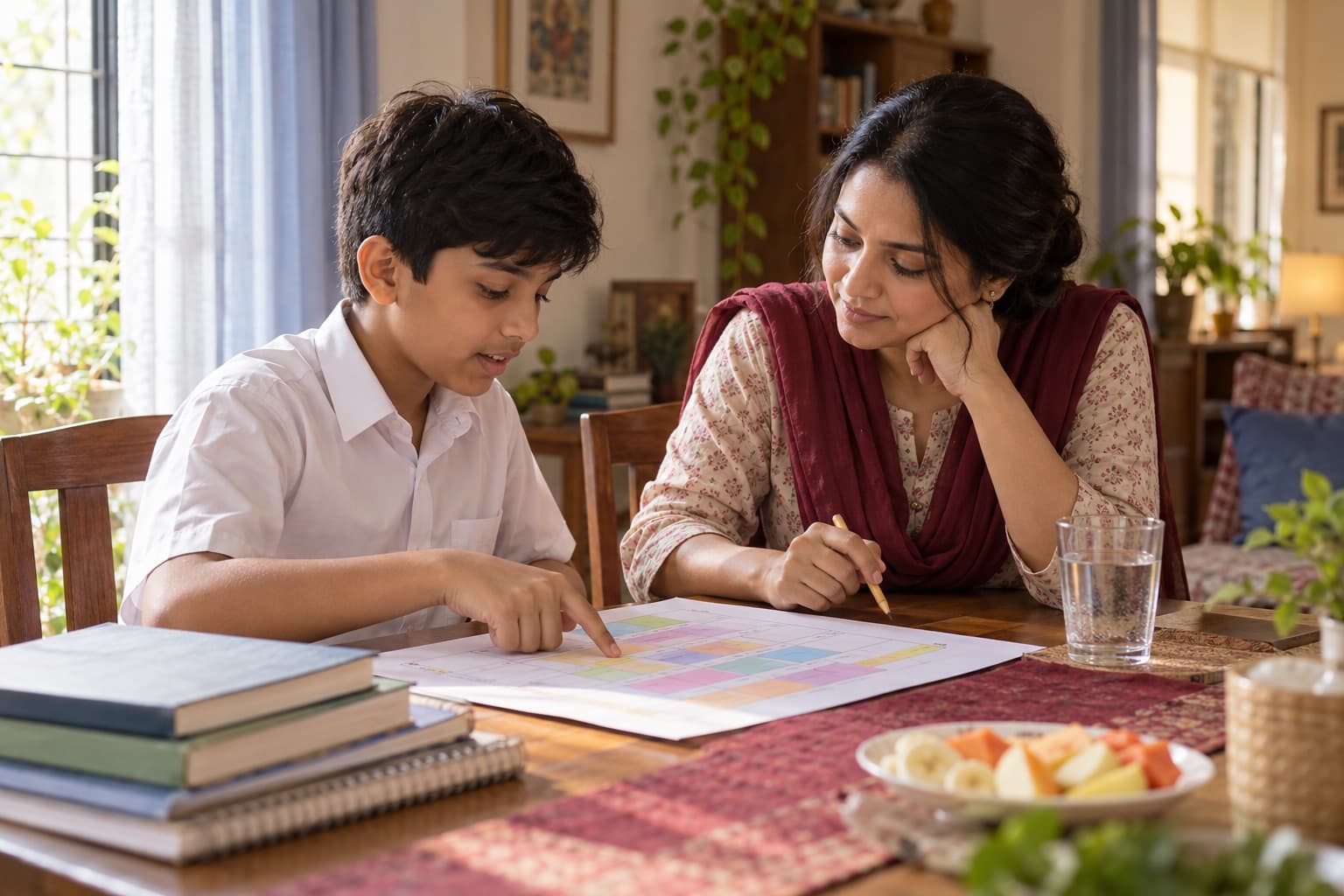
After the first day, these steps keep things moving. Write one line each evening: how school went, anything new, and your child's mood, sleep and appetite. Compare after a week.
- Day 1: Listen, believe and thank your child. Check for injuries, take photos, see a doctor if they are hurt, and write it all down.
- Day 2: Meet the head teacher with your written complaint, and keep the signed copy.
- Day 3: Agree on a safe adult at school with your child, and pause any private lessons with that teacher.
- Day 4: Ask your one ordinary question about that class, and listen without pushing.
- Day 5: Plan something your child enjoys outside school, to rebuild their confidence.
- Day 6: If there is no written reply yet, follow up with the head teacher, politely and in writing.
- Day 7: Compare with Day 1. If nothing has changed, or it has happened again, go to the managing committee, and think about changing school or tutor.
When to act at once: injuries, fear and other warning signs
Act quickly if
- Your child is injured: bruises, swelling, a cut, pain that doesn't settle, or a blow to the head or ear. See a doctor the same day, and call 999 if your child is drowsy, vomits or isn't acting normally after a blow to the head. You can report an assault at the local police station.
- Any sexual touching, photos or being asked to keep a secret: believe your child, keep them away from that person, act the same day, report it at your local police station (thana), and call 999 if they are in danger now. See body safety for children.
- A sudden change: your child stops eating, can't sleep, starts wetting the bed again, won't go to school or seems afraid of one person. Believe your child, act the same day, and call 999 if they are in danger.
- Any talk of not wanting to live or of self-harm: stay calm and close, call 999 if your child is in danger now, and otherwise see a doctor the same day.
- School missed for more than a week or two, or low mood most days for two weeks: talk to the school and a doctor or child psychologist; see when a child is afraid to go to school.
- Nothing changes after your written complaint: write to the managing committee and the local education office, and keep copies.
A child's trust and confidence often come back step by step after a teacher has hurt them, and the steps are easy to miss. ParentMind helps you note what happens each day, see patterns and get guidance: how ParentMind works.
Questions parents ask
Is it legal for a teacher to hit a student in Bangladesh?
No. Physical and mental punishment is banned in schools in Bangladesh, so hitting, ear-pulling, insults and humiliation are not allowed as punishment. If it happens, write down what happened, see a doctor if your child is hurt and give the head teacher a written complaint. For an assault you can go to the local police station; call 999 if your child is in danger now.
What should I do if a teacher humiliated my child in front of the class?
Treat it as seriously as hitting: humiliation is mental punishment, and it can leave a child ashamed, anxious and afraid of school. Comfort your child first and say it is not their fault. Write down what was said and who heard it, then raise it with the head teacher, in writing if it was serious or has happened before.
My child is afraid of a teacher and cries before school. What can I do?
Ask calmly what happens in that class, and believe what your child tells you. If the teacher hits, insults or humiliates children, follow the steps above. If the teacher is simply harsh or strict, a calm talk with the class teacher, and practising a confident answer at home, often helps. If fear keeps your child home for more than a week or two, talk to a doctor.
Should I confront the teacher myself?
Not in anger, and not in front of the class. An angry confrontation can turn into an argument and make school harder for your child. Go to the head teacher with your notes instead. If you know the teacher well and the incident was small, a calm private talk can help, but put anything serious in writing.
Will the teacher take revenge on my child if I complain?
It is a very common worry. A written complaint that asks for no payback makes it less likely, and easier to act on if it happens. Keep copies of tests and marks, and check in with your child every day. If you see payback, write it down and report it to the head teacher that week.
What if my child was misbehaving when the teacher hit them?
Yes. Misbehaviour can be handled firmly without hitting or humiliation, and a child's mistake never makes physical punishment acceptable. You can deal with both: talk with your child about what went wrong in class, and still complain about the punishment. Ask the school how it will handle behaviour in future.
This article is general information, not medical advice. For health worries, talk to a doctor; if someone is in danger, contact your local emergency number.