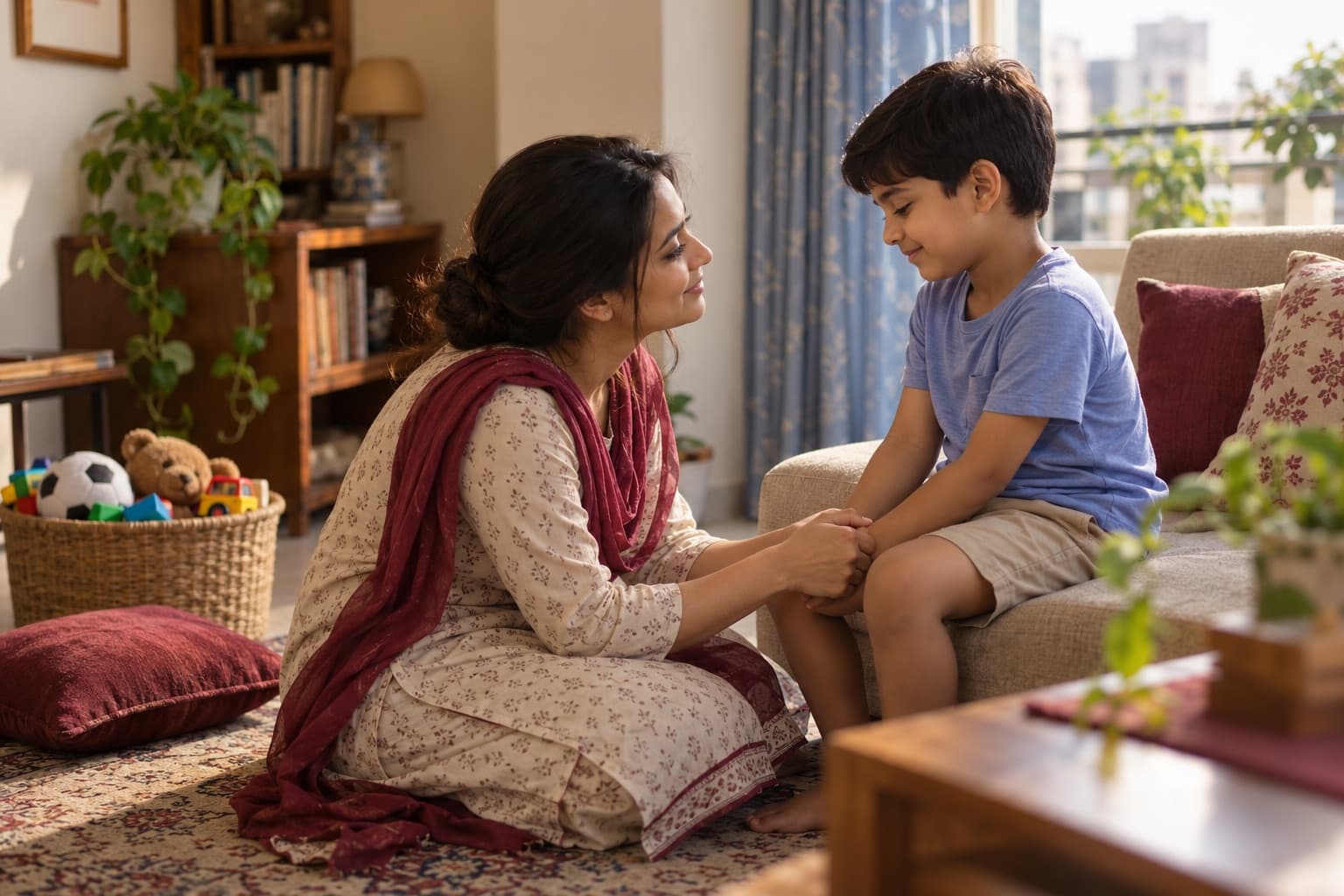
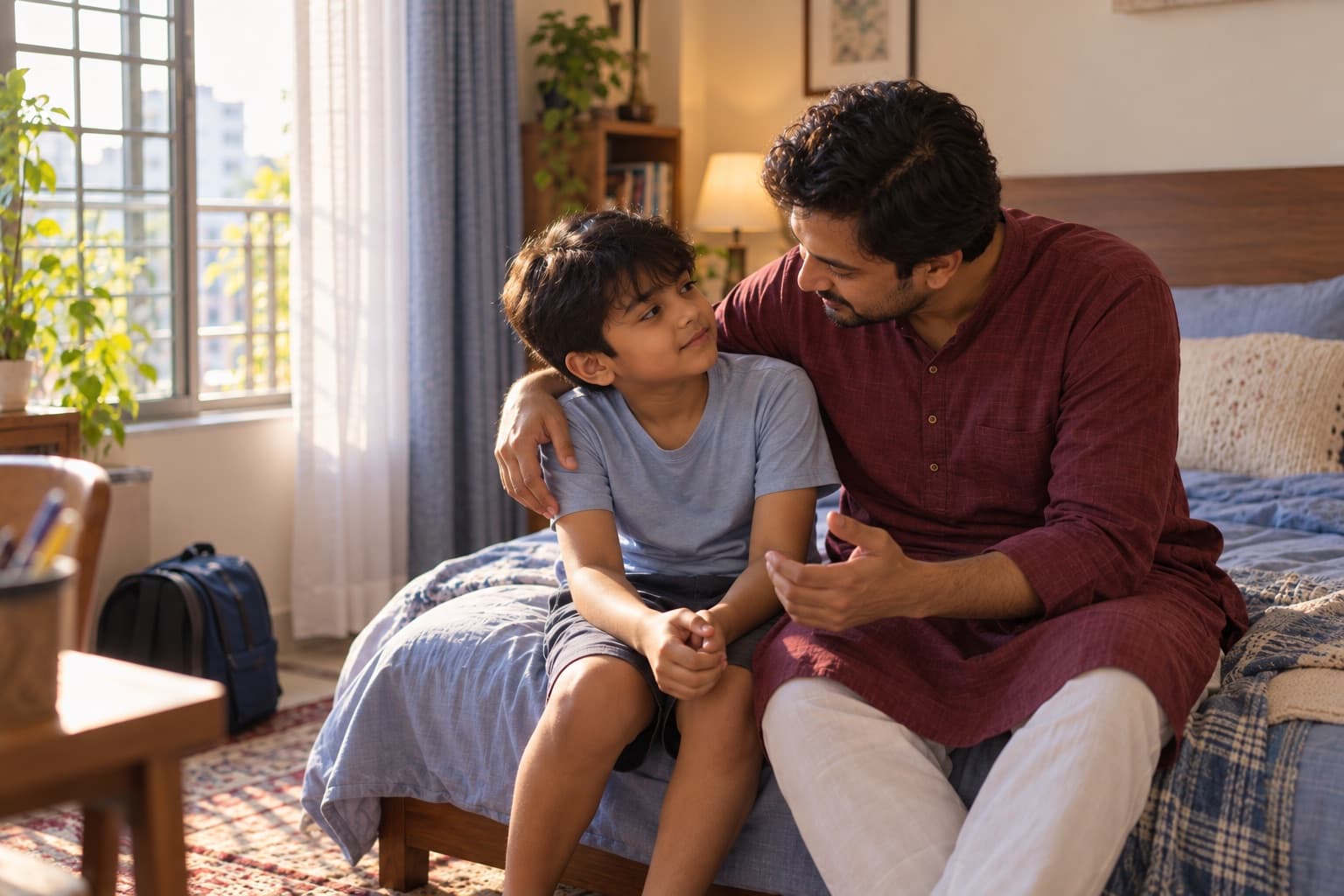
My child is a bully: what to do when your child is the one bullying
Quick answer
Hearing “my child is a bully” is hard, but the first steps are clear: stay calm, get the facts from the school and talk to your child without shaming them. Be clear it stops, help them repair the harm and look for what's behind it: copying, fitting in, anger or being bullied themselves. Get help if it continues for weeks.
 By the ParentMind team12 min read
Listen to this article
16 min listen · Read by your device's voice
At a glance
- Who it is for
- Parents of children aged 6–16 who have been told, or suspect, that their child is teasing, hurting, excluding or targeting others at school, at coaching or online
- Key takeaways
- Bullying is hurtful behaviour repeated on purpose against someone with less power; a child who bullies needs firm limits and help, not a label.
- Stay calm, get the facts first, then talk to your child at a quiet moment, listening to their side without accepting excuses.
- Repair matters more than punishment: a real apology, returning or replacing things, and undoing the harm online.
- Get help if bullying carries on for weeks after you and the school act, or comes with violence, cruelty or signs that your child is struggling.
“My child is a bully” is a hard sentence for any parent to hear, or to think. It might come in a call from the class teacher, a message from another parent or a screenshot from a class group chat. Your first reaction may be shock, anger at the school, or shame.
Children who bully are not bad children. Bullying is a behaviour, and most children can change it when adults at home and at school respond calmly, firmly and together. What you do in the next few days matters more than the first moment.
Below: what bullying looks like at each age, why children bully, what to do and say first, working with the school, repairing the harm, online bullying, kindness at home, a 7-day plan and when to get more help.
Is my child a bully? What bullying looks like from 6 to 16
Before deciding “my child is a bully”, check what happened. Bullying is hurtful behaviour that is repeated, done on purpose and aimed at someone with less power. A single fight is not bullying, but a pattern of teasing, hurting or leaving out the same child is, even if your child calls it a joke.
| Age | What it often looks like | What helps |
|---|---|---|
| 6–8 years | Pushing, grabbing tiffin or toys, name-calling, “you can't play with us” | Clear rules, practising kind words, an adult close by at break |
| 9–12 years | Mocking looks or accents, spreading stories, leaving one child out, the first unkind messages | Talking about how the other child felt, repair, noticing whose lead they're following |
| 13–16 years | Group chats, edited photos, threats, ragging younger students, sexual comments | Firm limits, phone rules, repair online too, and close contact with the school |
Your child doesn't need to be the leader to be involved: laughing along or sharing a cruel post adds to the harm. If your child is the one being bullied, see my child is being bullied at school.
Why does my child bully others?
Children who bully usually have a reason that makes sense to them, even when the behaviour is wrong. Finding it lets you work on the cause, not only the behaviour:
- Fitting in: joining a group that picks on one child can feel safer than being the target.
- Copying: children repeat what they see, from older cousins, siblings, adults or videos that make cruelty look funny.
- Being bullied themselves: some children pass on what is happening to them at school, at coaching or at home.
- Big feelings: anger, jealousy, exam stress or trouble at home can spill out at a weaker child; see angry child.
- Power and attention: bullying can feel like a quick way to look strong or get noticed.
- Empathy still growing: some children truly haven't stopped to think how it feels for the other child.
None of these excuses the behaviour, but each one points to the kind of help that might work.
My child is a bully: what to do first
Your response in the first few days matters most. Try these steps, in order:
- Stay calm with whoever tells you. Thank them, listen to the whole account, and don't argue or defend your child on the spot.
- Get the facts: what happened, how often, since when, who else was involved, and how the other child is now.
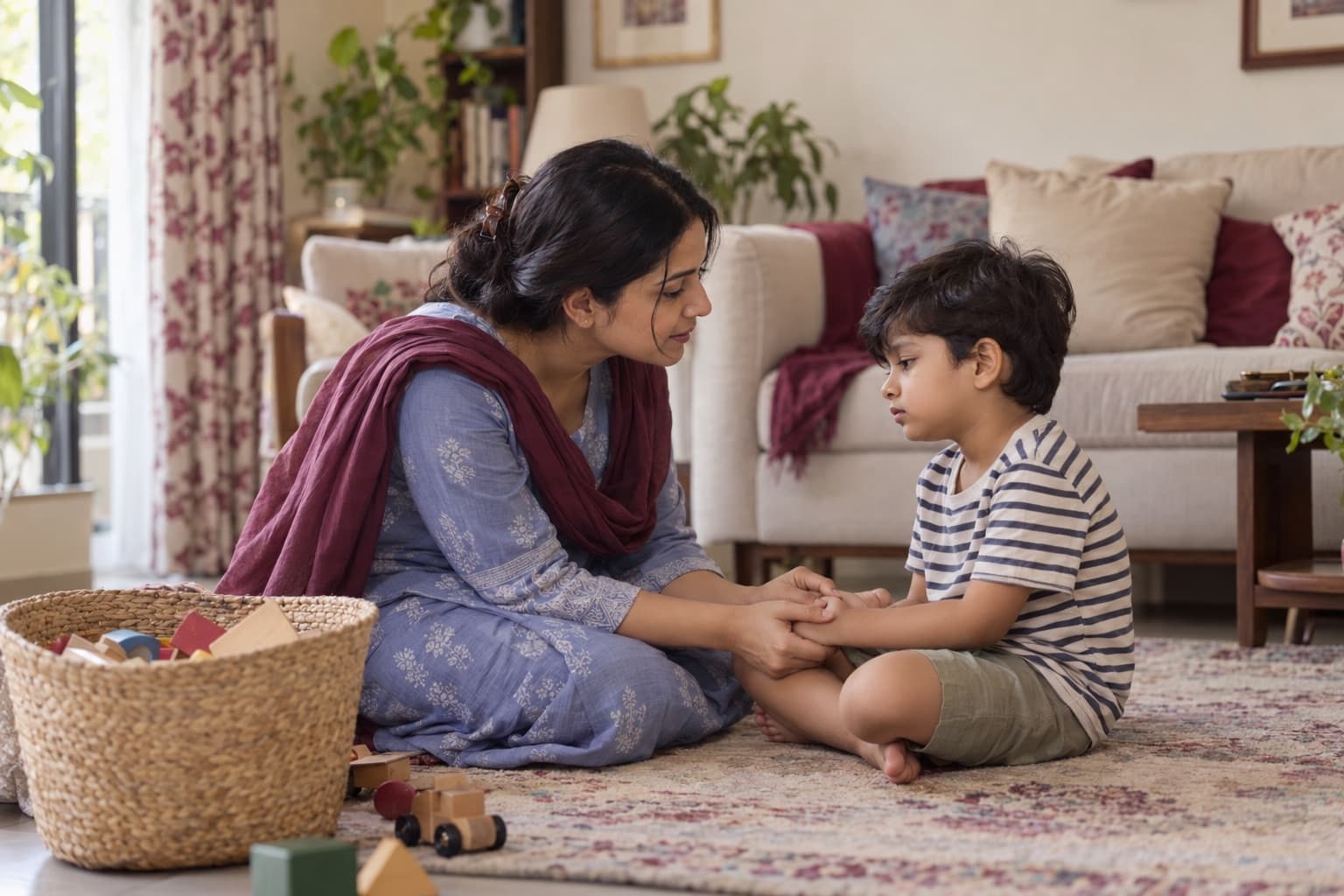
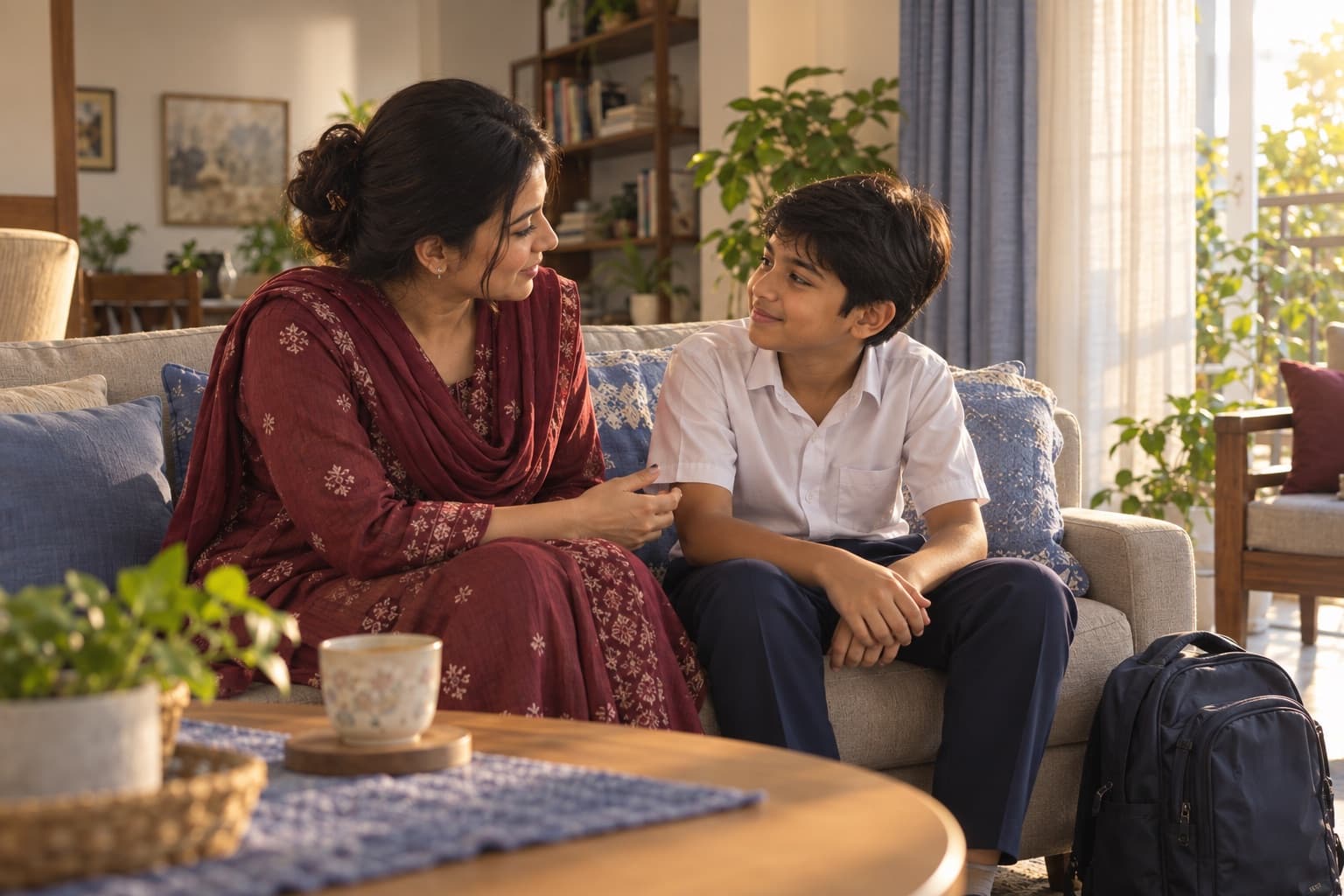
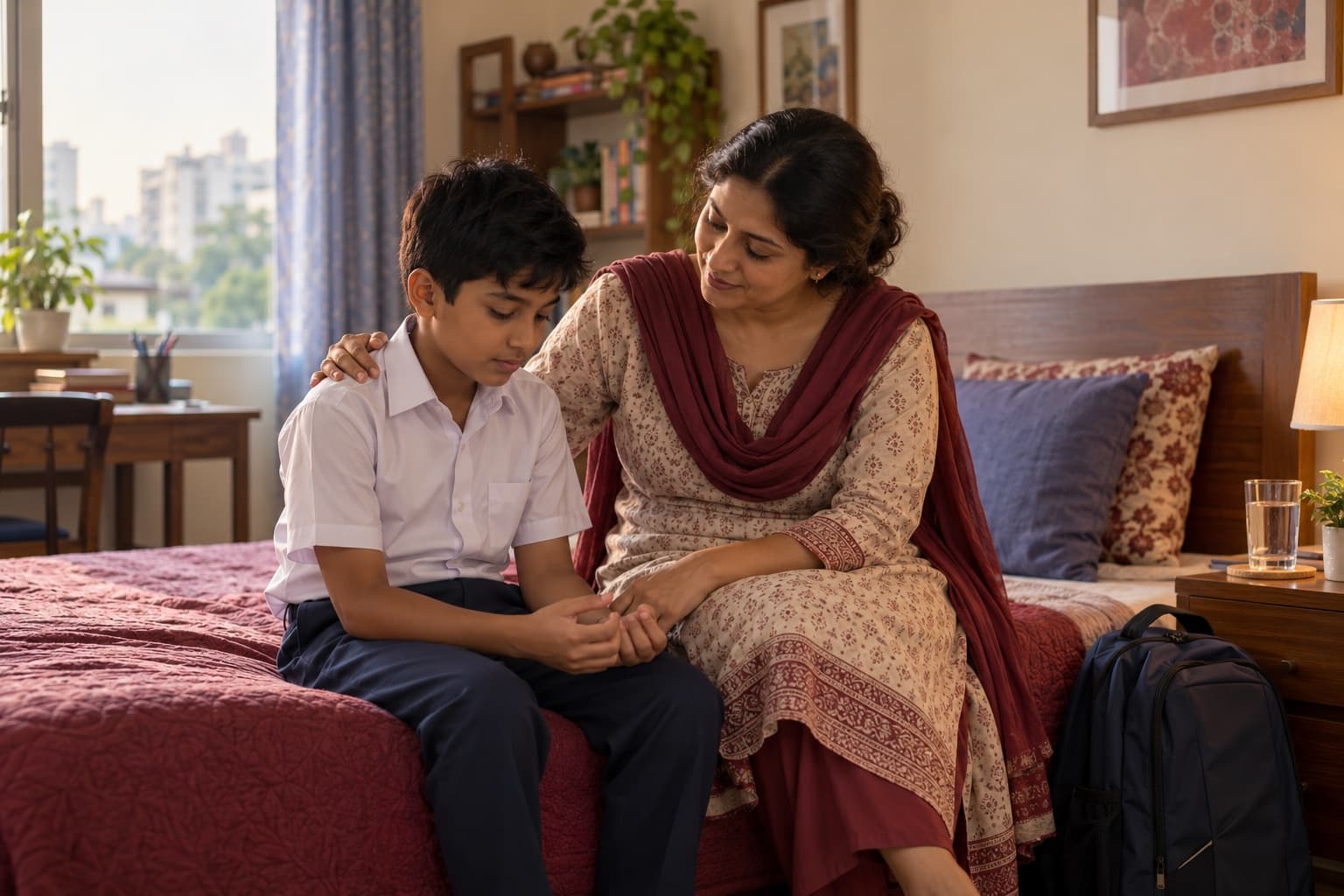
- Talk to your child alone, at a calm time. Ask for their side and listen without interrupting, even if you doubt parts of it.
- Name it clearly: “What happened was bullying, and it stops now.” Don't accept “It was only a joke” as the end of the talk.
- Help them see the other side: “How do you think she felt when everyone laughed?”
- Agree a repair and a small, linked consequence, such as less free phone time if the bullying happened online.
- Tell your child what happens next: you'll talk to the school, and you'll check in every day for a while.
What you might say to your child
- I love you, and what happened wasn't okay.
- Tell me what happened, from the start. I'm listening.
- It might have felt like a joke to you. It didn't feel like one to him.
- The bullying stops now. Let's work out how to put it right.
- If anyone is pushing you to join in, you can tell me. You won't be in trouble for telling.
- I know you can be kind. I've seen it.
Avoid hitting, shouting at or shaming your child, especially in front of others. Physical punishment tends to teach that the stronger person wins, the very lesson you want to undo; see discipline without hitting.
How to work with the school when your child is the one bullying
Working with the school is usually the fastest way to stop bullying, because most of it happens where parents can't see: tiffin break, the school van, the corridors and coaching.
- Go to the meeting ready to listen, not to defend. Ask what staff have seen.
- Share what you have learned at home, including anything that might be behind it.
- Ask how the other child is being kept safe, and what support the school can give your child, such as a seat change or a teacher who checks in.
- Agree one plan for home and school, and a day to talk again, about a week later.
- Keep it private: talk to the other family through the school, unless you know them well and both families are calm.
What you might say to the teacher
- Thank you for telling me. I want to help sort this out.
- Can you tell me what you've seen, and how often?
- Let's agree a plan, and talk again next week.
How to help your child repair the harm
Repair teaches more than punishment, because your child does something real to make things better. It also helps the other child feel safer.
- A real apology, once your child understands what they did. A short note or a quiet word, arranged through the teacher, usually works better than a forced sorry in front of the class.
- Returning or replacing anything taken or broken, paid for from pocket money if possible.
- Undoing online harm: deleting posts and photos, and a kind message in the same group if the other child and the school agree.
- A kind action over the next weeks, such as including the child they left out, or helping in class.
- Noticing and praising every kind act you see at home or hear about from school.
Online bullying: when your child is the one posting
Online bullying by a child can be mocking messages in a class group chat, edited photos, fake accounts or ganging up on someone in a game. It spreads fast and is hard to undo, so act quickly.
- Sit with your child and remove the posts, photos or messages together.
- Agree phone rules for a while: phones out of the bedroom at night, and regular talks about group chats.
- Talk about how online words land: there is no tone of voice and no face, and screenshots last.
- If your child shared, or threatened to share, a private or sexual photo of another child, stay calm but treat it as serious: make sure it is deleted everywhere it was sent, never copy or forward it yourself, and tell the school the same day so the other child's family can be told. Get help for your child too. If an adult asked for, made or spread the photo, tell the local police station the same day; call 999 if anyone is in danger now.
- For settings and family rules, see online safety and cyberbullying.
In a Bangladeshi home: what children copy, and teaching empathy
Children learn how to treat people mostly at home, by watching. A few patterns that are common in Bangladeshi families are worth a gentle look:
- Nicknames about looks: calling a child “dark”, “fatty” or “shorty”, even with love, teaches that looks are fair game for teasing.
- “Boys will be boys”: elders may laugh off rough behaviour in boys. Hold sons and daughters to the same standard of kindness.
- How adults speak to others: children notice how we talk to the house help, drivers and shopkeepers. Speaking with respect teaches respect.
- Siblings and cousins: an older cousin or sibling who keeps teasing a younger one at family gatherings is bullying too; step in kindly, even in front of relatives.
- Comparing children: constant comparison with cousins or classmates, over marks or looks, can make some children push others down to feel bigger.
- Teaching empathy: at dinner, ask “How do you think she felt?” about stories, dramas and real days, and share your own feelings in simple words.
A 7-day plan after the school calls
A short note each evening shows whether things are changing. Write one line: any news from school, what your child said, one kind act you noticed and how your child seemed.
- Day 1: stay calm, listen to the school and get the facts. Talk to your child at a quiet time.
- Day 2: agree with your child how they'll repair the harm, and what the consequence is.
- Day 3: meet the class teacher, and agree one plan and a day to check in.
- Day 4: if any of it happened online, go through the phone and group chats together.
- Day 5: do one thing to build empathy: a story, a talk about feelings or a kind act to plan.
- Day 6: ask how school went, and notice one kind thing out loud.
- Day 7: compare with Day 1 and check with the teacher. Keep what helped; if nothing has changed, ask the school for more support.
When to get more help for a child who bullies
Most children change when home and school act together and the child gets help with what's behind the bullying. If the bullying carries on for weeks, or you notice these signs, talk to your child's doctor, the school counsellor or a child psychologist:
Get help if
- Bullying carries on for several weeks after you and the school have acted, or moves on to new targets.
- Your child is often cruel to people or animals, or seems not to care at all when they hurt someone.
- Serious injuries, weapons, threats to hurt someone, or taking money by force: act the same day, and call 999 if anyone is in danger now.
- Your child may be bullied, hurt or pressured by others too, or is suddenly afraid of a person or place: believe them, act the same day, and call 999 if they are in danger now.
- Anger most days, low mood most days for two weeks or more, or any talk of not wanting to live or of self-harm. For any such talk, stay calm and close: call 999 if your child is in danger now; otherwise speak to a doctor the same day.
- You fear you might hit your child in anger, or feel you can't cope: talk to someone you trust or a doctor today, and call 999 if anyone is in danger now.
Change after bullying usually comes step by step, and the steps are easy to miss. ParentMind helps you note what happens each day, see patterns and get guidance: how ParentMind works.
Questions parents ask
Does bullying mean my child is a bad person?
No. Bullying is a behaviour, not who your child is. Many children bully at some point, often to fit in, to copy others or to let out feelings, and most change when adults set clear limits and help them repair the harm. Avoid calling your child “a bully” at home; talk about what they did and what they'll do differently.
Should I punish my child for bullying?
Yes, with a calm, fair consequence linked to what happened, but not hitting or shaming. Less phone time after online bullying, or paying for something they broke, makes sense. Pair it with repair and with help for what is behind it. Harsh punishment tends to teach that the stronger person wins, the opposite of what you want.
Should my child apologise to the child they bullied?
Yes, once they understand what they did. A real apology names the harm and what they'll do differently. Plan the words together and let the teacher choose the moment. A short note or a quiet word often works better than a forced sorry in front of the class, which can embarrass both children.
What if my child says it was only a joke?
A joke is only a joke if everyone is laughing, including the child it's about. Ask: “Did he laugh? Did he ask you to stop?” Explain that teasing which keeps going, or hurts, is bullying whatever it's called. Agree what jokes should never be about: looks, family, religion or anything a person can't change.
Should I apologise to the other child's parents myself?
It can help if you know them and both families are calm, but go through the school first. A short, sincere message, “I'm sorry for what my son did; we're working on it at home”, can ease things. Avoid long explanations or blaming their child, and let the school handle any meeting.
My child keeps picking on a younger sibling. Is that bullying too?
It can be. Sibling squabbles are normal, but when one child keeps hurting, mocking or frightening the same sibling, who can't make it stop, treat it as bullying: step in every time, protect the younger child and teach repair. For everyday fights, see sibling rivalry.
How can I teach my child empathy?
Talk about feelings every day: your own, characters' in stories and dramas, and real people's. Ask “How do you think she felt?” and listen to the answer. Praise kindness when you see it. Children also learn from how adults treat others, including the house help, drivers and shopkeepers.
This article is general information, not medical advice. For health worries, talk to a doctor; if someone is in danger, contact your local emergency number.