Child won't share? What's normal by age and how to teach sharing
Quick answer
When a child won't share, that is usually normal: under about 3, children can't yet put another child's wish first, and sharing grows slowly from 3 to 6. Teach turn-taking instead of forcing a handover, put special toys away before guests come, and praise every turn. Get advice if, after 5, your child often hurts others over toys.
 By the ParentMind team12 min read
Listen to this article
16 min listen · Read by your device's voice
At a glance
- Who it is for
- Parents of children aged 2–6 who grab, hold on tight or shout 'mine', at home, with siblings and cousins, or when guests come
- Key takeaways
- Not sharing is normal for toddlers: 'mine' comes long before 'yours', and real sharing usually grows slowly between about 3 and 6.
- Taking turns is easier to learn than sharing: 'your turn, then my turn' with a timer or a song gives a clear end and a fair start.
- Forcing a child to hand over a toy often makes them hold on tighter next time; let them finish their turn, and praise them when they give.
- Before guests or cousins arrive, put two or three special toys away together, and agree which toys are for everyone.
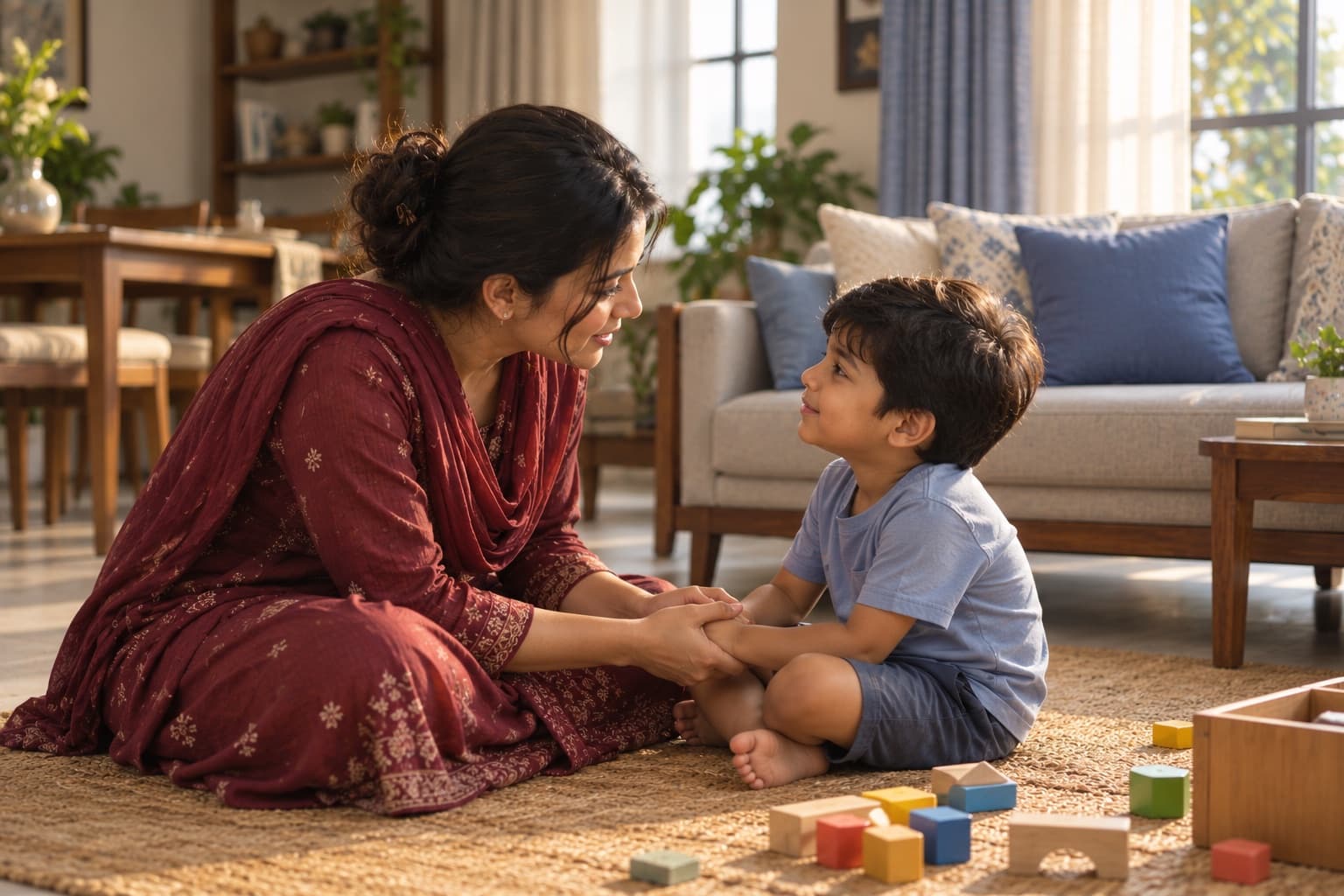
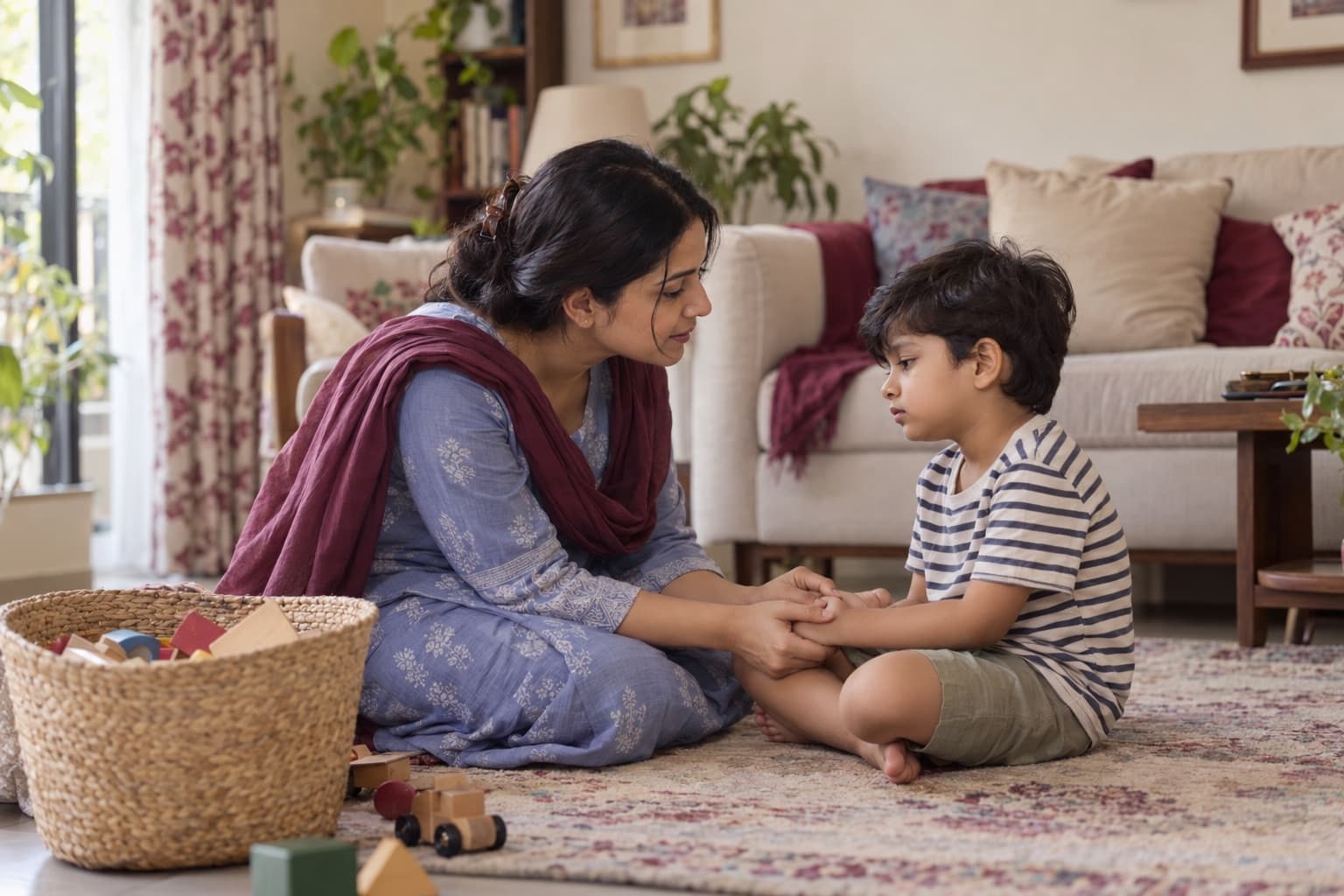
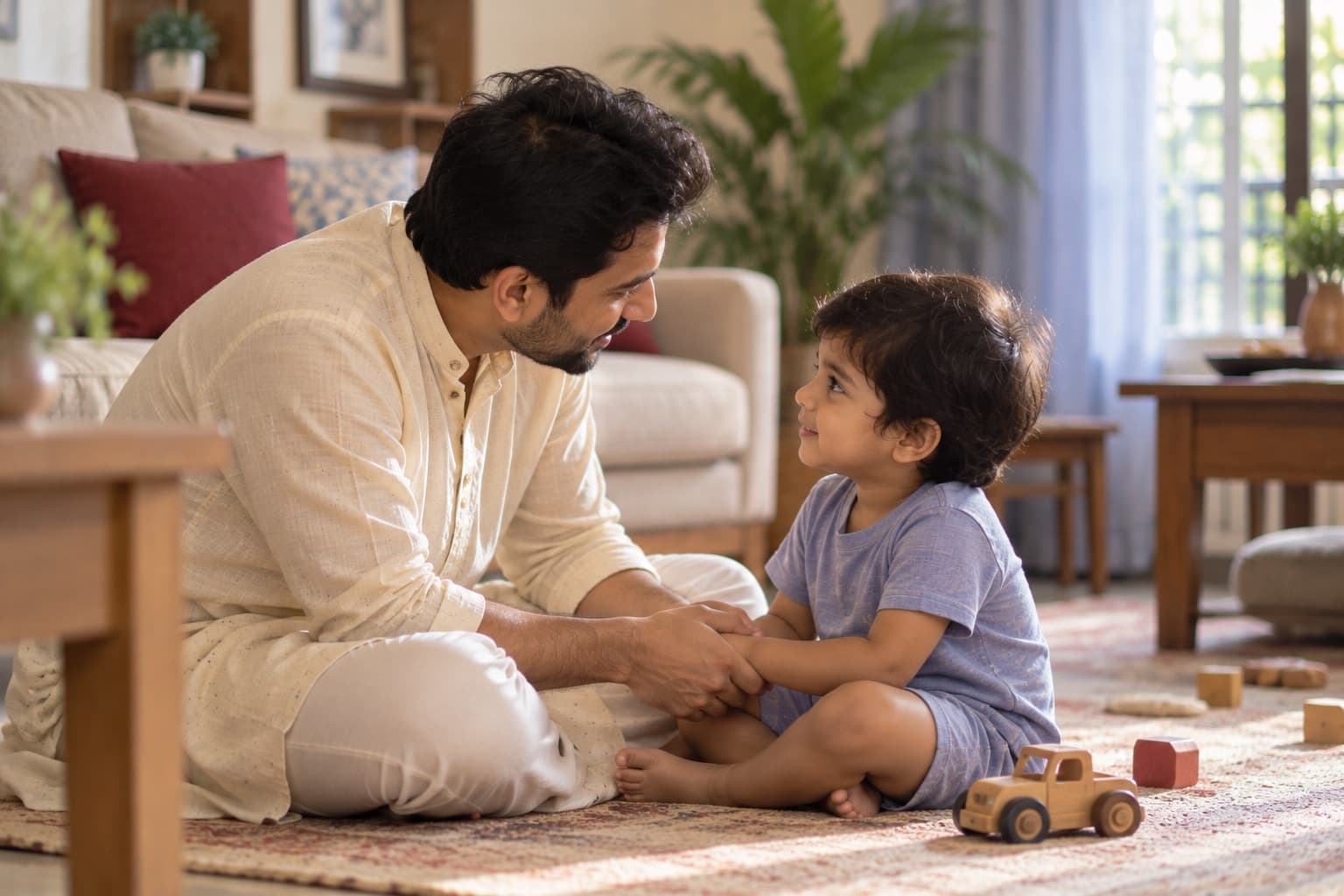
When your child won't share, a simple afternoon can turn into tears: your daughter clutches her doll, her cousin wails, and every adult in the room looks at you. If your child shouts 'mine!' and holds on tight, it doesn't mean they are selfish or spoiled. For most children under 4, it is exactly what you would expect.
Sharing is a skill, and it grows slowly. A young child has to understand that someone else wants the toy too, wait for it to come back, and trust that it really will. Below: what's normal at each age, what to do in the moment, how to teach turns, siblings, cousins and guests, and a 7-day plan.
Why won't my child share? What's normal at each age
Toddlers not sharing toys is one of the most common worries parents raise, and one of the most normal behaviours there is. A child's sense of 'mine' arrives early, around the time they realise they are a separate person. Understanding that another child wants things just as strongly, and that a toy can go and come back, takes years.
- They can't yet see the other side. Before about 3, most children don't understand that another child wants the toy as much as they do.
- 'Later' doesn't mean much yet. To a 2-year-old, a toy handed over can feel gone for good.
- Some things are special: a doll from Nanu, a car they carry everywhere, a gift sent from abroad.
- Tired, hungry or crowded children share less. A busy Eid afternoon with ten cousins is the hardest test of all.
| Age | What's usual | What helps |
|---|---|---|
| Under 2 | Grabs whatever looks interesting; 'mine' is not yet a thought about other people. Sharing isn't expected. | Swap, distract or offer a second toy; play give-and-take games with you. |
| 2–3 years | 'Mine!' at its strongest; grabbing and holding on are common; plays beside other children more than with them. | Very short turns with an adult right there, a timer or a song, and the words 'my turn' and 'your turn'. |
| 3–4 years | Starts to take turns and wait a little with help; begins to share with a favourite friend. | Praise each turn, practise in play, and warn before a turn ends. |
| 4–6 years | Shares more often, cares a lot about what is fair, can agree simple rules; special things and tired days are still hard. | Let them suggest the rule, keep special toys private, and talk about how the other child felt. |
What to do when your child won't share, step by step
In the moment, the aim is not a perfect handover but a fair, safe turn, and a child who learns that their things are safe with you.
- Move in early and calmly. Sit down beside the children before the pulling turns into hitting.
- Name what each child wants: 'You're playing with the car. Rafi wants a turn too.'
- Don't snatch the toy to give to the other child. Grabbing it from them teaches that grabbing is how things work.
- Set a clear turn: a sand timer, a few minutes, or 'until the song ends'. The child holding the toy finishes their turn first.
- Help the waiting child wait: offer another toy, hold their hand, count down together.
- Warn before the turn ends, then help hand the toy over. If your child can't let go, gently help, and stay close through the tears.
- Notice the giving: 'You gave Rafi a turn. Look how happy he is.' Then make sure the toy really comes back when promised.
What you might say
- You're still playing with it. When the sand runs out, it's Rafi's turn.
- You really want the car. It's Mim's turn now. Yours is next.
- I won't let you grab. You can say, 'Can I have a turn?'
- That's your special doll. Let's keep it on the shelf while your cousins are here.
- You gave her a turn and waited for yours. That wasn't easy, and you did it.
Should you force a child to share?
Usually not. If your child won't share the moment another child asks, making them hand the toy over can teach that whoever cries loudest gets it, and the first child often holds on harder next time. Turns are different: you can firmly insist that a shared toy is passed on when a turn ends, while your child still keeps a few things that are only theirs.
How to teach sharing and turn-taking every day
Teaching kids to share happens mostly in calm moments, long before the next fight over a toy. Short, playful practice with you is where turn-taking for toddlers usually begins.
- Play turn games: rolling a ball, adding one block each to a tower, and ludo or snakes and ladders for older children.
- Share out loud yourself: 'I'll share my orange with you', 'Baba, would you like half my paratha?'
- Use one timer for everyone, so the rule, not a person, decides when a turn ends.
- Give your child words to borrow: 'Can I have a turn?', 'Five more minutes, then you', 'Let's play together.'
- Read or act out stories where characters share and wait, then ask, 'How do you think he felt?'
- Praise sharing by describing it: 'You gave your sister the red crayon.' There are more examples in how to praise a child.
Sharing with siblings, and the toddler who grabs
Sharing with siblings is often harder than sharing with friends, because toys, space and your attention are shared every single day. If your child won't share with a brother or sister, a few house rules help:
- Each child keeps a few things that are only theirs, in their own box or on their own shelf, and nobody uses them without asking.
- Everything else belongs to the family and goes by turns.
- Don't always ask the older child to give way because they're bigger. Hearing 'Give it to him, he's small' again and again can feel deeply unfair.
- Protect the older child's games: a block tower or a drawing that a toddler keeps wrecking can move to a table out of reach.
- Give the younger child a job too: holding the timer, or choosing the next game.
When a toddler grabs from other children, step in early, give the toy back to the child who had it, and offer the grabber words and another toy. If grabbing turns into hitting or biting, see toddler hitting and biting. For fights that go well beyond toys, sibling rivalry has a full plan.
In a Bangladeshi home: guests, cousins, Eid and the special toy
In many Bangladeshi homes a child shares far more than toys: rooms, beds, relatives' attention, and a steady flow of guests. That is a real gift, and it also means sharing is tested much more often than in a quieter house.
Before guests arrive
Put special toys away before guests come, together with your child: 'Your doll from Nanu and your new car can rest in the cupboard. Which toys shall we put out for everyone?' A child who knows their treasures are safe often shares the rest more easily. Put out enough shared toys, and two of anything popular if you can.
'Give it to him, he's a guest'
Many of us grew up with the rule that a visiting child gets whatever they want. Hospitality is a lovely value, and you can teach it without taking your child's things by force. Offer the guest the shared toys first, set a turn for anything both children want, and keep the special shelf closed. If an elder insists, a calm line usually works: 'They're taking turns. Mim first, then Rafi.'
Cousins, Eid and family gatherings
A room full of cousins, a new Eid toy each and a late lunch is when sharing falls apart most often. Feed the children before the busiest part, stay near the play for the first half hour, and keep one quiet corner where a tired child can rest. Agree two rules for every child with the other parents: no grabbing, and a turn is a turn.
Joint families and shared rooms
When cousins live together or siblings share one room, every child still needs one small place of their own, such as a box under the bed that others ask before opening. Ask grandparents and house help to use the same words for turns, so the rule stays the same whoever is in charge.
A 7-day plan for more turns and fewer grabs
Pick one change, note what happens each day, and compare after a week.
- Day 1: Just notice. Write down each fight over a toy: which toy, with whom, what time, and what happened just before.
- Day 2: With your child, choose two or three special toys that are only theirs, and give them a safe place.
- Day 3: Bring in a timer or a turn song, and play a turn game together for 10 minutes.
- Day 4: Practise the borrow words in play: 'Can I have a turn?' and 'When I've finished.'
- Day 5: Tell grandparents, house help and older siblings the same turn rule and the same words.
- Day 6: Invite one child over for a short play, put the special toys away first, and stay close.
- Day 7: Compare with Day 1: how many fights, how long they lasted, and how many turns your child gave. Keep what helped and choose the next step.
A child who knows their things are safe finds it easier to share the rest.
When to get help with sharing and grabbing
Finding it hard to share is part of growing up and rarely a problem on its own. Talk to your child's doctor, a child psychologist or the teacher if:
Get help if
- After about age 5, your child still can't take a turn, or can't play near other children at all, even after several weeks of calm practice.
- Your child hurts other children over toys most days, or the hurting is getting worse.
- Your child shows little interest in other people, has speech well behind other children the same age, or loses words and skills they had.
- A sudden change: a child who used to play happily now hides things, guards food, or seems frightened of a particular child or adult. Believe your child, keep them away from that person and act the same day. Report any abuse to the local police station (thana), and call 999 if your child is in danger now.
- You feel you might hurt your child when the fights start. Make sure your child is safe, step away for a few minutes, and get support the same day. Call 999 if anyone is in danger now.
If your child won't share today, they are usually still learning, not failing. ParentMind helps you note what happens each day, such as which toys, times or visitors lead to fights, so patterns are easier to spot; see how ParentMind works.
Questions parents ask
At what age do children learn to share?
Gradually, usually between about 3 and 6. Children under about 3 rarely share on their own, because they can't yet see things from another child's side, though they can take very short turns with an adult's help. Between 3 and 4 many start to take turns and wait a little, and by 5 or 6 most share more often, especially with friends. Special toys stay hard for longer.
Is it normal for a 3 year old not to share?
Yes, for most children it is. Three-year-olds are only starting to understand that other children have wishes too, and 'mine' is still very strong, especially at home, with special toys or when they're tired. Expect short turns with your help rather than generous sharing. If your child often hurts others over toys, or still can't take any turns after about age 5, talk to your child's doctor.
Should I make my child share with a guest or a cousin?
Not by taking their things away. Put special toys away before guests arrive, offer the shared toys first, and set turns for anything both children want. You can be firm about turns while your child still keeps a few things that are theirs alone. Children who feel their things are safe often become more generous over time, not less.
Why does my child share at school but not at home?
Because home is where their own things live, and where they feel safe enough to protest. At school the toys belong to everyone and a teacher runs the turns, so sharing is easier. It's a good sign that your child can share at all. At home, keep a few special toys private and use the same turn rules for the rest. Playing with one friend at a time helps too; see helping a child make friends.
What should I do when my child grabs toys from others?
Step in early and calmly. Give the toy back to the child who had it, and give your child words to use instead: 'Can I have a turn?' Offer another toy while they wait, and make sure their turn really comes. Grabbing it back roughly or scolding loudly tends to teach more grabbing. If hitting or biting still happens most days after about age 4 or 5, talk to your child's doctor.
My child won't share with their younger sibling. What can I do?
Give each child a few things that are only theirs, and make everything else family toys shared by turns. Try not to ask the older child to give way just because they're bigger; over time it can build resentment. Protect their games from a grabbing toddler, and notice out loud each turn they give.
This article is general information, not medical advice. For health worries, talk to a doctor; if someone is in danger, contact your local emergency number.