My child has no friends: how to help them make and keep friends
Quick answer
“My child has no friends” is a common worry, and small steps often help. Children aged 4–12 who struggle are often shy, new or still learning to join games and take turns. Practise at home, invite one cousin or neighbour to play, and try one club. Get help if your child is lonely and low for weeks, or is bullied.
 By the ParentMind team12 min read
Listen to this article
17 min listen · Read by your device's voice
At a glance
- Who it is for
- Parents of children aged 4–12 who play alone, get left out at school or say “nobody wants to play with me”
- Key takeaways
- Many children go through times with few or no friends, often after a move, a new school or a friend leaving, and one good friend is often enough.
- Making friends takes skills, such as joining a game, taking turns and losing calmly, and children can practise them at home.
- Short play with one cousin or neighbour, and one club built around an interest, usually help more than big parties.
- Being left out on purpose, again and again, is bullying rather than a friendship problem: believe your child and act the same day.
If your child plays alone at break time, never gets invited to birthday parties, or comes home saying “nobody wants to play with me”, you may lie awake thinking: my child has no friends, and I don't know how to help.
This worry is common, and it is usually something you can help with. Making friends takes skills, such as joining a game, sharing and coping with losing, and many children simply need more practice and more chances to play. Some children are shy or new; a few are being left out on purpose, which needs a different response.
Below: why it happens, how to tell a skills gap from bullying, what to say, skills to practise, chances to play in a city flat, a 7-day plan and when to get help.
Why does my child have no friends?
When a parent says “my child has no friends”, the child is rarely unkind or unlikeable. Most often, one or more of these things is getting in the way:
- Temperament: shy children often watch for a long time before joining in, and the game moves on without them. See how to build confidence in shy children.
- Skills still growing: joining a game, waiting for a turn, losing without a meltdown and reading other children's faces all take practice, and some children need more of it.
- A big change: a new school, a move to a new flat, a best friend leaving, or a long stretch at home after illness or holidays.
- Few chances to play: school, coaching, homework and screens can leave little time with other children, especially in a flat with no playground.
- Different interests: a child who loves insects in a class that loves cricket may simply not have found their people yet.
- Big feelings in play: grabbing, hitting, bossing or crying on losing can make other children keep away.
- Being left out on purpose: when the same children exclude, mock or gang up on your child again and again, that is bullying, covered below.
Is it normal for a child to play alone?
Yes, some of the time. Many children enjoy playing alone, and a child with one or two close friends is doing well, even if they are never the centre of a group. A child who plays alone and is content is different from a child who wants to join in and cannot.
| Age | What friendship often looks like | What helps most |
|---|---|---|
| 4–5 years | Playmates of the moment: whoever is building with blocks today. Short games, grabbing, and making up quickly. | Short play with one child, with an adult nearby to help with turns |
| 6–8 years | Friends who like the same games, and the first “best friends”. Rules matter, and arguments about fairness are common. | Practising joining in, taking turns and losing calmly |
| 9–12 years | Shared interests, loyalty and groups. Being left out hurts more, and friendships can shift quickly. | Clubs built around interests, and talking through fallouts |
Friendship problems in children: skills, shyness or bullying?
Friendship problems in children usually fall into one of three groups, and each needs a different kind of help. The difference matters most with bullying, which is targeted harm, not a lack of social skills.
| What you notice | Still learning social skills | Shy or slow to warm up | Left out on purpose (bullying) |
|---|---|---|---|
| In play | Wants to join, but grabs, bosses or quits when losing | Watches for a long time, then joins once settled | Tries to join and is pushed away by the same children |
| How your child feels | Confused or cross that games go wrong | Nervous at first, fine later | Scared or ashamed; dreads school or certain children |
| What helps | Practice at home and short, guided play | Warm-up time and one friend at a time | Believing your child and talking to the school the same day |
If the same children tease, threaten, hit or shut out your child, read about bullying at school. If your child also says “I'm no good” or gives up easily, see how to build a child's confidence.
My child has no friends: what to say when they feel left out
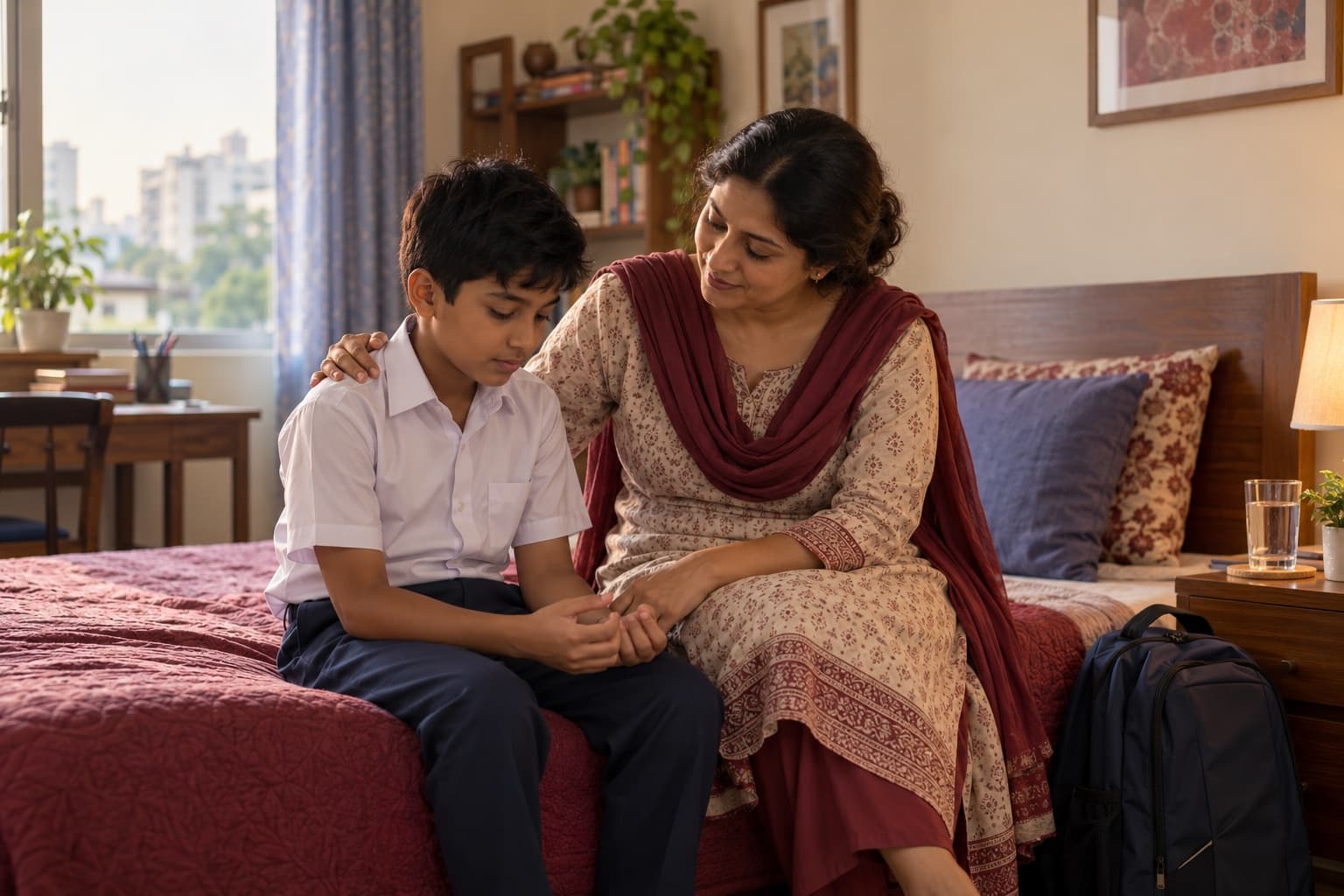
When your child comes home sad, listen first and fix later. A calm talk shows the problem can be worked on, and helps you learn what is really happening at school.
- Stop and listen. Put your phone down, sit at their level and let them finish.
- Name the feeling before anything else: “That sounds lonely.” Skip “Just go and play with someone.”
- Ask for details gently: where it happened, who was there, what your child did and what the others did.
- Hold back blame, of your child or of the other children, until you know more.
- Choose one small next step together, such as asking one child to play at break tomorrow, or sitting near a classmate at lunch.
- Check in the next day, and tell the class teacher if it keeps happening.
What you might say
- That sounds really lonely. I'm glad you told me.
- Making friends can be hard. It's something we can practise together.
- Tomorrow, would you like to try asking just one person, “Can I play too?”
- You don't need lots of friends. One good friend is a great start.
- If anyone is mean to you on purpose, tell me. That is never your fault.
How to help a child make friends: social skills to practise at home
Social skills for kids are learned a bit like reading: in small steps, with practice and a patient adult. Many parents who worry “my child has no friends” find the gap is one or two specific skills. Home is the safest place to rehearse, because mistakes there cost nothing.
- Joining a game: watch for a moment, move close, then ask “Can I play?” or offer something useful: “I can be the goalkeeper.”
- Starting a chat: a greeting, the other child's name and one question, such as “What are you drawing?”
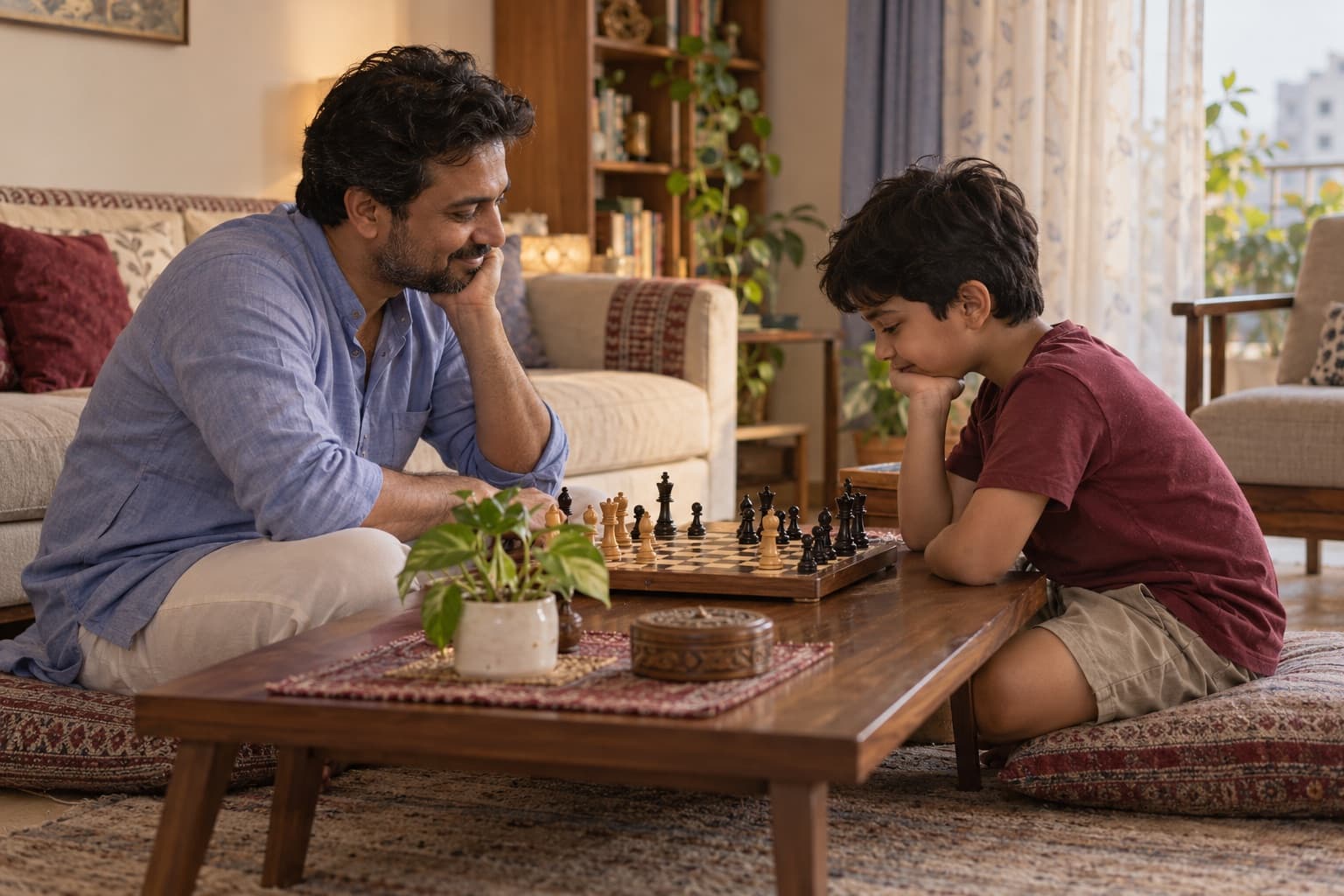
- Taking turns and sharing: ludo, carrom and other board games are ready-made practice.
- Losing calmly: play games your child can lose, and practise one line, such as “Good game, let's play again.”
- Reading faces: pause a cartoon or a picture book and ask, “How is she feeling? How can you tell?”
- Keeping a friend: saying sorry, giving up a turn, remembering what the friend likes and inviting them back.
How can you create chances to play? Playdates, cousins and clubs
Skills grow only with real chances to use them. Children usually become friends through small, repeated meetings, so a short weekly play with the same child often does more than one big party.
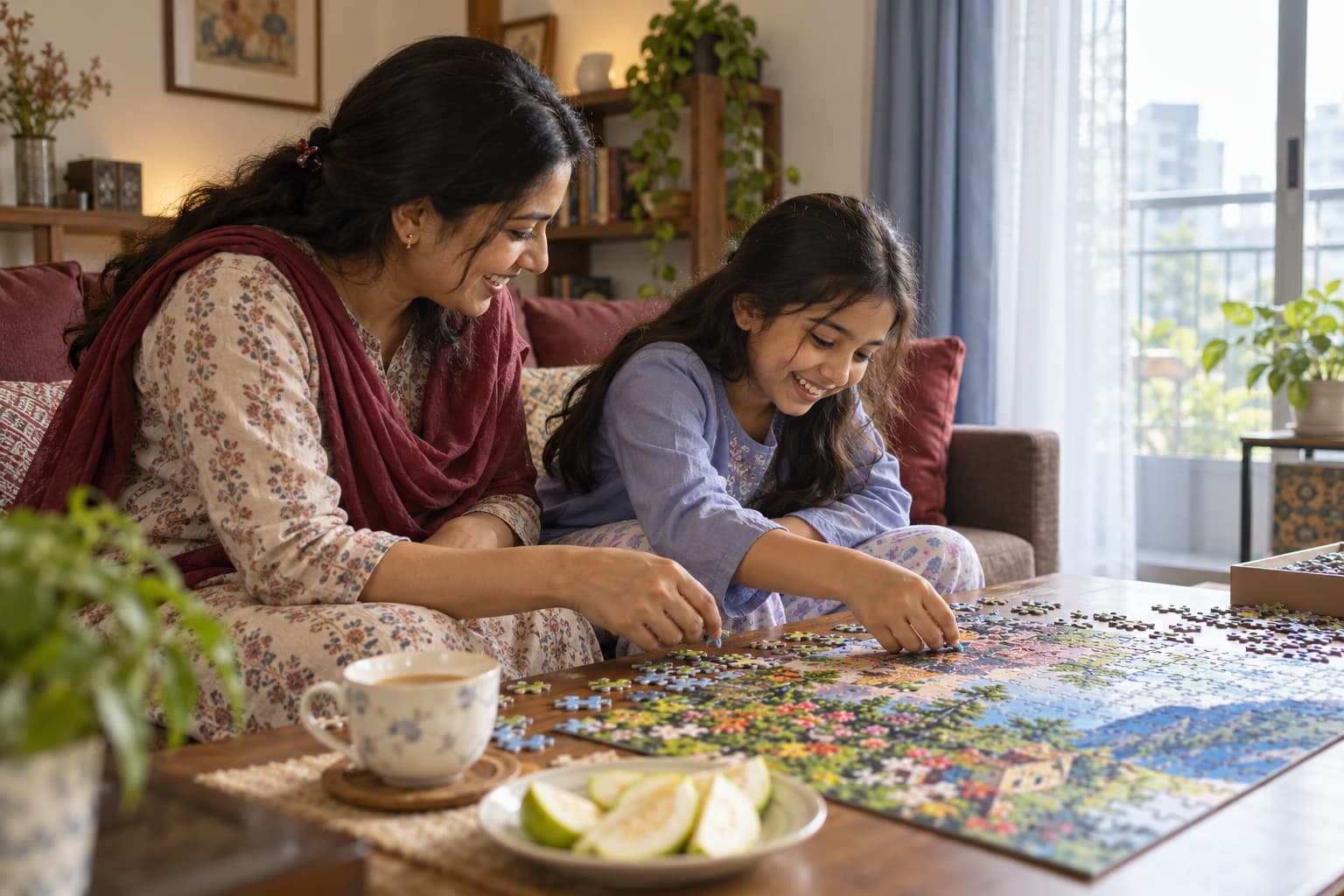
- One child, one hour: invite one classmate, cousin or neighbour for about an hour, with an activity ready, such as blocks, drawing, a puzzle or making a simple snack together. Find more in play ideas at home.
- Cousins: they are often a child's first friends. Use family visits and Friday lunches as easy, low-pressure practice.
- Neighbours in the building: swap numbers with one family and start a regular play in each other's flats or on the roof, always with an adult there, and never in the car park.
- School clubs and classes: art, science, debate, sport, swimming or dance. A club built around your child's interest gives children something to talk about besides themselves.
To set up a play with another parent
- Our children seem to get on in class. Could your son come over for an hour on Friday afternoon?
- I'll be at home the whole time, and I'll bring him back by six.
- Would your daughter like to play with mine on the roof this afternoon? I'll be up there with them.
Making friends in a Bangladeshi home: flats, coaching and cousins
Many children in Dhaka and other cities grow up in flats with no playground, with long school and coaching days and homework every evening. Friendship needs time, and that time often has to be planned.
- Protect one free afternoon a week for play, even in exam season. A child with no free time has no time to make friends.
- Swap some screen time for time with people. A phone or tablet can fill the space where friends should be, and online games are not the same as playing face to face.
- Skip the comparisons. “Look how many friends your cousin has” adds shame, and shame makes children hold back more.
- Use family events as practice. Eid visits, weddings and birthdays are full of children; before you go, agree one small goal, such as asking one cousin to play.
- Birthday invitations: some classes invite everyone, some don't. If your child doesn't get invited, plan something small and fun that day, and invite one child to your home soon.
- Grandparents and house help who look after your child can help too, by taking them to a neighbour's flat to play.
A 7-day plan to help your child make friends
Write one line each evening: who your child played or talked with, what went well and what was hard. After a week, you can often see patterns that are easy to miss day to day.
- Day 1: change nothing. Ask about the day, and note who your child mentioned, where they were at break and how they felt.
- Day 2: choose one skill from the list above, such as joining a game, and role-play it with toys for five minutes.
- Day 3: play a turn-taking game at home, such as ludo or carrom, and practise losing calmly.
- Day 4: message one parent, a cousin's family or a neighbour, and set up a short play.
- Day 5: ask the class teacher, briefly, who your child seems to get on with and how break time goes.
- Day 6: hold the play: about an hour, an activity ready, and finish while it is still fun, so both children want to meet again.
- Day 7: read your notes. When was your child happiest? Which child came up more than once? Plan next week's play around that.
When to get help for a child with no friends
Often, “my child has no friends” is a stage you can help with at home, through practice and time. Talk to your child's doctor or the school counsellor if you notice any of these:
Get help if
- Your child is lonely, sad or withdrawn most days for a few weeks, or stops enjoying things they used to love.
- Your child is being teased, threatened, hit or shut out on purpose, in person or online. Believe your child, act the same day by talking to the school, and call 999 if they are in danger now. If your child has been hurt, threatened with a weapon or had money taken by force, you can also report it at the local police station.
- Your child avoids all children, refuses school or every gathering, or shows panic-like fear in groups.
- Your child shows little back-and-forth talk, eye contact or shared play, or has very fixed routines. These differ from shyness, so mention them to a doctor; see child development by age.
- Hitting, biting or grabbing in play happens most days, and other children have started to avoid your child.
- Your child says they want to die or to hurt themselves: stay calm and close, call 999 if they are in danger now, otherwise speak to a doctor the same day.
Friendships often grow slowly, through small wins that are easy to forget. ParentMind helps you note what happens each day, see patterns and get guidance: how ParentMind works.
Questions parents ask
Is it normal for my child to have no friends?
For a while, it is common, especially after a move, a new school or a friend leaving, and many children go through stretches of playing alone. It is worth acting when your child wants friends but can't make them, or seems lonely and unhappy for weeks. Practise social skills at home and set up short play with one child.
How many friends does a child need?
Often just one or two good ones. A child with one close friend they trust usually does well, even if they are not popular. Quality matters more than numbers: a friend who is kind, plays fairly and makes your child feel welcome is worth more than a big group that leaves them out.
Why is my child left out at school?
Often because of a skills gap, such as not knowing how to join a game or getting upset when losing, or because your child is new, shy or has different interests. Ask your child and the teacher what happens at break. If the same children shut your child out on purpose again and again, that is bullying: act the same day.
Should I talk to the teacher if my child has no friends?
Yes, briefly and calmly. Teachers see the break times you never see. Ask who your child gets on with, how they spend break and whether the two could sit or work together. Ask the teacher to tell you if they notice teasing or children being shut out. Many teachers are glad to help when a parent asks this way.
Is it my fault that my child has no friends?
No. Friendship troubles usually come from a mix of temperament, skills still growing, few chances to play and the children around them. Blaming yourself drains the energy you need for the useful part: listening, practising one skill at home and setting up one short play a week. Those small steps are well within your reach.
How can I help my child make friends at a new school?
Give it time, and create small chances to connect. Ask the teacher to pair your child with a kind classmate, practise a greeting and one question at home, and invite one classmate over within the first month or two. Join one club early. Many children take a term or so to settle, so look for small steps, not instant friends.
This article is general information, not medical advice. For health worries, talk to a doctor; if someone is in danger, contact your local emergency number.