Group chats and online friends: staying close without spying
For many 10–15-year-olds, friendships now live in group chats as much as at school. A few ways to stay in the picture that keep trust intact.
 By the ParentMind team4 min read
Listen to this article
2 min listen · Read by your device's voice
At a glance
- Who it is for
- Parents of children aged 10–15
- Key takeaways
- Be curious about the chats, not suspicious of them.
- Agree together what to do when something feels wrong.
- Keep the door open, so they come to you first.
The class group, the cousins’ group, the cricket group: for many children the phone is where friendships carry on after school. It is natural to wonder what is said there, and natural for a child to want some of it to stay private.
Curious, not suspicious
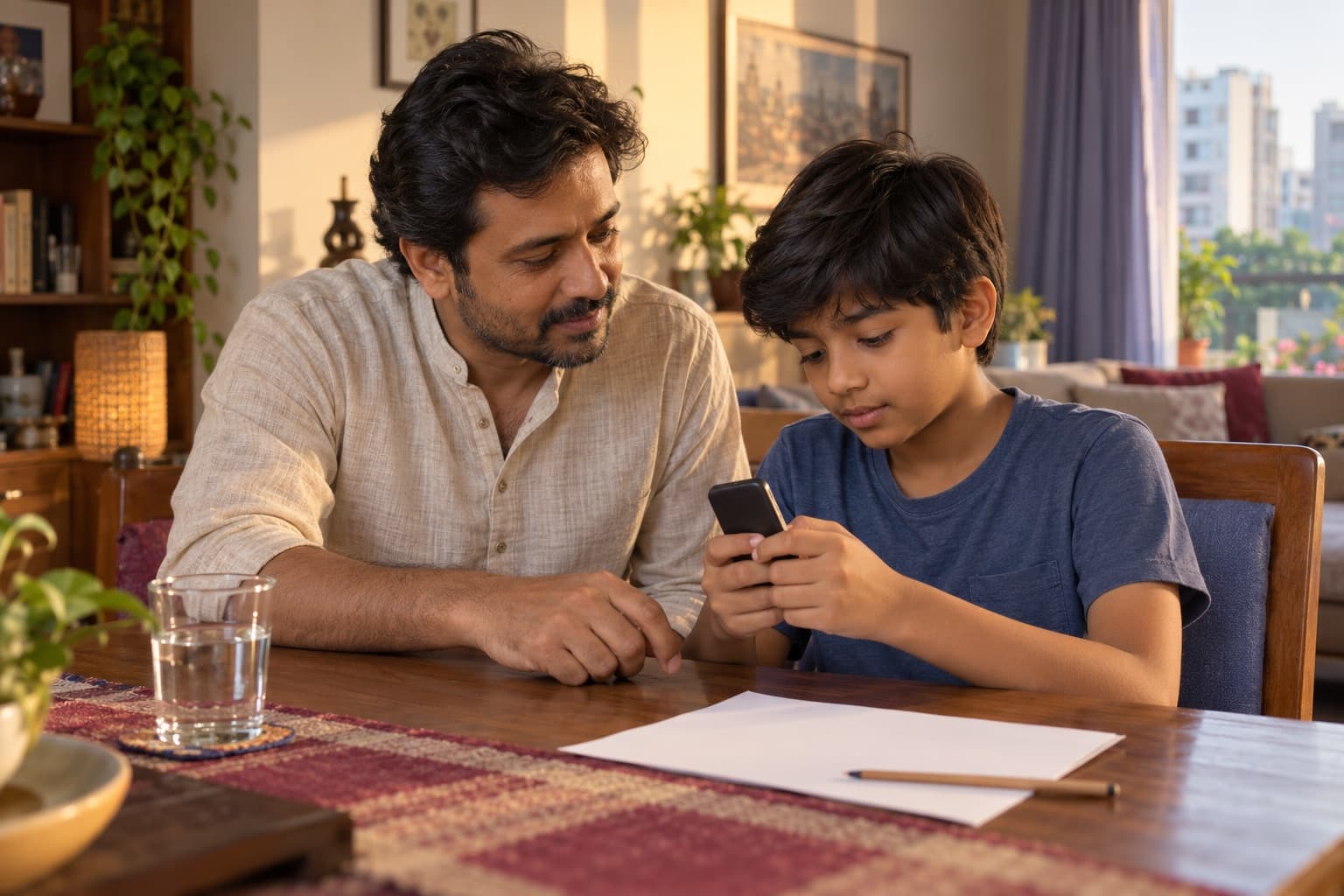
Asking “Who is in the group? What was funny today?” opens a different conversation from “Show me your phone.” Many families find that children share more when the questions sound like interest rather than inspection.
- Ask about the people, not only the messages.
- Laugh at the funny bits they choose to show you.
- Share something from your own groups, too.
The goal is that they come to you first.
When something feels wrong
Unkind messages, being left out of a group, or a stranger asking for photos are hard to bring up. It helps to agree, on a calm day, what your child can do: leave the chat, take a screenshot, and tell you — without the phone being taken away as a result.
If you are worried about bullying or someone’s safety, talk to the school, and in an emergency contact your local emergency number.
This article is general information, not medical advice. For health worries, talk to a doctor; if someone is in danger, contact your local emergency number.