Night terrors in toddlers: what they are, what to do and when to get help
Quick answer
Night terrors in toddlers are sudden episodes of screaming, thrashing or sitting up early in the night, while the child stays deeply asleep and remembers nothing. They are common between about 2 and 6 and usually harmless. Stay close, keep your child safe, don't wake them; see a doctor if they are frequent or come with rhythmic jerking, injuries or loud snoring.
 By the ParentMind team9 min read
Listen to this article
13 min listen · Read by your device's voice
At a glance
- Who it is for
- Parents of children aged 1–6 who scream or thrash in their sleep
- Key takeaways
- A night terror is a partial waking from deep sleep: your child looks terrified but is asleep, isn't in pain, and won't remember it.
- During one, stay close and keep your child safe. Don't wake, shake or hold them down; let it pass.
- Overtiredness and irregular bedtimes are common triggers, so enough sleep and a steady routine often mean fewer episodes.
- See a doctor for frequent episodes over weeks, injuries, loud snoring or pauses in breathing, or stiffening and rhythmic jerking.
Your toddler has been asleep for an hour or two. Suddenly there is a scream: they sit up, eyes wide open, thrashing and sweating, and they don't seem to know you. If this sounds familiar, it may be a night terror, and night terrors in toddlers are far more common than most parents realise.
They are frightening to watch, but most children are not in pain, go back to sleep and remember nothing. Below: what a night terror is, how to tell it from a nightmare, what to do during one, how to make them less likely, a 7-day plan, and the signs that mean you should see a doctor.
What are night terrors in toddlers?
A night terror, also called a sleep terror, is a partial waking from deep sleep. Part of the brain wakes enough to scream, sit up or kick, while the rest stays deeply asleep. Your child is not awake, not aware of you, and not having a bad dream in the usual sense.
- A sudden scream, cry or shout, often in the first few hours after falling asleep.
- Eyes open but glassy, looking straight through you.
- Sweating, fast breathing and a racing heart.
- Thrashing, sitting up, or getting out of bed and running.
- No response to comfort, or pushing you away.
- Back to deep sleep afterwards, with no memory of it in the morning.
At what age do night terrors happen, and how long do they last?
Night terrors are most common in the preschool years, roughly between 2 and 6, though they can start in younger toddlers or carry on into school age. Most episodes last a few minutes; some go on longer. They often run in families, and most children have far fewer as they grow.
Night terrors vs nightmares: how to tell the difference
Night terrors and nightmares are often confused, but they happen in different kinds of sleep and need different responses. The quickest test: a child after a nightmare is awake, wants you and can tell you about it.
| What you notice | Night terror | Nightmare |
|---|---|---|
| When | Early in the night, in the first few hours of sleep | Later in the night, often towards morning |
| Awake? | No, still deeply asleep | Yes, fully awake and scared |
| Comfort | Doesn't respond, may push you away | Wants a cuddle and calms with you |
| Next morning | Remembers nothing | Often remembers the dream |
| What helps | Stay close, keep them safe, don't wake them | Comfort, reassure, a night light, talk in the day |
Many toddlers also cry out or whimper briefly between sleep stages and settle within a minute. That is ordinary night waking, not a night terror.
What to do during a night terror
- Stay calm. It looks frightening, but your child is not in pain and won't remember it.
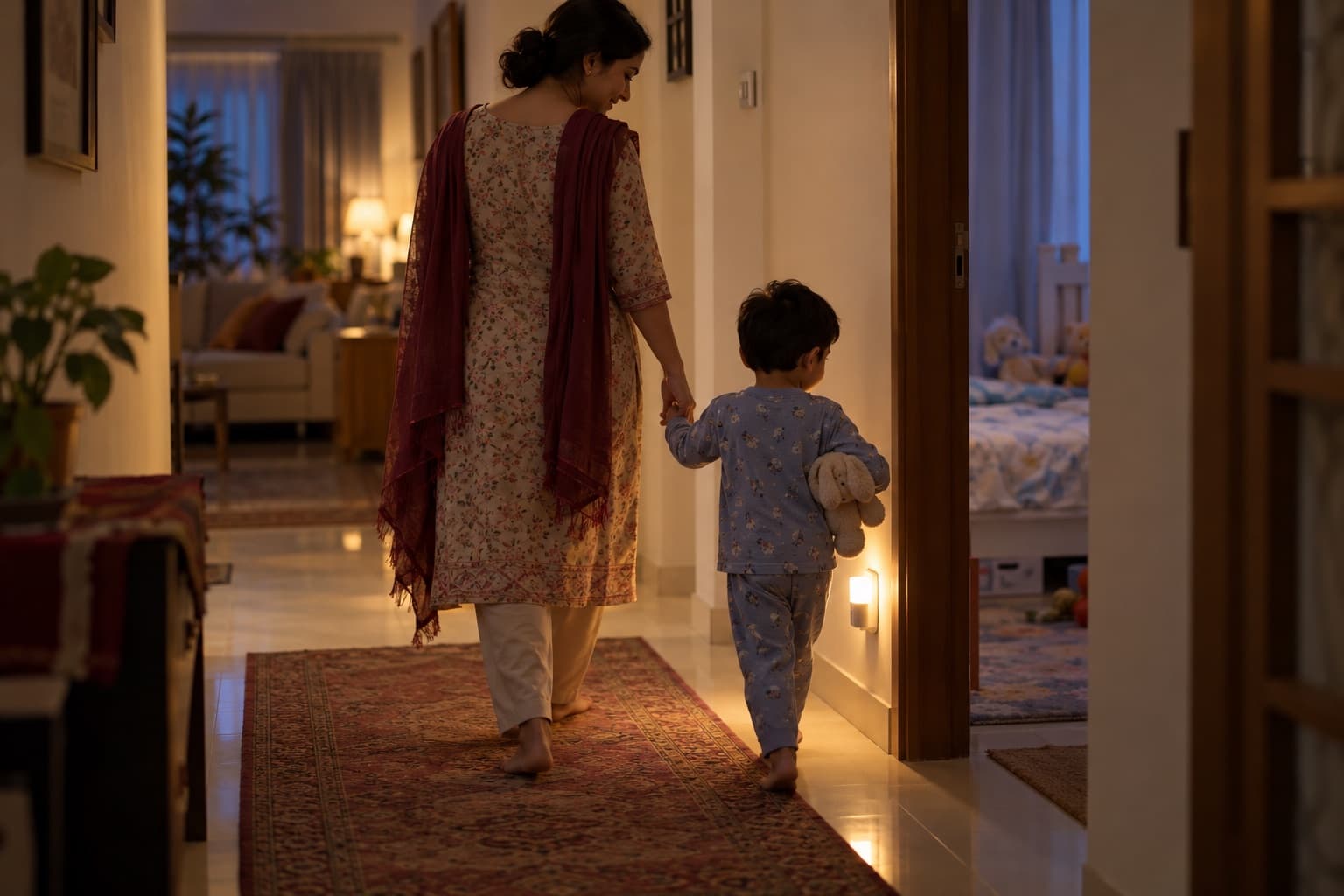
- Keep them safe: stay between your child and the edge of the bed, and move hard or sharp things away.
- Don't try to wake them. Waking is hard and often makes the episode longer or more confusing.
- Don't shake, shout or hold your child down; that tends to make them fight harder. Guide them gently if they get up.
- Say very little, softly, or nothing at all.
- Wait for it to pass. Most episodes end within minutes, and your child sinks back into deep sleep.
- In the morning, don't quiz your child or make them feel they did something wrong.
What you might say
- Shh. You're safe. I'm right here.
- Let's lie back down.
- (To a relative) Please don't wake him. It usually passes in a few minutes.
- (To a sibling) Your brother was still asleep. He isn't hurt, and he won't remember.
- (If your child asks in the morning) You were a bit restless in your sleep, and I was right beside you the whole time.
What causes night terrors, and how can you make them less likely?
Night terrors in toddlers usually have ordinary triggers, most of them about sleep itself. You can't switch them off, but many families see fewer episodes when they work on these:
- Overtiredness, one of the most common triggers. Children aged 1–2 need 11–14 hours of sleep in 24 hours and 3–5-year-olds 10–13, naps included; see how much sleep children need by age.
- Irregular bedtimes and late nights. A steady bedtime and wake-up time, weekends included, helps protect deep sleep.
- Dropping a nap. While your child gets used to no nap, an earlier bedtime for a while often helps.
- Illness, fever, a new place, or a busy or stressful time such as a new sibling or starting school.
- A full bladder: a last toilet trip just before sleep.
- Loud snoring, which can break up deep sleep and is worth mentioning to a doctor.
Night terrors in a Bangladeshi home: shared beds, late nights, worried elders
A child screaming in sleep with open, unseeing eyes can alarm the whole household. Night terrors are easier to handle when everyone at home understands them, because in many families someone will have an explanation ready.
- “Something frightened him”: elders may worry the child has been scared by something unseen, or that ‘bad air’ (batash laga) has touched them. The fear is understandable, because a night terror is frightening to watch. It is a known part of how young children sleep, common and usually harmless. If a dua is part of your family's bedtime, it can stay as a calm, comforting ritual.
- Shaking the child awake: relatives may shake the child, splash water on their face or carry them around to wake them. Explain gently that waking tends to make it last longer, and agree on one calm response for everyone.
- Shared beds and rooms: keep the edge of a shared bed clear, settle siblings with a few calm words, and if your child gets up during episodes, lock the main and balcony doors at night.
- Weddings, guests and Eid nights: a late night now and then is fine, but a run of them leaves a toddler overtired. Plan an early night after a late one.
- Visits to the village or grandparents: a new bed and a new room can bring on episodes, so keep the bedtime steps the same.
A 7-day plan for fewer night terrors
- Day 1: Notice. Write down bedtime, wake-up time, naps, and the time and length of any episode. Change nothing yet.
- Day 2: Compare your child's total sleep with the range for their age. If it's short, move bedtime 15 minutes earlier.
- Day 3: Fix one steady bedtime and wake-up time, including the weekend.
- Day 4: Make the room safe: a clear floor, nothing sharp near the bed, the main and balcony doors locked, the bed away from the window.
- Day 5: Agree the plan with everyone at home: don't wake, don't shake, stay close, keep them safe.
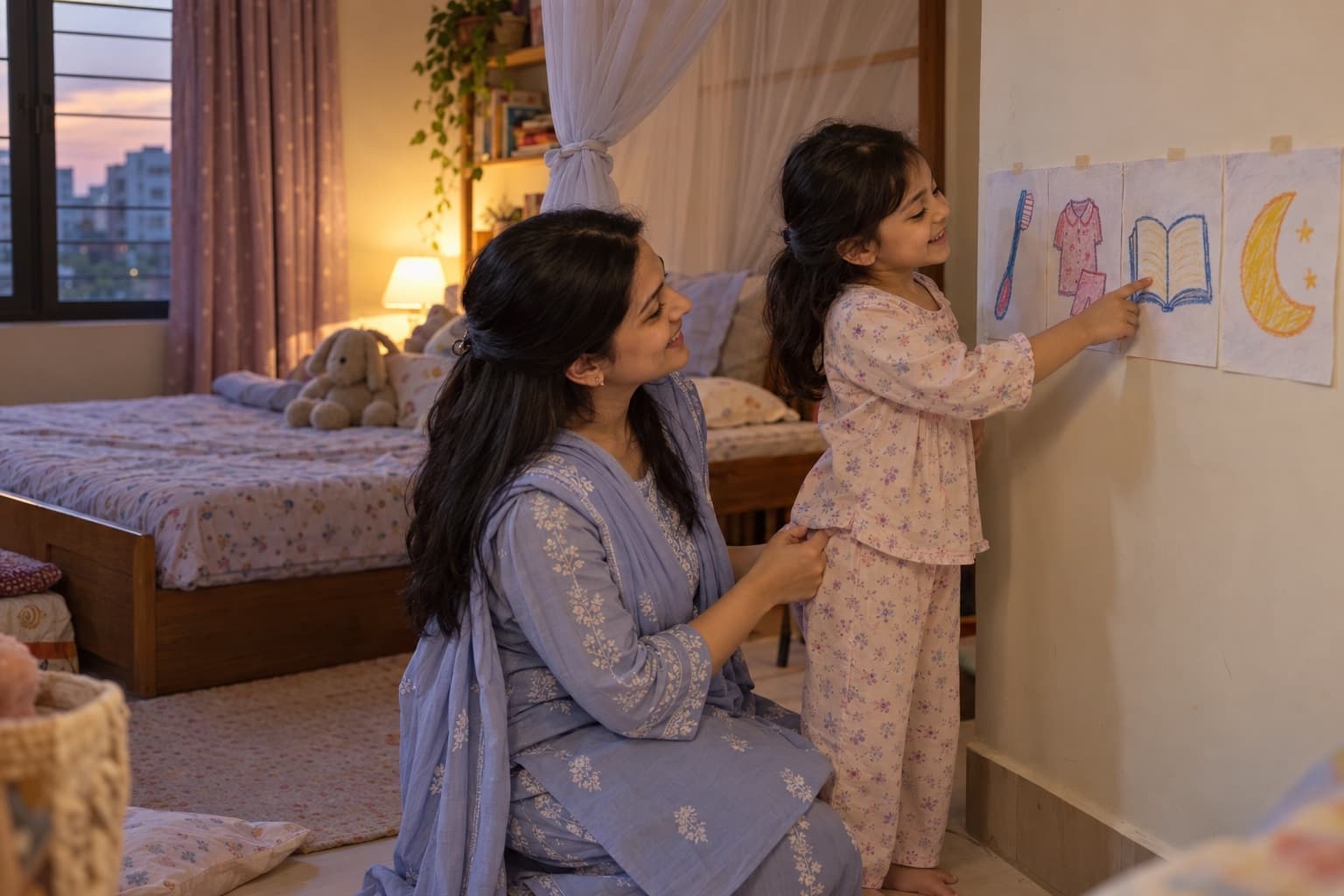
- Day 6: Add a calm, screen-free hour before bed and a toilet trip just before sleep.
- Day 7: Look back: how many episodes, at what time, after what kind of day? Keep what helped.
When to see a doctor about night terrors
Most night terrors fade with time and steadier sleep. Talk to your child's doctor if:
When to get help
- Episodes happen several times a week for more than a few weeks, or often more than once a night.
- An episode lasts much longer than usual, such as more than half an hour, or your child gets hurt or tries to leave the house.
- Your child snores loudly most nights, or you notice pauses in breathing, gasping or choking sounds.
- The episodes involve stiffening, rhythmic jerking, drooling or wetting, or always look exactly the same.
- Your child is very sleepy or struggling during the day, or the episodes come with daytime fears or a lot of stress; for daytime worries, see anxiety in children.
- Call 999 if your child seems to be having a fit for the first time, has a fit that doesn't stop, or struggles to breathe or turns blue.
Writing down the time of each episode and the day before it often shows a pattern, such as a late night or a skipped nap. ParentMind helps you note what happens each day, see patterns and get guidance. See how ParentMind works.
Questions parents ask
Are night terrors harmful to toddlers?
Usually not. Night terrors look frightening, but most children aren't in pain, don't remember them and grow out of them. The main risks are injury during an episode and lost sleep for the family. Keep the room safe, don't wake your child, and see a doctor if episodes are frequent or come with snoring, jerking or injuries.
Why does my toddler wake screaming but not seem awake?
That is the typical sign of a night terror. Part of the brain wakes from deep sleep while the rest stays asleep, so your child can scream, sit up or thrash without being awake or aware of you. It usually happens in the first few hours of the night and passes within minutes.
Should I wake my child during a night terror?
No. Waking a child during a night terror is hard, and it often makes the episode longer or leaves them confused and upset. Stay close, keep them safe, speak softly if at all, and let it pass. Once it ends, most children fall straight back into deep sleep and remember nothing.
At what age do night terrors stop?
Most children have fewer night terrors as they get older, and many stop by school age, though some have the occasional episode in later childhood. They are most common roughly between 2 and 6. Enough sleep and a steady routine often mean fewer episodes while your child grows out of them.
How can I tell a night terror from a seizure?
They can look alike, so the details matter. Night terrors usually come in the first few hours of sleep, with screaming and thrashing that varies from night to night. Stiffening, rhythmic jerking, drooling, wetting, or episodes that look exactly the same each time are reasons to see a doctor. A short phone video of an episode can help.
Do night terrors mean my child is stressed or something is wrong?
Not usually. Night terrors are mostly about sleep: being overtired, irregular bedtimes or being unwell. A stressful time, such as a new sibling or starting school, can make them more frequent. On their own they are not usually a sign of an emotional problem, but talk to a doctor if your child also seems anxious in the day.
This article is general information, not medical advice. For health worries, talk to a doctor; if someone is in danger, contact your local emergency number.