When should a child sleep alone? A gentle move to their own bed
Quick answer
There is no fixed answer to “when should a child sleep alone?”: sharing a bed or room is normal in many families, and children move to their own bed at different ages, often in the preschool or early school years. Move when your child seems ready and life is calm, go step by step, and never force or frighten them.
 By the ParentMind team12 min read
Listen to this article
16 min listen · Read by your device's voice
At a glance
- Who it is for
- Parents of children aged 2–8 who share a bed or room and are thinking about a move
- Key takeaways
- Sharing a bed or room is normal in many Bangladeshi homes, and there is no deadline for a child to sleep alone.
- A child is often ready when they settle with a short routine, mostly sleep through, and seem curious about a bed of their own.
- Move in small steps over a few weeks: a mattress beside your bed, then across the room, then their own bed or room, with you close at first.
- Never force, scare or shame a child into sleeping alone; fear that lasts for weeks or starts suddenly deserves a closer look.
Your child still sleeps curled up beside you, a new baby is on the way, or nobody in the bed is sleeping well, and you've started to wonder: when should a child sleep alone? Many parents ask, often right after a relative has asked them.
Here's the reassuring part: sharing a bed or a room (co-sleeping) is normal in many families around the world, and in many Bangladeshi homes it's simply how families sleep. There is no deadline. If you do want your child in their own bed, most children can make the move with a gentle, gradual plan.
Below: when a child may be ready, a step-by-step plan, fears, siblings sharing a room, small flats, a 7-day plan and when to get help. If the battle is bedtime itself, see toddler won't sleep.
When should a child sleep alone? Is there a right age?
There is no single right age. Child-health guidance focuses on safe sleep for babies and on enough sleep for children, not on where an older child sleeps. Some children move to their own bed at 2 or 3, many in the early school years, and some share with a parent, grandparent or sibling for longer; that's a family choice.
Families often decide to make the move when a new baby is coming, when kicks and early waking mean nobody sleeps well, when a child asks for a bed of their own, or when growing children need more privacy. If everyone sleeps well together and you're happy, there's no need to change anything.
| Arrangement | Often works well when | Watch for |
|---|---|---|
| In the parents' bed | Everyone sleeps well and the bed has room | A baby under one needs the safe-sleep steps, and an older child shouldn't sleep right next to a baby |
| Own mattress or small bed in the parents' room | You want space in the bed, but your child still wants you close; a good first step | Low and firm, inside the mosquito net, away from windows and the balcony door |
| With a brother or sister | Siblings get on, and the older one enjoys the company | Different bedtimes, privacy as they grow, and the same body-safety rules for everyone |
| With a grandparent | A grandparent shares the room or bed and loves the closeness | The same routine and words as at home; no ghost or jinn stories at bedtime |
| A room of their own | There is space, and your child is ready and not fearful | You can hear them at night; a dim night light; a rechargeable light for load-shedding, never a candle |
For babies under one, the safe-sleep steps are different and matter a lot; they are in how much sleep children need, with the sleep hours for every age.
Is your child ready to sleep alone? Signs to look for
Readiness matters more than age. A move often goes more smoothly when several of these are true:
- Your child falls asleep with a short routine and some comfort, not only while being fed or rocked for a long time.
- Most nights they sleep through, or settle again quickly after waking.
- They can be calmed by your voice from across the room.
- They're curious about a bed of their own, or ask for one.
- Life is fairly calm: no new baby arriving this month, and no new school, illness, house move or family upset.
- You're ready too: you can keep the same plan, calmly, for a few weeks.
How to move a toddler or older child to their own bed, step by step
Gradual is the key word: one small step every few nights, so your child never feels suddenly alone. The same steps work for a toddler and for an older child.
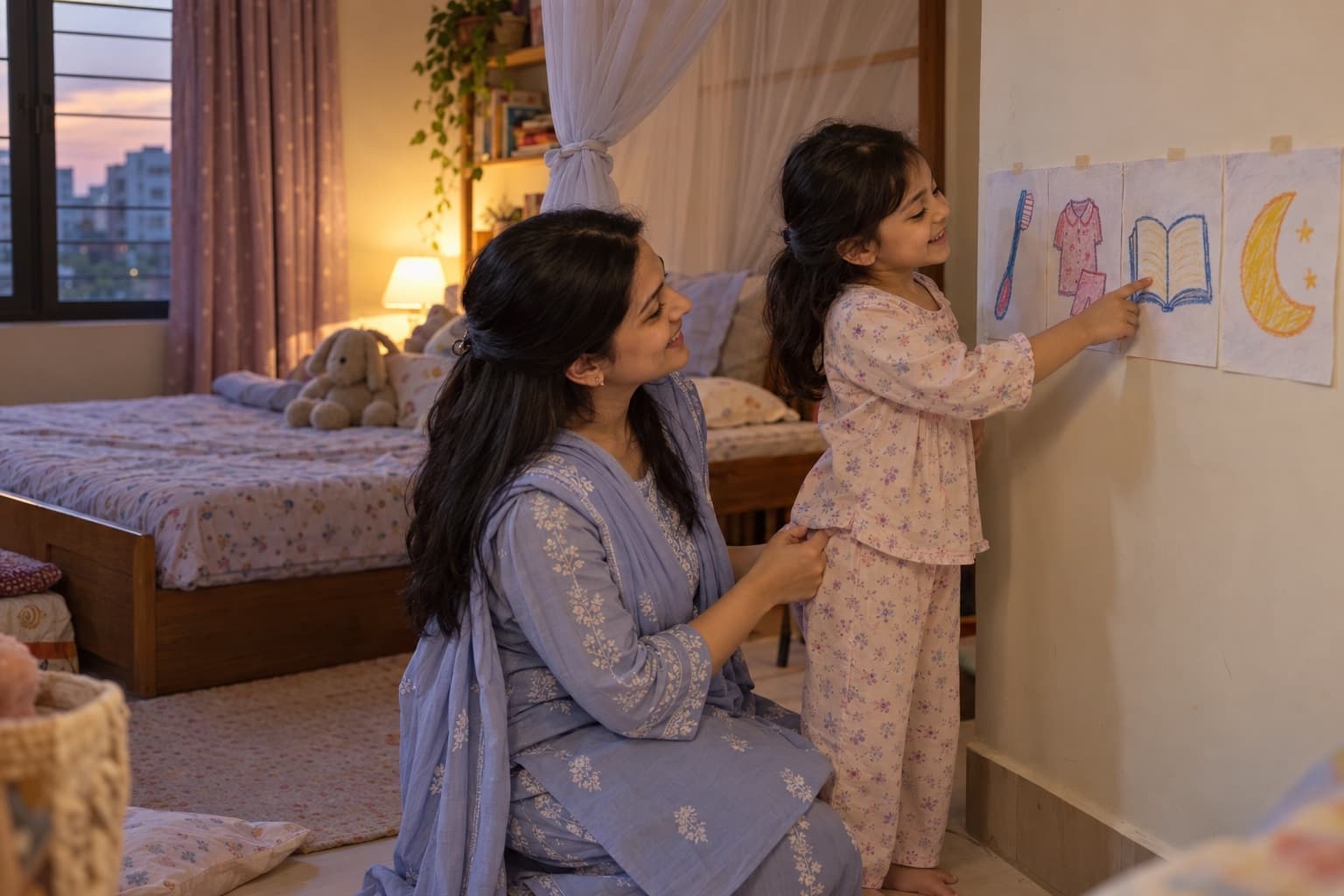
- Talk about it in the daytime, warmly: “Soon you'll have your own bed, just like big kids do.” Let them choose a sheet, a pillow cover or a soft toy for it.
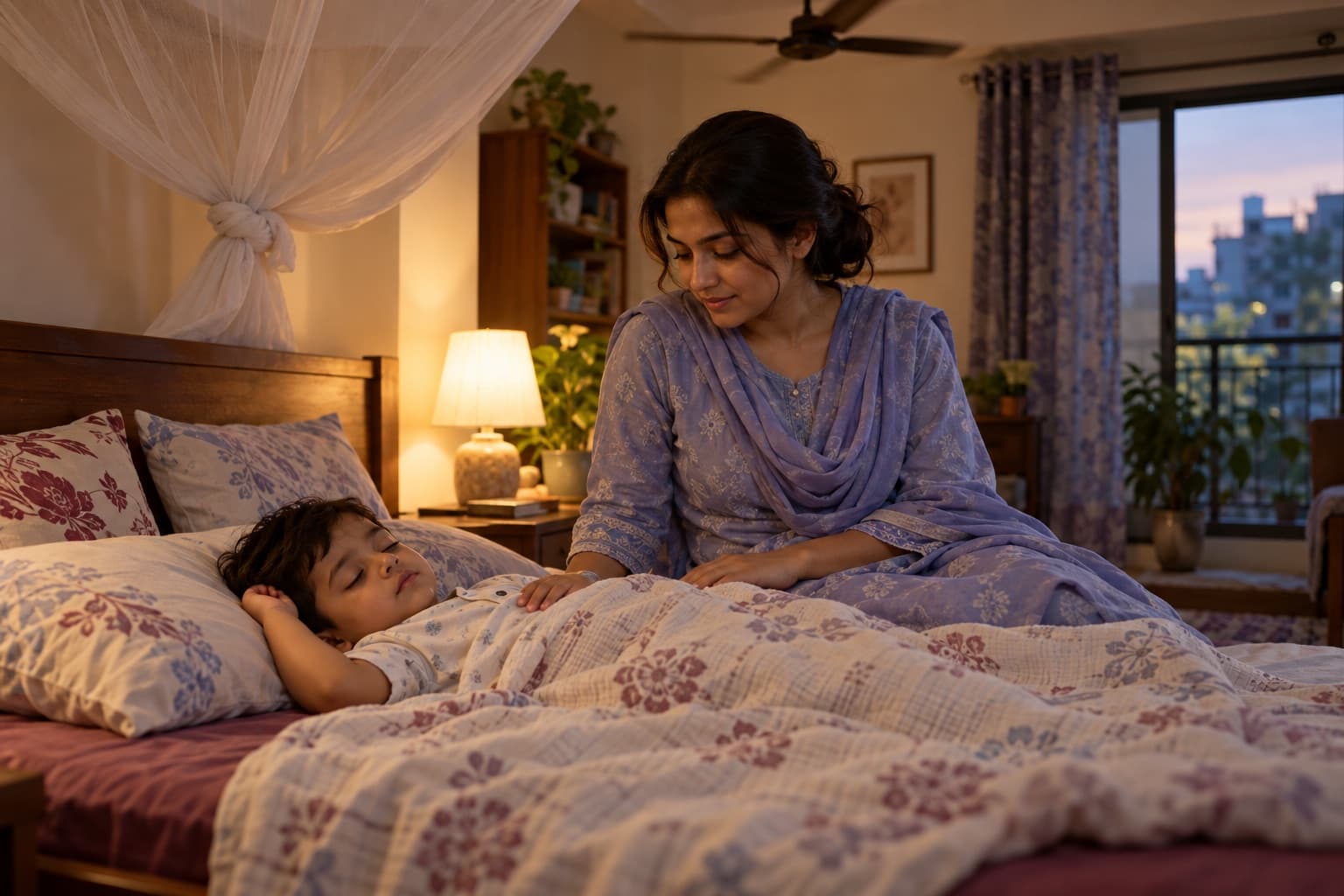
- Start close by: a mattress or small bed beside yours, in your room. Make it low and firm, inside the mosquito net, away from windows and the balcony door.
- Try it first for a daytime rest or nap, when everyone is calm, so the new bed feels familiar.
- Keep the same bedtime routine, ending in the new bed: wash, teeth, toilet, a story, a dua or a song, lights low.
- Stay close at first. Sit beside the bed until your child falls asleep. Every few nights, move a little further away: the end of the bed, the middle of the room, the door.
- Check in before they call: “I'll come back in five minutes to see you,” and come back. Slowly stretch the gap. If they get up, walk them back calmly with the same short sentence.
- Once your child sleeps well in their own bed beside you, move it across the room, or into a sibling's room or their own, if that's the plan.
What you might say at bedtime and at night
- This is your bed. I'm right here, and I'll stay until you're sleepy.
- I'll come back in five minutes to check on you.
- You're safe. Ammu and Abbu are right next door.
- It's sleep time. Back to your bed. I love you.
- You stayed in your own bed all night. You must feel proud!
Child scared to sleep alone? What helps with fears
Fears of the dark, ghosts and being alone are common from about 2 to 8, and they often show up just when a child moves to their own bed. Take the fear seriously, without making it bigger:
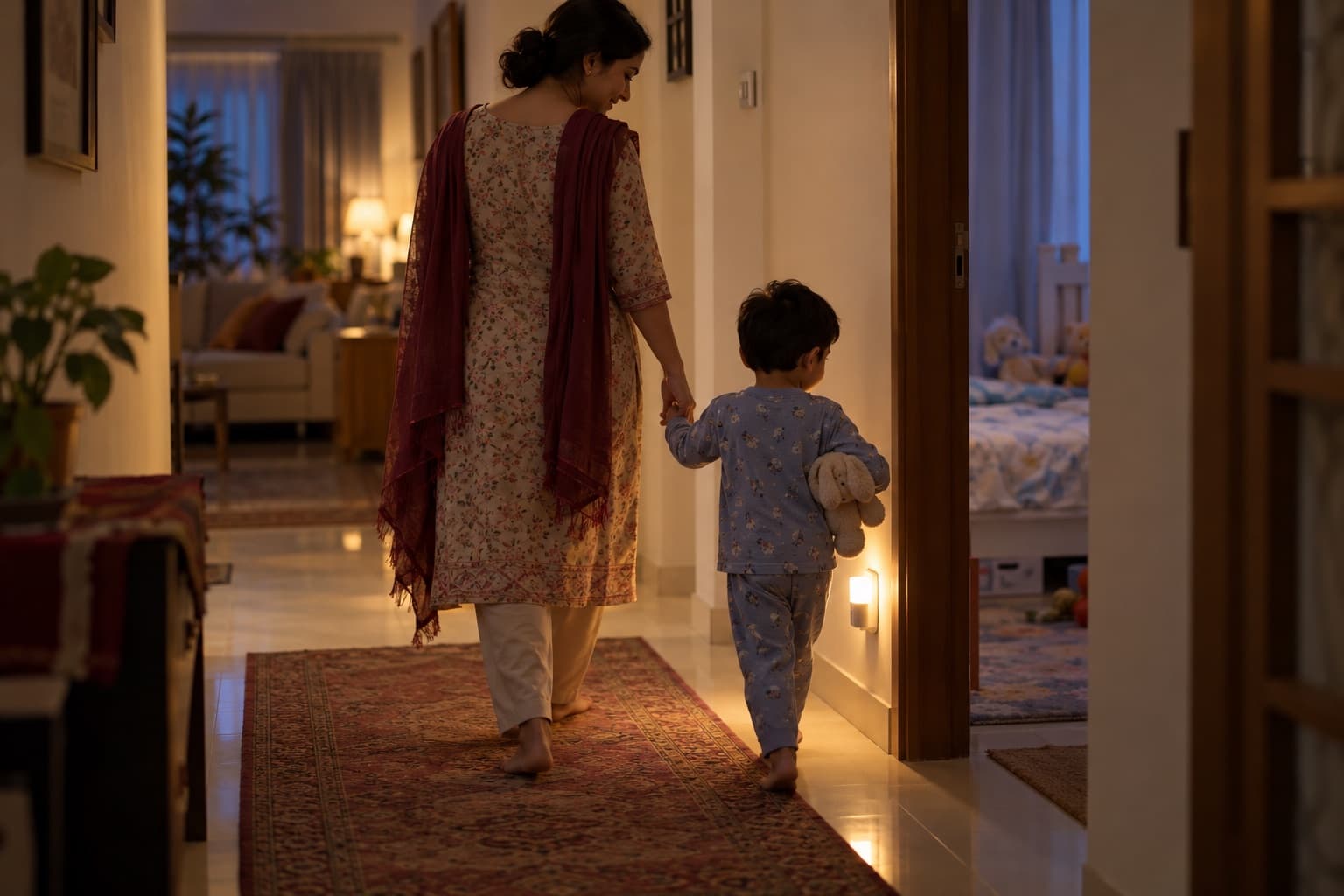
- A dim, warm night light, and the door left open or ajar so they can hear you.
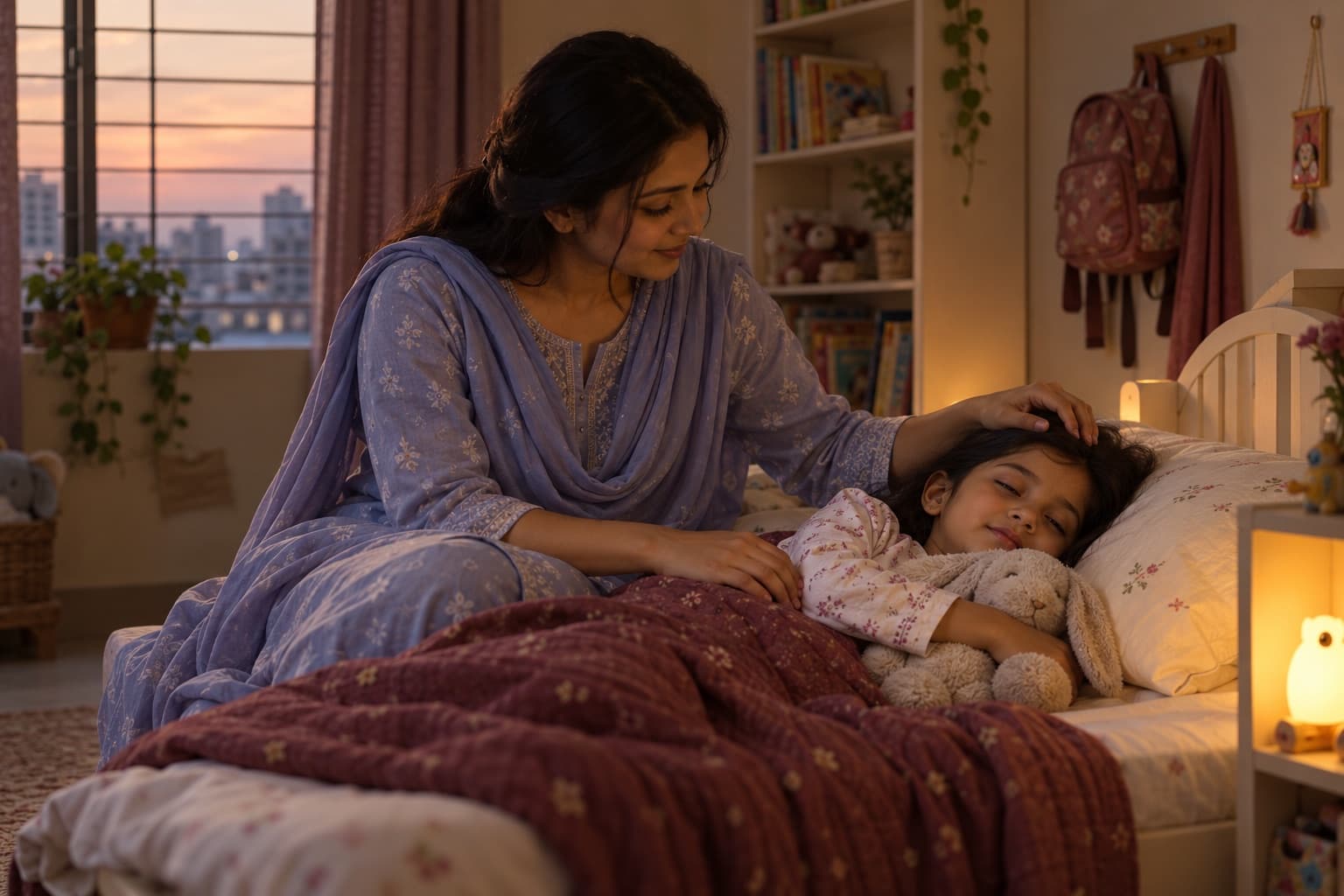
- A comfort object that smells of you, such as an old T-shirt or a small piece of an old orna (nothing long in the bed), or a favourite soft toy.
- One calm check of the room together, then: “All safe. Goodnight.” Repeated monster hunts can make monsters feel real.
- No threats: “If you don't sleep, the ghost will come” makes sleeping alone much harder.
- Talk about fears in the daytime, when your child feels brave, and slow the plan down for a while if fear is high.
Child afraid of the dark has small brave steps, and what to say about ghosts and jinn.
Sharing a room with siblings: how to make it work
In many homes, “sleeping alone” means sleeping without a parent, beside a brother or sister. Young siblings often comfort each other, and a few house rules keep nights calm:
- Stagger bedtimes: the younger child goes first, and the older one comes in quietly later with a small torch, not the main light.
- Separate beds or mattresses where you can, even in one room, so each child sleeps better.
- No screens, games or torch fights after lights out.
- Bunk beds: keep children under about 6 off the top bunk, and make sure it has a guard rail.
- As children near puberty, privacy matters more: many families give brothers and sisters separate beds by then, for privacy, modesty or faith.
- Whoever shares a bed or room, the body-safety rules are the same: private parts are private, there are no secrets about touching, and your child can always tell you. Body safety for children has the words to use.
In a Bangladeshi home: one family bed, small flats and grandparents
In many Bangladeshi homes the whole family shares one big bed, or a child sleeps with Dadi or Nani. That closeness is part of family life, and moving a child doesn't have to mean a separate room:
- A small flat: “own bed” can mean a mattress on the floor beside your bed, a small bed in a corner, or a low folding bed made up each night with the same sheet and pillow.
- Grandparents: if your child sleeps with a grandparent, that can be a warm step on the way to their own bed. Agree the same routine and words, and no frightening stories.
- Relatives' comments: “Still sleeping with his mother at six?” You can smile and say, “We'll move when he's ready.” Your child's readiness matters more than anyone's timetable.
- Heat, mosquitoes and load-shedding: a fan, light cotton night clothes, a mosquito net and a rechargeable light make a new bed easier. Never a candle near a bed.
- Guests and holidays: when relatives stay over or you travel for Eid, your child may end up in your bed again. That is fine; restart the plan when life is back to normal.
- Ramadan: sehri and late evenings shift everyone's sleep, so it is often easier to start the move before or after the month.
A 7-day plan to start the move
For a week, note three things each night: how long it took to fall asleep, how often your child woke or came to you, and their mood in the morning.
- Day 1: Notice. Change nothing; write down bedtime, wake-ups and where your child ends up by morning.
- Day 2: Talk about the new bed in the daytime, and let your child choose a sheet or a toy for it.
- Day 3: Set up the new bed beside yours, and use it for a daytime rest.
- Day 4: First night in the new bed, with the usual routine and you sitting beside it until they sleep.
- Day 5: Same again. Add five-minute check-ins if they're settling well.
- Day 6: Agree the plan with everyone who puts your child to bed, including grandparents.
- Day 7: Compare with Day 1. If nights are calmer, move your chair a little further away and keep going for a few more weeks.
When to get help with a child who won't sleep alone
Many children settle into a new bed within a few weeks, with a few bad nights along the way. Talk to your child's doctor, or act sooner, if:
When to get help
- Fear of sleeping alone stops your child sleeping most nights for more than a few weeks, or spreads into the day: they won't stay in any room alone, or they avoid school or friends.
- A child who slept alone happily suddenly refuses their bed or room, or becomes afraid of one person or place: ask gently, believe what your child tells you, keep them away from that person and act the same day; call 999 if they are in danger now. If your child tells you someone has hurt them, report it to the local police station (thana).
- Sexual behaviour between children who share a bed or room that goes beyond ordinary curiosity: keep them apart for sleeping and bathing, and get help the same day. Both children need help, not shame.
- Loud snoring most nights, especially with pauses in breathing, gasping or choking sounds.
- A child who was dry at night for months starts wetting again, along with unusual thirst, weeing much more often, tiredness or weight loss: see a doctor the same day.
- If your child is struggling to breathe, turns blue or cannot be woken, call 999 straight away.
A move to a new bed is easier to judge over a week of notes than on one long night. ParentMind helps you note what happens each day, see patterns and get guidance. See how ParentMind works.
Questions parents ask
When should a child sleep alone in their own room?
Whenever your family has the space and your child seems ready; there's no fixed age. A separate room isn't needed to sleep well, and many children sleep in their own bed in a parent's room, or share with a sibling, for years. If you're moving them to another room, start with a bed beside yours, go step by step and keep the doors open.
Is it bad for a child to sleep with their parents?
No, not for most children past babyhood. A child sleeping in parents' bed is normal in many families around the world, and it's a family choice. It's worth changing if nobody sleeps well, or your child can't sleep anywhere else without great distress. For babies under one, the safe-sleep steps are different; see how much sleep children need.
Why won't my child sleep without me?
Usually because being close to you feels safe, and the dark makes being apart feel bigger. A habit of falling asleep beside you, fears of the dark or ghosts, or a recent change such as a new baby or school are common reasons. Go slowly, stay close at first, and talk about fears in the daytime. A sudden refusal deserves gentle questions.
How long does it take a child to get used to sleeping alone?
Often a few weeks with a gradual plan, though some children take to it in days and others need longer. Expect a few bad nights, especially after illness, travel or guests. Keep the routine and your response the same each night, and judge progress over a week of notes, not one difficult night.
Can brothers and sisters share a bed?
Yes, many young siblings do, and they often comfort each other. As children grow, separate beds give everyone better sleep and more privacy, and many families separate brothers and sisters before puberty. Whoever shares a bed, keep the body-safety rules the same, and act the same day if anything goes beyond ordinary curiosity.
What if my child keeps coming into my bed at night?
Walk them back calmly each time, with the same short sentence and little talk, and settle them briefly in their own bed. A small mattress on the floor of your room can be a halfway step. After a bad dream or on a sick night, comfort in your bed is fine; start again the next night. Calm, boring, repeated responses usually work best.
This article is general information, not medical advice. For health worries, talk to a doctor; if someone is in danger, contact your local emergency number.