Toddler won't sleep? Bedtime stalling, getting out of bed and what helps
Quick answer
When a toddler won't sleep, they are usually not tired yet, overtired, scared or wanting more of you. At ages 2–8, keep a steady bedtime and a short routine, answer stalling with the same calm sentence, and walk them back to bed every time. See a doctor for loud snoring with pauses, or weeks of poor sleep with daytime trouble.
 By the ParentMind team10 min read
Listen to this article
14 min listen · Read by your device's voice
At a glance
- Who it is for
- Parents of children aged 2–8 who stall, call out or keep getting out of bed
- Key takeaways
- Most bedtime battles come from timing (a late nap or a bedtime that is too early or too late), fears, or wanting more of you.
- Build the usual “one more thing” requests into the routine, then answer the rest with the same short sentence.
- Walk a child who gets up back to bed calmly, with few words and low light, every time; many families see change within one to two weeks.
- See a doctor for loud snoring with pauses in breathing, or poor sleep for a month with daytime sleepiness or crankiness.
When your toddler won't sleep, evenings can stretch on for hours: one more drink, one more story, a call from the dark, small feet padding back to the living room for the fifth time. By the time they finally sleep, you have nothing left.
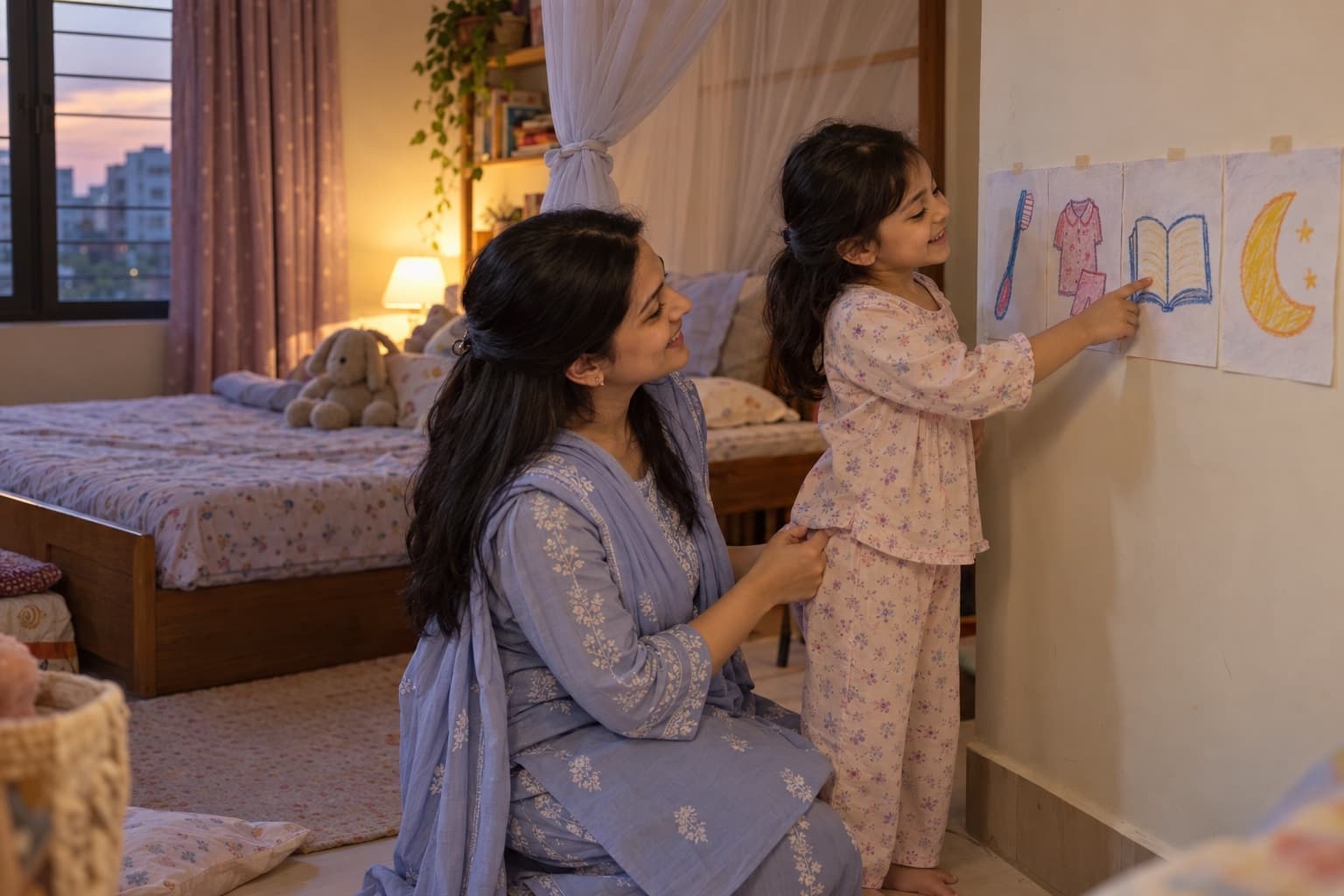
Bedtime resistance, a child who won't go to bed or keeps calling you back, is very common between about 2 and 8, and it usually has a reason you can work with. This page is about the battle itself: why it happens, what to do when they stall or get up, fears of the dark, late Bangladeshi evenings, a 7-day plan and when to see a doctor. For the routine itself, see a children's bedtime routine.
Toddler won't sleep at bedtime? The most common reasons
Toddler bedtime battles, and a preschooler who refuses bedtime, rarely come from naughtiness. Look for the reason first, because each one has a different answer:
| Reason | What you might notice | What often helps |
|---|---|---|
| Not tired yet | Wide awake and chatty at bedtime; a late or long nap; a late wake-up | Wake them at the same time daily; end naps by mid-afternoon; more active play outdoors |
| Overtired | Rubbing eyes, then a “second wind”: wild, giggly, more tantrums | Start the routine earlier, by 15–30 minutes, for a week |
| Wanting you | Calls you back again and again; worse after a busy day or when a parent comes home late | Ten calm minutes together before the routine; a promised check-in |
| Fears | Scared of the dark, monsters, being alone; clinging at lights out | A dim night light, a comfort toy, talking about fears in the day |
| Screens and noise | Cartoons or phones close to bedtime; TV on in the shared room | Screens off an hour before bed; TV off or very low in the last hour |
| Discomfort | Too hot, hungry, mosquitoes, needs the toilet | Fan and light clothes, a small snack in the routine, a mosquito net, toilet last |
| A change | A new sibling, new school, illness, a move or a trip | Extra closeness for a while, the same steps every night |
Children aged 1–2 need 11–14 hours of sleep in 24 hours, 3–5-year-olds 10–13 hours and 6–12-year-olds 9–12 hours, naps included. A bedtime that is too early for a child who still naps can cause as much resistance as one that is too late; how much sleep children need has the full chart and naps by age. Active play helps too: children aged 3–4 need at least 180 minutes of activity a day, and from 5, at least 60 minutes of moderate-to-vigorous activity.
Bedtime stalling: what to do about “just one more thing”
Bedtime stalling is how young children stretch the best part of the day. Instead of fighting each request, plan for them:
- A “last call” before lights out: water, toilet, one hug, one question. Ask, “Anything else before I switch off the light?”
- A bedtime pass: one card a night that buys one trip out of bed, for a hug or a drink. An unused pass can be swapped in the morning for a small treat, such as choosing breakfast.
- A “tell me in the morning” promise for late thoughts and stories, and keep it at breakfast.
- Small choices before lights out, so they feel in charge: which night clothes, door open or ajar.
What you might say at lights out
- Last call: water, toilet, one hug. Anything else?
- You have one pass tonight. You can use it, or keep it for the morning.
- That’s a good question. Save it for breakfast, and I’ll listen properly.
- It’s sleep time now. I’ll come and check on you in a few minutes.
Child keeps getting out of bed? The calm return-to-bed method
When a toddler won't stay in bed, the most reliable approach is also the most boring: return them every time, the same way, without a fuss.
- Stay calm and quiet. Keep the lights low and your face neutral.
- Take their hand and walk them back to bed, saying the same short sentence each time.
- Tuck them in once and leave. No new story, no screens, no snack, no long talk.
- Repeat as often as it takes. The first nights are usually the hardest.
- Check in before they call: “I’ll be back in five minutes,” and come back. Slowly stretch the gap.
- Keep it the same every night, with every adult who puts them to bed, for at least one to two weeks.
The same short sentence, every time
- It’s sleep time. Back to bed.
- I love you. Goodnight.
- You’re safe. I’m just in the next room.
Scared of the dark? Night lights, monsters and bedtime fears
Fears of the dark often appear around 2–5, as imagination grows faster than the ability to tell real from pretend. Take the fear seriously, without making it bigger:
- A dim, warm night light is fine; avoid bright or blue light.
- Check the room together once, then say it is safe. Repeated monster hunts can make the monster feel real.
- A comfort toy or a parent’s scarf can help them feel you are near.
- Keep scary stories, videos and threats away from bedtime, including “the ghost will come if you don’t sleep”.
- Talk about fears in the daytime, when your child feels brave.
If your child screams in their sleep but doesn’t seem awake, that is different from a fear at bedtime; see night terrors in toddlers. If worries keep an older child awake most nights, anxiety in children may help.
Bedtime in a Bangladeshi home: shared beds, late dinners and guests
In many Bangladeshi homes, evenings run late and children share a room or a bed with parents, so “bedtime” is often whenever the adults sleep. A few small changes help without fighting the family’s rhythm:
- The evening nap: a child who falls asleep at Maghrib time is often wide awake until midnight and wants to play at night. Keep them busy and in the light in the late afternoon, and move any nap earlier.
- A parent home late: give your child ten calm minutes when Baba walks in, then start the routine, or move that special time to the morning.
- Shared beds and rooms: lights off for the whole room at your child’s bedtime, or lie down with them, then get up once they sleep.
- Late dinners and guests: feed your child earlier, let them say salam and goodnight, and keep a short version of the routine.
- Heat, mosquitoes and load-shedding: a fan, light cotton night clothes, a mosquito net and a rechargeable light make sleep easier.
- Grandparents and house help who put your child to bed: agree the same steps and the same words, and no frightening stories.
Phones are often the hardest part for older children; phones at bedtime covers getting them out of the bedroom.
A 7-day plan for calmer bedtimes
For a week, write down three things each night: lights-out time, how many times they got up or called, and when they fell asleep.
- Day 1: Notice. Change nothing, and write down naps, wake-up time and the three bedtime numbers.
- Day 2: Set a steady wake-up time and check the nap: does it end by mid-afternoon?
- Day 3: Add the “last call” and introduce the bedtime pass.
- Day 4: Start the calm return to bed, with the same sentence every time.
- Day 5: Agree the same steps and words with everyone who puts your child to bed.
- Day 6: Keep going. If fears are part of it, add the night light and a daytime chat.
- Day 7: Compare with Day 1. Fewer trips out of bed? Asleep sooner? Keep what helped, and give it another week.
When to see a doctor about a child who won’t sleep
Most bedtime resistance eases with steady timing and a calm, repeated response. Talk to your child’s doctor if:
When to get help
- Your child snores loudly most nights, especially with pauses in breathing, gasping or choking sounds.
- Sleep problems have gone on for a month or more despite a steady routine, with daytime trouble: very sleepy, cranky, or struggling at play school or school.
- Screaming or thrashing in sleep happens several times a week, for weeks; these may be night terrors (see above).
- Itching, coughing, tummy pain or other discomfort wakes or bothers your child most nights.
- Fear of going to sleep starts suddenly, after a frightening event or around one person or place: ask gently, believe what your child tells you and act the same day; call 999 if they are in danger now.
- If your child is struggling to breathe, turns blue or cannot be woken, call 999 straight away.
Bedtime changes are easier to judge over a week of notes than on one long night. ParentMind helps you note what happens each day, see patterns and get guidance. See how ParentMind works.
Questions parents ask
Why won't my toddler go to sleep at night?
Usually because of timing, fear or wanting you. A late or long nap, a late wake-up or a bedtime that is too early can leave a child not tired; a bedtime that is too late can make them overtired and wired. Fears of the dark, screens close to bed and a parent coming home late are other common reasons.
How do I get my toddler to stay in bed?
Walk them back calmly every time they get up, with the same short sentence, low light and no new story or screen. Check in before they call, every few minutes at first, and slowly stretch the gap. A bedtime pass for one trip out of bed helps many children. Keep it the same for one to two weeks.
Is it OK to lie down with my child until they fall asleep?
Yes, if it works for your family. Many Bangladeshi parents lie down with their children, and it is a warm habit. It becomes a problem only if it takes very long, or your child wakes and needs you again every time. Then try a slow step back: sitting beside the bed, then a little further away every few nights.
What time should a 3-year-old go to bed?
Work it back from the wake-up time. A 3-year-old needs 10–13 hours of sleep in 24 hours, naps included. With a 7:00 am wake-up and no nap, aim for asleep by about 9:00 pm at the latest, and earlier if mornings are hard. A long afternoon nap can push bedtime a little later.
Why does my child want to play at night instead of sleeping?
Usually because they are not tired yet. A nap in the early evening, a late wake-up, too little active play or daylight, or a parent coming home late can all push sleep later. Keep the wake-up time steady, end naps by mid-afternoon, get outside in the day, and keep the last hour quiet and dim.
Is it OK to let my child fall asleep with cartoons or a phone?
It is best not to. Screens tend to keep the brain alert and push sleep later, and a child who falls asleep to a screen often needs it every night. Switch screens off an hour before bed, keep devices out of the bedroom at night, and use a story, a song or quiet talk instead.
This article is general information, not medical advice. For health worries, talk to a doctor; if someone is in danger, contact your local emergency number.