Child won't brush teeth? Calm ways to make brushing a habit
Quick answer
When a child won't brush teeth, keep brushing twice a day but make it short, calm and playful: offer choices, take turns, sing and brush together. Use a rice-grain smear of fluoride toothpaste under 3 and a pea-sized amount from about 3. Parents usually help until about 7 or 8. See a dentist for pain, swelling or dark spots.
 By the ParentMind team12 min read
Listen to this article
16 min listen · Read by your device's voice
At a glance
- Who it is for
- Parents of children aged 2–8 who cry, clamp their mouth shut or run away at brushing time
- Key takeaways
- Brush twice a day, in the morning and last thing at night, for about two minutes, with an adult finishing the job until about 7 or 8.
- Use a rice-grain smear of fluoride toothpaste under 3, and a pea-sized amount from about 3.
- Choices, turns, songs and brushing side by side usually work better than force.
- Sweets kept mostly to mealtimes, and no feeder bottle in bed, protect teeth alongside brushing.
Your child won't brush teeth without a fight: lips clamped shut, head turning away, tears at the basin, or a sudden need for the toilet the moment the brush appears. Brushing battles are one of the most common daily struggles at ages 2 to 8, and they say nothing bad about your parenting.
Most children who resist brushing are not being naughty. They want some control, dislike the taste or feel, or are simply too tired at night. With a calm routine, a little play and the right amount of toothpaste, many families turn brushing into a short, ordinary part of the day.
Below: why children refuse, what to do in the moment, games that help, toothpaste and who brushes by age, sweets and night milk, a Bangladeshi home, the first dentist visit, a 7-day plan and when to see a dentist.
Why won't my child brush their teeth?
When a child won't brush teeth, there is usually a reason you can work with:
- Control: at 2 to 4, “no” is a favourite word, and their mouth is one place they can really say it.
- Taste and feel: strong mint, foam, a hard brush or the brush touching the back of the mouth can feel unpleasant, and some children gag easily.
- Tiredness: brushing comes at the end of the day, when patience is lowest for children and parents alike.
- Fun elsewhere: brushing interrupts play, cartoons or a story.
- A sore mouth: new teeth, a sore gum or a hole in a tooth can make brushing hurt.
- Past struggles: if brushing has meant being held down, a child may start to fear it.
If brushing seems to hurt, look inside your child's mouth in good light, and check the signs at the end of this page.
What to do when your child won't brush teeth tonight
- Keep your voice calm and the order the same: last milk or snack, then teeth, then the story.
- Offer two small choices: the red brush or the blue one, top teeth or bottom first, standing at the basin or on your lap.
- Let your child go first, then take your turn: “You brush, then I'll check for hiding germs.”
- Make it short and predictable: one short song of about two minutes, or slow counting for each part of the mouth.
- Try a different position: your child lying back with their head in your lap, looking up, often makes it easier to see and gentler.
- If it falls apart, do a quick, gentle brush and stop. Pinning a child down or forcing their mouth open can frighten them and make the next night harder.
- Praise the exact thing: “You opened so wide!”
What you might say
- Teeth time! Red brush or blue brush?
- You do the front, I'll do the back. Then we swap.
- Open wide like a lion! Roar!
- I can see germs hiding behind that tooth. Let's chase them out!
- I know you're tired. Quick brush, then your story.
How to make brushing fun: games, turns and a chart
A brushing teeth routine for kids sticks best when it feels like a game you play together, every day, at the same times.
- Brush together: children copy you, so brush your own teeth at the same time, side by side at the basin.
- A brushing song or rhyme, about two minutes long, sung only at brushing time.
- A germ hunt: count the “germs” you brush away, or give each tooth a name as you go.
- A toy's turn: let your child brush a doll's or teddy's teeth first, then their own.
- A simple brushing chart: a tick or sticker for each brush, morning and night, with warm praise rather than big prizes.
- Their own brush: let your child choose a soft, small-headed brush, and replace it every few months, or sooner if the bristles splay.
How much toothpaste, and who brushes, at each age?
Brush twice a day: in the morning, and last thing at night after the last food or milk. Most child-health and dental guidance suggests a toothpaste with fluoride from the first tooth, in small amounts, with an adult doing or finishing the brushing for several years. You may hear that children under 3 should use fluoride-free toothpaste; most guidance now suggests a tiny smear of fluoride toothpaste instead, because keeping the amount small is what protects a young child.
| Age | Toothpaste | Who brushes |
|---|---|---|
| First tooth to about 3 | A thin smear, about the size of a grain of rice | You brush; your child can hold a brush and “help” |
| About 3 to 6 | A pea-sized amount | Your child has a go, then you brush again properly; teach them to spit out the extra |
| About 6 to 8 | A pea-sized amount | Your child brushes; you check and finish, especially the back teeth, until about 7 or 8 |
- Use a soft, small-headed brush, angled towards the gums, with small circles on every surface of every tooth.
- Teach your child to spit out the extra toothpaste rather than swallow it.
- Keep toothpaste out of reach; small children may eat it from the tube.
- The first adult back teeth often come through around 6, behind the baby teeth; they are easy to miss, so brush there.
If you are unsure which toothpaste suits your child, ask a dentist or the doctor at the next check-up. As your child grows, brushing becomes one of their independence skills, with you still checking.
Brushing teeth at night: sweets, night milk and feeder bottles
The night brush matters most, because less saliva washes the teeth during sleep, and whatever is left on them stays for hours. What children eat and drink between brushes matters too.
- Keep sweets, chocolates and sweet drinks mostly to mealtimes rather than grazing through the day; junk food and sweets has a calm plan.
- Make water the drink between meals and after the night brush.
- Give the last milk before brushing, not after, so your child does not fall asleep with milk on their teeth.
- No feeder bottle in bed, and no sugar or honey added to milk. Falling asleep with milk in the mouth can harm teeth; night waking in toddlers has gentle ways to cut night feeds.
- Sticky snacks such as toffee, chocolate and sweet biscuits cling to teeth; if they are eaten, a drink of water afterwards helps.
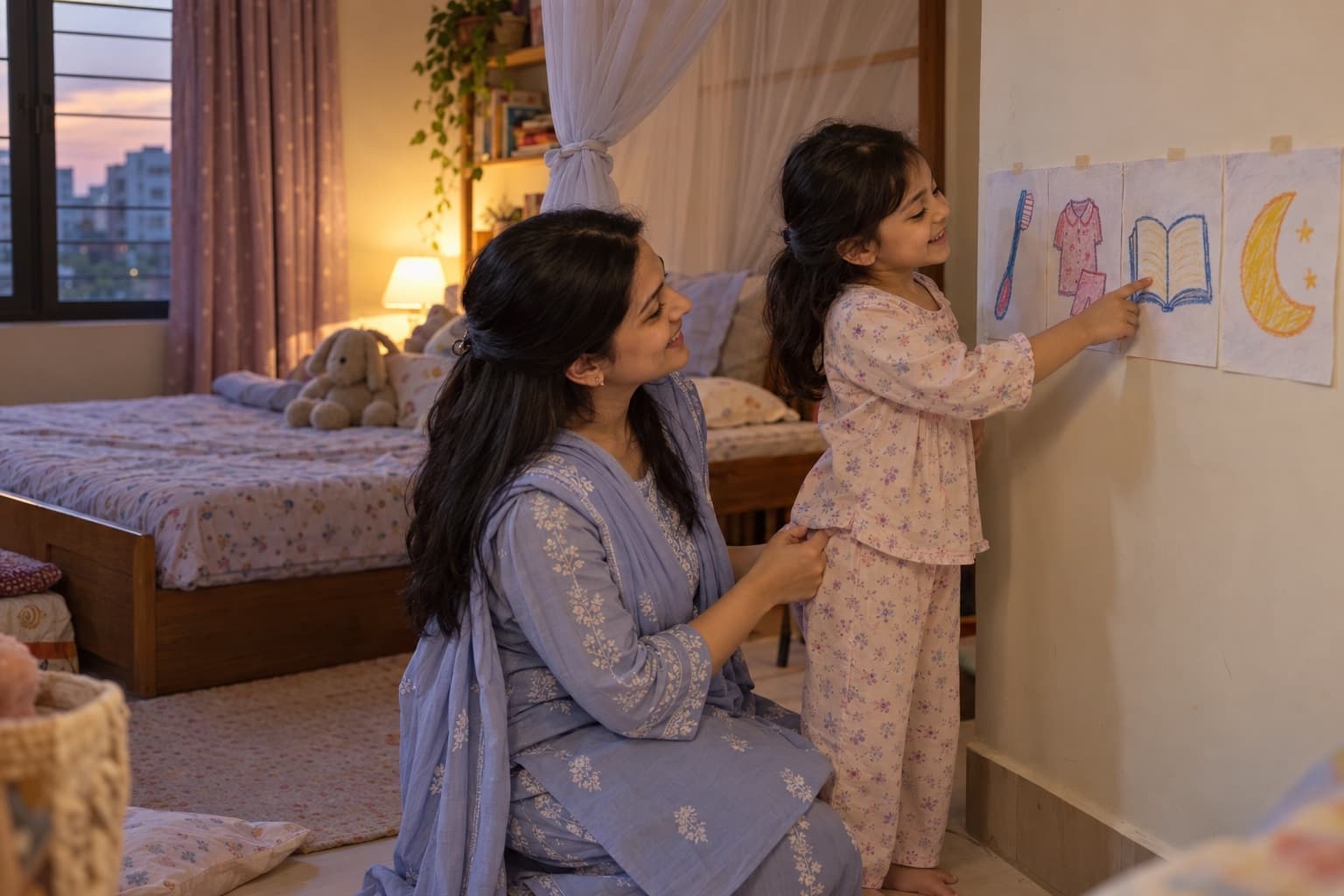
Brushing is easiest as one fixed step in a steady bedtime routine: wash, teeth, toilet, story, lights out, in the same order every night.
Brushing in a Bangladeshi home: chocolates, guests and busy mornings
- Chocolates and sweets from guests: relatives often arrive with a box, and saying no can feel rude. Thank them, put it away, and serve a little after a meal.
- Grandparents' ways: some grew up cleaning teeth with charcoal, ash, tooth powder or a twig. Thank them for caring; for small teeth, a soft brush and a little children's toothpaste is gentler.
- School mornings: with an early van or rickshaw, brush straight after breakfast, and keep the brushes at the dining-area basin so the step isn't skipped.
- House help: if a house help brushes your child's teeth, show them the toothpaste amount and the lap position, and ask them to keep it gentle.
- Eid, weddings and dawats: after a day of semai, mishti and chocolates, the night brush matters most, even when it is late.
- Load-shedding: keep a torch by the basin, so the night brush still happens in the dark.
When should a child first see a dentist?
Many dentists suggest a first check around the first birthday, once the first teeth are in. In many Bangladeshi families, the first visit only happens when a tooth already hurts. A calm visit before anything hurts often makes later visits easier.
- Play dentist at home first: count teeth with a clean spoon, and take turns opening wide.
- Talk about it simply: “The dentist will count your teeth and see how strong they are.”
- Never use the dentist as a threat, such as “If you don't brush, the doctor will give you an injection”; it makes visits frightening.
- Book a morning slot when your child is fresh, bring a favourite toy, and praise them afterwards, whatever happened.
A 7-day plan to make brushing a habit
If your child won't brush teeth most nights, change one thing at a time and note what happens:
- Day 1: change nothing. Note when brushing happens, how long the struggle lasts and what sets it off.
- Day 2: fix the times: straight after breakfast, and as the step just before the bedtime story.
- Day 3: add choices and turns: your child picks the brush and goes first, then you finish.
- Day 4: add a brushing song, and brush your own teeth alongside.
- Day 5: start a simple tick chart for morning and night, with plenty of praise.
- Day 6: check the extras: the last milk before brushing, sweets mostly at mealtimes and the right amount of toothpaste.
- Day 7: compare with Day 1: is brushing shorter and calmer? Keep what worked, and book a dentist check if your child hasn't had one.
When should you take your child to a dentist?
A child who won't brush teeth is usually not unwell, and most brushing battles ease with time and a steady routine. See a dentist, or a doctor, if you notice any of these:
See a dentist if
- Toothache, or your child avoids chewing on one side or wakes at night with mouth pain: see a dentist within a few days.
- Brown, black or chalky white spots, or a hole in any tooth: book a dentist visit soon, because early decay is often easier to treat.
- Swelling of the gum or face: see a dentist or doctor the same day, especially with a fever. If the swelling makes it hard to swallow or breathe, call 999.
- A tooth knocked out or broken in a fall: see a dentist the same day; if it is an adult tooth, keep it in milk and go at once. After a fall or a knock to the head, call 999 if your child is drowsy, vomits or isn't acting normally.
- Gums that bleed at every brush for more than a week or two, even when you brush gently.
- Brushing is still a big battle most nights after several weeks of a calm routine, or your child gags, panics or is very upset by anything in the mouth: mention it to a dentist or doctor.
Brushing gets easier when you can see what helps, even for a child who fought it for months. ParentMind helps you note what happens each day, such as brushing, sweets and bedtime, see patterns and get guidance: how ParentMind works.
Questions parents ask
Is it okay to skip brushing if my toddler cries too much?
An occasional missed brush is not a disaster, but try not to let crying become the way out. Keep the brush short and gentle, do a very quick one if that is all your child allows, and try again in the morning with choices and a song. If the battle happens most nights for weeks, ask a dentist or doctor.
How much toothpaste should a child use?
Most child-health and dental guidance suggests a thin smear of fluoride toothpaste, about the size of a grain of rice, from the first tooth until about 3, and a pea-sized amount from about 3. Supervise so your child spits out the extra rather than swallowing it, and keep the tube out of reach.
At what age can a child brush their own teeth?
Most children can start brushing by themselves from about 3, but they usually need an adult to brush again, or at least check and finish, until about 7 or 8. Back teeth and the gum line are the parts children miss most, so take your turn there after them.
Is brushing teeth at night really that important?
Yes, the night brush is usually the most important one. During sleep the mouth is drier, so food and milk left on the teeth stay there for hours. Brush last thing, after the last milk or snack, and give only water afterwards. If your child falls asleep early, move brushing a little earlier in the routine.
My child hates the taste of toothpaste. What can I do?
Try a children's toothpaste with fluoride in a milder flavour, a smaller amount, or a nearly dry brush, since foam and strong mint put some children off. Let your child choose between two flavours. Keep using a little toothpaste rather than none, and mention it to a dentist if your child gags or panics every time.
When should my child first go to the dentist?
Many dentists suggest a first check around the first birthday, once the first teeth are in. If your child is older and hasn't been, book a visit now, before anything hurts, so the first experience is calm. Go sooner for pain, swelling, a hole or dark spots on a tooth.
What should I do about black spots or a hole in my child's tooth?
Book a dentist visit soon. Brown, black or chalky white spots and holes are often signs of tooth decay, which many families call “tooth worms”, although there are no worms. Early decay is often easier to treat. Meanwhile, brush twice a day, keep sweets mostly to mealtimes, and see a dentist the same day for swelling.
This article is general information, not medical advice. For health worries, talk to a doctor; if someone is in danger, contact your local emergency number.