Does screen time delay speech? What's known, what's not and what helps
Quick answer
Screen time isn't known to cause speech delay on its own, but heavy screen use in toddlers is linked with later talking, probably because it crowds out the back-and-forth talk children learn words from. Limit under-18-months to video calls and 2–5-year-olds to an hour a day. Get a check if there are no words by about 16 months.
 By the ParentMind team11 min read
Listen to this article
15 min listen · Read by your device's voice
At a glance
- Who it is for
- Parents of children aged 0–4, especially toddlers who watch screens most days or talk less than expected
- Key takeaways
- Heavy screen use in toddlers is linked with later talking, mainly because screens can crowd out the back-and-forth talk children learn words from.
- Screens are rarely the only reason a child talks late, so the warning signs need a check whatever the screen time.
- Under 18 months, no screens except video calls with family; at 18–24 months, only good-quality content with an adult; at 2–5, at most 1 hour a day.
- Swapping screen moments for talk, books and play often helps, and it is worth starting today, even while you wait for a check.
Does screen time delay speech? If your 2-year-old says only a few words and watches cartoons on the phone every day, it is natural to wonder, and relatives may already have blamed the phone. Many parents feel a stab of guilt here. Guilt doesn't help a child talk, but a few small changes from today can.
The honest answer to “does screen time delay speech” sits in between. Heavy screen use is linked with talking later, but screens are rarely the whole story, and the time they take can be given back to talk, reading and play. Below: what's known and what isn't, why toddlers learn words from people, how much screen time is okay, what to do instead, a 7-day plan and the signs that mean a check now.
Does screen time delay speech? What's known and what isn't
Child-development experts broadly agree on a few things about screens and talking, and are still unsure about others. This table sets what parents often hear beside what is actually known:
| What you may hear | What is actually known |
|---|---|
| “The phone has caused my child's speech delay.” | Heavy screen use is linked with talking later, mostly because it replaces talk and play. It is rarely the only reason, so a child who talks late still needs a check. |
| “Educational videos will teach my toddler to talk.” | Under about 2, children learn words far better from a person than from a screen, even when the words are the same. Watching together and talking about it helps more. |
| “Background TV doesn't count if nobody is watching.” | A TV left on can mean fewer words from adults and shorter play. It counts. |
| “Cartoons in English or Hindi will make my child talk sooner.” | Children may copy words and songs from cartoons, but real talking grows from conversation. Speak your own language, warmly and often. |
| “Too much mobile causes autism.” | Screens are not known to cause autism. But few words, rarely answering to their name or rarely sharing attention with you need a development check, whatever the screen time. |
| “Video calls are screen time too.” | Video calls with family are a real conversation, and they are fine at any age. |
| “If we stop screens, my child will start talking.” | Swapping screen time for talk and play often helps, but it is not a treatment. If warning signs are there, book the check now and make the changes while you wait. |
It is also hard to know which comes first: a child who finds talking hard may be handed a phone more often, so the link can run both ways. What is not in doubt is that toddlers need plenty of talk with people, and screens take time away from it.
Screen time and language development: why toddlers learn from people
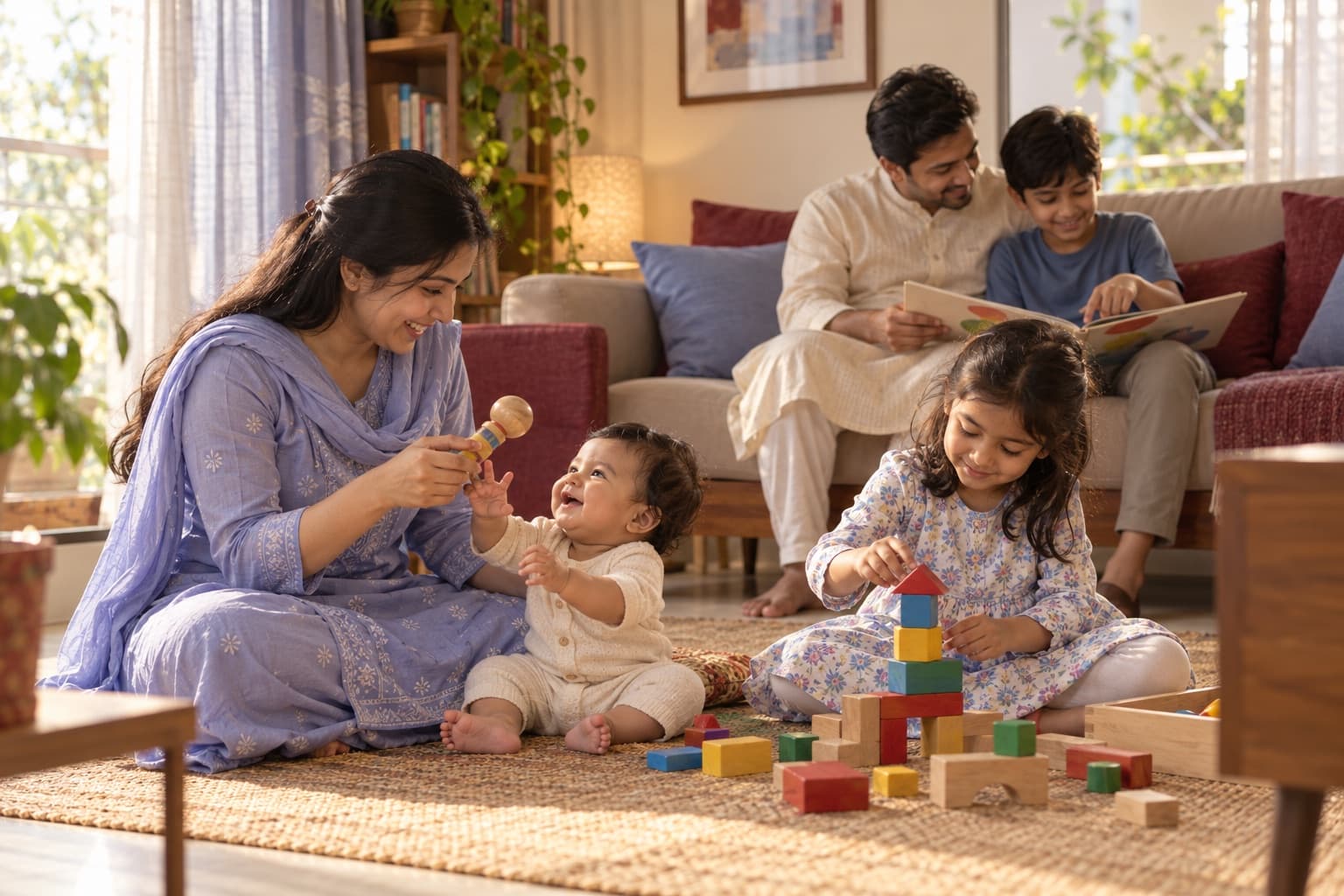
Toddlers learn language through back-and-forth: your child babbles or points, you answer, they try again. Speech therapists often call these small exchanges “turns”, and toddlers need a great many of them every day. A screen can't take part:
- A screen doesn't wait for your child's turn or answer their babble; it just carries on.
- It can't follow what your child is looking at, the way you name the bird they have just spotted.
- Fast cartoons leave little time to watch a face and copy how a word is made.
- Background TV pulls adults' attention too, so they talk less to the child in the room.
- Adults' phones count as well: while we scroll, toddlers hear fewer words. That's not a reason for guilt, just an easy place to win back time.
Video calls are different, because a grandparent on a call answers your child, says their name and waits. That is real conversation, which is why video calls with family are fine at any age.
How much screen time is okay for toddlers and preschoolers?
If you are wondering how much TV delays speech, there is no known number of hours. The best guide is the limits in most child-health guidance, which also protect talking time:
| Age | Guidance | For talking, also |
|---|---|---|
| Under 18 months | None except video calls with family | No background TV; talk, sing and read through the day |
| 18–24 months | Only good-quality content, watched with an adult | Name what you see, ask, and wait for an answer |
| 2–5 years | At most 1 hour a day of good-quality content, ideally together | No screens at meals or just before sleep |
For the full table up to age 18, see screen time by age. What a child watches matters too: slow, gentle programmes with songs and a story leave more room for talk than fast clips that roll one into the next.
Talking to toddlers instead of screens: swaps for the hardest moments
Screens usually appear at the same few moments every day. Swap those moments first; you don't need to clear the whole day at once.
| When | Try this instead |
|---|---|
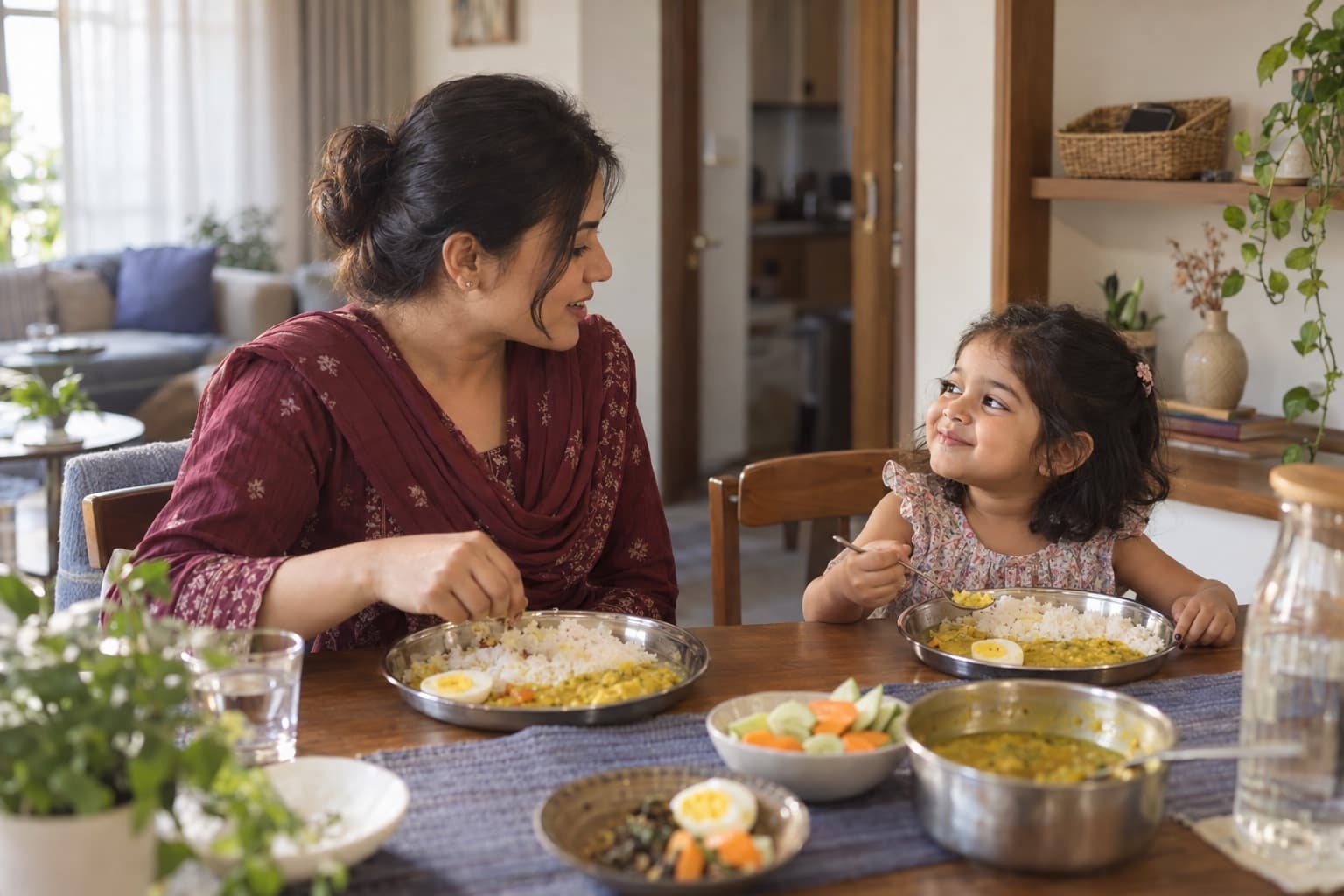
| Meals | Sit together and name the food: “Hot rice! Yellow dal. More?” See feeding without the phone. |
| While you cook | A bowl and spoon in a high chair or at the kitchen doorway, well away from the stove and hot pots and within sight, while you talk about what you're doing |
| Waiting at the doctor's, in traffic or in a rickshaw | Point and name rickshaws, buses and colours, sing a rhyme together, count the red cars |
| When guests come | A small basket of picture books and a toy phone for pretend calls |
| When your child is upset | Hold them, name the feeling and sing softly; a screen calms fast, but a hug and words teach calming down |
| Before sleep | A picture book and a rhyme, the same ones each night |
When you do use a screen
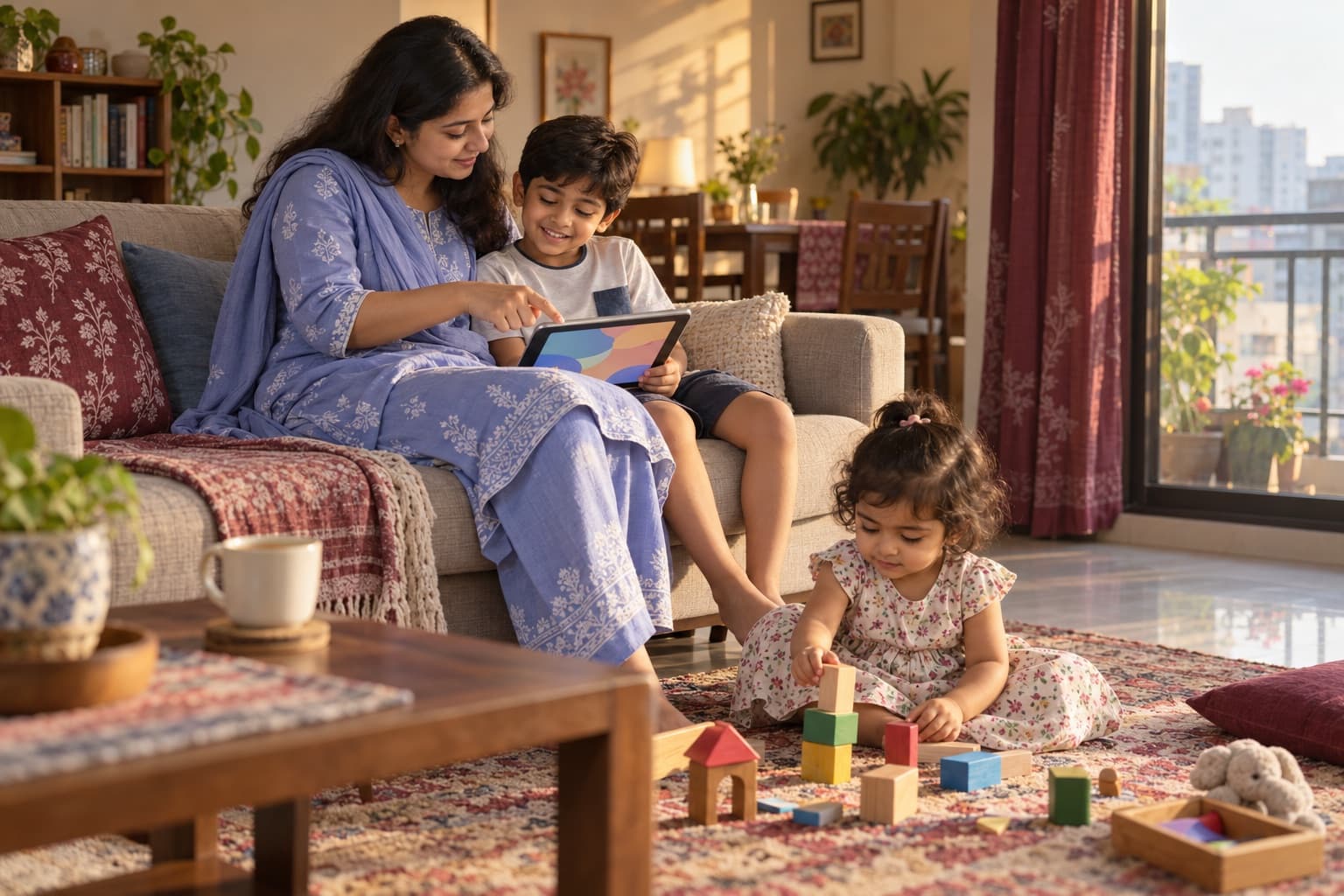
- Choose one slow programme before you switch on, and turn autoplay off.
- Sit with your child and watch together, especially under 2.
- Name what you see and ask simple questions: “Where's the cat?”
- Pause, and wait a few seconds for your child to point or say something.
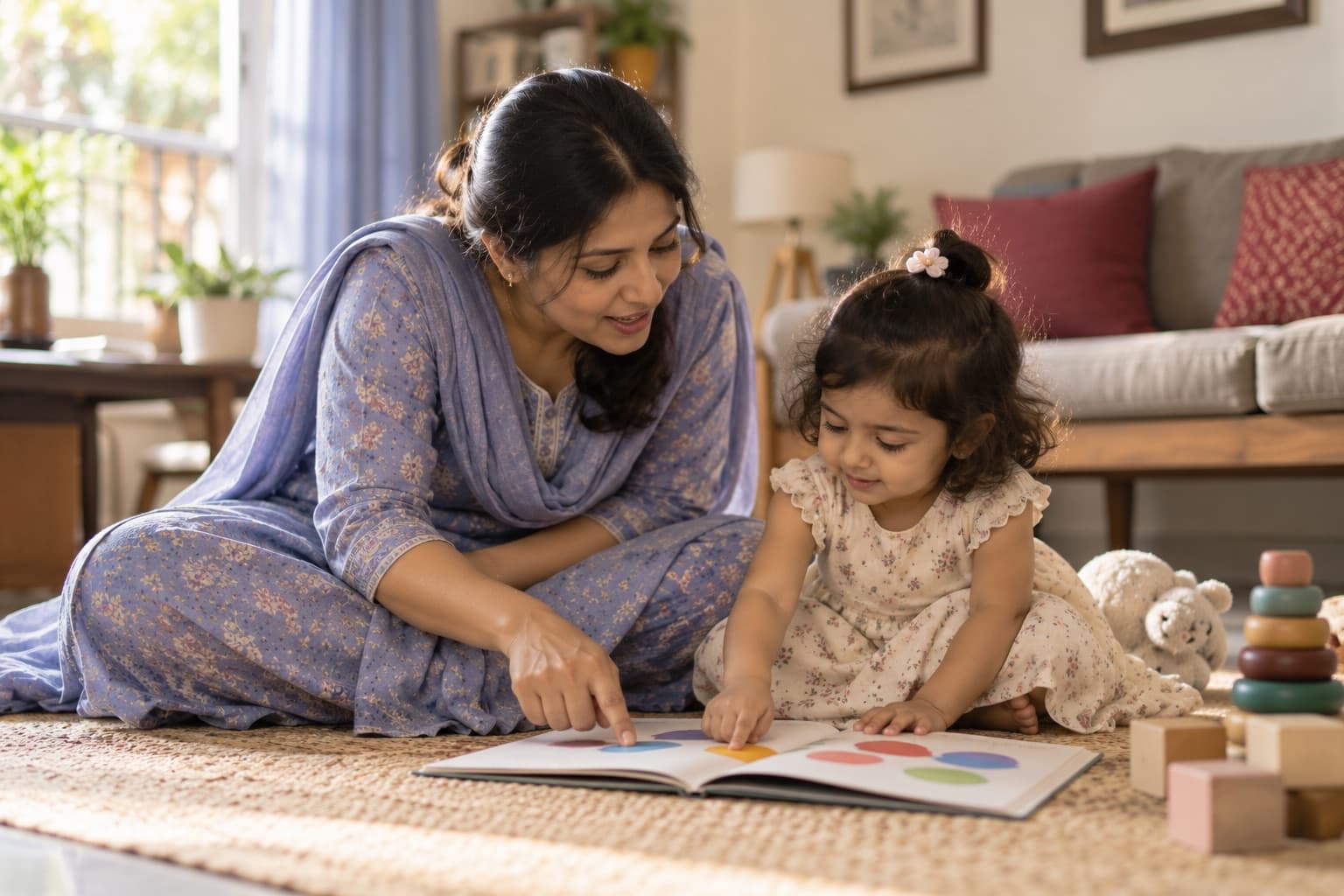
- Copy the actions and songs together, then switch off and carry the game on away from the screen.
- End the same way each time: “Bye-bye, TV!”, then straight on to play or a book.
What you might say
- Look, a cow! Moo! The cow says moo.
- You're pointing at the ball. Ball! Big ball.
- Bye-bye, TV! Now, book or blocks?
- Hot rice. Blow, blow. Now eat!
- Where's Baba? There he is! Hello, Baba!
- I'm cutting the cucumber. Chop, chop, chop.
Screens and speech in a Bangladeshi home: meals, elders and cartoons
- Phones at meals. Feeding with a cartoon on is common, and it quietly removes one of the day's best chats. Swap one meal first, usually the calmest one.
- Grandparents and house help. If someone else minds your child for long hours, share two or three swaps, like a rhyme instead of a video, and thank them; they often know songs your child will love.
- Hindi and English cartoons. Some children repeat words or whole lines from cartoons, which can look like early talking. Enjoy it, but notice whether your child also uses words to ask for things and answer you; if not, mention it at a check.
- One TV on all evening. In a small flat, a serial or the news on for hours is background TV for the youngest. Try a TV-off hour after dinner.
- A parent working abroad. Video calls are good talk time: hold your child on your lap, help them wave and show a toy, and keep calls short and happy.
- Load-shedding evenings. When the power goes, the quiet can become rhyme and story time by a rechargeable lamp.
A 7-day plan to swap screen time for talk time
Change one moment at a time, note new words and how the day went, and compare after a week.
- Day 1: Note when screens are on, for how long, and every word or gesture your child uses.
- Day 2: Turn off background TV for the whole day, and notice how much more you talk.
- Day 3: Swap the screen at one meal for naming the food together.
- Day 4: Add 10 minutes of floor play where your child leads, and add one word to theirs.
- Day 5: Read one picture book together, pointing and naming, and sing one rhyme with actions.
- Day 6: Share the swaps with grandparents, house help and anyone else who minds your child.
- Day 7: Compare with Day 1: screen minutes, new words, mood. Keep what fitted your day, and book a check if any sign below is there.
When to get a speech check, whatever the screen time
Don't wait to see whether cutting screens helps first: do both. Ask your child's doctor for a check, including hearing, if any of these are true:
Get a check if
- No babbling by about 12 months, or no pointing or waving by about 12 months.
- No single words by about 16 months.
- Not joining two words by about 2 years, such as “more milk”.
- Your child doesn't respond to their name, or seems not to hear you, at any age.
- Your child doesn't seem to understand simple words or requests by about 18 months, or family members understand little of their speech by about 3.
- Your child loses words or skills they had, at any age. Get this checked promptly.
Take your notes from the 7-day plan and a short video of your child at home. For what's typical at each age and what happens at a check, see speech delay in toddlers.
ParentMind helps you note new words, screen time and how each day went, so you can see patterns and take a clear record to a check-up. See how ParentMind works.
Questions parents ask
Can watching cartoons on the phone make my toddler talk late?
It can play a part. Toddlers who watch many hours of cartoons a day are more likely to talk later, mostly because those hours replace talk and play with people. But late talking usually has more than one cause, so if your child shows warning signs, get a check, including hearing, while you cut screen time.
How much TV is too much for a 2 year old?
Most child-health guidance suggests at most 1 hour a day of good-quality content for children aged 2 to 5, ideally watched together, and none at meals or just before sleep. There's no known number of hours that causes speech delay, but staying within this limit protects time for the talk and play toddlers learn words from.
My toddler watches TV all day and doesn't talk. What should I do?
Do two things at once. Book a check with your child's doctor, including hearing, and start bringing screen time down in steps: background TV off first, then screen-free meals, then one planned slot a day. Fill the gaps with face-to-face talk, books and floor play. Many toddlers start using more words as talk time grows.
Will my child start talking if I stop screen time?
Often, talk grows when screen time drops and talk and play time rise, but stopping screens isn't a treatment on its own. Some children talk late because of hearing, development or other reasons that screens don't explain. Make the changes, give them a few weeks, and get a check now if any warning sign is there.
Can too much mobile use cause autism?
Screens are not known to cause autism, and “virtual autism” is not a medical diagnosis. But some signs deserve attention: few words, rarely answering to their name, rarely pointing or looking at you to share something. These need a development check whatever the screen time, and cutting screens while you wait is still worth doing.
Are video calls with grandparents bad for a baby's speech?
No. Video calls are treated differently from other screen time at every age, because the person on the call answers your child, says their name and waits for them. Hold your baby on your lap, help them wave or show a toy, and keep calls short and happy, especially with a parent working abroad.
Is it okay to show educational videos to a 1 year old?
Most child-health guidance advises no screens under 18 months except video calls with family, educational videos included. At this age, children learn words far better from you than from a screen, so name things through the day, read picture books and sing rhymes. From 18 months, a short, good-quality programme watched with you is fine if you choose.
This article is general information, not medical advice. For health worries, talk to a doctor; if someone is in danger, contact your local emergency number.