After school meltdowns: why kids fall apart at home and what helps
Quick answer
After school meltdowns are common at ages 5–11: a hungry, tired child who has held it together all day lets go at home, where they feel safest. A calm arrival routine often helps: water and a snack, quiet time, and no questions for a while. Talk to the teacher if meltdowns continue most days for several weeks.
 By the ParentMind team13 min read
Listen to this article
17 min listen · Read by your device's voice
At a glance
- Who it is for
- Parents of children aged 5–11 who are calm at school but cry, shout or go silent when they get home
- Key takeaways
- A meltdown after school often means your child held it together all day, not that school or home is failing.
- Hunger and tiredness are the usual triggers, so water and a filling snack come before any questions.
- A predictable arrival routine of a snack, 20–30 minutes of quiet and no questions helps many children reset.
- Coaching straight after school leaves no time to recover; a real meal and a short rest in between often help.
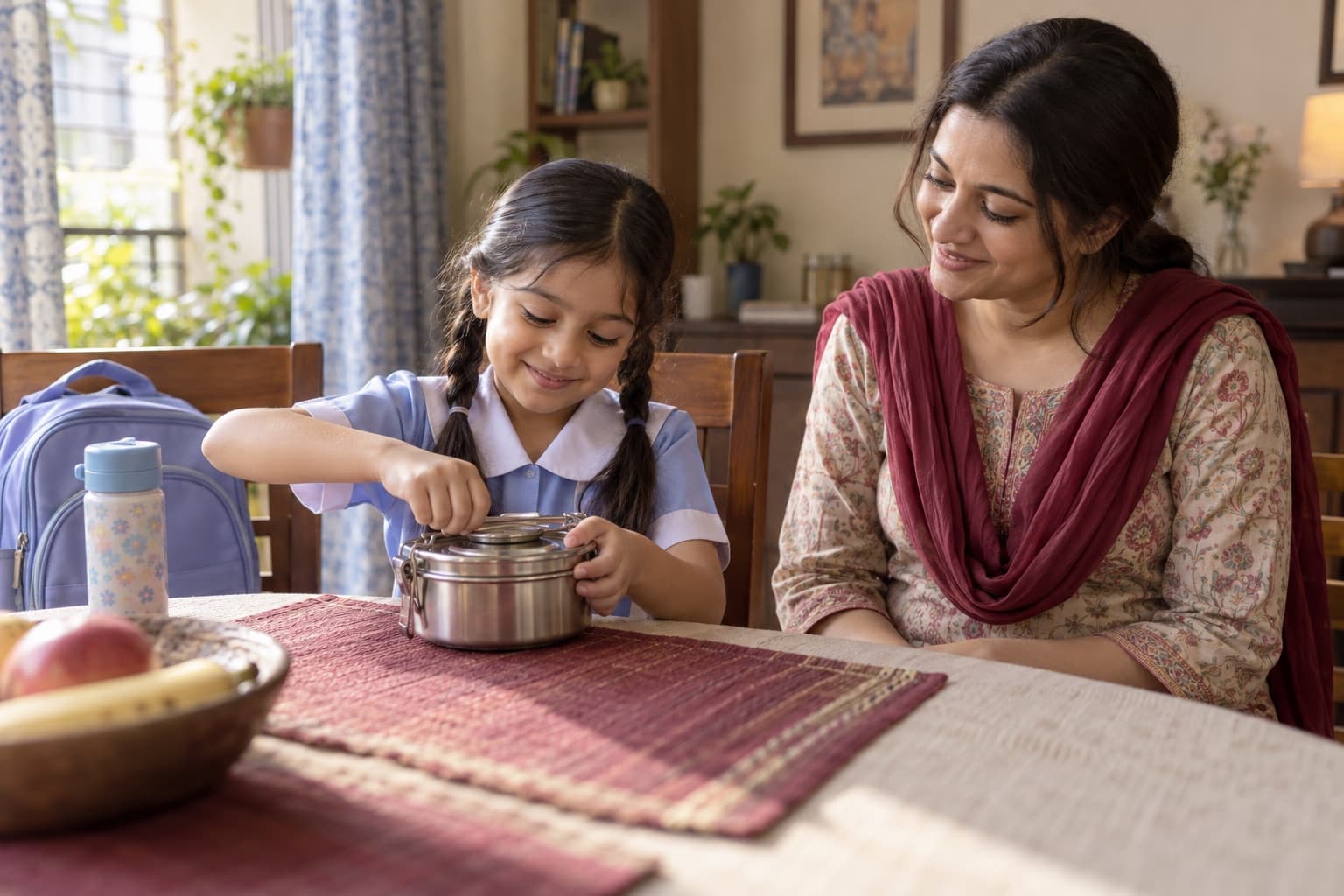
If your child is calm at school but falls apart the moment they walk through the door, you are not alone. After school meltdowns, with tears, shouting, slammed doors or a flat refusal to speak, are common at ages 5–11, and they often say more about a long day than about your parenting.
A child who has followed rules, waited their turn, sat still and kept small upsets to themselves for hours often has nothing left by the time they get home. Home is where they feel safe enough to let go. That doesn't make hitting or rudeness okay, but it changes what helps: food, rest and calm first, questions later.
Below: why it happens, what to do in the moment, a calm arrival routine, how to ask about school, how coaching fits in, a 7-day plan and when to get help.
Why do kids have after school meltdowns?
A child who is cranky after school is usually dealing with a few ordinary things at once rather than one big problem. Most of them are about the body and the day, not about you.
- Hunger: tiffin is often small, rushed, swapped or brought home uneaten, so by pickup many children have not eaten properly for hours. A hungry child has a much shorter fuse.
- Tiredness: an early start, a noisy classroom, heat and a slow ride home through traffic drain energy, especially after a morning shift that begins soon after dawn.
- Holding it together all day: at school, children follow instructions, sit still, wait their turn and swallow small upsets. The release at home is sometimes called 'after school restraint collapse'. It describes a common pattern; it is not a diagnosis.
- Too many questions too soon: 'How was the test? What marks? Why didn't you eat your tiffin?' at the gate can feel like more school.
- A hard moment they haven't told you about: a scolding, a falling-out with a friend, a test that went badly, or being teased.
- The switch itself: moving from one place and one set of rules to another is hard for young children, and harder when homework or coaching comes straight after.
What after school meltdowns look like at different ages
| Age | What it often looks like | What often helps |
|---|---|---|
| 5–7 years (KG to Class 2) | Tears over small things, clinging, whining, lying on the floor, pushing a sibling | Food and a cuddle first, very few words, an earlier bedtime |
| 8–9 years (Class 3–4) | Snapping, arguing about everything, 'I hate school', slamming a door | A snack and some space, a set quiet time, a talk later, side by side |
| 10–11 years (Class 5–6) | Going quiet, shutting themselves away, rudeness, 'Leave me alone' | Respect the quiet, leave a snack nearby, chat at bedtime or on a walk |
What to do when your child melts down after school
When a meltdown has already started, or your child is angry the moment you pick them up from school, the goal is to help their body calm down, not to win the argument or teach a lesson. These steps suit most children aged 5–11.
- Keep your own voice low and slow. Your calm is the first thing your child can lean on.
- Meet your child's body's needs first: water and a filling snack, before any talking.
- Say less. Name the feeling in a few words, then stop: 'Long day. You're tired and cross.'
- Keep everyone safe. Move a younger sibling away and calmly block hitting or throwing: 'I won't let you hit.'
- Offer quiet nearby, such as a cool spot under the fan. Stay close if they want you, and step back a little if they need room.
- Wait. Many meltdowns ease within a few minutes once a child has eaten and rested a little, though some take longer.
- Talk later. Come back to the day, and to any rudeness, at a calm time such as dinner or bedtime, and repair: 'We both had a hard afternoon.'
What you might say
- You're home. Have some water first.
- You don't have to talk. I'm right here.
- You're very angry. I won't let you hit your sister. Come and sit with me.
- Snack first. I'd love to hear about school later.
- Tell me when you're ready. I'll be in the kitchen.
- That was a hard afternoon. Tomorrow, shall we have a banana on the way home?
For more on staying steady through the storm itself, and on naming feelings with your child, see how to help a child with big emotions.
What helps after school? A snack, quiet time and no questions for a while
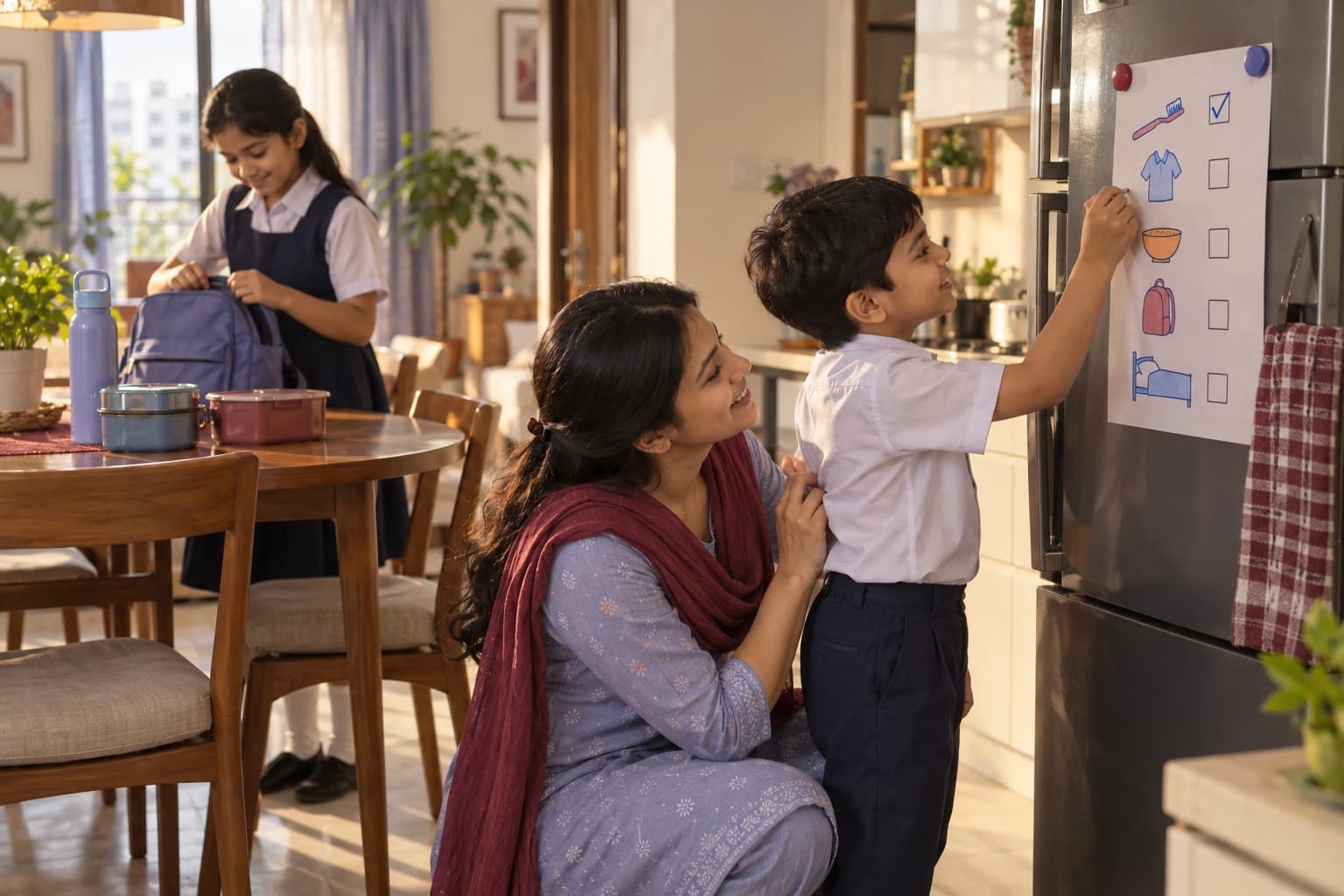
The most useful way to have fewer after school meltdowns is usually to plan the first hour home before anything goes wrong. A predictable arrival routine tells your child's body that school is over and the next part of the day can wait.
- Food and water within minutes. Have the snack ready: fruit, a boiled egg, a roti roll or chira with yoghurt fills a child better than biscuits or chips.
- Uniform off, hands and face washed, shoes away: a small signal that school is over.
- Quiet time for about 20–30 minutes: lying under the fan, drawing, blocks, a comic or a picture book. Many families find a calm activity works better than a screen here, because switching the screen off later can start a second meltdown.
- No questions for a while: hold back the marks, the diary and the homework until your child has eaten and rested.
- A moment of connection: a hug, sitting together or a few minutes of play. Some children want closeness; others want you nearby but quiet.
- Then movement before homework: active play outside, on the roof with an adult, or a dance in the living room. Children aged 5–17 need at least 60 minutes of moderate-to-vigorous activity a day.
| When | What happens | What to skip |
|---|---|---|
| Pickup or arrival | A smile, a hug, water and the snack | Questions about marks or the diary |
| First 10 minutes | Uniform off, a wash, sit down to eat | Screens and homework talk |
| 10–30 minutes | Quiet time, alone or beside you | Chores, lectures, comparisons |
| 30–60 minutes | A chat if they want one, then active play | A long list of what went wrong |
| After about an hour | Homework at the usual time | Starting homework while hungry or upset |
For the rest of the afternoon, from play to dinner, a daily routine for school children has sample timetables for morning-shift and day-shift schools.
How to ask about school without starting a meltdown
A child who won't talk after school is usually not hiding anything; they simply have no words left yet. Most children open up later, once they have eaten and rested, often at bedtime, in the car or while helping you cook.
- Swap 'How was school?' for small, specific questions: 'Who did you sit with at tiffin?'
- Try 'What made you laugh today?' or 'What was the hardest part of today?'
- Share a bit of your own day first; children often answer a story with a story.
- Talk side by side rather than face to face: folding clothes, walking, or on the ride home once they've eaten.
If one-word answers have become the norm, when 'fine' is the only answer has more ideas for children aged 8 and over.
What if coaching comes straight after school?
In many families a child goes from school straight to coaching or a tutor, sometimes with only a packet of chips in between. The meltdown then comes at 7 pm instead of 1 pm, or shows up as refusing to go.
- Put a real meal between school and coaching, not just a snack from the shop.
- Protect at least 20 minutes of rest before any extra class, even if it means arriving a little later.
- Ask whether coaching can move later in the day or to fewer days, especially for children in the early classes.
- Keep at least one weekday afternoon free of extra classes, if you can.
- Count the whole day: school, travel, coaching and homework. If there is no time left to play or rest on most days, the load is probably too heavy.
Coaching and private tutors covers how to tell whether extra classes are helping, and how to choose a kind tutor.
After school in a Bangladeshi home: heat, traffic, elders and house help
The hours after school in Bangladesh have their own pressures, and a few small changes at home can take a lot of heat out of them.
- Heat and traffic: the ride home can take an hour or more. Send water and a snack, and use the ride for quiet or a song rather than questions.
- Grandparents at the door: out of love, elders often greet a grandchild with questions about marks. Share the plan kindly, 'Snack first, the news later', and give them a job, such as peeling the fruit.
- House help: if house help is home when your child returns, show them the routine and the snack list, and ask them to call you rather than scold if things go wrong.
- Siblings on different shifts: a younger child home at noon and an older one back at 5 pm both need their own quiet time and a corner of their own.
- Working parents: some children hold on until a parent comes home in the evening, then fall apart. Ten calm minutes together when you walk in, before phones and chores, often help.
- Load-shedding in the afternoon: a hand fan, a cool wet cloth for the face and a shaded room make quiet time possible without power.
A 7-day plan for calmer afternoons
Change one thing at a time and write one line each day: what time the meltdown came, what your child had eaten, how long it lasted and what helped.
- Day 1: change nothing. Note the time, the last thing your child ate and what set it off.
- Day 2: have water and a filling snack ready at pickup.
- Day 3: add 20–30 minutes of quiet time, and hold all questions until after it.
- Day 4: share the plan with everyone who is home in the afternoon, including grandparents and house help.
- Day 5: move homework to after rest and play, and check bedtime: children aged 6–12 need 9–12 hours of sleep, and 5-year-olds 10–13.
- Day 6: on a weekend day, notice how your child is without school, and plan something fun together.
- Day 7: compare with Day 1. Fewer meltdowns, or shorter ones? Keep what helped and change one more thing next week.
Feed the body first, then ask about the day.
When are after school meltdowns a sign of something more?
Most after school meltdowns ease with food, rest and a steady routine, often within a few weeks. Some signs suggest something else is going on, and they are worth acting on.
Talk to the teacher or a doctor if
- Meltdowns happen on most school days for more than a few weeks despite food, rest and a calm routine, or keep getting longer and stronger.
- Stomach aches, tears or begging to stay home on most school mornings for a few weeks; see school anxiety.
- Your child is exhausted most days despite enough time in bed, or snores loudly with pauses in breathing.
- Bullying, a sudden change in behaviour, fear of a teacher or tutor, or unexplained marks or injuries: believe your child and act the same day. Report an adult who hits your child to the local police station (thana), and call 999 if your child is in danger now.
- Low mood, withdrawal or loss of interest in things your child used to enjoy, for two weeks or more.
- Your child hurts themselves or talks about not wanting to live: stay calm and stay close. Call 999 if they are in danger now; otherwise speak to a doctor the same day.
Afternoon patterns are easy to miss when every day feels the same. ParentMind helps you note what happens each day, see patterns and get guidance: how ParentMind works.
Questions parents ask
Is it normal for kids to have meltdowns after school?
Yes, for many children aged 5–11 it is very common, especially at the start of a school year, after holidays and in exam weeks. A child who has held it together all day often lets go at home, where they feel safe. Food, water, quiet time and fewer questions usually help. Talk to the teacher if it happens most days for several weeks.
Why is my child good at school but difficult at home?
Often because home feels safe. At school, children work hard to follow rules and keep their feelings in; at home, with the people they trust most, the effort stops and the feelings come out. It doesn't mean school is fine and you are failing. It usually means your child needs food, rest and a calm landing after school.
How long does after school restraint collapse last?
A single meltdown often passes within a few minutes to an hour, especially after a snack and quiet time. The pattern tends to be strongest in the first weeks of a new school year or class, after long holidays and in busy exam weeks, and it often eases as your child settles. If it isn't easing after a few weeks of a calm routine, talk to the teacher.
What is a good snack after school?
Something filling with a little protein: a banana with milk, a boiled egg and fruit, a roti roll with egg or vegetables, chira with yoghurt and banana, or a small plate of rice and dal if your child comes home hungry for a meal. Offer water first. Chips, sweets and soft drinks fill the gap briefly but often lead to another slump.
Should I punish my child for being rude after school?
Usually not in the moment. First keep everyone safe and let things calm down; a lecture rarely lands with a hungry, tired child. Once they have eaten and rested, talk briefly about what happened and how to say it next time. Punishment and shaming tend to make afternoons harder, while a calm talk later helps your child learn.
Why does my child melt down after school but not at weekends?
Usually because school days carry the load: the early start, hours of effort and self-control, a small tiffin and the journey home. Calm weekends are a good sign that your child can manage feelings when rested and fed. Use the pattern: protect sleep on school nights, add food at pickup and keep the first hour home quiet.
This article is general information, not medical advice. For health worries, talk to a doctor; if someone is in danger, contact your local emergency number.